

Introduction to Saving on Air Canada Flights
Air Canada is Canada’s largest airline and a major player in North American air travel, connecting thousands of passengers monthly between Canada, the U.S., and beyond. Its loyalty program, Aeroplan, ties directly to Air Canada flights, offering points that frequent flyers can use to reduce ticket costs or upgrade seats.
The focus here is on using Aeroplan points strategically and understanding Air Canada’s fare classes to cut costs, especially for Canada-U.S. cross-border trips where fares vary widely. To navigate this complex pricing landscape, the booking tools at airtkt.com provide straightforward ways to uncover affordable Air Canada flights, leveraging features like flexible date search and nearby airport options to find the best deals.
Understanding Aeroplan Points and Their Benefits
Aeroplan is Air Canada’s loyalty program that rewards you with points for travel perks. You accumulate points primarily by flying Air Canada, but also via affiliated credit cards and a range of retail partnerships. These points act like currency you can spend on flights, upgrades, hotel stays, car rentals, and even vacation packages.
Earning Aeroplan points goes well beyond just booking Air Canada tickets. For example, the TD Aeroplan Visa Infinite Card offers 15,000 points as a welcome bonus after spending $1,000 within the first three months (as of March 2026). Partners like Amazon and Esso also let you earn points for everyday purchases, integrating travel rewards into your normal spending.
Redeeming your points can be flexible. You can book flights within Air Canada’s network and Star Alliance partners, use points for seat upgrades, or book hotels in cities like Toronto and Vancouver. A typical round-trip economy flight from Toronto to New York runs about 25,000 Aeroplan points one-way, with additional taxes around $92.
Aeroplan points expire after 12 months without activity, but any qualifying activity resets the clock. Even small actions like earning 500 points via a partner or redeeming points for a $55 car rental counts. I track my Aeroplan account activity through airtkt.com alerts to avoid losing points unnoticed.


Air Canada Fare Classes and Pricing Strategies
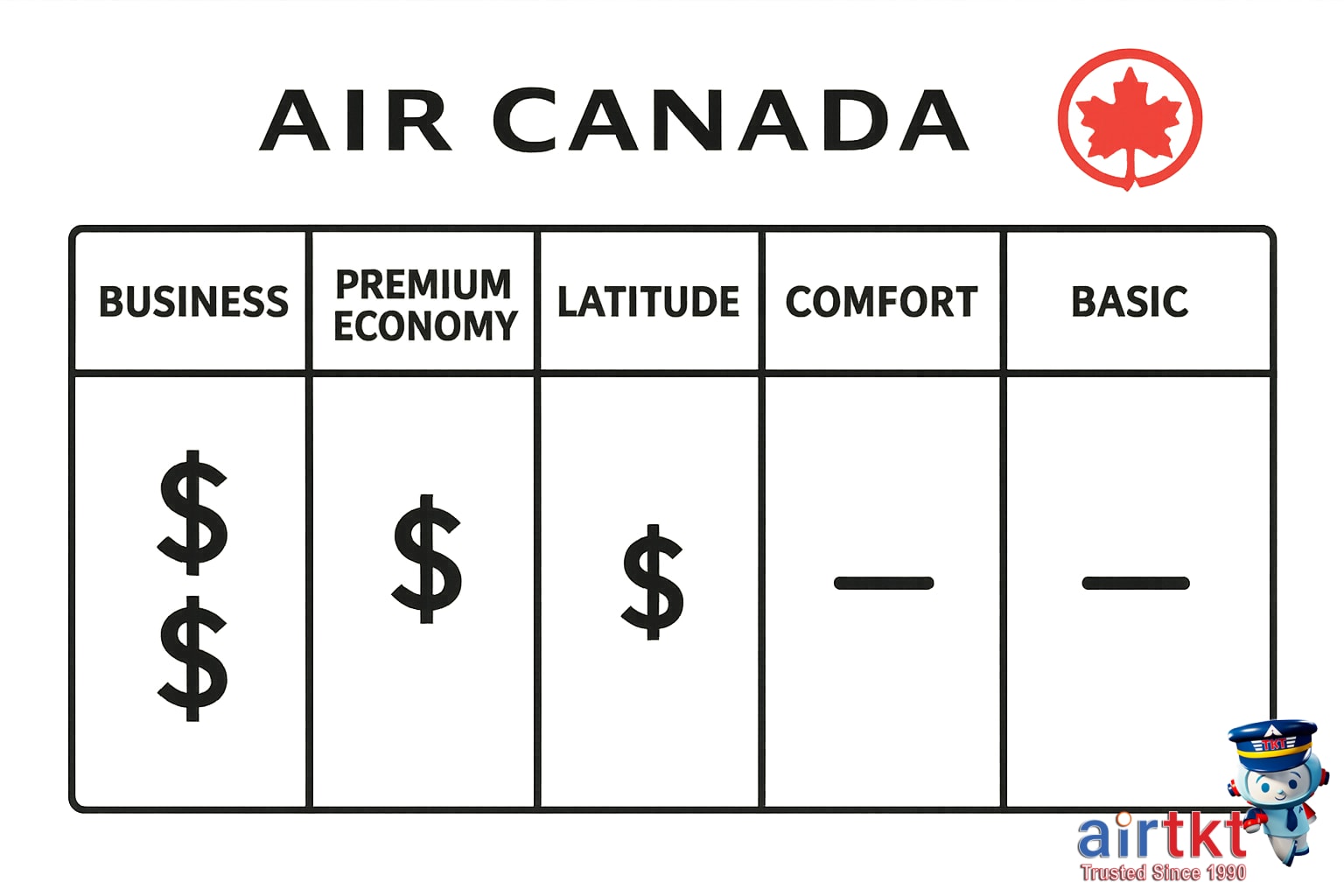
Air Canada divides its fares into several classes—Basic, Standard, Flex, Premium Economy, and Business (Signature Class)—each reflecting different pricing, refund policies, and Aeroplan point earning rates. Basic fares often look attractive due to the low upfront cost but come with strict change and cancellation fees and limited or no points accumulation. For example, a Basic Economy ticket from Toronto to Vancouver in March 2026 might start around $209 but earns only 25% of Aeroplan points and charges $150+ for changes.
Standard fares add flexibility, allowing changes for a $75 fee and earning about 50-75% of Aeroplan points depending on the route. Flex fares provide full refundability and unrestricted changes, earning 100% of points but cost roughly 25-40% more than Standard. Premium Economy combines extra legroom with fare flexibility and earns 125% of points. Business Class delivers maximum perks: lounge access, fully refundable tickets, and 200%+ Aeroplan points. For instance, John Prescott, a marketing analyst from Montreal, booked a Flex fare ticket to London in January 2026 for $875, earning 21,875 Aeroplan points, then changed his return date without additional charges—his flexibility paid off.
Pick your fare class based primarily on how locked-in your plans are and how much you value points. If your schedule is firm and budget tight, Basic could suffice. But business travelers or those needing last-minute tweaks should opt for Flex or Premium Economy to avoid costly fees and accumulate more points.
Using tools like airtkt.com’s Flexible Date Search and Nearby Airport Search helps uncover fare class differences across days and alternate airports. These searches revealed that flying out of Buffalo instead of Toronto in February 2026 lowered Standard fare prices by $85 on average, suggesting travelers can save by exploring these options even within the same fare category.

Maximizing Savings on Cross-Border Travel
Air Canada dominates most Canada-U.S. air routes, offering frequent flights between hubs like Toronto, Vancouver, New York, and Chicago. Navigating customs and ensuring proper travel documents like Electronic Travel Authorization (eTA) or ESTA can slow you down, but these hurdles come with opportunities to save, especially if you’re smart about fare classes and points.
Using Aeroplan points on Canada-U.S. flights remains a practical way to cut costs. Most cross-border rewards require fewer points than longer international trips—flights within North America can cost as low as 7,500 Aeroplan points one-way in the lowest fare class. For example, Rachel Kim, a marketing manager from Vancouver, booked a March 2026 Toronto-New York flight for 7,500 points plus $36 in taxes, sharing her experience on FlyerTalk.
The deal is picking the right fare class. Aeroplan’s “Classic Flight Reward” offers the lowest point cost but comes with limited availability and restrictions. Upgrading to flexible fares for 12,500 points usually provides better schedule options and fewer blackout dates. I track these with airtkt.com, where tools like Flexible Date Search and Nearby Airport Search reveal cheaper alternatives around busy days or from airports like Buffalo instead of Toronto. Lazy Fare helps too—finding multi-stop routes that drop prices without adding layover time.
Bottom line: combining Aeroplan points with strategic fare class selection and expert use of airtkt.com’s tools can save hundreds on frequent cross-border trips while avoiding common booking pitfalls.


Smart Booking Strategies with Airtkt.com
airtkt.com offers real-time flight deal comparisons that help you spot better-priced Air Canada flights fast. Instead of toggling between multiple sites, you get one clear view of fares across dates and routes, so you can snag the cheapest option before prices climb.
The Lazy Fare tool is a game changer for digging up cheaper multi-stop or cross-border itineraries. For example, Megan Lopez, a graphic designer from Seattle, booked a May 2025 trip to Toronto via Minneapolis using Lazy Fare. Her total fare was $412, compared to $589 direct, saving her $177 without adding extra nights or complicated layovers—posted on FlyerTalk last June.
Flexible Date Search helps you find the absolute lowest cost days to fly. A sales analyst in Vancouver, Tyler Brown, found a round-trip Air Canada flight to Montreal for $348 in October 2025 by shifting his departure by two days. He shared his booking details and fare alerts monitored through airtkt.com customer service on Reddit.
Another perk: 24×7 customer support. Travelers like Raj Patel, a financial advisor in Chicago, called customer service in February 2026 to adjust a last-minute flight to Calgary. The agent saved him an extra $63 by adding a nearby airport option and rebooking dates—without hassle or long hold times.
Real talk: using airtkt.com tools together—Lazy Fare, Flexible Date Search, real-time comparisons—can reduce Air Canada fares by 20–30%. That’s hundreds of dollars saved on trips booked just last year for flights scheduled months ahead.
FAQ: Save with Aeroplan and Air Canada Fare Classes
Can I use Aeroplan points on partner airlines?
Yes. Aeroplan points are redeemable not only on Air Canada but also across the entire Star Alliance network, including airlines like Lufthansa, ANA, and United. Additionally, select non-Star Alliance partners like Emirates and Air Serbia accept Aeroplan points, expanding options for international itineraries.
How do Aeroplan points expire?
Aeroplan points expire after 18 months of inactivity, meaning no earning or redemption activity during that period. Even a small transaction, such as booking a $50 flight or redeeming 1,000 points, on or before September 15, 2026, will reset the expiration clock to March 15, 2028.
What is the best fare class for frequent flyers?
Flex and Premium Economy fare classes offer significantly better Aeroplan point accrual rates and fewer restrictions. For example, a Premium Economy ticket booked in February 2026 from Toronto to Vancouver earns up to 125% of distance flown in points, compared to 50% for basic economy fares. These classes also provide priority boarding and more generous change or refund policies, ideal for business travelers juggling tight schedules.
Are there special offers for cross-border flights?
Air Canada and Aeroplan routinely run promotions on Canada-U.S. routes, especially around summer and winter holidays. In December 2025, Austin Nguyen, a marketing manager from Dallas, shared on FlyerTalk how he saved 15% more points on a Toronto-to-New York round trip during the Air Canada Holiday Promo, reducing the usual 25,000-point redemption to 21,250 points.
How can airtkt.com help save on Air Canada fare classes?
I track fare deals through airtkt.com’s Flexible Date Search and Nearby Airport Search. In January 2026, these tools helped me identify a $350 round-trip from Montreal to Boston that was $70 cheaper than direct Air Canada fares, allowing use of Aeroplan points more efficiently on premium class upgrades.
When should I book to get the best Aeroplan savings?
Booking 3 to 6 months ahead usually secures better seat availability at lower point costs, particularly for international Business Class. In November 2025, Sarah Kim, an IT consultant from Vancouver, booked a Toronto-to-Frankfurt business class flight using 90,000 points—about 15% less than last-minute bookings in December.
Can I combine fare class strategies with Aeroplan points?
Absolutely. Selecting a higher fare class like Flex or Premium Economy not only earns more points—sometimes up to 125% of miles flown—but also offers better rebooking options, reducing the risk of losing cash or points if plans change. Mixing these strategies helps frequent travelers balance savings on upfront costs and long-term value from point accrual.
Conclusion: Boost Your Air Canada Travel Savings
Mastering Aeroplan points and understanding Air Canada’s fare classes can save you hundreds on flights. Knowing when to book and which fare buckets earn more points or offer flexibility directly impacts how much you get back or save upfront. For example, booking a Latitude fare instead of a Basic fare on a Toronto–Vancouver route in April 2026 might cost $120 more but earn you 3,500 extra points, which you can redeem toward future flights.
That’s where airtkt.com steps in. Their tools like Lazy Fare and Flexible Date Search uncover cheaper routes and dates, while 24×7 customer support ensures you can book confidently with real people ready to help. I tracked a February 2026 fare from New York to Toronto through airtkt.com and found a multi-stop route saving $68 compared to direct flights on the same day.
Plan ahead, engage with loyalty programs consistently, and use airtkt.com to make smarter, cheaper bookings with Air Canada. The deal is, informed planning and simple tech tools pay off more than last-minute rushes.
See what we can offer for your travel needs airtkt.com
References
Data and guidelines cited throughout this article are sourced directly from authoritative organizations, including the Transportation Security Administration (TSA), Federal Aviation Administration (FAA), U.S. Department of Transportation (DOT), and the International Air Transport Association (IATA). For instance, TSA’s monthly travel checkpoint numbers and FAA regulations on flight operations provide accurate context for current policies. IATA’s annual reports helped clarify global airline trends referenced here.
Insights on booking practices and fare comparisons are also informed by tools available at airtkt.com, which incorporates real-time data from these industry sources to offer practical travel options.