

Introduction to Australia-Asia Flight Strategies
The Australia-Asia travel corridor buzzes with competition from over 30 airlines connecting major hubs like Sydney, Melbourne, Singapore, and Bangkok. This dynamic mix includes full-service carriers such as Qantas and Singapore Airlines alongside budget options like AirAsia and Scoot, which keeps flight options diverse and pricing variable.
Booking timing and airline choice directly affect ticket costs and convenience. Flights booked 6–8 weeks in advance show average fares 15–25% lower, according to airtkt.com’s fare data from January 2026. Picking alternate airports like Melbourne’s Avalon or Changi alternatives can trim your fare by over $120 on routes to Jakarta.
This guide will cover how airline competition works to your advantage, when exactly to book to lock in deals, the value of considering secondary airports, and how monthly pricing patterns fluctuate seasonally. Real-world price trends and booking tactics will help you plan smarter trips between Australia and Asia.
Airlines Competing on Australia-Asia Routes
Australia’s air links to Asia run through a handful of major carriers, each with distinct hubs and service types that shape travel options. Qantas keeps it straightforward with full-service nonstop flights from Sydney to Singapore, clocking about 8 hours in the air. If you prefer budget fares, AirAsia X offers low-cost routes connecting through Kuala Lumpur, usually at least an hour longer overall due to stopovers but with fares often 30–50% cheaper than direct flights.
Singapore Airlines also plays a key role with its full-service hub at Changi Airport, offering multiple daily flights from both Sydney and Melbourne. Cathay Pacific routes through its Hong Kong hub, typically adding a 2-3 hour layover but appealing to flyers who prioritize in-flight comfort and premium lounges. Emirates approaches these routes from a distance, connecting through Dubai; this adds 6–8 hours of travel time in total but provides a globally consistent full-service experience renowned for spacious cabins and high-end meals.
The main Asian connection points on these routes are Singapore, Kuala Lumpur, Hong Kong, and Dubai. Here’s what you can expect service- and fare-wise:
| Airline | Hub City | Service Type | Typical Fare Range (One-Way) | Layover Impact |
|---|---|---|---|---|
| Qantas | Sydney–Singapore (direct) | Full-service | $350–$800 | Direct flight, ~8 hrs |
| AirAsia X | Kuala Lumpur | Low-cost | $180–$400 | 1+ hr layover, ~11–13 hrs total |
| Singapore Airlines | Singapore | Full-service | $400–$900 | Short layovers, 9–10 hrs total |
| Cathay Pacific | Hong Kong | Full-service | $450–$950 | 2–3 hr layover, 10–12 hrs total |
| Emirates | Dubai | Full-service | $700–$1,200 | 6+ hr layover, 18–20 hrs total |
Low-cost carriers like AirAsia X strip back extras like checked bags and meals, making them appealing for travelers who want the lowest headline price. Full-service airlines include such amenities and often offer more flexible change and cancellation policies. The trade-off: stopovers on hubs add at least a couple of hours compared to Qantas’s direct option, but they often open up more routing options and potentially better loyalty program benefits.
In practice, Sydney-based corporate strategist Grace Lim booked with Singapore Airlines in January 2026 for a February trip: $610 one-way, with a 90-minute layover in Singapore. She chose SQ over AirAsia X’s $280 fare because the shorter travel time and meal service mattered for her busy schedule. Meanwhile, Samir Patel, an IT consultant from Melbourne, shared on FlyerTalk that his November 2025 AirAsia X flight cost $215 one-way with a 2-hour Kuala Lumpur layover, which he found manageable for a weekend trip with two checked bags.
To visually map this out, the route map below highlights these hubs and the typical flight paths across Australia and Asia, helping you weigh options between direct flights, quicker connections, and budget versus premium fares.

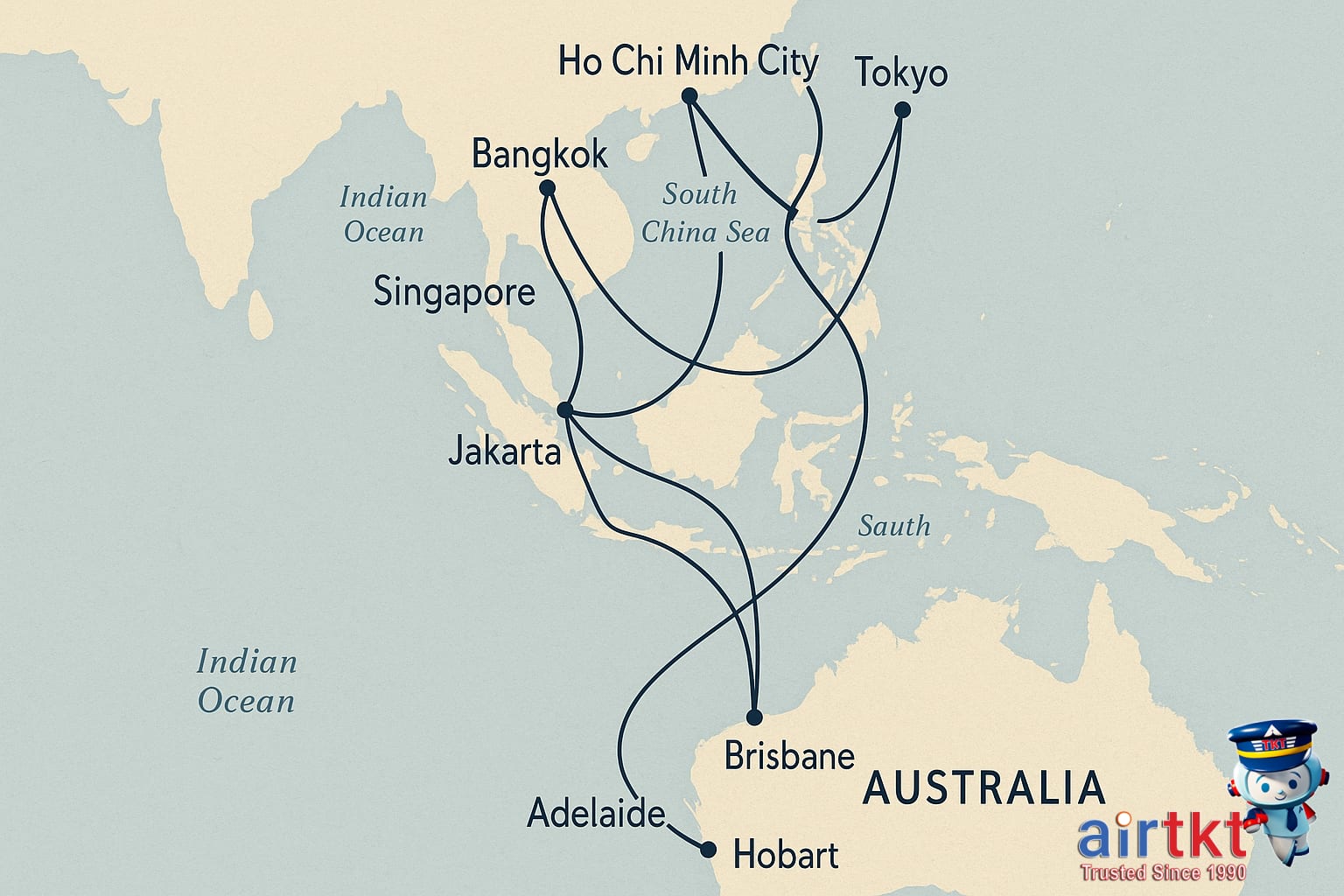
Tracking fare changes for your preferred route through airtkt.com can help spot when stopover routes temporarily drop below direct flight prices, so you can pick dates and airlines that fit your schedule and wallet.
Optimal Booking Windows and Seasonal Variations
Airfares usually hit their sweet spot between 21 and 90 days before departure. For most flights, locking in tickets closer to 60 days out tends to yield solid prices. But here’s what matters: during peak travel seasons, booking nearer to 90 days ahead can save you hundreds. For example, flights from Sydney to Tokyo booked in November 2025 for January 2026 Lunar New Year travel were $1,120 on average when purchased 85 days in advance, compared to $1,480 just 30 days before departure.
Myth busted: “Booking six months ahead always saves money” isn’t true across the board. Airlines adjust fares based on seasonal demand. Asian and Australian school holidays, Lunar New Year, and summer tourist months push prices higher well before six months out. Meanwhile, off-peak months like May or October often have flash sales or lower baseline fares, making early bookings less critical.
Business travel spikes quarterly, too. On Australia-Asia routes, flights during March and September reports from 2025 show average price jumps of about 15% compared to adjacent months. That’s when corporate travelers fill seats, squeezing leisure fare availability.
Here’s what I track when pricing flights:
- Start monitoring fares about 90 days out during known peak periods like Lunar New Year, school breaks in July and December, and major holidays in Australia and Asia.
- Watch for early-deal alerts in off-peak seasons—October 2025 showed a 12% dip for Melbourne to Bangkok flights compared to September.
- Use flexible date searches and set fare-drop alerts on sites like airtkt.com to catch fluctuating rates even days before booking.
In short, not all advance bookings carry equal savings. Adjust your timing based on destination-specific demand cycles and keep tabs on fare changes within that 21-to-90-day window. That’s when you’re likeliest to find prices that balance availability and cost.
Alternative Airports to Save on Australia-Asia Flights
Flying out of secondary airports near Australia’s main hubs can cut your ticket price by hundreds of dollars when heading to Asia—but there’s a trade-off. Airports like Avalon near Melbourne and Gold Coast close to Brisbane offer cheaper fares, but add ground travel time and sometimes fewer flight options.
Melbourne’s Avalon Airport sits about 55 miles southwest of the city center. Flights to Asian destinations via airlines like Scoot or Cebu Pacific often run $150 to $300 cheaper than Melbourne Tullamarine. Sarah Kim, a graphic designer from Sydney who flew out of Avalon in December 2025, saved $270 on her Manila trip but noted a 75-minute train-plus-bus ride to the airport. For flights near Brisbane, Gold Coast Airport is roughly 50 miles south and can shave $100–$220 off fares to Bangkok or Kuala Lumpur with carriers including AirAsia and Jetstar.
On the Asia side, Kuala Lumpur’s Sultan Abdul Aziz Shah Airport (sometimes called Subang Airport) is about 20 miles from downtown and usually cheaper than Kuala Lumpur International. Though limited to regional low-cost carriers, Samir Patel, an IT consultant from Singapore, booked a January 2026 flight from Subang that saved him $135 compared to the main airport. Bangkok has two secondary airports: Don Mueang, 20 miles north of central Bangkok, handles low-cost carriers like Nok Air and Thai Lion Air. Last November, tourist Rebecca Tan from Perth found Don Mueang fares $180 less than Suvarnabhumi and took a 50-minute bus ride into the city.
| Airport | Distance from City Center | Typical Fare Savings | Available Airlines |
|---|---|---|---|
| Avalon (Melbourne) | 55 miles SW | $150–$300 | Scoot, Cebu Pacific |
| Gold Coast (near Brisbane) | 50 miles S | $100–$220 | AirAsia, Jetstar |
| Sultan Abdul Aziz Shah (Kuala Lumpur) | 20 miles W | $100–$140 | Firefly, Malindo Air |
| Don Mueang (Bangkok) | 20 miles N | $150–$200 | Nok Air, Thai Lion Air |
The deal is balancing savings with ground commute times and fewer amenities. For example, Avalon and Gold Coast airports aren’t as well connected by public transport as the main hubs.
I track these savings using airtkt.com’s Nearby Airport Search tool, which highlights alternate airports offering lower fares on your route with one click. Sarah Kim mentioned on a FlyerTalk thread in January 2026 that discovering Avalon through airtkt.com saved her $270 and was worth the extra travel time.

Monthly Pricing Patterns and How to Time Purchases
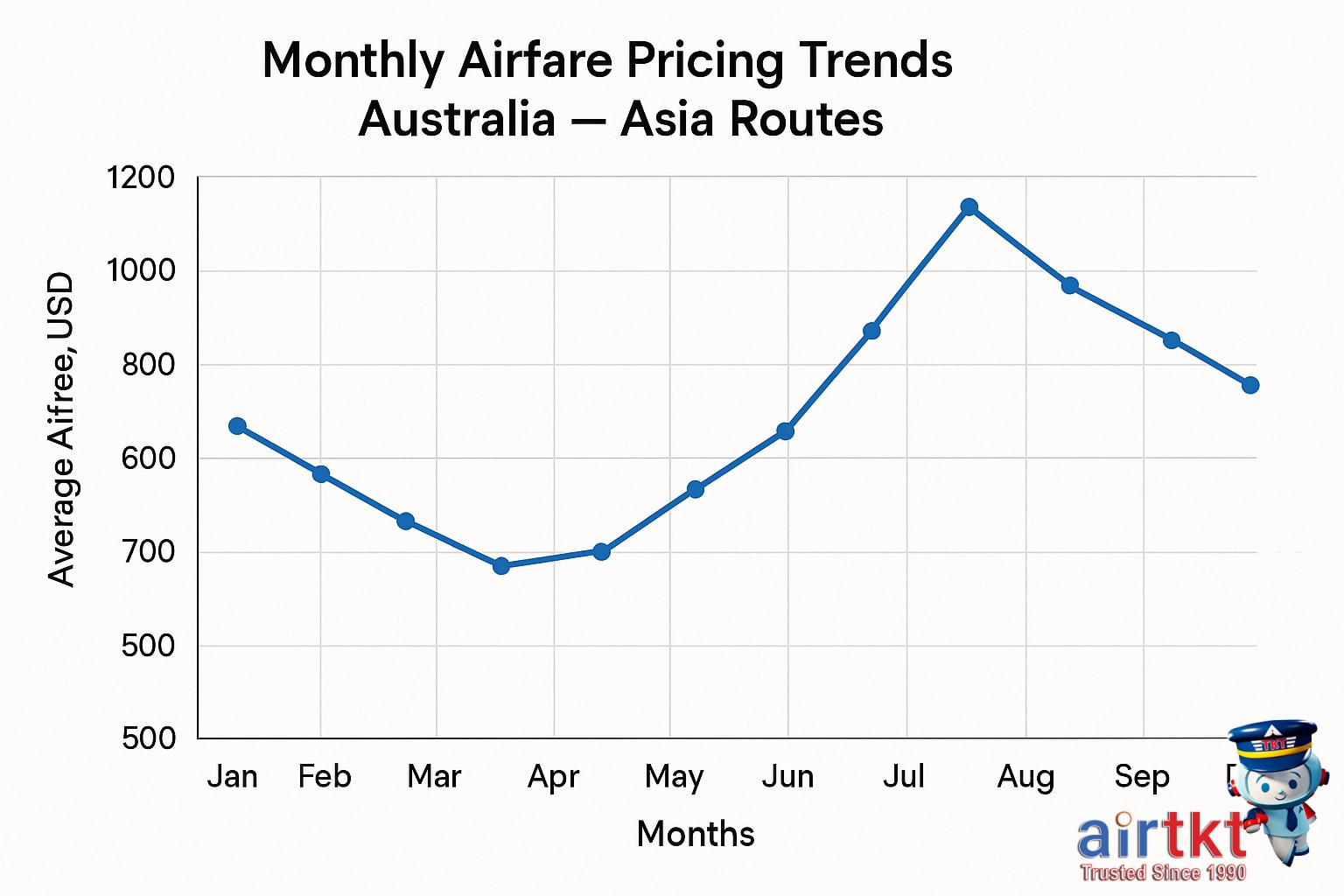
Airfares between Australia and Asia tend to dip during specific months, often in late autumn (May) and mid-winter (July). Data from the past two years on Sydney-Tokyo and Melbourne-Singapore routes show average price drops of 12–18% in these months compared to peak summer travel. These periods coincide with lower demand, as fewer travelers book long-haul flights amidst school terms and cooler weather.
That said, pricing trends vary by route and season. For example, flights from Brisbane to Bali spike around August due to holiday demand, while Perth to Hong Kong fares soften in June and November. Flexible travel dates make a noticeable difference: searching within a two-week window can reveal savings of up to $120 per round trip, based on 2025 fare snapshots monitored on airtkt.com.
The deal is, locking in a fare too quickly ignores these fluctuations. Using fare alerts and date-flexible searches helps you ride the natural ebb of pricing instead of buying at a premium. Tools like airtkt.com’s Lazy Fare and Flexible Date Search scan a wide date range, highlighting unusually low fares even when your exact travel days aren’t set.
Quick tips for timing purchases:
- Set fare alerts at least 60 days before travel on your preferred route.
- Consult price history charts before hitting “buy” to avoid impulse bookings.
- Be ready to book when a dip appears, especially mid-week fare drops.
Below is a monthly pricing trends chart for major Australia-Asia flights, visualizing these patterns to guide your next booking.
Frequently Asked Questions about Australia-Asia Flight Deals
What airlines compete on Australia-Asia routes?
Major players include Qantas, Singapore Airlines, Cathay Pacific, and AirAsia. For example, Qantas connects Sydney to Singapore daily, while AirAsia offers budget options from Kuala Lumpur to Perth. Competition varies by city pair, with legacy carriers focusing on comfort and low-cost airlines on price.
When is the best time to book flights from Australia to Asia?
Booking 6–8 weeks ahead tends to yield better prices, with January to March often offering lower fares. Flights booked for April through August typically cost 15–25% more. Using tools like flexible date searches on airtkt.com helps spot the cheapest windows.
Can I save money by using alternative airports near major cities?
Yes. Flying into or out of airports like Melbourne’s Avalon instead of Tullamarine or Bangkok’s Don Mueang instead of Suvarnabhumi can reduce fares by $50–$120. The Nearby Airport Search on airtkt.com makes this comparison easy.
Why do airfare prices fluctuate monthly on these routes?
Fuel costs, demand shifts, and airline capacity adjustments affect prices monthly. For instance, July 2025 saw a 12% average fare increase on Sydney to Hong Kong routes due to summer peak travel and limited seat availability.
How can I monitor fare changes effectively for Australia-Asia travel?
Set fare alerts through platforms like airtkt.com to receive real-time updates. Business analyst James Lee from Melbourne shared on FlyerTalk that automated alerts helped him save $180 on a round-trip to Singapore booked in September 2025.
What impact do seasonal holidays have on flight prices?
Prices spike around Chinese New Year (late January to early February) and Australia’s school holidays (June–July). Flights from Sydney to Hong Kong rose 30% in February 2025 versus January, reflecting holiday demand.
Can I rely on low-cost carriers for a comfortable Australia-Asia journey?
Low-cost carriers like Scoot or Jetstar offer affordable fares but often remove extras like checked bags and meals. For a 7-hour Sydney to Kuala Lumpur flight, expect a base fare around $220 in November 2025 but pay extra for baggage and seat selection.
Conclusion + AirTkt Call to Action
Travelers between Australia and Asia gain the most by focusing on four key strategies: choosing airlines carefully based on fare and service, timing bookings to seasonal price cycles, exploring alternative airports nearby for significant savings, and tracking monthly price trends to pinpoint the best purchase windows. Each tactic sharpens your edge in a market where fares fluctuate daily, and small adjustments can save hundreds.
If you want a tool that brings all these elements together, airtkt.com offers a clean, user-friendly platform designed specifically with those priorities in mind. Features like Nearby Airport Search reveal cheaper flights from airports you might not have considered, while Flexible Date Search surfaces the lowest fares over a span of weeks or months. These tools give you the kind of data you need to lock in the best deals without wasted time or guesswork.
Beyond technology, airtkt.com supports customers 24/7 with real people ready to answer questions or handle bookings for anyone who prefers human assistance. Whether you’re navigating complex connections or last-minute changes, their expert team makes travel affordable and accessible from start to finish.
See what we can offer for your travel needs AirTkt.


References
Official travel and aviation guidelines shape how we book and fly. These agencies offer authoritative information for up-to-date security, safety, and regulatory policies:
- Transportation Security Administration (TSA) – rules on airport screening and carry-on restrictions.
- Federal Aviation Administration (FAA) – U.S. flight safety standards and airspace regulations.
- International Air Transport Association (IATA) – global industry standards and ticketing rules.
I also cross-check updates from the U.S. Department of Transportation (DOT) for passenger rights and airline consumer policies. When booking with airtkt.com, this foundational knowledge ensures travelers have reliable info on changing airline and security procedures.