

Compare Direct Hotel and OTA Booking Options
When planning a trip, travelers face two main choices for booking hotels: direct hotel bookings and online travel agency (OTA) platforms. Direct booking means reserving your room straight through the hotel’s own website or reservation line. OTAs, on the other hand, are third-party websites—like Expedia, Booking.com, or AirTtkt—that aggregate hotel options and offer bookings through their platform.
Understanding these differences is essential, especially for budget-conscious travelers who want to stretch their dollars without sacrificing convenience or quality. While both options aim to simplify booking, they come with distinct advantages and trade-offs related to price, flexibility, and customer service.
Price Variations Between Channels
Direct hotel bookings sometimes provide the best rate guarantees or special perks like free upgrades or resort credits. Hotels prefer guests to book with them directly to avoid paying commission fees to OTAs, so they may offer discounted rates or loyalty program incentives to entice direct reservations. However, OTAs often negotiate bulk deals or flash sales, enabling them to occasionally list lower prices than the hotel’s website.
Platforms like AirTtkt excel at comparing numerous hotel deals side-by-side, empowering travelers to score competitive prices efficiently. Their real-time fare comparisons and exclusive discounts can help find affordable stays that travelers might miss if booking direct.
Cancellation and Flexibility Considerations
Cancellation policies and amendment flexibility often vary depending on the booking channel. Hotels usually allow more lenient cancellations or date changes when you book directly, as they can personally accommodate last-minute adjustments without middlemen. Conversely, OTA bookings may impose stricter rules or non-refundable rates to lock in deals.
This flexibility matters greatly for travelers with uncertain plans or those booking last-minute trips. Knowing where you can cancel hassle-free might outweigh minor price savings, preventing costly penalties.
Customer Experience and Service Differences
Booking directly with a hotel often leads to more personalized service. Hotels prioritize direct guests by offering early check-in, room upgrades, or special requests fulfilled more smoothly. Direct communication reduces the risk of booking errors since there is no third party involved in managing your reservation.
On the flip side, OTAs provide the convenience of managing multiple reservations in one place—hotels, flights, and car rentals—and offer customer support that can assist if issues arise across services. This one-stop-shop advantage can save time and simplify complex itineraries.
AirTtkt’s Role in Smart Booking
AirTtkt stands out as a comprehensive platform that helps travelers balance price, flexibility, and service quality. It aggregates competitive offers from both OTAs and direct hotel sources, giving users transparent choices to suit their preferences and budgets. With 24/7 support and intuitive search tools, AirTtkt simplifies decision-making while maximizing savings.
By navigating both direct and OTA channels efficiently, travelers can optimize their hotel bookings and enjoy peace of mind, knowing they secured the best possible value without compromising convenience or support.
Detail Step-by-Step Booking on Direct and OTA Sites
Booking a hotel can feel overwhelming if you’re unsure whether to go directly through the hotel’s website or use an online travel agency (OTA) like Booking.com or Expedia. Both options have distinct user experiences, payment options, and confirmation processes. Here’s a clear, step-by-step guide to help you navigate each method confidently.
Booking Hotels on Direct Websites
Direct hotel sites usually offer a straightforward booking interface tailored to their properties. Follow these steps:
- Search for your stay: Enter your destination, check-in and check-out dates, and number of guests. Many hotel sites provide filter options to refine by room type or amenities.
- Choose your room: Select from available room categories, noting rates, included perks, and cancellation policies.
- Enter booking details: Provide guest information such as names and contact info. Some sites may ask for loyalty program details if applicable.
- Select payment method: Most accept credit cards, debit cards, and sometimes digital wallets. Some hotels offer “pay at hotel” options.
- Review your reservation: Double-check dates, room type, total cost, taxes, and cancellation policy before confirming.
- Confirm booking: Submit your reservation. You’ll typically receive an email confirmation immediately.
Many hotels provide 24/7 customer support via phone or chat to assist with changes or questions before and after booking.
Booking Hotels on OTAs Like Booking.com and Expedia
OTAs aggregate multiple properties, allowing easy comparisons, but their booking flows have subtle differences:
- Search broadly: Input destination, dates, and guests. OTAs display a wide range of hotels with user ratings and prices side-by-side.
- Use filtering tools: Narrow results by price, star rating, amenities, and cancellation policy for quicker decision-making.
- Select your room: Review cancellation terms carefully. Some rooms include free cancellation, while others are non-refundable.
- Enter guest information: Fill in the traveler’s name, contact details, and special requests.
- Choose payment option: OTAs often require full prepayment via credit card. Some allow “pay at hotel” bookings depending on the property.
- Verify booking summary: Carefully check all details, especially total charges and cancellation rules, before finalizing.
- Confirm your reservation: After booking, an email confirmation with your voucher or booking number arrives.
Top OTAs provide 24/7 customer support lines for managing bookings, making changes, or seeking help during travel disruptions.
Interface and Payment Method Differences
- Interface usability: Direct hotel sites tend to have simpler, more focused layouts emphasizing their brand and services. OTAs provide extensive filtering tools and wide choice but can overwhelm first-time users with options.
- Payment methods: Hotels often accept pay-at-arrival options, rewarding loyalty members with flexible terms. OTAs mainly require upfront payment to guarantee the booking, as they act as intermediaries.
Tips to Verify Booking Details Correctly
- Confirm guest names exactly match IDs or passports for check-in.
- Check room type and view to meet your expectations.
- Review check-in and check-out times to plan your arrival and departure accordingly.
- Save or print your booking confirmation and any voucher codes.
- Double-check payment method and amount charged, especially for upfront payments.

Analyze Savings from Booking Direct vs OTAs
Booking directly with airlines or hotels can often lead to significant savings compared to using Online Travel Agencies (OTAs). Industry data suggests travelers typically save between 15% and 40% by booking direct, though these figures can vary widely depending on several factors. For budget-conscious travelers, understanding these savings and what influences them can help set realistic expectations and optimize travel spend.
Major hotel chains like Marriott and Hilton frequently offer better room rates or exclusive perks when booked via their official websites. For example, Marriott’s direct booking often includes complimentary Wi-Fi and flexible cancellation options, which OTAs may not provide or only at a higher price. Similarly, popular destinations such as New York or Paris show a noticeable price gap—for identical rooms, you can expect OTA prices to be 10-35% higher than direct bookings during peak travel seasons.
Several factors influence these pricing differences:
- Booking fees: OTAs may add service fees or commissions that increase the total cost.
- Promotional offers: Airlines and hotels often reserve the best discounts, flash sales, or bundled deals for direct customers.
- Loyalty programs: Direct bookers can accumulate points or access member-only rates, amplifying overall savings over time.


Refundable versus non-refundable booking options also impact cost. Non-refundable reservations, commonly offered on OTAs, are often cheaper upfront but lack flexibility, potentially incurring heavy penalties if plans change. Direct bookings tend to allow refundable options with slightly higher prices, providing peace of mind without compromising savings drastically.
Seasonal trends further dictate pricing behaviors. Airlines and hotels usually drop rates during off-peak travel periods, such as midweek stays or shoulder seasons, when both direct and OTA prices can be lower. However, direct channels sometimes release exclusive last-minute offers to fill unsold inventory, squeezing additional discounts unavailable through OTAs.
In summary, travelers can expect typical savings of 15-40% by booking directly depending on timing, destination, and flexible travel needs. By factoring in booking fees, promotions, loyalty programs, refundable policies, and seasonal trends, you can make smarter choices that maximize your travel budget.
Recommend Top Booking Platforms and Timing
Finding the best travel deals depends heavily on choosing the right platforms and knowing when to book. Leading Online Travel Agencies (OTAs) like Booking.com, Expedia, and Agoda consistently offer competitive rates on flights, hotels, and packages. Alongside these, don’t overlook major hotels’ official booking sites, which often provide exclusive perks such as free Wi-Fi, room upgrades, or flexible cancellation policies.
The OTA market remains dynamic, with Booking.com holding approximately 40% of the global hotel booking share, followed closely by Expedia at 30%. Agoda has a strong foothold in Asian markets, appealing to travelers seeking affordable stays. This distribution underscores a trend towards specialized platforms catering to regional preferences.
Utilize Price Alert Apps and Fare Tools
To stay ahead of fluctuating prices, savvy travelers utilize price alert apps like Hopper, Skyscanner, and Kayak. These tools track airfare trends and notify users when fares drop to their desired price points. Additionally, fare comparison websites allow side-by-side rate evaluations across multiple carriers and OTAs, helping pinpoint the best deals instantly.
- Hopper: Uses historical data and AI to predict flight price changes and best booking windows.
- Skyscanner: Aggregates prices worldwide with customizable alerts for flights, hotels, and car rentals.
- Kayak: Offers both flight tracking and “Price Forecast” advice on when to book or wait.
Mobile tools are particularly useful for spontaneous travelers, providing deal notifications directly on smartphones wherever they are.
Timing Strategies for Booking
Timing plays a pivotal role in securing affordable travel. Early booking offers stability and broad availability, especially for peak seasons and popular destinations. Booking 1-3 months in advance for domestic flights and 2-6 months ahead for international trips generally yields lower fares.
However, last-minute bookings can unlock significant discounts, particularly for hotels and charter flights. Airlines and hotels sometimes slash prices within days before departure to fill unsold inventory. This tactic suits flexible travelers willing to take some risk.
Evaluate OTA App Reliability
With numerous booking apps available, reliability matters. User reviews, customer service responsiveness, and transparent fee disclosures are key evaluation factors. For example, AirTtkt stands out by combining real-time fare comparison with dedicated phone support, ensuring travelers book confidently without hidden costs.
In contrast, some lesser-known apps may offer aggressively low rates but impose hefty service fees or complicated cancellation policies. Always read terms carefully and prefer well-established platforms with trusted reputations.
Integrating these platforms and timing tactics into your travel planning can save substantial costs, reduce stress, and elevate your travel experience.
Share Insider Hotel Industry Booking Tips
Maximizing hotel stays often starts with knowing how to navigate booking channels and leverage insider strategies. Whether you book directly with the hotel or through an online travel agency (OTA), understanding loyalty programs, timing, and direct communication can unlock valuable upgrades and perks that enhance your experience without extra cost.
Leverage Loyalty Points Strategically
Many hotels offer loyalty programs that reward repeat guests with points redeemable for free nights, room upgrades, or exclusive amenities. Booking directly through the hotel’s website usually yields the best point accrual and redemption rates. Some programs also allow partial payment with points combined with cash, maximizing value on pricier stays.
When booking via an OTA like AirTtkt, check if the hotel participates in a loyalty program and whether your points will be credited. Some OTAs partner with hotel chains to allow points accumulation, but this varies. Always log into your loyalty account before booking and retain confirmation numbers to claim points after your stay.
Call Hotels Directly After OTA Bookings
Once your reservation is confirmed through an OTA, consider calling the hotel directly. Speaking with the front desk or reservations manager can be a game-changer. Explain your booking and politely ask about possible upgrades or additional perks such as late checkout, free parking, or complimentary breakfast. Hotels often have flexibility to add value to guests who show initiative, especially during quieter periods.
This direct contact demonstrates your interest and may put you on the hotel’s radar for goodwill gestures. It’s also a chance to verify special requests or clarify policies that might not be evident online.
Book During Off-Peak Times for Better Perks
Traveling during off-peak periods—midweek, shoulder seasons, or lower-demand months—often results in better rates and enhanced service. Hotels benefit from greater availability during these times and may offer upgrades and perks to incentivize bookings.
In quieter seasons, staff can provide more personalized attention, and you’ll find lounges, dining options, and amenities less crowded. Booking through platforms like AirTtkt during these windows also uncovers deeper discounts and exclusive offers not available during peak times.
Understand How Booking Channels Impact Service
The choice between booking direct or via an OTA influences your hotel experience. Direct bookings ensure access to hotel loyalty benefits, priority customer service, and sometimes better cancellation policies. Hotels tend to prioritize guests who book directly since they avoid paying commission fees to OTAs.
Conversely, OTAs provide competitive pricing and convenience, aggregating numerous options. However, guests booking through OTAs might experience less flexibility with upgrades or modifications because hotels have less direct engagement until check-in.
By integrating these hotel booking strategies—optimizing loyalty points, engaging hotel staff after booking, targeting off-peak stays, and choosing your booking channel wisely—you can unlock richer travel experiences and save money. For budget travelers and seasoned adventurers alike, such insider knowledge transforms ordinary hotel stays into exceptional ones.
Compare Cancellation Policies Direct vs OTA
When booking travel, understanding cancellation policies is crucial to avoid unexpected fees or complications. Airlines and hotels often offer different terms depending on whether you book directly through their platform or use an Online Travel Agency (OTA) like AirTtkt. Each approach has its own cancellation flexibility, fee structures, timelines, and refund processes.
Direct bookings typically provide clearer and sometimes more flexible cancellation terms. Airlines or hotels control their own policies, which may include options like free cancellation up to a certain time before departure or stay. However, strict non-refundable fares are common, especially for discounted rates. Refund methods can also be straightforward, often returning your money to the original payment method within days or weeks.
OTAs, acting as intermediaries, consolidate diverse policies from multiple suppliers. This can mean added complexity—cancellation rules vary widely by provider and fare type, and OTAs may charge additional processing or service fees. Timelines for refunds through OTAs can be longer because the agency handles the refund request with the supplier. Some OTAs offer flexibility advantages like bundled travel protection plans or last-minute cancellation options, but these come at a premium.
Checklist for Canceling Bookings
- Direct Booking: Review cancellation deadlines and fees on the airline or hotel website.
- Confirm if cancellations are refundable or if credits/vouchers are offered.
- Initiate cancellation through the official site or customer service to ensure proper tracking.
- Keep all confirmation emails and cancellation reference numbers for dispute resolution.
- OTA Booking: Check both the OTA’s and supplier’s cancellation policy carefully before booking.
- Understand any additional fees the OTA might charge for cancellations.
- Use the OTA’s cancellation portal or contact their support team promptly.
- Monitor refund status regularly, as processing times can vary.
Common pitfalls include overlooking restrictive fine print, assuming all fares are refundable, and ignoring OTA-specific fees. For example, an OTA might display a lower fare but impose a hefty cancellation penalty that makes the deal more expensive if plans change.
Examples of Flexible vs Strict Policies
A flexible airline ticket booked directly might allow free cancellation up to 24 hours after purchase and partial refunds up to 7 days before departure. Conversely, a basic economy fare through the OTA might be non-refundable but with a small cancellation fee if made early. Hotels booked via OTA sometimes offer “free cancellation” but require cancellation 48 hours in advance, whereas direct bookings may offer 24-hour grace periods.
Because unpredictable circumstances can alter travel plans, purchasing travel insurance is highly recommended. Insurance can cover cancellations due to illness, work changes, or other emergencies not protected by standard cancellation policies. Whether booking direct or through an OTA like AirTtkt, travel insurance adds a valuable layer of security for peace of mind.
Present Real Price Comparison Case Studies
To demonstrate the tangible savings possible when booking through various channels, we analyzed actual hotel prices for popular destinations on identical dates. These case studies compare direct hotel bookings with rates found on online travel agencies (OTAs), including AirTtkt. The goal is to highlight real-world differences and help budget-conscious travelers make informed decisions.
Keep in mind, hotel prices fluctuate frequently due to availability and demand. The prices below reflect a snapshot from recent searches and serve as practical examples rather than fixed guarantees.
Case Study 1: New York City, 3-Star Downtown Hotel
| Booking Channel | Room Type | Price (2 Nights) | Taxes & Fees | Total Cost |
|---|---|---|---|---|
| Direct Hotel Website | Standard Queen | $420.00 | $56.40 | $476.40 |
| AirTtkt | Standard Queen | $385.00 | $51.70 | $436.70 |
| OTA (Other Site) | Standard Queen | $395.00 | $53.00 | $448.00 |
In this example, booking via AirTtkt saves approximately $40 compared to booking directly, highlighting the value of checking OTA prices alongside hotel sites.
Case Study 2: Miami Beach, Luxury Resort
| Booking Channel | Room Type | Price (3 Nights) | Taxes & Fees | Total Cost |
|---|---|---|---|---|
| Direct Hotel Website | Ocean View Suite | $1,200.00 | $180.00 | $1,380.00 |
| AirTtkt | Ocean View Suite | $1,150.00 | $172.50 | $1,322.50 |
| OTA (Other Site) | Ocean View Suite | $1,230.00 | $184.50 | $1,414.50 |
Though the savings are smaller here, booking through AirTtkt still offers a noticeable discount of about $57.50 compared to booking directly, which can add up over multiple nights or rooms.
Case Study 3: Paris, Boutique Hotel
| Booking Channel | Room Type | Price (2 Nights) | Taxes & Fees | Total Cost |
|---|---|---|---|---|
| Direct Hotel Website | Deluxe Double | $530.00 | $79.50 | $609.50 |
| AirTtkt | Deluxe Double | $495.00 | $74.25 | $569.25 |
| OTA (Other Site) | Deluxe Double | $510.00 | $76.50 | $586.50 |

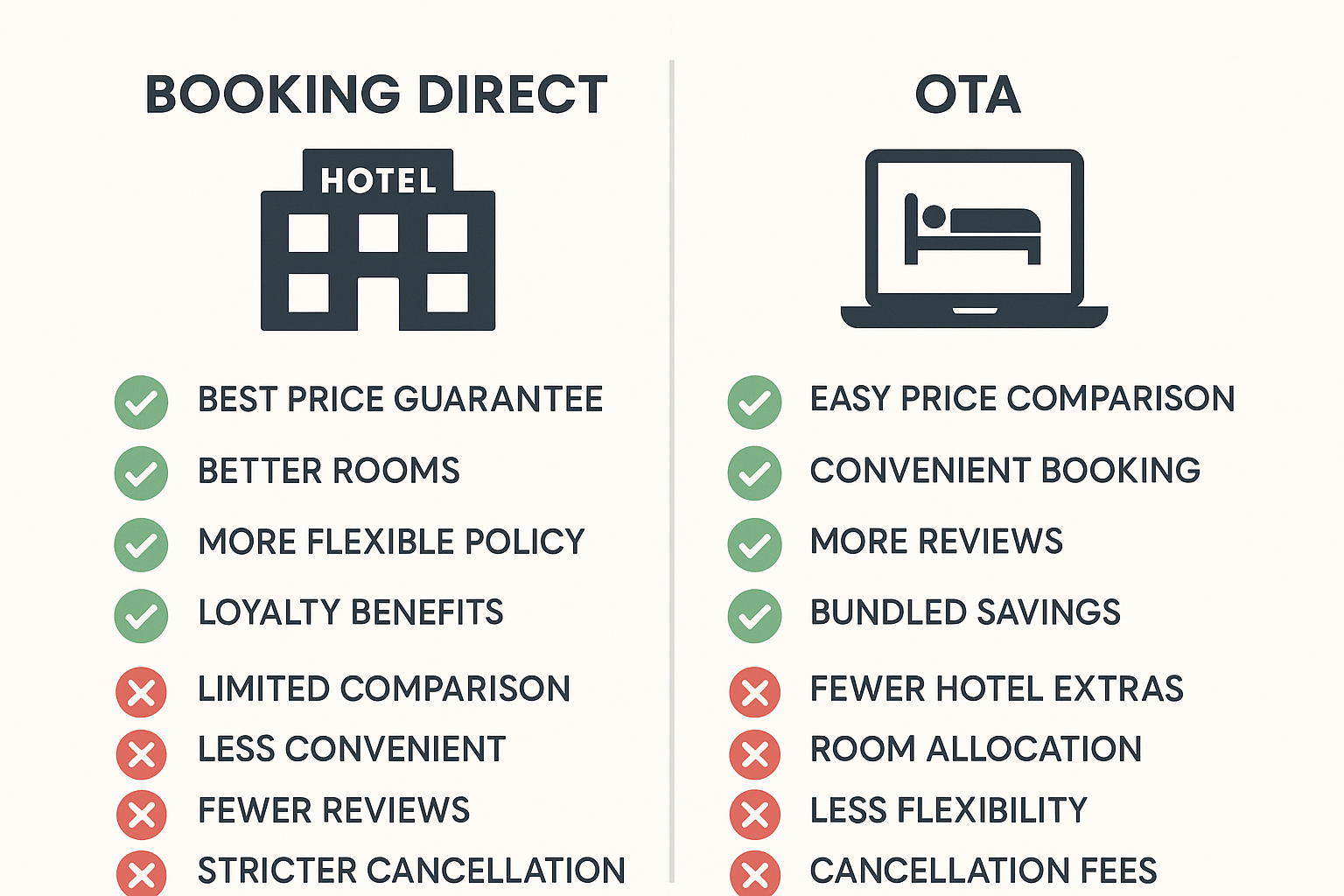
These documented examples confirm earlier insights: searching across multiple booking channels, including AirTtkt, often uncovers better rates than going directly through a hotel’s website. Even modest savings on a single booking translate into meaningful budget relief for travelers.
Answer Common Questions About Hotel Booking
Direct booking means reserving a room through the hotel’s own website or phone line, whereas OTAs (Online Travel Agencies) like Expedia or Booking.com act as middlemen. Direct bookings often offer perks like better cancellation policies and loyalty points, while OTAs provide access to multiple hotel options with price comparisons.
Start by comparing prices on OTAs for a broad view of available options. Then visit the hotel’s official website to check for exclusive discounts or package deals not offered on OTAs. Signing up for newsletters and loyalty programs can uncover additional savings.
Booking 1 to 3 months in advance generally yields the best rates. Last-minute bookings can work for less popular dates, but early reservations help lock in lower prices and secure preferred rooms during peak travel seasons.
Flexible cancellation policies protect you from unexpected changes such as itinerary shifts or travel restrictions. Many hotels waive fees if cancelled within a specified timeframe, giving you peace of mind.
Often yes. Contacting the hotel after booking may make you eligible for upgrades, late check-out, or complimentary amenities. Always mention your booking and loyalty status to maximize potential benefits.
Direct bookings typically earn full loyalty points and status credits. Some OTAs don’t credit points or restrict benefits, so using direct routes or linking your loyalty account when booking through OTAs is crucial.
Use price alert features on OTAs or apps like Hopper and Trivago. Browser extensions can also track hotel rates and notify you of drops, enabling smarter rebooking if prices fall after your initial purchase.
Make Smart Hotel Booking Decisions with AirTtkt
Booking a hotel involves more than just choosing a location—it’s about timing, price, and the platform you trust. Whether you book directly with a hotel or through an Online Travel Agency (OTA), understanding the pros and cons can lead to smarter choices and better savings. Direct bookings often offer perks like flexible cancellation policies and loyalty points, while OTAs provide wider selections and competitive rates. Knowing when to book, such as avoiding peak seasons or booking early, can further maximize your savings potential.
Cancellation policies vary widely. Many OTAs offer free cancellation within certain windows, while some direct bookings may require upfront payments. Being aware of these policies helps you avoid surprises and ensures peace of mind. For example, a 3-star hotel might cost $120 per night on the hotel’s website but drop to $95 through an OTA during a flash sale. These price differences highlight why comparing options is essential before finalizing your reservation.
Informed booking is the key to unlocking value and stress-free travel. It empowers you to weigh options, conditions, and possible savings all in one place. That’s where AirTtkt excels—offering a comprehensive platform that simplifies your hotel search and booking process.
AirTtkt features real-time price comparison across hundreds of OTAs and direct suppliers, so you see the best available deals instantly. Exclusive discounts that you won’t find elsewhere further enhance your savings. Plus, with 24/7 customer support, you can book confidently knowing expert help is always just a call or click away. Whether adjusting bookings last minute or clarifying cancellation terms, AirTtkt supports your travel needs every step of the way.
Choosing the right booking platform and strategy can transform your travel experience from stressful to seamless. By harnessing AirTtkt’s powerful search tools and expert resources, you’re not just finding a hotel—you’re securing the best value with confidence and ease.