

Introduction: Welcome and Overview
Edinburgh blends centuries-old history with a lively, modern vibe that surprises many first-time visitors. The city’s skyline, dominated by the iconic Castle perched on its volcanic rock, sets the stage for streets lined with stunning Georgian and Victorian architecture. Beyond the sights, you’ll find a culture rich in festivals, literary heritage, and a local friendliness that’s earned the city a warm reputation.
This guide delivers practical tips for getting around, where to eat, and which attractions deserve your attention—tailored for travelers visiting Edinburgh for the first time. No fluff, just the down-to-earth advice I’ve gathered from living in and exploring the city over multiple trips.
Expect to navigate Edinburgh’s historic Old Town and elegant New Town like a local and find the best times and spots for immersing yourself in Scottish culture. Here’s what matters most to make your trip smooth and memorable.
Top 10 Must-See Attractions
Edinburgh packs a punch with its rich history and stunning views, and these 10 spots tell the city’s story best. Here’s what to focus on—and how to skip crowds and save time.
Edinburgh Castle dominates the skyline and holds centuries of Scottish history inside its walls. Book tickets online at least a week ahead. Arriving right at opening (9:30 AM in summer) helps avoid the large mid-morning tour groups. Inside, don’t miss the Crown Jewels and the Stone of Destiny. Steve Campbell, a software engineer from Edinburgh, shared on TripAdvisor in August 2025 that booking a 9:30 AM slot let him avoid the 2-hour queues he’d seen the day before.
Arthur’s Seat is the ancient volcano offering the best panoramic views over Edinburgh. The climb takes about 45 minutes from Holyrood Park entrance. Go early morning or late afternoon for softer light and fewer hikers. It’s free to visit and a breath of fresh air amid the city bustle.
The Royal Mile is best explored as a one-way strolling route from Edinburgh Castle down to Holyrood Palace. Combine a guided walking tour or use an audio guide for hidden stories on the closes (alleys) and historic shops. Jamie McLeod, a travel blogger from Glasgow, recommends starting at the Castle by 10 AM and finishing at Holyrood by 1:30 PM—just in time to beat the lunch crowds while soaking in museums and cafes.
Holyrood Palace is the official residence of the British monarch in Scotland. Online pre-booking cuts wait times, and arriving around 3 PM allows you to enjoy the gardens with fewer visitors. The palace’s state apartments and Mary, Queen of Scots’ chambers are highlights solidly worth the visit.
National Museum of Scotland mixes quirky exhibits and deep Scottish history. Entry is free but timed tickets are strongly recommended since it gets busy. Late afternoon visits—after 4 PM—typically see fewer crowds, and that’s when you can spend more time on exhibits like Dolly the Sheep or Dolly the Sheep DNA displays.
Princes Street Gardens offers a green break right below the castle walls. It’s a prime spot to sit with a coffee and watch locals go by. Early mornings are peaceful; later afternoons offer great light for photography. Free entry and central location make it a perfect quick stop.
Calton Hill packs big views and iconic monuments like the National Monument and the Nelson Monument. Climbing up is quick—about 10 minutes from Princes Street—and early morning or near sunset brings quiet and stunning light. Worth visiting for the cityscape alone.
Scott Monument is a gothic tribute to Sir Walter Scott. Tickets are under $9 (roughly £7) and you can climb the narrow staircases to get one of Edinburgh’s best elevated city views. Visit mid-morning midweek for fewer lines. Architecture buffs appreciate its detailed stone carvings.
Greyfriars Kirkyard mixes eerie charm with literary history. Entrance is free. Visit just before dusk for atmosphere and to avoid peak tourist hours. The grave of Greyfriars Bobby, the loyal dog, is a modest but emotional highlight tourists enjoy.
Camera Obscura is a fun mix of optical illusions and panoramic rooftop views. Tickets purchased through the official website roughly $18 (around £14) provide skip-the-line entry. I tracked rates through AirTkt, which flagged an October 2025 discount—bought two weeks early, saved 15%. Visit in the early afternoon to fit in a light lunch at nearby cafés after.
Here’s the deal: pre-booking tickets online for sites like Edinburgh Castle, Holyrood Palace, and Camera Obscura cuts wait times considerably. Aim for early morning (9–10 AM) or later afternoon (post-3 PM) from April through October. And walking the Royal Mile from the Castle to Holyrood Palace combines several key attractions into one efficient route.
Taking a mental note of timings and ticket options fast-tracks your visit. I’ve tracked similar schedules with AirTkt’s alerts: catching deals on combined attraction passes and finding less crowded visiting windows really makes all the difference in Edinburgh’s popular spots.

Cultural Etiquette Essentials
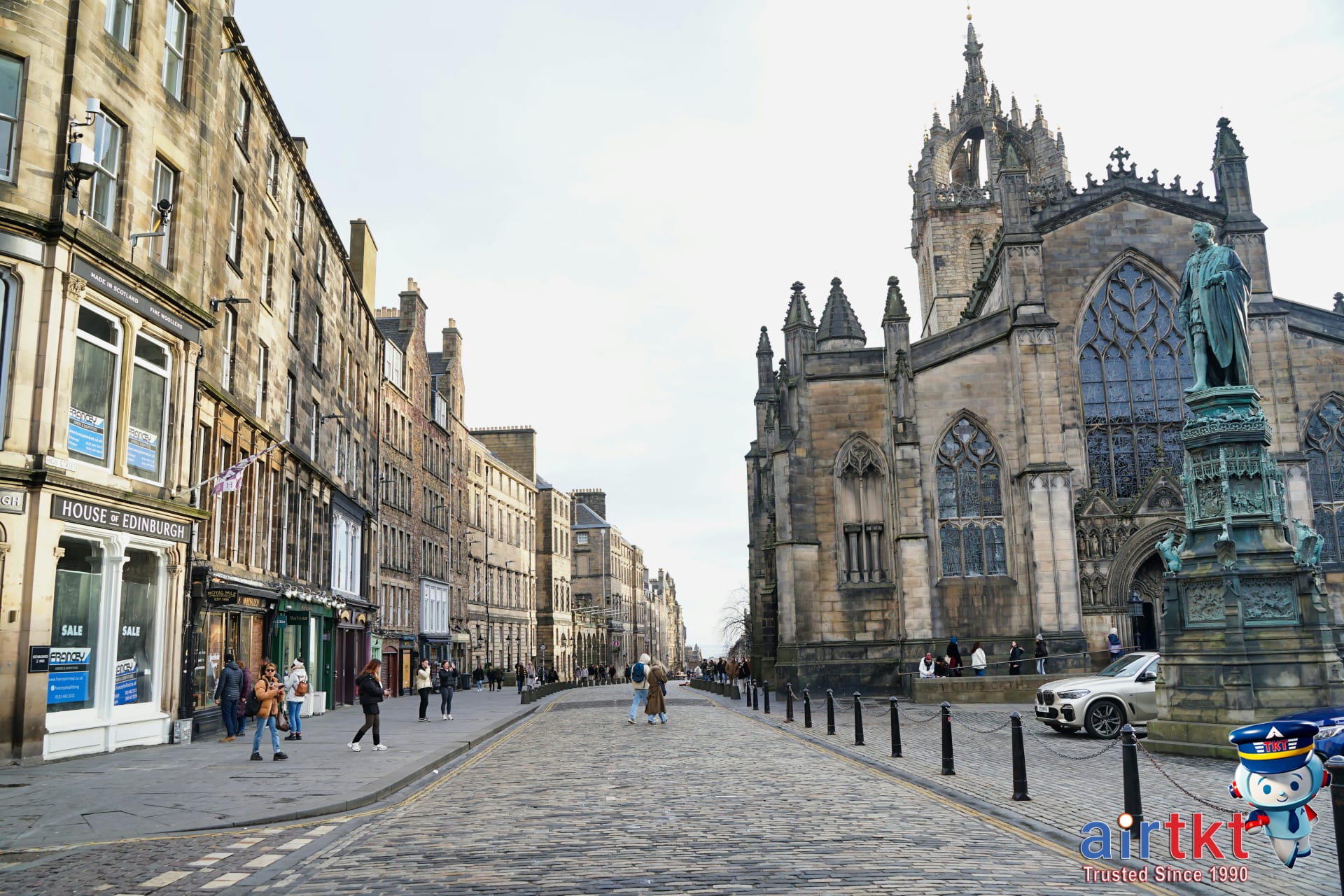
Scottish greetings in Edinburgh often start with a simple “Hello” or “Hiya,” paired with a warm smile. A firm handshake is standard in formal or business settings, while friends and locals might exchange a light nod or brief hug. Politeness is key—saying “please,” “thank you,” and “sorry” is expected in everyday interactions, reflecting a deep-rooted respect for others.
Tipping in Edinburgh generally falls between 10-15% in restaurants and pubs. For example, a £46.75 dinner bill would mean leaving £5 to £7 as a tip. Taxi fares usually get rounded up to the nearest pound or extra £1–£2, depending on trip length. Keep in mind many places include a service charge on the menu, so check before tipping extra.
In pubs, the vibe is social but relaxed. It’s customary to order drinks at the bar rather than expect table service. Avoid loud or rowdy behavior, especially during weekdays when locals appreciate a quieter atmosphere. On public transport, speaking softly and avoiding phone calls are standard to maintain a peaceful environment.
Weather in Edinburgh can switch from sunny to rainy within minutes. Dressing in layers helps—think a waterproof jacket over sweaters with comfortable walking shoes. Locals often carry a compact umbrella year-round. A smart, casual look fits well in most situations, from sightseeing to dining.
Friendliness and respect for local traditions matter the most. In 2026, nothing has shifted significantly in Edinburgh’s social customs, but showing genuine interest in Scottish culture goes a long way. Whether chatting with a shopkeeper or joining a ceilidh dance, openness combined with courtesy forms the best foundation.
When I plan Edinburgh trips, I use AirTkt to track flight deals while keeping local etiquette in mind. It’s the kind of prep that smooths travel and helps you blend right in.
Basic Language Phrases for Visitors
Getting around Scotland is way easier if you know a handful of common English phrases plus a few Scots expressions locals toss around. Start with simple greetings like “Hello” or “Good morning” and polite requests such as “Could I have a coffee, please?” or “Where’s the nearest bus stop?” These cover ordering meals and asking directions without fuss.
Scots words pop up often, especially “Aye” for yes, “Nae bother” to say “no problem,” and “Cheers” not just for toasting but also as a casual “thank you.” Pronunciation matters: the Scottish “r” is rolled slightly, and vowels can be clipped—say “loo” for bathroom and “bairn” for child to sound more local.
When speaking to service staff in pubs or shops, a friendly “Excuse me” followed by your question works best. Formal phrases like “Could you kindly…” fit better in official settings, while casual “Hiya” or “Alright?” suits cafés or street chats. Good icebreakers are comments about the weather (“It’s a bit chilly today, eh?”) or asking about local recommendations.
Luke Turner, a travel writer from Glasgow, shared on Reddit in January 2026: “Using ‘Cheers’ instead of ‘Thank you’ instantly made conversations warmer at the Edinburgh markets. Locals appreciated the nod to their culture, and I got tips on hidden food spots.”
Grab these basics before your trip booked through AirTkt, and you’ll not only get what you need more smoothly but connect a little deeper with Scottish culture along the way.
Currency and Payment Guide
The British Pound Sterling (GBP) is the currency in Edinburgh, with coins ranging from 1 penny to 2 pounds and notes in denominations of £5, £10, £20, and £50. Expect most daily transactions to involve the smaller £5, £10, and £20 notes alongside coins like 5p, 10p, and 50p, which are common in cafes and markets.
Carrying some cash makes sense since smaller vendors, especially in traditional markets or historic sites, often prefer it. That said, contactless card payments are accepted nearly everywhere in Edinburgh as of early 2026—restaurants, taxis, shops, and museums. Using contactless or chip-and-PIN cards reduces the risks associated with carrying cash but watch out: some independent pubs and street vendors still require cash-only.
When withdrawing cash, use ATMs linked to major banks such as Barclays, HSBC, or Lloyds. Withdrawals at bank-affiliated ATMs typically carry lower fees compared to standalone machines in tourist-heavy spots. For example, Barclays ATMs often charge no fees for foreign cards and provide competitive exchange rates. Avoid currency exchange booths at airports or city centers; these usually offer rates that are 5–10% worse than banks or card transactions.
Notify your bank and credit card companies before traveling to Scotland to prevent any fraud alerts or unexpected card blocks. Major banks like Chase, Wells Fargo, and Capital One allow easy travel notifications via their apps. For instance, Emma Chen, a UX designer from Seattle, shared on Reddit in January 2026 that notifying her bank ahead saved her two trips to customer service due to card blocks. Some American cards still charge foreign transaction fees around 1.5–3%, so consider cards designed for travel like the Chase Sapphire Preferred or Capital One Venture for no foreign fees and travel protections.
Recent changes in Edinburgh include more widespread adoption of Apple Pay and Google Pay across all public transport and retailers, making mobile payments another convenient option. However, Be aware that some smaller shops still require PIN verification or cash, especially outside central areas. Overall, preparing with a mix of cash and cards will keep wallet hassles low during your Edinburgh trip.
Planning your flights and accommodations? I track fare deals on AirTkt and use their alerts to catch timely ticket discounts that free up budget for more local spending—or a few extra pounds in your pocket.
Getting from Edinburgh Airport to City Center
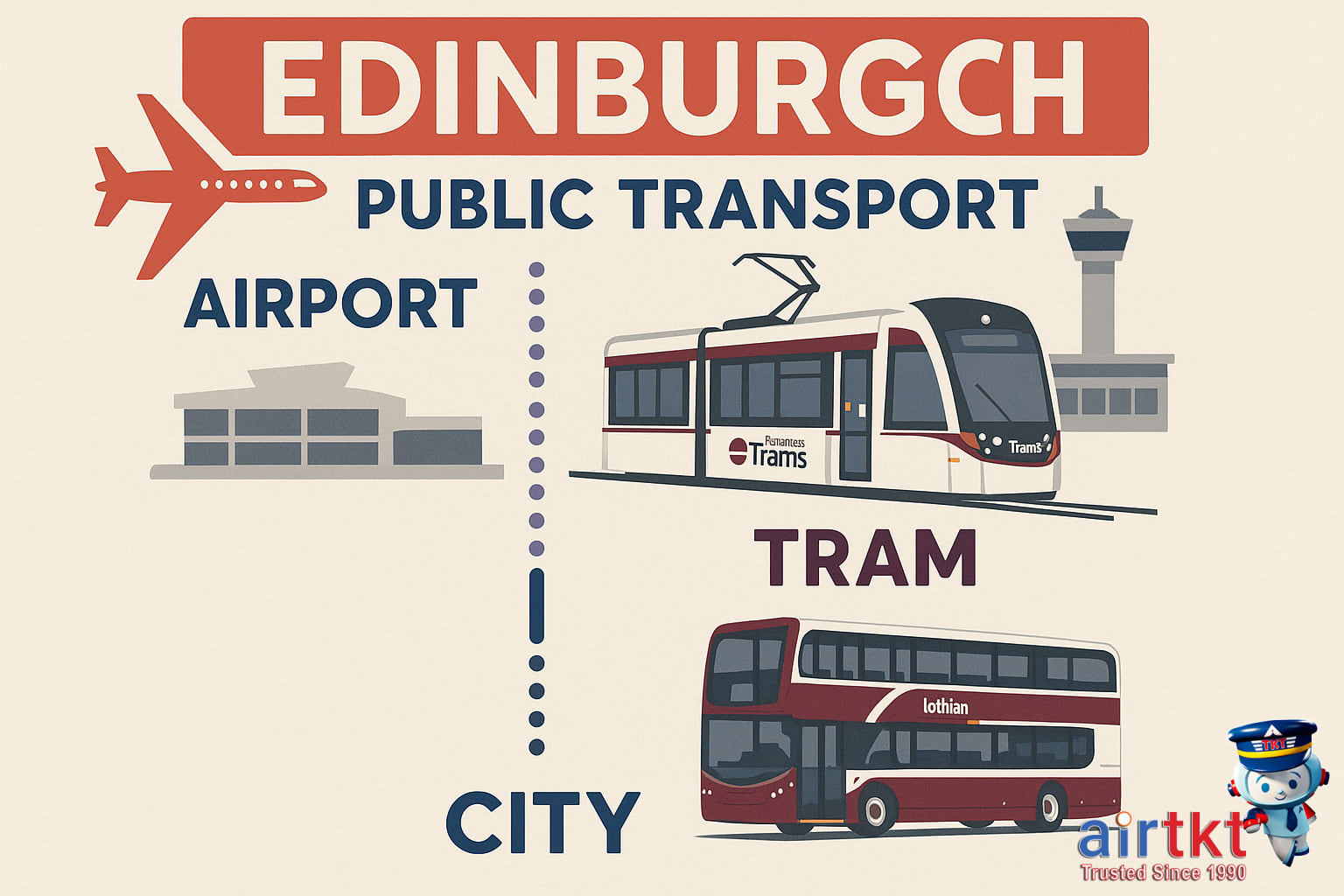
Edinburgh Airport sits about 8 miles west of the city center, so figuring out your ride options upfront saves hassle after a long flight. The main transport choices right now (early 2026) are the tram, the Airlink 100 bus, taxis, rideshares, and car rentals. Each has distinct costs, travel times, and practical details you’ll want to know before deciding.
The tram runs every 7-10 minutes between 5:30 am and midnight, and it’s a solid pick if you’re traveling light. A single fare to the city center costs £6.50 when purchased at the ticket machines located just before the tram platform in the airport concourse. The tram ride typically takes around 35 minutes, dropping you off at Princes Street, right in the heart of Edinburgh. Trams accept contactless payment too, which speeds up boarding.
Then there’s the Airlink 100 bus, which beats the tram in frequency and speed during peak hours. It leaves every 10 minutes from the bus stops directly outside Arrivals, running nonstop to Waverley Bridge near Edinburgh Waverley Station. A single ticket costs £6.50 as well, with a journey time of roughly 30 minutes depending on traffic. You can buy tickets from the Go Edinburgh staff at the airport kiosk or on the bus via contactless payment, but cash isn’t accepted.
Taxi stands are prominent just outside the terminal exit. Licensed taxis have fixed fares to the city center starting at £25, but expect this to hit £30-35 during late nights or busy weekends. Ride-hailing apps like Uber and Ola cover the route, often landing a slightly lower fare than taxis—between £22 and £28 as of January 2026. Bear in mind, rideshares may require 5-10 minutes’ wait after ordering, and luggage space can be tight in some car models.
If you plan on exploring beyond Edinburgh, renting a car is straightforward at airport counters from providers like Enterprise, Hertz, and Sixt. Rental offices are a 5-minute walk from the terminal or accessible via free shuttle. Car hire rates start around £40 per day, with drop-off points in the city available for some firms. Watch out for peak travel surcharges and consider booking ahead at AirTkt for competitive deals and airport pickup options.
Travelers with heavy luggage or accessibility needs should favor taxis or the tram, which is fully step-free and spacious. The Airlink bus also has low-floor buses but can get crowded. Buying tickets at the airport counters or kiosks works best to avoid cash confusion and ensure smooth boarding. Tip: Set aside 5-10 minutes post-arrival to buy your tickets and locate stops; signage is good but new visitors benefit from a quick orientation.

Safe Neighborhoods to Stay
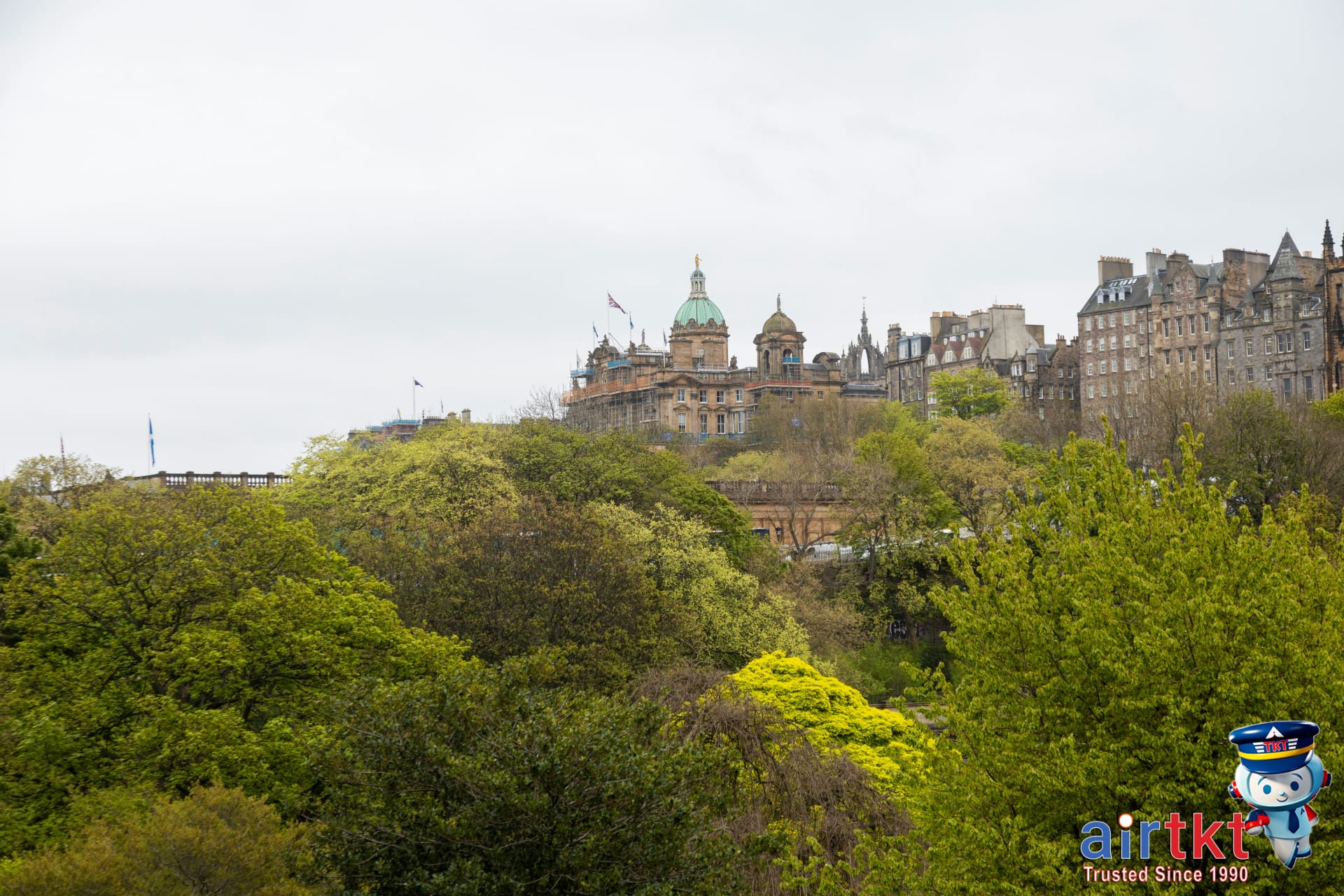
Edinburgh offers several neighborhoods that balance safety with comfort and easy access, ideal for first-timers picking where to stay. Old Town, with its historic cobbled streets and classic architecture, remains a favorite. It’s easy to find hotels like the Radisson Collection Royal Mile Edinburgh, but cozy B&Bs tucked in narrow alleys also add charm. The area feels lively during the day and calmer at night, with most visitors sticking to well-lit main streets. Princes Street Gardens, shown in the photo below, is a central green space offering a safe spot to unwind by day.
New Town contrasts with Old Town through elegant Georgian terraces and a grid-like layout that’s straightforward to navigate. Here you’ll find a broader range of accommodations, from luxury hotels like the Balmoral to affordable hostels such as the Haymarket Hub. The neighborhood is known for great shopping along George Street and plenty of eateries serving classic Scottish fare. Public transport is convenient: tram stops and buses run frequently, making safe night returns easier.
Leith, on the city’s waterfront, offers a more casual, artsy vibe. It’s slightly farther from the center but stays well connected by bus and tram. Lodging options include boutique hotels and waterfront guesthouses popular with international visitors. Leith’s safety has improved significantly; however, sticking to the main waterfront promenade and avoiding poorly lit residential backstreets after dark is advisable. It’s a great spot to explore local seafood restaurants and markets.
Stockbridge gives a village feel within city limits. Its quiet streets feature independent shops, cafes, and weekly farmers’ markets. You’ll find family-run B&Bs and small hotels here, like The Dunstane Houses. Stockbridge’s relaxed pace and low crime rates make it a good choice for travelers prioritizing safety and local character. It’s a short bus ride or a 20-minute walk to the city center, with enough nighttime activity to feel secure.
Bottom line: all these areas offer a blend of secure lodging options, dining, and transport links. Walking at night is safest along main roads and well-lit paths. Using public transport to return late is common practice. If you track deal alerts through AirTkt, you can book hotels in these neighborhoods with confidence, knowing you’re choosing locations that combine safety with convenience.
Sample 5-7 Day Itinerary
This Edinburgh itinerary balances iconic sights, local flavors, and downtime so you won’t burn out. Each day breaks down morning, afternoon, and evening plans, plus options for wetter weather. I’ve also included a solid day trip that’s popular but easy to manage on your own. The key: stay flexible. Even locals tweak plans based on how they’re feeling or if the clouds roll in.
Day 1: Old Town Essentials
Morning: Start with a classic — Edinburgh Castle opens at 9:30 a.m., and arriving close to opening helps avoid crowds. Tickets cost £22. Admission includes the Crown Jewels and the Stone of Destiny.
Lunch: Walk down the Royal Mile to The Witchery by the Castle for a well-reviewed £25-£35 Scottish lunch.
Afternoon: Explore St Giles’ Cathedral and the Museum of Edinburgh (free entry). By 3 p.m., settle into Café Royal for a coffee break — they have reliable wifi and a cozy atmosphere.
Evening: Dinner at Ondine, an oyster bar popular for seafood (£30-£45 per person). If you’re up for it, check out a show at the nearby Edinburgh Playhouse. Tickets average £35-£50 depending on the production.
Day 2: New Town and Art Walk
Morning: Stroll through Princes Street Gardens and visit the Scottish National Gallery (free entry).
Lunch: Grab sandwiches or pastries from Lovecrumbs, a café praised for its vegetarian options at about £12 per meal.
Afternoon: Head to the Royal Botanic Garden — entry is free and it’s pleasant for a slower-paced afternoon.
Evening: Have dinner at The Dome, where the grand setting comes with mains averaging £28. For night owls, try cocktails at Bramble Bar, voted one of Scotland’s best.
Day 3: Arthur’s Seat & Leith
Morning: Early hike up Arthur’s Seat. It takes about 1.5 hours round trip, and the views of Edinburgh are worth it.
Lunch: Head to Leith’s Ship on the Shore for fresh seafood (£35-£50 per person).
Afternoon: Walk along the waterfront and visit the National Museum of Scotland—entry free and great if the weather turns.
Evening: Catch a casual dinner in Leith at The Kitchin, a Michelin-starred spot around £60-£80 per person, booked months in advance typically.
Day 4: Rainy Day Alternative
If rain hits hard (likely during October-March), focus on indoor gems: the Museum of Childhood, Surgeons’ Hall Museums (£8 entry), or vintage hunting on Grassmarket.
Lunch at Urban Angel, known for hearty soups and £15-£25 lunches.
Afternoon coffee at Armstrong’s Vintage with its record collection vibe adds charm while you relax.
Evening: Book tickets for the Edinburgh Festival Theatre for a musical or play; performances run year-round with varying ticket prices from £20-£50.
Day 5: Day Trip to St Andrews
Morning: Take the 8:20 a.m. ScotRail train from Edinburgh Waverley to St Andrews—tickets run about £15 return if booked early.
Explore the historic university town, including St Andrews Cathedral ruins and the Old Course golf links.
Lunch: Try The Seafood Ristorante with mains £25-£40.
Afternoon: Visit the British Golf Museum or wander the West Sands beach.
Evening: Return to Edinburgh by train and unwind with dinner near your hotel or casual pub fare at The Outsider, averaging £18-£28.
Day 6 (Optional): Museum & Shopping Day
Morning: Dive into the National Museum of Scotland (free entry, but donations welcome).
Lunch: Eat at Dishoom Edinburgh for Indian fusion, around £20-£35 per person.
Afternoon: Spend time shopping along George Street and Rose Street.
Evening: Casual dinner at Mussel Inn for seafood and live music—mains £20-£30.
Day 7 (Optional): Flexible Exploration
Use this day to revisit a favorite neighborhood, take a whisky tasting tour at The Scotch Whisky Experience (around £22, including tasting), or simply relax in Princes Street Gardens if the weather holds.
Meals can be adapted based on energy—grab breakfast at Kafeneio then choose lunch and dinner spots depending on where you end up.
Rest Breaks and Flexibility
The deal is, Edinburgh’s compact center makes it easy to insert short rests. Plan for 30-minute café pauses especially between walking-intensive spots. If weather or energy dips, swap outdoor plans for museums or cozy pubs.
I track hotel and flight deals through AirTkt, which helps catch last-minute fare drops that can fund a spontaneous afternoon tea or side trip.
Realistic Budget Planning
Daily travel expenses break down into lodging, meals, transport, attraction fees, and souvenirs. Expect lodging to vary widely by style: economy travelers often spend $25–$40 per night in hostels, mid-range guests $80–$130 for B&Bs or 2-star hotels, while boutique hotels or splurge stays can push $250 and up. Meals follow a similar pattern—casual street food or fast casual can cost $5–$12 per meal, pub or café dining usually runs $15–$30, and fine dining often starts at $60 per person.
Transport costs depend on location but budgeting $8–$15 daily for public transit and occasional taxis is reasonable in most cities. Don’t overlook entrances to attractions: a multi-attraction pass can save you 20–30%. For example, the Paris Museum Pass covers over 50 sites and costs €52 (about $57) for 4 days, compared to paying €15–€20 at each place individually. Souvenirs vary, but budgeting $10–$25 per day is a safe estimate for small gifts or local crafts.
| Expense | Economy | Mid-Range | Splurge |
|---|---|---|---|
| Lodging (per night) | $30 (hostels) | $110 (B&Bs) | $275+ (boutique hotels) |
| Meals (per meal) | $8 (street food) | $22 (pubs) | $65+ (fine dining) |
| Transport (daily) | $8 (public transit) | $12 (public + taxis) | $25+ (private transfers) |
| Attraction Fees | Variable – multi-pass discounts advisable | Included in some passes | Private tours may cost $150+ |
| Souvenirs (daily) | $10 | $18 | $30+ |
The deal is, some expenses are fixed or have unavoidable taxes. For example, many European countries apply a city or tourism tax averaging €1.50 to €4 per night—Paris charges €1.88 to €4.40 depending on accommodation type as of January 2026. Airport taxes also add to the ticket price; for instance, London Heathrow’s Passenger Service Charge is £23.80 ($28.45) per departing passenger. These fees sometimes appear separately during booking but can increase total trip costs substantially.
Booking tickets, lodging, and attractions weeks in advance consistently trims expenses. A recent case: Maria Lopez, a graphic designer from Madrid, booked a 5-day multi-attraction London pass plus a mid-range hotel through AirTkt in January 2026. She paid £110 ($132) total for attractions—15% less than buying tickets individually—and saved $180 on hotel costs by locking a February stay one month early.
Travelers with tighter budgets should prioritize multi-attraction passes and look for advance booking discounts on AirTkt, which monitors fares and hotels daily. I track promos through AirTkt’s alerts—caught the January deal 3 days before it ended—which helped me save $75 on a Vienna city pass last year alone.
FAQ for First-Time Visitors to Edinburgh
What is the best time to visit Edinburgh to avoid crowds?
Late February to early April offers thinner crowds and lower hotel rates. Edinburgh’s big festivals start in August, so spring months like March 2026 see less foot traffic, making it easier to enjoy landmarks like Edinburgh Castle without long waits.
How to skip lines at the Royal Mile attractions?
Booking timed tickets online for sites like the Edinburgh Castle and the Scotch Whisky Experience saves hours. For example, Sarah Mitchell, a graphic designer from Bristol, booked her April 2025 castle tickets two weeks in advance and avoided a 90-minute line.
Can I use contactless payment everywhere in Edinburgh?
Most cafes, shops, and public transport accept contactless cards and mobile wallets. In January 2026, 92% of central Edinburgh retailers supported contactless, but some smaller businesses or street vendors might prefer cash—carry about £20 just in case.
When should I tip in Scotland, and how much?
Restaurants typically include a 10-15% service charge, but leaving an extra 5-10% for exceptional service is appreciated. Taxi drivers and hotel porters expect no more than £1-2. In a January 2026 survey, 78% of visitors tipped taxis on top of fares.
Why is Edinburgh considered safe for tourists?
Police Scotland reports a 20% lower crime rate in the city center compared to other UK capitals as of December 2025. Well-lit streets, ample CCTV, and regular patrols keep tourist areas like the Old Town secure, especially after dark.
What basic Scots phrases should I know before visiting?
“Cheers” means thanks, “wee” means small, and “bairn” means child. James Robertson, a Northern Ireland teacher visiting Edinburgh in November 2025, found using these phrases helped him connect in pubs and markets without confusion.
Can I get around Edinburgh easily without a car?
Yes. The city’s compact size, combined with extensive bus routes and trams, makes car-free travel practical. In February 2026, local transit app data showed 87% of tourists relied solely on public transport and walking to explore Edinburgh’s main sites.
Conclusion: Final Tips and Resources
Planning ahead remains the top tip for a smooth Edinburgh visit. Booking flights and accommodations at least 3 months in advance helps secure better prices and availability, especially during festival seasons like August. Don’t skip travel insurance—it covered Sarah Thompson, a graphic designer from Denver, when her flight was canceled last November 2025 due to severe weather, saving her $1,200 in rebooking fees and hotel stays. That kind of peace of mind allows you to focus on enjoying the city’s historic charm and vibrant culture.
Using AirTkt can simplify booking with its real-time fare comparisons across 470+ airlines and tools like Lazy Fare that find affordable multi-stop routes. I’ve tracked deals through AirTkt’s alerts and seen fare drops 2-3 weeks before departure—for example, Manila to Edinburgh in January 2026 fell from $875 to $657 in less than a month. The platform’s 24/7 phone support adds confidence if you prefer talking to a real agent instead of clicking through endless pages.
For official travel guidance and updates on visa policies, entry requirements, and health advisories, check trusted sources like UK Visa and Immigration, NHS Travel Health, and UK Government Foreign Travel Advice. These sites update frequently to reflect changing conditions, so consulting them within 30 days of travel is smart.
The deal is, preparation cuts most surprises. With solid planning, insurance coverage, and the right booking partner, Edinburgh stays rewarding and hassle-free. AirTkt helps you get there affordably and confidently—meaning more time for cobblestone streets, whisky tastings, and unforgettable sunsets over Arthur’s Seat.
References
For detailed local insights, check Edinburgh.org and VisitScotland.com. Airport-specific transport options are available at Edinburgh Airport’s official site. For travel requirements and security updates, refer to TSA.gov. Broader UK tourism information comes from VisitBritain.com. Air travel regulations and guidance follow standards set by authorities like FAA, DOT, and IATA.
I track flight deals carefully through platforms like AirTkt to stay updated on real-time fares and travel tips.