

Bangkok Transit: Key Transport Options
Bangkok can seem overwhelming on your first visit, but its transit system is surprisingly user-friendly once you know where to start. The city offers several reliable ways to get around, including the BTS Skytrain, MRT subway, Chao Phraya river boats, and of course, the iconic tuk-tuks. When I first used the BTS Skytrain, I was surprised how easy and fast it was—zipping above the city traffic made sightseeing so much more efficient.
The BTS Skytrain and MRT are the backbone of urban travel here, connecting business, shopping, and cultural areas with clean, air-conditioned trains. River boats provide a scenic and affordable route along Bangkok’s main waterway, while tuk-tuks add that lively Thai experience for short inner-city trips. Each transport option has its perks, making it simple to mix and match for different parts of your journey.
If you haven’t booked your flight yet, airtkt.com is a useful starting point when searching for affordable ticket options to Bangkok. Combining a solid transit plan with a well-priced flight will make your visit as smooth as possible.
How The BTS Skytrain Works

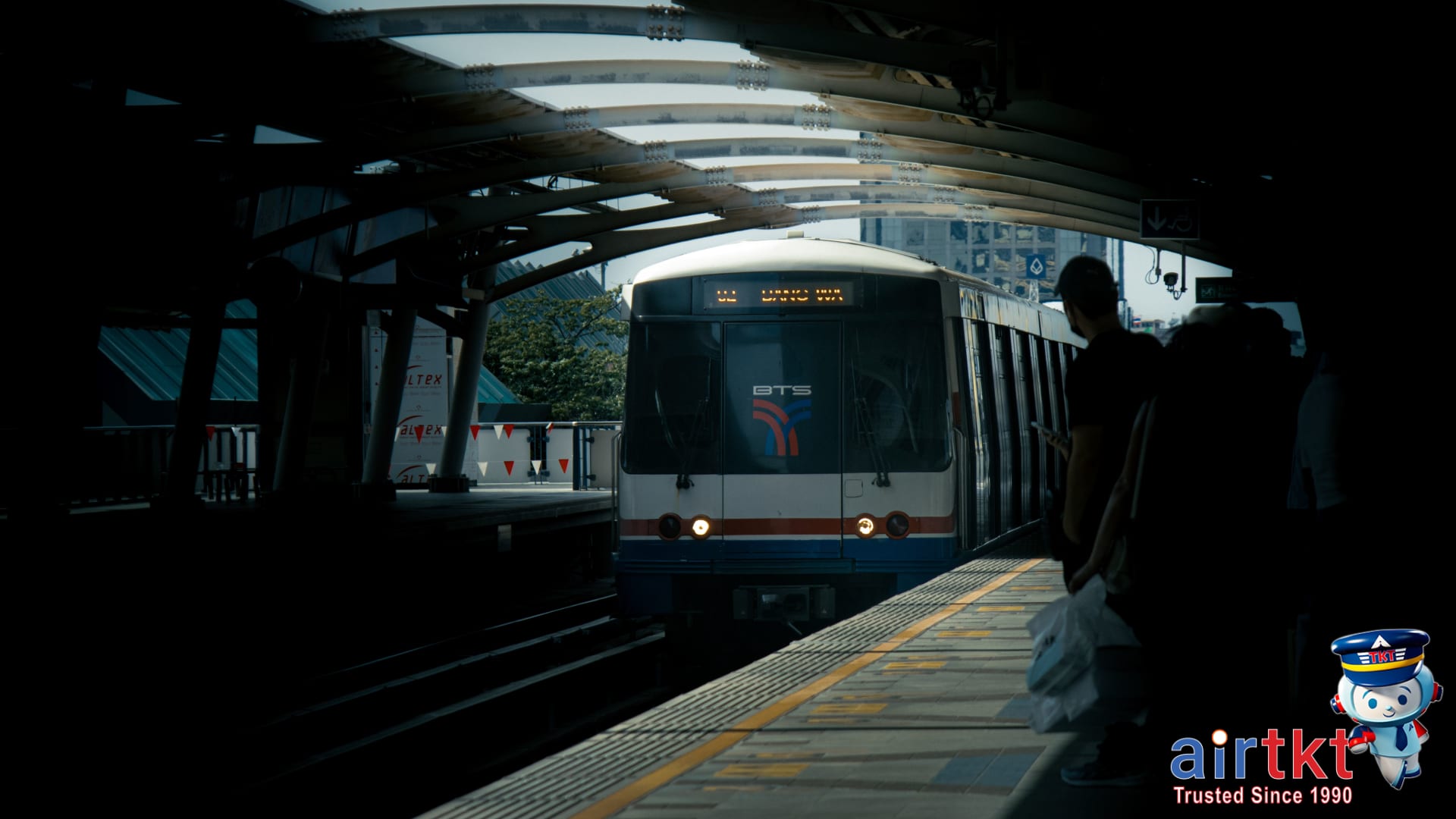
The BTS Skytrain is one of the simplest and fastest ways to get around Bangkok, especially if you want to avoid the city’s notorious street traffic. It runs on two main lines: the Sukhumvit Line, stretching from the north (ideal for reaching Chatuchak Market and Mo Chit), down through the city’s busy commercial districts, and all the way east; and the Silom Line, which runs from the National Stadium area through the business and riverside neighborhoods. The two lines intersect at Siam Station, making it a handy transfer point if you’re connecting routes or exploring the main shopping zone.
I usually take the BTS when traveling between downtown and shopping areas, especially for places like Siam, Asoke, or Phrom Phong. Trains operate from early morning to around midnight, though the first and last train times can vary depending on the station and day, so I recommend checking the schedule ahead of time if you have tight plans.
Finding Your Route On The Map
BTS route maps are posted at every station and inside the trains. Stations are numbered, which really helps if you’re not familiar with Thai names. For trip planning, I’d compare both the physical maps in stations with the digital maps on the BTS website or app, since these show all stops, transfer points, and connections to the MRT subway lines. It’s a good idea to scan the network before you go, especially if you’ll make a connection or want to avoid peak-hour crowds.
Tickets, Passes, And Fares
Buying tickets is straightforward. You can use coins at ticket machines or visit the counter for change. For single rides, fares typically start at about $0.75 for a short journey and increase with distance. If you’re planning multiple rides, grab a Rabbit Card, which is an easy way to tap in and out. Topping up is simple and helps you skip the ticket machine queues, especially during rush hours. Day passes are also available for about $4.50 if you expect to make several stops in one day.
If you want more local transit strategies, our BTS travel tips guide breaks down how to save time and avoid common mistakes on the system.
Navigating the MRT Subway in Bangkok

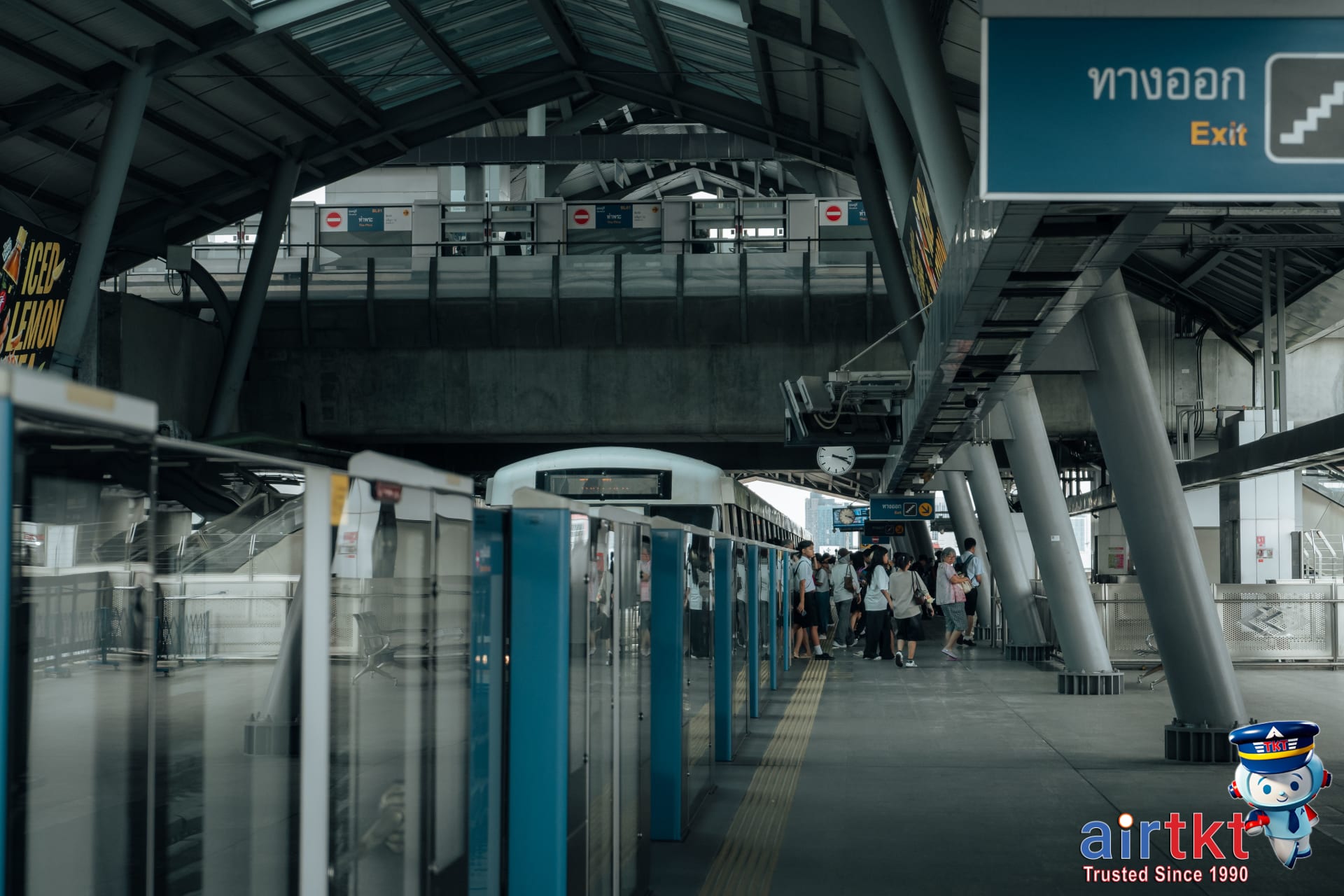
Bangkok’s MRT (Metropolitan Rapid Transit) system is a practical way to move quickly across the city’s busiest neighborhoods—especially during rush hour. The network consists of the Blue Line and the Purple Line, each serving different but connected areas of the city.
MRT Blue and Purple Lines
The MRT Blue Line forms a loop, stretching from Tao Poon in the north, wrapping past key downtown stops like Chatuchak Park, Sukhumvit (with convenient connections to the BTS), and on to Hua Lamphong, Bangkok’s main train station. The Purple Line, on the other hand, serves northern and western suburbs between Tao Poon and Khlong Bang Phai. Together, these lines give you coverage over many popular business, local, and sightseeing districts.
Key Stations and Transfer Points
If you’re traveling around central Bangkok, focus on bigger interchange stations: Chatuchak Park connects to the famous weekend market, while Sukhumvit is a major transfer point where you can easily switch to the BTS at Asok. Hua Lamphong is handy for catching cross-country trains. Tao Poon is where the Blue and Purple Lines meet—so if you’re heading out to the northern suburbs, this is where you’ll transfer.
Buying MRT Tickets and Fares
Tickets are sold at automated machines inside every MRT station. Just tap your destination on the touchscreen, insert cash, and collect your token. A typical one-way fare is about $0.80 to $1.50 depending on distance. If you want to save time and avoid lines, you can purchase a stored-value MRT card at the ticket counter. Using the MRT helped me avoid road traffic during rush hours, and having a card made boarding much quicker.
Switching Between MRT and BTS
Several stations offer easy connections to the BTS Skytrain, which opens up even more parts of Bangkok. The most popular transfer is at Sukhumvit (MRT) and Asok (BTS). For travelers considering whether to favor BTS or MRT for certain routes, check out our in-depth BTS vs MRT guide for side-by-side comparisons and planning tips. In my experience, planning MRT/BTS connections before you travel saves you a lot of time and confusion on the ground.
Getting Around Bangkok by River Boat
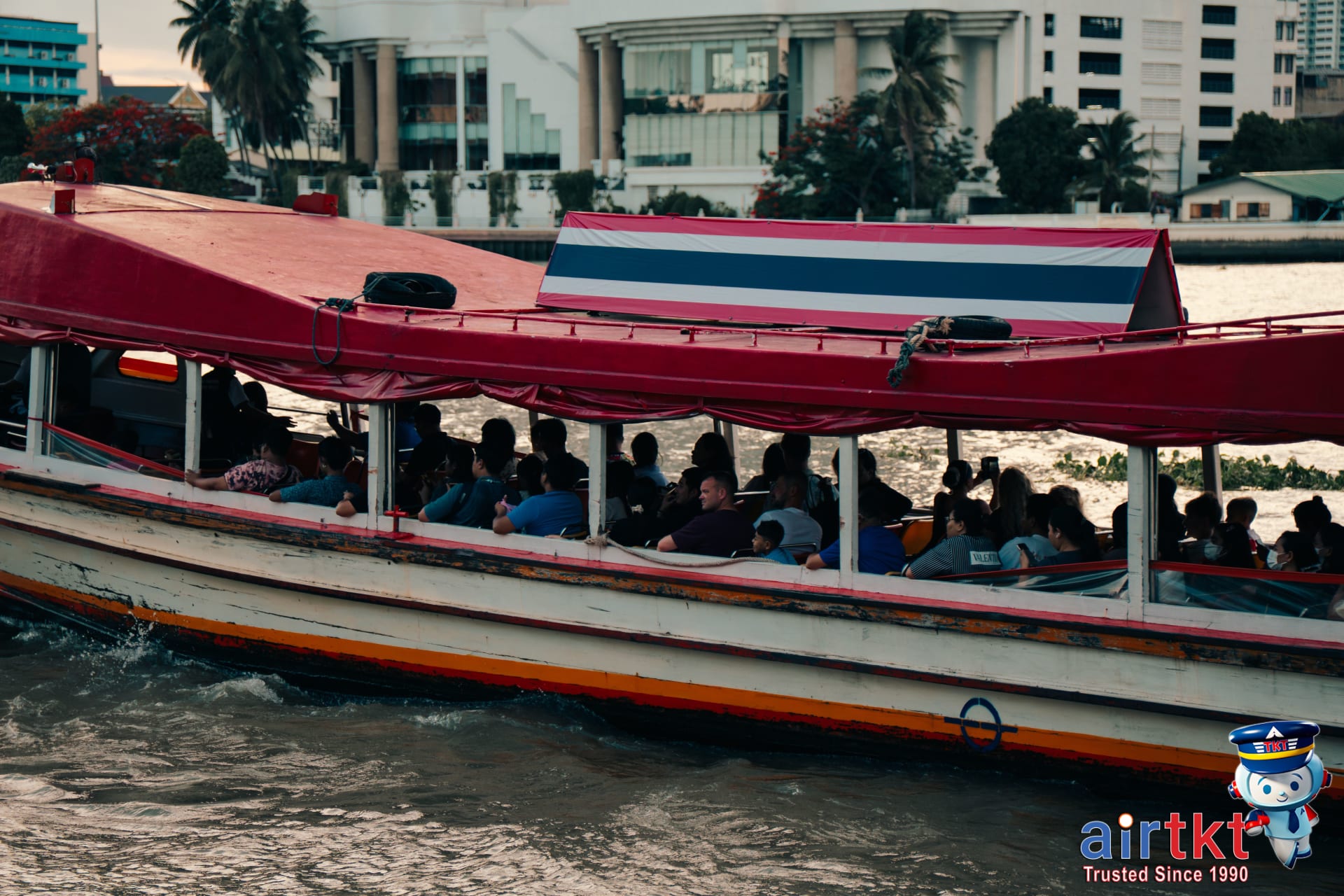
The Chao Phraya River is one of Bangkok’s most scenic—and practical—ways to explore the city. Dozens of river boats crisscross the water daily, connecting lively neighborhoods, iconic temples, bustling markets, and hotels along the riverbanks. If you want to experience Bangkok like a local, learning to use the riverboats opens up a fun, budget-friendly way to hop between sights.
Main Routes and Notable Piers
The river boat services follow simple routes up and down the Chao Phraya. The Chao Phraya Express Boat is the most popular option for travelers, stopping at around 20 main piers from the city center up to Nonthaburi. Notable piers include Sathorn (near Saphan Taksin BTS station), Tha Chang (for the Grand Palace), and Tha Tien (for Wat Pho and ferries across to Wat Arun). Maps at the piers make navigation easier, but I’d recommend checking your planned stops ahead of time so you feel confident when you board.
Express vs Local Boat Tips
Express boats are usually marked with colored flags: orange (all stops), yellow, or green (limited stops for express commuters), plus a no-flag boat which serves locals with nearly every pier. Express services tend to be quicker and a bit more comfortable for visitors, while local boats can get very crowded at rush hours but are a true slice of city life. When I took the boats, I enjoyed seeing Bangkok’s riverside attractions from the deck—it’s a relaxed way to spot landmarks like Wat Arun and the busy street markets edging the water.
Boarding and Ticketing Advice
At most piers, you’ll wait in a roped queue and board quickly once the boat docks—there’s little time to hesitate, so keep your destination in mind and move briskly. Tickets for most rides cost about $0.50, and you can usually pay the conductor on board. However, some piers have ticket windows, especially at Sathorn. Staff can be brisk but helpful if you check the flag color and tell them your destination.
If you want to know which river sights are worth visiting by boat, you might appreciate a dedicated guide to Bangkok’s top river attractions, which makes trip planning even smoother.
Getting Around Bangkok by Tuk-Tuk

There’s no experience quite like zipping through Bangkok’s energetic streets in a classic tuk-tuk. These three-wheeled motorized vehicles are a lively and iconic way to travel, especially for short distances or when you’re feeling adventurous. Taking a tuk-tuk around the city is always an adventure—I’ve had my share of speedy rides weaving past traffic and glimpsing side streets I would’ve missed by taxi or metro.
Tuk-tuks are best for quick hops of one or two miles. They don’t have meters, so you negotiate your fare directly with the driver. The process is part of the charm, but it does require a little assertiveness. I always recommend clearly stating your destination, making sure you and the driver agree on the price before you hop in, and confirming that the total quoted covers everyone in your group. Keep in mind that tuk-tuk fares are typically higher than what you’d pay for a regular metered taxi, but you’re paying for the fun factor and the open-air ride.
Aside from tuk-tuks, Bangkok’s road transport network is filled with other options. Conventional taxis are widely available, affordable, and metered—just look for the glowing red “for hire” sign. Motorbike taxis are another speedy choice, especially when traffic slows to a crawl, but they’re best for solo travelers with light luggage. I often compare these options depending on time of day and my budget—sometimes the air-conditioned comfort of a taxi wins, especially in the midday heat. If you want a deeper dive into using cabs or other modes, I’d recommend checking out airtkt.com’s guide to Bangkok transport for tips on fares, etiquette, and safety.
How to Plan Transit Routes Effectively
Navigating Bangkok’s busy streets is much smoother when you know how to blend its main public transit options: the BTS Skytrain, MRT subway, and river boats. If you’re planning a day packed with temples, markets, and riverside strolls, it really pays to map out a multi-modal route in advance. I planned a perfect day using BTS and river boats to reach temples and markets, and it saved me loads of time and hassle.
Start with Your Main Stops
First, highlight your must-see destinations. Bangkok’s most popular temples—like Wat Pho and Wat Arun—are close to the Chao Phraya River, while lively markets such as Chatuchak need either BTS or MRT access. I usually list my top spots and look up which transit lines get me closest to each one. This helps me decide when to hop on the Skytrain, switch to a river boat, or head underground with the MRT.
Connecting BTS, MRT, and Boats
Each transit mode has its strengths. The BTS is perfect for reaching modern shopping centers or hopping across Sukhumvit and Silom, while the MRT covers more of the city’s old districts. Both the BTS and MRT connect at certain interchanges (like Asok/Sukhumvit), so I’d compare both options before choosing which is more direct. River boats, especially the Chao Phraya Express, open up quick access to Old Town attractions you’d otherwise reach only with slow-moving taxis or confusing bus routes.
Sample Full-Day Itinerary
If you’re aiming for a classic “temples and markets” itinerary, try something like this:
- Start at your hotel and catch the BTS to Saphan Taksin station.
- Transfer to the Chao Phraya Express boat at Sathorn Pier right beside the station.
- Ride upriver to Tha Tien Pier for Wat Pho—walkable from the dock. Cross the river by shuttle ferry (about $1.00) to visit Wat Arun.
- Return by river boat to Sathorn, board the BTS, and head toward Mo Chit station for Chatuchak Weekend Market.
- Wrap up with a quick BTS ride back downtown or hop onto the MRT at Chatuchak Park if it’s more convenient for your final stop.
This combination really mixes efficiency and scenery, letting you skip traffic and enjoy Bangkok from multiple perspectives. For more detailed day plans, you might want to check our full airtkt.com guide to making the most of the city’s transit system.
Bangkok Transit Costs Budget Table

Transit expenses in Bangkok can shift your daily budget by quite a bit, depending on whether you stick with the speedy BTS Skytrain, opt for taxis, or try the river ferries. Here’s a simple breakdown of typical costs for different spending styles. Personally, I found that using the BTS instead of relying on taxis not only saved me money, but also cut down my travel time when hopping between the city’s busy neighborhoods.
| Budget | Mid-range | Luxury | |
|---|---|---|---|
| Accommodation | $18.00 | $49.00 | $155.00 |
| Food | $7.00 | $20.00 | $60.00 |
| Transport | $3.00 | $12.00 | $30.00 |
| Activities | $3.00 | $15.00 | $40.00 |
How Transit Choices Affect Budgets
Choosing public transport, like the BTS or MRT, can keep your daily transit costs around $3.00. Hopping in taxis or booking Grab rides quickly adds up, bringing a mid-range traveler closer to $12.00 per day. For those that want a private car and flexibility, budget about $30.00 daily, especially if you’re venturing beyond central Bangkok. The difference may seem small on one ride, but it adds up over a week’s trip. In my view, efficient public transit leaves more funds for food, shopping, or a splurge activity without feeling squeezed.
If you’re looking to stretch your budget even further, check out these practical Bangkok transit budgeting tips on airtkt.com for more ideas.
FAQs About Bangkok Public Transit
- What is the cost of a Bangkok BTS, MRT, or river boat day pass?
A day pass for the BTS Skytrain usually costs about $4.00 and allows unlimited rides until midnight. The MRT does not offer a universal day pass, but single journey tickets typically start at around $0.80. Chao Phraya River boats do not use day passes, so expect to pay per ride.
- How can I buy BTS or MRT tickets in Bangkok?
You can purchase single-journey tickets using cash or coins at the ticket machines and counters inside all BTS and MRT stations. For frequent travel, consider picking up a stored-value card (Rabbit Card for BTS, MRT Card for MRT) for easier, cashless access and quicker station entry every time.
- When is the best time to use Bangkok public transit?
Bangkok’s public transit is most crowded during morning and evening rush hours, typically from 7:00–9:00 a.m. and 5:00–7:00 p.m. I’ve found that late mornings and early afternoons are a lot quieter, making them the best times for a more relaxed ride and faster boarding.
- Are there multi-modal passes covering BTS, MRT, and boats?
Currently, there isn’t a single pass that covers BTS, MRT, and boats together. Tickets and stored-value cards are separate for each system, so you’ll need to purchase them individually. Some local guides provide helpful overviews—I’d suggest checking a BTS or MRT ticket guide before your trip for up-to-date details.
- How late do Bangkok BTS, MRT, and river boats run?
BTS and MRT lines generally run from early morning until around midnight, making them convenient for sightseeing or evening plans. The Chao Phraya Express boats usually stop operating earlier in the evening, so always check schedules ahead if you’re planning to travel by river at night.
- What’s the best stored-value card for tourists?
The Rabbit Card is best for frequent BTS users, while the MRT Card is used for MRT trips. Neither card works across both systems, so you’ll need one for each if you’re transferring. Most tourists find stored-value cards save time and avoid ticket machine lines during busy periods.
- Can I pay for Bangkok public transit with credit or mobile payment?
Most BTS and MRT ticket counters accept cash. Some main BTS stations and certain lines now accept contactless payments or mobile wallets. However, cash is still the safer bet, so I typically bring small bills and coins for ticket purchases just in case payment terminals aren’t available or don’t work.
Bangkok Public Transit: Final Thoughts
Exploring Bangkok is refreshingly straightforward once you’ve figured out the city’s public transit. The BTS Skytrain, MRT subway, river boats, and those lively tuk-tuks make getting around far less intimidating than you might expect. Using these options together saves not just time, but also helps you avoid the city’s legendary traffic jams. In my experience, Bangkok’s transit network is impressively consistent after you get the hang of it — it really takes the stress out of cross-city adventures.
I’d suggest planning your daily routes using a combination of BTS and MRT for longer distances, grabbing a tuk-tuk for those last short stretches. If you want a scenic shortcut, river boats are a great change of pace and connect you directly to some of Bangkok’s biggest attractions on the water.
If you’re looking to book your flights into Bangkok, you can always use airtkt.com for an easy start. With your travel sorted and this transit guide in hand, you’ll be ready to explore more smoothly and confidently.