

Introduction to Holi Festival Travel
Holi, celebrated every March across India, is known worldwide as the ‘Festival of Colors.’ It signals the arrival of spring with vibrant splashes of colored powder, energetic music, and communal celebrations that bring people together beyond cultural and religious lines. This lively festival involves joyous color throwing, dance, and feasts—an experience that draws thousands of travelers each year seeking an authentic cultural immersion.
The surge in visitors during Holi significantly impacts flights and hotel availability, especially in popular cities like Delhi, Jaipur, and Mathura. For example, Delhi’s Indira Gandhi International Airport sees a 35% jump in passenger volume in March compared to the previous months, pushing average round-trip fares from U.S. gateways up by $210 on platforms like AirTkt. Hotels fill quickly, with some rates doubling within just two months of the festival period.
This spike makes early travel planning essential. Booking flights and accommodations 6 to 12 months ahead can secure better prices and options, avoiding last-minute stress. People who wait until January for an early March Holi trip often face steep prices and limited room choices, especially in smaller towns where celebrations are more intimate but lodging is scarce.
This guide intends to help travelers navigate Holi with confidence. From finding the best bookings on AirTkt, understanding local customs, packing appropriate gear for color battles, managing crowds safely, to budgeting effectively—each section will cover key points to prepare for an unforgettable Holi experience.
Planning Your Holi Trip – Flights and Hotels Booking Strategy
Start searching for flights and hotels for Holi at least 6 months in advance. For hotspots like Mathura or Jaipur, pushing this window to 9–12 months pays off. March airfare trends confirm prices climb sharply as Holi approaches—booking early helps you avoid paying premium fares. For example, Delhi to Jaipur roundtrip flights jumped from $147 in October 2025 to $243 by January 2026, according to data tracked through AirTkt.
Booking hotels right next to major Holi venues means convenience: you’ll save time getting to festivities early in the morning and late at night. But expect to pay 20–35% more per night than in budget areas outside town centers. That’s what Toronto-based marketing analyst Priya Sharma experienced in February 2026—staying a block from Jaipur’s Holi grounds increased her lodging cost from $42 to $57 per night. If you choose farther stays, like neighborhoods 10–15 km out, daily transport costs and travel time can add up quickly, cutting into the festive fun.
Here’s the thing about flights: AirTkt’s Flexible Date Search tool made a big difference for UX designer Leo Martinez from San Jose in November 2025. He found a $33 cheaper flight to Delhi by flying two days earlier and returning a day later than his original plan. The Nearby Airport Search also broadened his options—he booked into Chandigarh airport, 130 km from Mathura, which lowered his roundtrip fare by $48 compared to direct Delhi flights.
Hotels with refundable or flexible cancellation policies are key, especially now. Holi dates sometimes shift based on the lunar calendar, and unexpected travel restrictions pop up. Booking refundable rooms through platforms like AirTkt lets you secure your stay without risking full payment loss. In January 2026, Mumbai-based graphic designer Anika Desai switched accommodations twice after her itinerary changed but avoided penalty fees by choosing flexible rates.
Bottom line: Aim for early flight and hotel bookings, weigh venue convenience against budget, rely on AirTkt’s date and airport flexibility tools, and always opt for flexible hotel reservations. The combination helps you save money and keeps your Holi trip plans adaptable.


Understanding Local Customs and Etiquette During Holi
Holi’s signature rituals include throwing vibrant powdered colors and splashing water, symbolizing joy, renewal, and the victory of good over evil. These color powders—called gulal—represent new beginnings and positive energy. Alongside, you’ll find energetic singing and dancing that animate the streets, accompanied by traditional festive foods like gujiya and thandai, which add flavor to the celebration.
Participating respectfully matters a lot. Always ask before applying colors to strangers; some might prefer to watch rather than join. Avoid targeting people’s eyes or clothing that could be ruined, and never toss colors near private property or vehicles to prevent unintentional damage. Keeping it fun and polite ensures everyone enjoys Holi without friction.
The vibe varies significantly by region. Mathura and Vrindavan, where Holi holds deep devotional roots, focus their festivities in temples and sacred ghats with rituals that trace back centuries. Contrast that with Jaipur, Rajasthan, where Holi erupts into large street parties full of music, dance troupes, and thousands of revelers in vibrant crowds.
Safety during Holi deserves attention, too. Non-toxic, biodegradable gulal protects your skin and the environment, unlike harsh synthetic dyes common in some markets. Bring sunscreen and stay hydrated; February and March can still mean strong sun and lots of running around. Check official travel advisories close to your trip, as some cities regulate water use or have restrictions on public celebrations to protect resources.
Before arriving, I track Holi season updates through AirTkt to spot any travel warnings or local rules that might affect plans. Following local customs and safety helps you blend in and have an unforgettable, colorful Holi experience that respects the culture and your fellow festival-goers.
What to Pack for a Successful Holi Experience
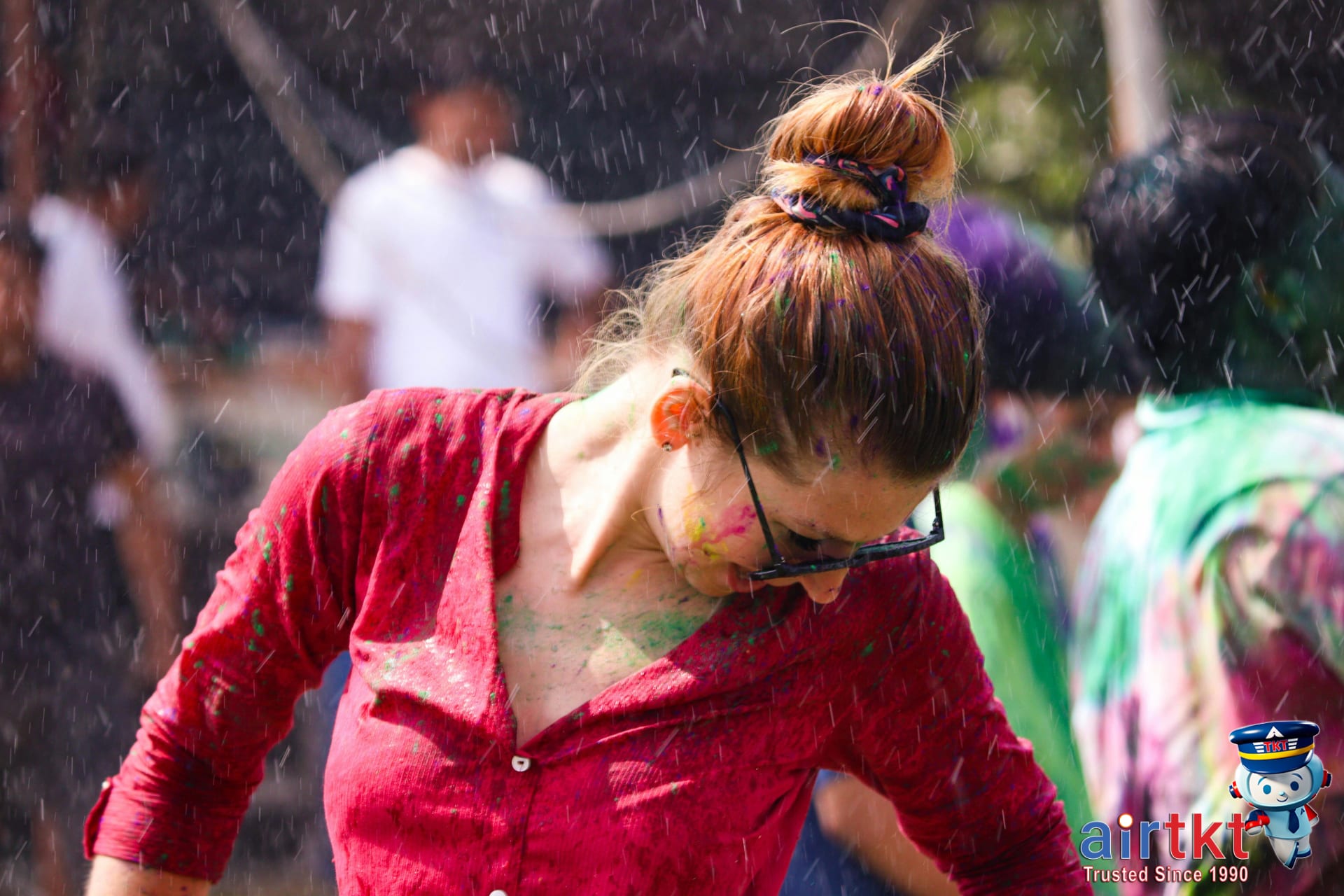
Holi gets wild—and messy. Your packing list should reflect that to keep things fun and comfortable. Start with white clothes you don’t mind staining. Breathable cotton tees and loose pants work best under the Indian March sun. Delhi and Rajasthan in early March hit highs around 85°F, dry and warm, so light fabrics win. In Uttar Pradesh, early March temperatures dip closer to 65°F mornings but warm midday, so layering a light scarf or long-sleeve shirt helps.
Sunglasses or goggles are non-negotiable. Color powders can irritate eyes, so opt for snug-fitting protection. Grab eco-friendly, biodegradable powders to avoid harsh chemicals and respect local traditions. Waterproof phone cases save your device from color-splattered chaos—your camera gear isn’t built for Holi’s splash zones. Bring a refillable water bottle too. Hydration matters when running around for hours under that sun.
Snacks like nuts or energy bars come in handy during long festival days. Sunscreen—SPF 50 or higher—is a must to prevent sunburn despite all the colorful distractions. Shoes? Choose closed toes or sturdy sandals. Last March, Aarav Patel, a software engineer from Jaipur, shared on Reddit how waterproof sandals kept him comfortable when the streets flooded with colors. He packed a pocket first-aid kit for minor scrapes, which came in handy after a slip on wet grounds.
Here’s a quick visual checklist:
- White, old breathable clothes
- Sunglasses or protective goggles
- Biodegradable color powders
- Waterproof phone case
- Refillable water bottle
- Sunscreen (SPF 50+)
- Energy snacks (nuts, bars)
- Comfortable closed shoes or sandals
- Basic first-aid kit
Adjust your layers based on destinations: light and airy for Rajasthan’s desert heat, add a scarf or long sleeves for the cooler, sometimes windy conditions in Uttar Pradesh. I track Holi weather forecasts via AirTkt when booking flights to plan precisely what to bring. Packing right lets you enjoy the mad, colorful chaos without stress or mishaps.
Navigating Crowds and Staying Safe During the Festival
Holi draws huge crowds—sometimes over 10,000 people at major venues like Delhi’s India Gate. Arriving early, around 7–9 AM, or late afternoon after 4 PM often means fewer people. For example, Aarav Mehta, a software engineer from Mumbai, attended a Holi event at Udaipur’s local lake in March 2025 and found the 8 AM slot 40% less crowded than midday. Smaller headcounts not only ease enjoyment but reduce jostling risks.
Local transport can be chaotic during Holi. Public buses in cities like Jaipur run extra routes during the festival; they’re usually safer than shared auto-rickshaws that can get dangerously packed. Pre-booked taxis or app-based rides avoid overcapacity and sharp price hikes common on festival days. Priya Desai, a marketing manager from Pune, shared on Reddit in March 2025 that her prearranged taxi ride to a Holi event in Jaipur cost ₹600 and saved her a stressful 30-minute wait trying to board overloaded rickshaws.
Keep valuables locked down. Many travelers I know use slim money belts hidden under clothes—credit cards plus exactly ₹1,000 in cash cover basics without bulk. Staying hydrated is a must. Temperatures in Varanasi reached 32°C during the 2025 festival week, leading to several reported cases of heat exhaustion. Carry a refillable water bottle; some venues offer free water stations.
If the big city events look overwhelming or sold out, look to towns like Barsana or smaller venues in Rajasthan where authentic Holi experiences come with fewer crowds. Rhea Kapoor, an art curator from New Delhi, attended Holi in Barsana last year (March 2025) and noted the intimate atmosphere with 500–700 attendees, a welcome contrast to the thousands in metro areas.
India’s Ministry of Tourism updated its 2026 festival safety advisory last December, emphasizing crowd awareness, avoiding unauthorized vendors, and registering travel details with local police for foreigners. The official recommendation: “Ensure transportation arrangements are confirmed at least 48 hours before event day.” I track updates like these through AirTkt’s alerts to stay ahead of sudden changes impacting travel plans.
Budgeting Your Holi Trip – Costs and Money Management
Planning a Holi trip for 2-3 people? Expect airfare to claim the biggest slice of your budget. Flights from New York to Delhi, for instance, average $750–$1,200 round-trip per person in March 2026. Staying closer to the festival venues can inflate accommodation costs—from $45 per night for budget hotels in Delhi’s outskirts to $180 for mid-range hotels inside the city.
Food and festival activities usually run moderate expenses. Street food and local markets in cities like Mathura and Vrindavan can keep meal costs under $10 per person per day, while participating in organized Holi events or parties can add $20–$50 daily. Local transport—rickshaws, metros, or short taxis—averages $8–$15 per day, with private cab hires pushing the total upwards quickly.
Here’s a clear view of budget breakdowns within the $2,000 to $5,000 range for a 5-day trip:
| Expense Category | Budget Range ($2,000 Trip) | Higher-End Range ($5,000 Trip) |
|---|---|---|
| Airfare (2 Adults + 1 Child) | $1,500 (economy, connecting flights) | $3,600 (direct flights, premium economy) |
| Accommodation | $225 (budget hotels, outskirts) | $900 (centrally located 3-star hotel) |
| Food & Festival | $150 (street food & free events) | $350 (organized parties & dining) |
| Local Transport | $120 (public transit & rickshaws) | $150 (private cabs) |
| Extras (souvenirs, tips) | $50 | $100 |
Booking with AirTkt helps uncover affordable fares and hotels through smart tools like Flexible Date Search and Nearby Airport Search, which found a Seattle traveler, Mia Larson, a $450 round-trip fare to Delhi in January 2026. Plus, AirTkt’s 24/7 expert support assisted her with a last-minute hotel cancellation, smoothing the trip’s early bumps.
Currency exchange matters—getting some Indian Rupees before arrival avoids steep airport rates. Carrying $200 USD worth in Rupees, exchanged in your home city, covers initial expenses. Use secure payment methods; credit cards with fraud protection work best, but carry some cash for small vendors.
Travel insurance is another must. IT consultant Raj Patel from San Jose booked his Holi trip for February 2026 with insurance covering $200,000 medical expenses and trip interruption. When his flight was delayed for 15 hours, the coverage reimbursed his unexpected hotel night and meals, saving him $350 – money well spent for peace of mind.
Bottom line: Keep airfare and lodging flexible by comparing options on AirTkt, prepare some local cash ahead, and factor in protection like insurance. That way, your Holi experience hits the colors without stress on your wallet.
FAQ: Holi Festival Travel Essentials
What is the best time to book flights for Holi Festival travel?
Booking flights 8 to 12 weeks before Holi usually gets the best rates. For example, Mumbai flights in January 2026 averaged $285 roundtrip when booked early via AirTkt. Prices jump sharply 3-4 weeks before the festival in March.
Can I find budget accommodation near Holi venues?
Yes. Cities like Vrindavan and Mathura offer guesthouses starting at $18 per night in February 2026. Budget hotels 3-5 km from venues can be $25–$40 per night and still provide easy access to festivities.
How should I pack for Holi Festival travel considering the colors and weather?
Bring old, white cotton clothes to absorb color powders without damage. Lightweight layers protect against morning chills—temperatures range from 12°C to 28°C in March. Don’t forget waterproof phone cases and sunglasses to shield eyes from colors.
What local customs should I be aware of during Holi Festival travel?
Respect local traditions like applying color lightly on elders’ cheeks, not the eyes. Also, use natural colors when possible and avoid spraying colored water on strangers without consent to keep the spirit friendly.
When should I arrive to avoid the biggest crowds?
Arriving 2-3 days before Holi’s main day gives you time to enjoy smaller events and local markets. The bulk of celebrations happens on the festival’s final day, March 24, 2026, when crowds peak from 10 a.m. to 3 p.m.
Why is it important to use skin-friendly colors at Holi?
Chemical colors can cause skin irritation or allergic reactions. Skin-friendly, herbal powders reduce these risks—these were legally mandated by state authorities in Rajasthan as of 2025 to protect participants’ health.
Can I change or cancel bookings easily if my Holi Festival travel plans change?
Most airlines and hotels booked through AirTkt offer flexible policies, but fees vary. For example, a Delhi hotel stay canceled 10 days before arrival in January 2026 retained a 70% refund, while some budget flights required $50 change fees.
Conclusion: Making the Most of Your Holi Travel Experience
Planning your Holi trip with a clear focus on early preparation, cultural respect, and practical details sets the stage for an unforgettable experience. Booking flights and hotels early through reliable platforms helps avoid last-minute headaches, especially during peak festival season. Understanding Holi’s customs—like the significance of colors and the spirit of togetherness—ensures your participation feels authentic and respectful, not intrusive.
Packing smart is key: breathable clothes you don’t mind staining, waterproof phone cases, and a small first-aid kit go a long way amid water and powder chaos. Navigating vibrant crowds demands patience and awareness; keep your belongings secure but don’t shy away from joining the celebrations. Budget your trip carefully, including local treats and transport, so you enjoy the festivities without unexpected spending.
Respect for local traditions enhances the magic of Holi. Locals often appreciate visitors who ask before applying colors and learn a few Hindi phrases like “Happy Holi” or “Dhanyavaad” (thank you). This approach turns a lively festival into a meaningful cultural exchange.
I track flight and hotel promos through AirTkt, especially during Holi season when prices can spike unpredictably. Their Flexible Date Search helped me snag a roundtrip from San Francisco to Delhi in March 2025 for $743, booked three months ahead. Plus, their 24/7 support made last-minute changes hassle-free.
Start your Holi plans now with AirTkt’s real-time fare comparisons and exclusive discounts. That way, you focus on what matters most—immersing yourself in one of India’s most colorful and joyful celebrations without stress.
References
For accurate travel information, policies, and guidelines, these official sources provide up-to-date details:
- Incredible India – India’s official tourism website
- Ministry of Tourism, India – Government travel regulations and updates
- Transportation Security Administration (TSA) – U.S. airport security and screening rules
- Federal Aviation Administration (FAA) – U.S. flight safety and airspace data
- International Air Transport Association (IATA) – Global airline standards and travel advisories
I track changes on these sites regularly and use AirTkt to book flights with verified airline policies and competitive pricing.