

Manage Flight Delays and Cancellations Effectively
Flight delays and cancellations are common disruptions that every traveler should understand and prepare for. According to the Federal Aviation Administration (FAA), a flight delay occurs when an aircraft’s departure is postponed beyond its scheduled time, while a flight cancellation means the airline has officially called off the flight altogether. Both scenarios can significantly alter travel plans, requiring adaptability and timely action.
Several recurring factors cause these delays and cancellations. The most frequent culprit is weather conditions: storms, fog, heavy winds, and snow can make flying unsafe or ground flights temporarily. Technical issues with aircraft, such as mechanical failures, also lead to unexpected hold-ups or cancellations to ensure passenger safety. Additionally, airlines sometimes face staffing shortages, including insufficient pilots or crew members, which disrupt scheduled flights. Airport congestion and air traffic control restrictions further contribute to delays, especially at busy hubs.
For travelers, these interruptions can lead to a chain reaction of inconveniences. Missing connecting flights is a common consequence, which may require rebooking and could extend total travel time by hours or even days. Important appointments, business meetings, or family events may be jeopardized, causing stress and frustration. The uncertainty also brings emotional impacts, ranging from anxiety to helplessness, especially without prior knowledge of rights and options.
Being well-informed and proactive is key to managing these situations calmly. Checking flight status frequently through reliable sources — including the airline’s official channels or AirTtkt’s real-time updates — can provide early warnings. Travelers should prepare contingency plans, like knowing alternative flights or airport lounges. Familiarity with airline policies on rebooking, refunds, or compensation empowers passengers to make quick decisions that minimize inconvenience.


Ultimately, accepting that delays and cancellations are sometimes unavoidable helps maintain a balanced perspective. With the right mindset and tools from AirTtkt, travelers can navigate disruptions efficiently and safeguard their travel experience.
Take Immediate Steps When Flight Disruptions Occur
Flight disruptions can strike unexpectedly, turning travel plans upside down. Acting promptly and efficiently at the first sign of a delay or cancellation can make a significant difference in securing alternative arrangements. Here’s a step-by-step plan every traveler should follow to navigate disruptions with confidence and minimize stress.
Get in Line at the Airline Help Desk Immediately
As soon as you hear about a delay or cancellation, head to the airline’s help desk without hesitation. Being physically present puts you ahead of callers who might face long wait times. Frontline agents can clarify your options, provide vouchers, and start rebooking right away. This in-person approach can sometimes trigger priority assistance for passengers with urgent needs like connecting flights or special accommodations.
Call Airline Hotlines Simultaneously
While standing in line at the desk, don’t just wait passively. Pick up your phone and call the airline’s customer service hotline at the same time. This dual approach increases your chances of faster assistance. Hotline agents might access different rebooking tools or last-minute availability that agents at the desk do not immediately see. It can also put you in contact with specialists who handle complex itineraries or frequent flyer exceptions.
Use Airline Mobile Apps for Self-Service Rebooking
Many major airlines now offer mobile apps with powerful self-service features. Download or open the app to quickly check your updated flight status and explore rebooking options. Apps often give you the ability to select alternative flights, request refunds, or manage meals and accommodations without waiting for an agent. This can save precious time and help you secure the best alternative flights during peak disruption periods.
Sign Up for Real-Time Flight Alerts
Real-time notifications delivered via text, email, or app push messages ensure you stay updated instantly. Register your contact details with your airline and with AirTtkt during booking to receive alerts. These updates often include gate changes, delays, cancellations, and even compensation notices, allowing you to proactively manage your travel plans.
Coordinate In-Person and Phone Efforts
Combining in-person presence with phone outreach creates an efficient, multi-channel approach to resolving flight disruptions. For example, while waiting in line, if an agent offers limited options, your call counterpart may find another flight on a partner airline or further down the day. Quickly relay those alternatives back to the agent at the desk. This teamwork speeds up rebooking and increases your chances of leaving the airport sooner.

Know Passenger Rights for Flight Disruptions
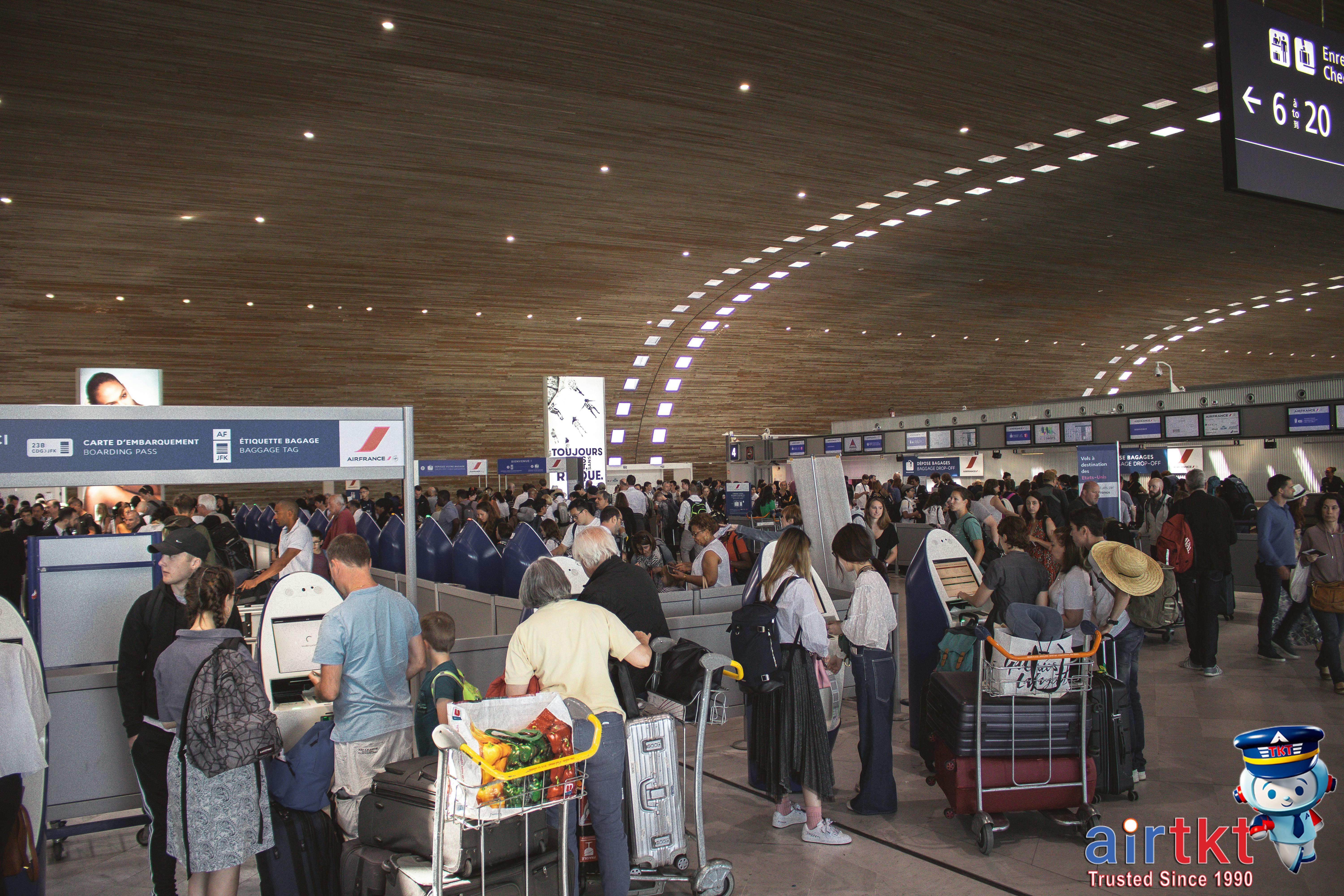
Flight delays and cancellations can disrupt travel plans and cause significant stress. Fortunately, both U.S. and international regulations offer protections to passengers facing these challenges. Understanding your rights empowers you to secure appropriate assistance, compensation, and accommodations when flights go awry.
U.S. Department of Transportation Rules
In the United States, the Department of Transportation (DOT) mandates that airlines clearly communicate policies for delays and cancellations. While U.S. carriers are not legally required to compensate passengers for delays, they must refund tickets for canceled flights or if the airline significantly changes the schedule and the passenger chooses not to travel.
Additionally, if you are involuntarily bumped from an overbooked flight, the DOT requires airlines to provide compensation depending on the delay length and ticket price. Airlines must also offer prompt access to toll-free customer service numbers and disclose any relevant delay information. However, airlines aren’t obligated to provide meals, lodging, or other amenities during disruptions, making it essential for passengers to clarify these details.
EU Regulation 261/2004 Passenger Protections
Passengers flying within, into, or out of the European Union benefit from EU Regulation 261/2004, a comprehensive passenger rights law. This regulation applies to all flights operated by EU-based airlines and offers protections beyond U.S. rules, including specific compensation amounts for delays, cancellations, and denied boarding.
Key rights under EU 261 include:
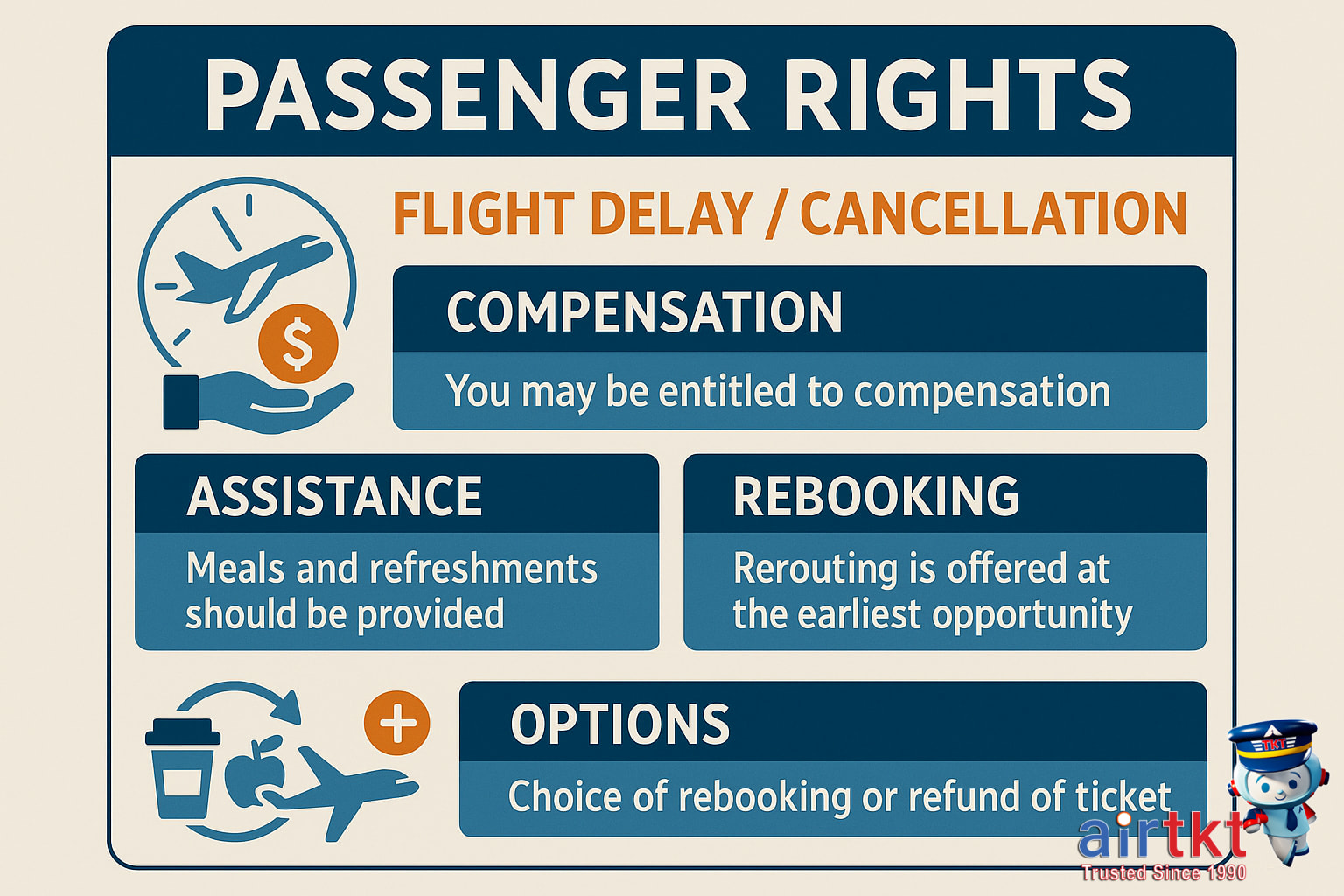
- Right to rerouting or refund: If your flight is canceled or delayed significantly, you can opt for a refund or alternative transportation.
- Meals and refreshments: Airlines must provide food and drinks depending on delay length.
- Accommodation: Overnight delays require airlines to offer hotel stays and transport.
- Compensation: Depending on delay duration and distance, you may be entitled to €250 to €600 (~$270-$650) in compensation.
Rerouting, Refunds, and Compensation Criteria
Both in the U.S. and Europe, your rights to rerouting and refunds are foundational protections. Airlines must rebook you on the earliest possible flight or provide a ticket refund if you decide not to travel. To qualify for compensation under EU rules, delays must typically exceed three hours, cancellations should be notified less than 14 days in advance, and denied boarding must be involuntary.
In the U.S., compensation rules are more limited and center on denied boarding due to overbooking. Keep in mind that extraordinary circumstances like severe weather or security threats often exempt airlines from compensation obligations.
Documenting and Asserting Your Rights
When dealing with flight disruptions, documenting every interaction is critical. Save receipts for meals, lodging, and transport expenses related to delays, as these can support reimbursement claims. Keep copies of all correspondence with the airline, including emails, text messages, and social media exchanges.
When requesting compensation or accommodations:
- Contact the airline promptly via official channels.
- Provide detailed information including flight number, booking reference, and disruption details.
- Clearly state your compensation or accommodation requests aligned with applicable regulations.

When and How to Request Accommodations
Request meals, hotel stays, or transport only when the delay or cancellation is within the airline’s control. Airlines typically provide these if your delay exceeds a certain threshold—usually 2-4 hours for meals and overnight for lodging. Always ask politely but firmly at the airline’s customer service desk or via their online platforms.
If initially refused, escalate the request through official complaint channels or regulatory bodies like the DOT or the European Consumer Centre. Persistence can often lead to successful reimbursement or compensation.
Knowing your passenger rights helps alleviate uncertainty and recover value during flight disruptions. For hassle-free travel planning and support, rely on AirTtkt to guide you through airline rules and find the best deals.
Rebook Flights Quickly and Smartly
When unexpected changes throw off your travel plans, rebooking efficiently is essential to minimize stress and cost. Using airline apps offers the fastest way to secure a new flight without waiting in line or on hold. Start by logging into the airline’s app and navigating to your booking. Look for options like “Change Flight” or “Manage Booking.” Many apps will display available alternative flights with real-time seat availability and rate differences, allowing you to select a suitable new itinerary instantly.
If the app isn’t an option or you prefer in-person assistance, airline service counters at airports remain reliable resources. Approach the counter with your booking reference and identification. Clearly explain your situation and preferred travel timing. Agents can pull up alternate flights, including waitlisted seats, and help apply any fare credit or waive change fees when policies allow. Be patient but persistent, especially during peak travel disruptions or irregular operations.
Understanding your fare class and the associated change rules can save you money during rebooking. Basic economy tickets are often less flexible or non-changeable, while premium economy, business, and refundable fares usually provide greater leeway for modifications. Checking fare conditions beforehand—either through the airline’s app or your AirTtkt booking confirmation—prepares you for potential fees or fare differences on your new flight.
When direct rebooking options are limited, exploring partner airlines or alternate routes can unlock better schedules and prices. Frequent flyers benefit from alliance networks like Star Alliance or Oneworld, where partner airlines may honor your ticket for reroutes. For example, if your direct flight is canceled, requesting rebooking on a partner carrier flying a similar route could save hours. Also, consider flights with layovers or connecting cities that might bypass heavy disruption zones.
Backup flights and flexible travel alternatives provide essential safeguards for uncertain itineraries. Booking refundable or changeable tickets as a secondary option—even if initially more costly—enables rapid switching if your original flight is delayed or canceled. Similarly, adding an open-ended return or one-way ticket grants additional timing flexibility. Travelers with flexible schedules should also monitor flights outside peak hours or dates to catch less crowded, cheaper availability.

Stay Calm and Use Delay Time Productively
Flight delays and cancellations can be frustrating, but managing your stress and making the most of your downtime will improve your travel experience. One effective way to upgrade your wait time is by accessing airport lounges. These spaces offer comfort, quiet, and free amenities like snacks, drinks, and Wi-Fi—helping you relax or work peacefully away from the crowded terminal.
If your delay extends overnight or for several hours, consider booking a day room or a nearby hotel. Many airports offer convenient short-stay rooms or are close to hotels with flexible check-in options. Resting properly will recharge you for your journey and reduce travel exhaustion.
Speaking of insurance, travel coverage can significantly ease your financial stress. Review your policy to understand what costs—such as meals, accommodations, or transport—you can claim during disruptions. Filing claims promptly after your delay increases your chances of reimbursement.
Stress management techniques also come in handy during these periods. Practice mindfulness: deep breathing exercises, meditation apps, or simple stretches help calm your mind and body. Staying hydrated and avoiding excess caffeine reduce anxiety symptoms, making your wait more bearable.
Productivity doesn’t have to pause with travel delays. Use the opportunity to catch up on work with your laptop or tablet, or dive into reading a book or catching up on favorite podcasts and movies. Organizing travel photos or planning upcoming trip segments also turns downtime into meaningful progress.
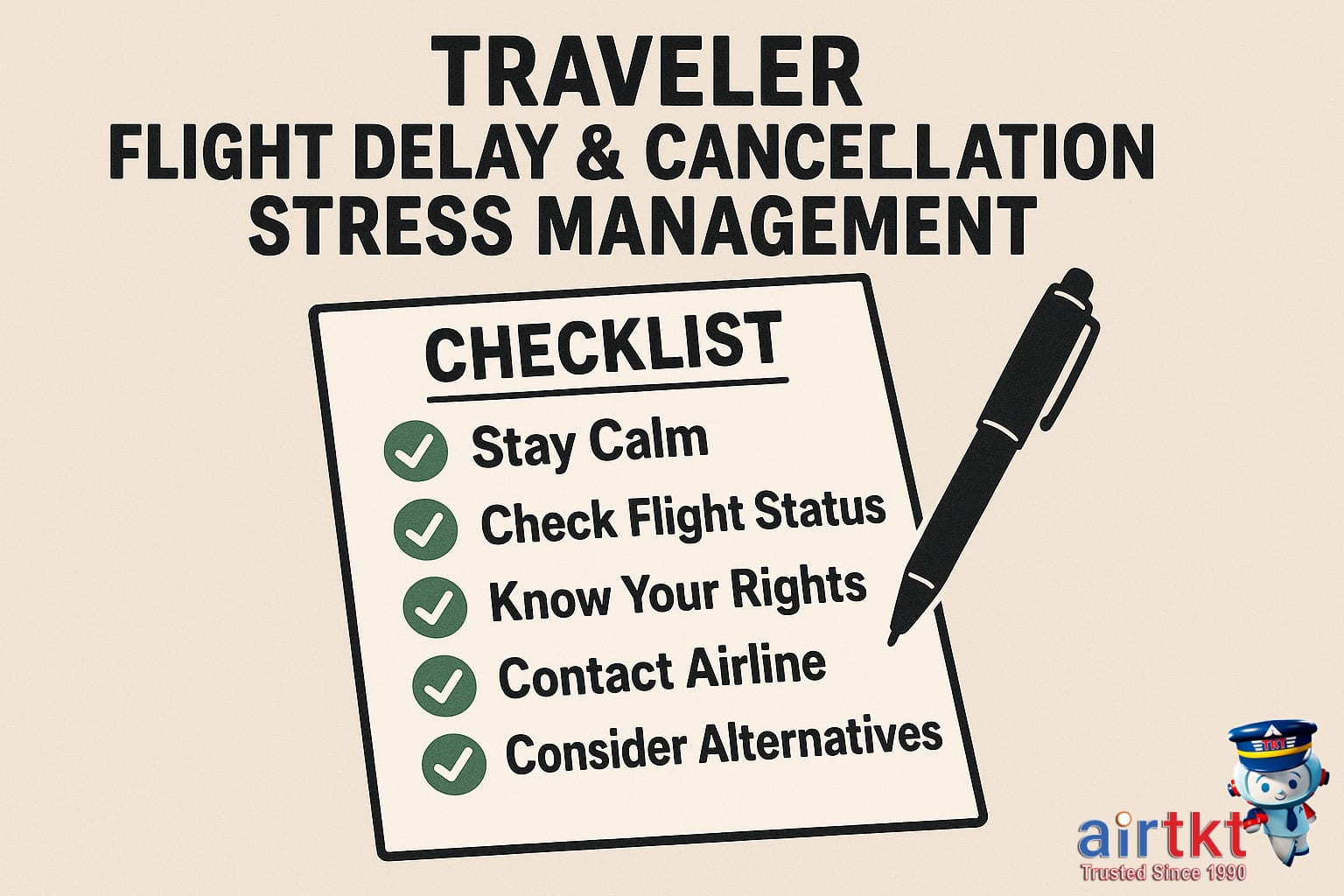
By staying calm and resourceful during delays, you protect your well-being and even turn disruptions into opportunities. For affordable flights, hotels, and travel insurance that support smoother journeys, visit AirTtkt and book with confidence.
Answer Frequent Questions About Flight Disruptions
What to do after learning of a flight delay?
As soon as you hear about a flight delay, confirm the updated departure time through official airline channels. Notify anyone expecting you and review alternate flights on the airline app or site. Staying proactive helps reduce stress and opens options for rebooking or compensation.
How to use airline apps for flight disruptions?
Airline apps offer real-time updates on your flight status, gate changes, and delay causes. Use them to manage check-in, receive push notifications, or even request refunds and rebookings instantly. These tools keep you informed and save valuable time during disruptions.
When to request a refund versus rebooking?
If your flight is canceled or delayed significantly, consider your schedule flexibility. Request a refund if you no longer wish to travel or find better options elsewhere. Opt for rebooking through the airline or AirTtkt if you want to maintain your travel plans without extra fees.
Why know passenger rights during cancellations?
Understanding passenger rights empowers you to demand fair treatment and compensation. Airlines must adhere to regulations protecting travelers in delays or cancellations, including meals, lodging, or refunds. Knowing these rights helps prevent being shortchanged during stressful disruptions.
Can I get compensation for delay-related expenses?
Yes, many airlines offer reimbursement for reasonable expenses like meals or accommodations caused by delays. Keep detailed receipts and check your airline’s compensation policies and passenger rights regulations to determine eligibility for such claims.
How to stay calm during long airport waits?
During long waits, maintain calm by staying hydrated, stretching, and engaging in relaxing activities like reading or listening to music. Use airport lounges if possible, and keep your phone charged for updates, helping reduce anxiety amid delays and cancellations.
How to track receipts and documents for claims?
Organize all travel documents, receipts, and correspondence in a dedicated folder or app. This makes filing claims for refund or compensation easier and faster. Detailed records support your case and simplify navigating passenger rights after disruptions.
Prepare Proactively for Travel Disruptions
Flight delays and cancellations can throw a wrench into even the best-laid travel plans. Being prepared with a clear action plan can ease the frustration and help you regain control quickly. Here’s a checklist of immediate steps to take when your flight is disrupted:
- Contact the airline immediately via their app, website, or customer service line.
- Ask about alternative flights or rebooking options.
- Keep all boarding passes, receipts, and documentation related to your travel expenses.
- Document any communication with airline representatives, including names and times.
- Check your travel insurance policy to understand coverage for delays or cancellations.
- Know your passenger rights according to your departure or arrival country regulations.
Keeping receipts and detailed records is crucial, especially if you need to file claims or request compensation. Receipts for meals, accommodation, and transportation can significantly simplify reimbursement processes.
Airline apps have become invaluable tools for travelers facing disruptions. They provide real-time updates, rebooking options, and customer service chat features, allowing you to manage your itinerary faster and more efficiently. Don’t rely solely on one communication channel—use phone calls, social media, and in-person help desks for the best response.
Knowing your passenger rights can empower you to demand fair treatment and compensation from airlines. Regulations such as the US Department of Transportation guidelines or EU261 in Europe outline specific rights, including meal vouchers, accommodation provisions, and refunds.
Booking with AirTtkt means more than just affordable fares. Our platform offers easy booking, real-time updates, and dedicated support that can guide you smoothly through any travel disruptions. Whether you need last-minute rebooking assistance or expert advice on travel insurance, AirTtkt has you covered for a stress-free journey.