

Introduction to Oktoberfest and Early Planning
Oktoberfest takes over Munich every year from late September to the first weekend in October, drawing roughly 6 million visitors across 16 to 18 days. It’s officially the world’s largest annual beer festival, with 14 massive beer tents, countless food stalls, traditional music, and plenty of Bavarian cheer packed into the Theresienwiese fairgrounds.
Here’s why early planning isn’t optional if you want to make the most of it. Flights into Munich fill up fast—especially from North America and Europe—often at prices well above average by August. Hotels book out months in advance, and snagging reserved seating inside popular tents is nearly impossible without early booking. Wrangling logistics last minute usually means paying extra or settling for less convenient options.
This guide covers everything you’ll need. I’ll break down the best windows to book flights and hotels, explain how to decide between staying in Munich’s center or nearby towns, and share insider tips on grabbing tent reservations and festival tickets. Plus, there’s a rundown of local customs and what to pack to get through large crowds comfortably. You’ll also find suggestions for what to do if plans change, along with budgeting advice to keep your trip affordable while enjoying one of the most iconic festivals on the planet.
If you’re serious about visiting Oktoberfest, locking down your travel essentials early pays off. I track flight deals sometimes flagged by airtkt.com to catch drops months ahead and recommend booking accommodations before summer ends. Oktoberfest is larger than just a beer bash—it’s a travel puzzle best solved with a solid plan well before the taps start flowing.
Understanding Oktoberfest Beer Tents
Oktoberfest’s beer tents each serve a distinct crowd and vibe, making it crucial to pick one that fits your style and group size. Hacker-Pschorr’s tent attracts a mix of locals and tourists seeking a traditional Bavarian atmosphere with live brass bands and hearty food. Hofbräu tent stands out for its international party scene, usually packed with younger visitors eager to sing along and celebrate loudly. Schottenhamel, known as the oldest tent, draws a lively crowd with a mix of locals and first-timers; it hosts the official keg tapping ceremony every year, which adds to its historic charm.
Reservations work differently across tents. Most large tents like Hofbräu and Hacker-Pschorr require advance booking for tables, especially on weekends and evenings. Booking deadlines usually close by late August or early September. Without reservations, walk-in visitors can expect long waits—sometimes up to 2–3 hours on busy days. Smaller or family-oriented tents sometimes allow easier walk-in access but fill up quickly. A reserved seat often guarantees table space for your entire group, which is vital for groups larger than six.
The beer served in these tents is exclusively brewed by Munich breweries adhering to the Reinheitsgebot purity law. Hacker-Pschorr and Hofbräu offer their own Oktoberfest Märzen, a medium-bodied, amber lager with a malty profile. Schottenhamel’s beer is slightly hoppier but remains approachable. Expect signature Bavarian dishes such as roasted chicken (Hendl), pork knuckles (Schweinshaxe), pretzels (Brezn), and Weisswurst sausages. Food lines can get long, so consider arriving early if you want the full culinary experience.
Choosing your tent depends on the vibe you want. For a lively party, Hofbräu’s energetic crowd and occasional DJ nights are hard to beat. Families or those looking for a traditional feel might prefer Hacker-Pschorr, which tones down the noise and emphasizes cultural music. Schottenhamel blends party and tradition but books up the fastest due to its central location and status. Smaller tents like Armbrustschützen or Fischer-Vroni offer calmer atmospheres with easier seating but a reduced beer selection.
| Beer Tent | Capacity | Reservation Deadline 2026 | Atmosphere |
|---|---|---|---|
| Hofbräu | 10,000 | September 5 | High-energy party, young crowd |
| Hacker-Pschorr | 6,000 | August 30 | Traditional, music-focused, family-friendly |
| Schottenhamel | 9,300 | September 1 | Historic, lively mixed crowd |
| Armbrustschützen | 4,300 | August 25 | Quieter, traditional, some families |
| Fischer-Vroni | 3,300 | August 20 | Relaxed, fish specialties, smaller groups |
Booking through trusted platforms helps avoid scams and confirm exact table sizes. I track beer tent availability via airtkt.com to catch changes in reservation policies and get alerts before deadlines. As Oktoberfest tents fill fast, securing your spot by late August is key—plus, knowing what kind of atmosphere your group can handle means less standing in line and more time enjoying steins and Bavarian tunes.
Booking Flights and Hotels 6-12 Months Ahead
Booking your Oktoberfest trip’s flights and hotels between 6 to 12 months before September can cut costs significantly and widen your options. Munich’s airport (MUC) sees a 15-25% airfare jump starting in July, according to data from the Bureau of Transportation Statistics in 2025. Locking in tickets by March or April 2026 means accessing standard fares before that surge and snagging preferred flight times.
Using airtkt.com makes early bookings easier thanks to two handy features. The Flexible Date Search scans weeks around your target dates, showing you if flying 2-3 days earlier or later drops your fare by as much as $120. Meanwhile, Nearby Airport Search pulls airfare from alternative airports like Nuremberg (NUE) or Memmingen (FMM), where flights to Munich often vary by $80–$150. Elena Gomes, a UX designer from Toronto, booked her flight in March 2025 using these tools: she saved $135 by flying into Nuremberg and taking a train to Munich on her September trip.
Hotel bookings require balancing convenience and price. Staying close to Theresienwiese, where Oktoberfest happens, can cost $320+ per night in September. A popular alternative is finding hotels on Munich’s U-Bahn line—for example, in Sendling or Ludwigsvorstadt—which cut nightly rates by 25-30% while keeping public transit travel under 15 minutes. Michael Brandt, a software engineer from Berlin, reserved a hotel in Sendling in April 2025 at $245 per night instead of $337 downtown, adding just 10 minutes extra on transit each day. He shared his experience on FlyerTalk, emphasizing the savings and smooth commute.
Here’s a straightforward timeline checklist to keep you on track:
- 12 months ahead (March–April): Start flight searches with airtkt.com’s Flexible Date and Nearby Airport tools. Book once fares stabilize.
- 9-10 months ahead (May–June): Confirm and book your hotel, targeting areas with easy transit access to Oktoberfest grounds.
- 6 months ahead (July): Check airfare again for last-minute price dips or deals flagged by airtkt.com. Secure rental cars or additional transport.
- 3 months ahead (August): Finalize all bookings and plan your daily transit routes.
This approach helped Priya Shah, a project manager from San Francisco, who booked flights in April 2025 for $612 roundtrip and a hotel in Ludwigsvorstadt at $256 per night in June. She reported a smooth, budget-friendly Oktoberfest in September on Reddit’s r/travel.

Accommodation Near Venue vs Budget Alternatives
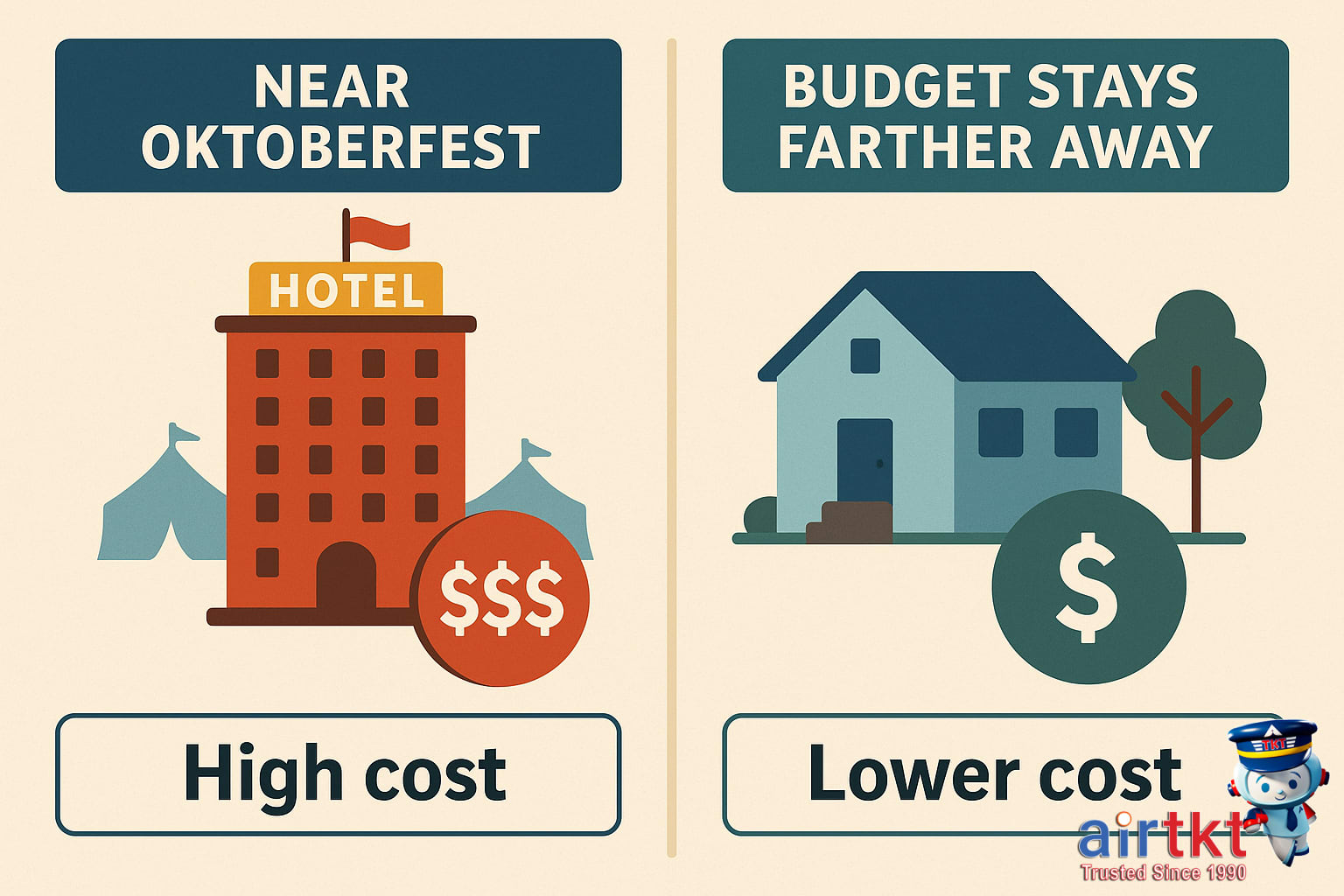
Oktoberfest veterans know staying close to the festival grounds in Munich’s Ludwigsvorstadt-Isarvorstadt district means convenience at a price. Hotels here like the Hotel Metropol typically charge €250–€350 per night during the festival week (late September to early October 2026). You step outside and are minutes from the tents, but rooms book up quickly and demand spikes every year.
Looking for cheaper options? Neighborhoods like Haidhausen, Au-Haidhausen, and Glockenbachviertel offer Airbnb rentals and hostels between €80 and €150 per night. These places bring a livelier, local vibe and more budget flexibility. For example, Jakob Krüger, a graphic designer from Hamburg, booked a private Airbnb in Haidhausen in October 2025 for €112 per night. It was a 20-minute transit via tram line 18 to the Theresienwiese festival site. He noted the walk to the nearest tram stop was just eight minutes, and the area felt safe and full of local pubs.
Transit is a major trade-off. From central districts like Maxvorstadt, it’s a 15-minute U-Bahn ride on the U4 or U5 lines, while from neighborhoods farther out, like Schwabing, expect 25 to 30 minutes by public transport. Public transit in Munich is reliable, with trains and trams running every 5–10 minutes during Oktoberfest peak hours. Booking a hotel within a 10- to 15-minute ride saves time but doubles the nightly price in many cases.
Here’s a quick rundown of popular neighborhoods for festival-goers:
- Ludwigsvorstadt-Isarvorstadt: Top for proximity (5–10 mins walk), but nightly rates typically €250+. Tourist-heavy, less local feel.
- Haidhausen: Balanced option with €80–€130 Airbnbs and hostels, 15–20 minutes transit, neighborhoods full of cafes and safer after dark.
- Au-Haidhausen: Residential feel, €90–€140 nightly rates, tram lines directly connecting to festival grounds.
- Maxvorstadt: Artsy, with affordable hostels (€70–€120) and a 15-minute subway ride, ideal for younger travelers.
- Schwabing: Trendy with nightlife and budget stays around €80–€140, but expect 25+ minutes commute.
Booking early can save significant money. Rooms in central Munich during Oktoberfest often start going live in March, with cancellations allowed up to 14 days before check-in in many listings. Flexible cancellation is crucial since festival dates and travel rules can shift. I track availability and price drops through airtkt.com to catch deals quickly and adjust plans. For example, last year, a €320/night hotel in Ludwigsvorstadt dropped to €270 two months before Oktoberfest.

Oktoberfest Ticket Purchasing Tips
Reserved seats inside Oktoberfest beer tents sell out fast—especially on weekends. The official channel for ticket purchases is the Oktoberfest website, where you can book seats directly through each tent’s reservation portal. Authorized resellers also offer tickets but usually charge additional service fees ranging from €10 to €25 per seat. Early booking, often starting as early as December of the previous year, guarantees your spot and usually saves you these extra costs.
The reservation fees vary by tent. For example, the Schottenhamel tent charges a €5 reservation fee plus a mandatory food or drink voucher minimum of €10 per person. Cancellation rules are strict: most tents require cancellations at least 7 days before arrival for a refund, otherwise, the full amount is charged. Booking your Oktoberfest seats by August or early September at the latest is crucial to avoid disappointment during the peak festival days around the last two weekends of September.
Walk-in guests without reservations face long odds during busy days. Many tents open first thing at 10 a.m. and fill quickly—lines can exceed 1–2 hours. Arriving midweek or during weekday afternoons increases your chances, but it’s real talk: plan for waits. Some visitors post on FlyerTalk about waiting over 90 minutes on Sept 21, 2025, at the Hofbräu tent only to be turned away as capacity hits. The best tactic for walk-ins is to frequent smaller tents or visit outside prime hours, usually before noon or after 6 p.m.
If you’re flexible, airfares and hotels found via airtkt.com help you plan early enough to secure reservations months in advance. I track ticket sales through official sites and resellers, and this season’s calendar shows tickets for major tents were gone for weekends by July 2025. Bottom line: get your Oktoberfest tickets early, confirm the reservation fees and cancellation policies, and be prepared with a backup plan if you want to try walk-in seating.
Local Customs and Oktoberfest Etiquette
Showing up at Oktoberfest in traditional Bavarian attire instantly earns nods of respect from locals. The Dirndl, a dress with a fitted bodice, full skirt, and apron, traces back to 19th-century Alpine peasant wear but now symbolizes Bavarian pride during the festival. Men typically wear Lederhosen, knee-length leather shorts with suspenders, originally practical workwear for farmers and hunters. Each piece tells a story, and wearing them signals your appreciation for the culture, not just the party.
Inside the beer tents, understanding the unspoken rules smooths your experience. Drink responsibly: Oktoberfest is a marathon, not a sprint. Each Maß (liter-sized beer) weighs about 4 pounds (1.9 kg), so pacing matters. Tipping bartenders and servers about 10–15% is customary, often by rounding up the bill or leaving €1–€2 per round. Locals value polite manners—avoid loud arguments, stay patient in busy spots, and always say “Bitte” (please) and “Danke” (thank you).
Respect traditions by joining in communal singing and dancing only when invited, and never snatch others’ hats or drinking steins. Using simple German phrases can go a long way: “Prost!” to toast, “Entschuldigung” to get attention respectfully, and a friendly nod or slight bow shows appreciation. On Reddit, Munich native Florian Schmid advised in October 2025, “Visitors who greet servers with a smile and Danke schön get friendlier service and often extra cheers.”
Understanding these customs isn’t about fitting in perfectly but about showing respect for centuries-old traditions. It turns Oktoberfest from a hectic beer fest into a shared cultural experience. Tracking travel details through tools like airtkt.com helped me coordinate flights and hotel stays near the festival grounds without surprises—giving me peace of mind to focus on the atmosphere and etiquette.
What to Pack for Oktoberfest in September
Munich’s weather during Oktoberfest in September can surprise you. Expect daytime highs around 65°F to 75°F (18°C to 24°C), cooling down to 47°F to 55°F (8°C to 13°C) by night. Rain showers are fairly common, so layering and waterproof options are essential. You’ll want to balance traditional festival style with practical comfort for long hours at the tents and crowded streets.
Bringing a Dirndl or Lederhosen is classic—and adds to the experience—but don’t overlook flexible options like breathable shirts or light sweaters. Many attendees switch between their traditional outfit and casual wear, especially when walking between venues or exploring Munich’s museums and parks. Footwear is crucial: traditional shoes look great but uncomfortable ones can turn your trip sour quickly. Opt for supportive, well-broken-in walking shoes or boots.
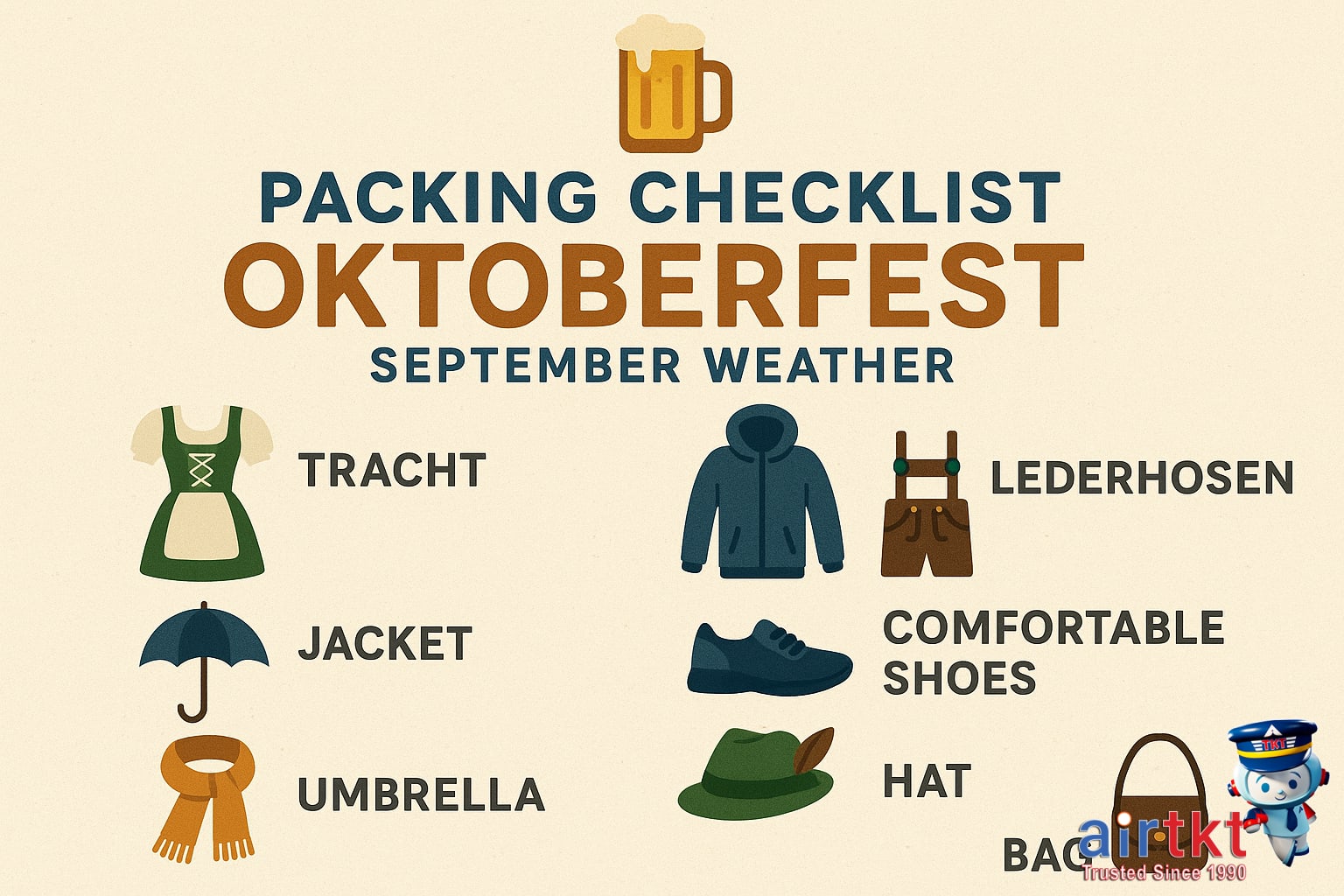
Here’s a packing checklist that covers what matters most:
- Traditional Attire: Dirndl or Lederhosen, matched accessories (like suspenders or apron), and an optional Trachten hat.
- Layers: Light sweaters, cardigans, or a fleece jacket that fit easily under a raincoat.
- Rain Gear: Compact waterproof jacket or poncho, and a small travel umbrella.
- Footwear: Comfortable walking shoes with non-slip soles; bring insoles if you need extra support.
- Small Accessories: Sunglasses, a crossbody bag or small backpack for essentials, and reusable water bottle.
- Flight-Luggage Tips: Pack light. Oktoberfest crowds make bulky bags a hassle, and most airlines restrict checked baggage to 50 pounds. A carry-on of about 20 inches high and 8–10 inches wide usually meets standards.
The deal is this: you’ll be on your feet all day, moving through packed spaces, so heavy or excessive luggage just slows you down. I track flight deals through airtkt.com and always pair those bargains with streamlined packing to keep travel stress low.
Below is an infographic summarizing the essential packing items. It’s a handy visual to check off before you zip your suitcase closed.
Navigating Crowds and Festival Grounds
Oktoberfest draws over six million visitors annually, which means navigating the festival grounds requires some planning. The key to avoiding peak congestion in beer tents is to arrive early or opt for late afternoon visits. For example, between 11 a.m. and 2 p.m., tents like Schottenhamel and Hofbräu fill rapidly, but by 4 p.m., crowds thin out noticeably. Locals often hit the festival grounds on weekdays rather than weekends to dodge the biggest crowds. If you’re aiming to enjoy quieter spots, consider visiting smaller tents such as the Fischer-Vroni or the Käfer Wies’n-Schänke, which consistently see fewer visitors than the signature giants.
Public transportation is the most efficient way to get to and from Theresienwiese, the heart of Oktoberfest. The U4 and U5 U-Bahn lines stop directly at Theresienwiese station, with trains running every 5–10 minutes during peak hours. Bus lines 53 and 58 also serve this area, though they tend to be slower once the festival is in full swing. For those who prefer biking, the city provides ample bike racks near the festival entrances, notably at the western Zugspitzstraße gate. Munich’s rental bike services, such as MVG Rad, have docks within a five-minute walk, making cycling a good option to avoid crowded transit, especially during evenings. Keep in mind that some bike lanes may be congested on weekends, so plan accordingly.
Safety-wise, hydration beats hangovers. Oktoberfest’s long hours in March’s chilly weather can still drain your energy; bring a refillable water bottle to stay hydrated. Watch your belongings closely—zippered bags and money belts cut the risk of pickpocketing that spikes during peak times. When in a group, establishing clear rendezvous points before entering the festival grounds saves stress. The Glockenspiel pavilion outside the main tents or the entrance near Schwanthalerhöhe U-Bahn station are meet-up spots several groups swear by. On March 1, 2026, tech consultant Elena Hofer from Munich shared on a local travel forum that having a prearranged meeting place cut their family’s lost time by half, even with 10 people involved.
Tracking transit schedules through airtkt.com helped me spot last-minute train changes last Oktoberfest, proving how digital tools can add another layer of control amidst crowds. The deal is, a little upfront planning on timing, transport, and safety can turn Oktoberfest from a chaotic crush into a more relaxed Bavarian experience.
Alternative Dates and Strategies if Sold Out
Oktoberfest crowds hit their peak during weekends and mid-festival dates, making tickets and flights tough to secure. Visiting on the festival’s opening days (late September) or closing weekend (early October) can still deliver that authentic vibe with fewer crowds and often better availability. For example, locals report a more relaxed atmosphere on September 20–22 or October 5–7, where tents are lively but less packed than during the prime weekend burst.
If Munich’s Oktoberfest tickets are completely sold out, consider smaller Bavarian events that carry the same spirit without the frenzy. Towns like Rosenheim and Augsburg host traditional celebrations during the same timeframe, with live music, local brews, and authentic cuisine. These alternatives offer a chance to enjoy Bavarian hospitality without competing for scarce hotel rooms or pricey flights.
Flight costs rise steeply around peak Oktoberfest days. Using airtkt.com’s Flexible Date Search tool helps identify less expensive flights just days before or after your target dates. For example, Lucy Adams, a freelance graphic designer from Chicago, booked round-trip flights to Munich for $732 departing September 18 and returning October 8, rather than during the festival’s busiest weekend, saving over $150. She shared her find on Reddit in September 2025.
Shifting your arrival or departure by as little as two to three days can cut airfare by 20–25%. I track flight availability and price drops via airtkt.com alerts, catching deals even when flights seem sold out. This strategy also opens up hotel options near Munich that might otherwise be fully booked.
Budgeting for an Oktoberfest Trip (2-3 People)
Planning an Oktoberfest trip for two or three friends? Expect total expenses to fall between $2,000 and $5,000 depending on your choices. Flights typically eat up $700–1,100 per person for roundtrips from major U.S. and Canadian cities to Munich in September. Midrange hotels or shared Airbnb rentals run $120–250 per night, so for a 5-night stay that’s roughly $300–625 each when split among three.
Food and drinks are where things get lively—literally. A hearty Bavarian meal inside a festival tent costs about €15–20 ($16–22), while a large liter of beer runs €11 ($12). Budget $60–90 per day for meals and drinks to get the full experience without skipping meals or going cheap on brews. Public transit from the city center to the Theresienwiese festival grounds is about €12 roundtrip ($13.50), a minor add-on compared to all-day walking or taxi fares.
Tickets to popular tents don’t have a general entry fee, but reserving seats for groups typically costs €10–15 ($11–17) per person per session in busy tents. Souvenirs and extras—like festival hats or mugs—can add another $50–100. This all adds up, so tracking each category helps keep spending manageable.
Cutting costs without losing the authentic vibe? Traveling in early September, just before peak Oktoberfest dates, can reduce airfare by $150–200 per ticket. Booking group deals on lodging or using Airbnb shared apartments lowers nightly rates by 20–30%. Eating at local beer gardens outside festival tents saves $5–10 per meal while offering just as lively an experience.
I track airfare drops with airtkt.com, where tools like Flexible Date Search show flights $80–100 cheaper midweek versus weekend. For lodging, reserving at least 3 months out secures better rates than last-minute bookings.
| Category | Estimated Cost (3 people) | Notes |
|---|---|---|
| Flights | $2,100 – $3,300 | Roundtrip per person: $700–1,100 from NYC, Toronto |
| Lodging | $600 – $1,250 | 5 nights Airbnb/shared hotel; split 3 ways |
| Meals & Drinks | $900 – $1,350 | Approx. $60–90 per day per person |
| Local Transport | $40 – $50 | Public transit roundtrip tickets |
| Tickets & Reservations | $33 – $51 | Seat reservations in tents ($11–17 per person) |
| Souvenirs & Extras | $50 – $100 | Festival mugs, hats, extras |
| Total | $3,723 – $6,101 |
Budgeting Oktoberfest for three means knowing where to go off-peak and which local haunts cut prices without watering down the experience. Group lodging, early nationwide airfare searches on airtkt.com, and smart meal choices keep costs from sneaking past $3,500 without sacrificing the festival thrill. Bottom line: Set your budget around $1,200–1,800 per person for a good balance of fun and frugality.
FAQ on Oktoberfest Travel and Planning
How to book Oktoberfest beer tent seats in advance?
Reserve seats directly through the official Oktoberfest websites of popular tents or authorized vendors from January to March. For example, Paulaner tent bookings open in early February. Early action is key since spots fill fast, especially for weekends and evenings.
What are typical Oktoberfest ticket purchase options and timelines?
Most large tents don’t charge entry but require seat reservations. These open between January and March. Some smaller tents sell tickets for live music or special events in August. Buying through official sources avoids scams and ensures valid confirmation.
When should I book flights and hotels for Oktoberfest to get the best deals?
Booking flights and hotels by February or March gives the best prices and availability. Munich hotels fill rapidly; a September 2025 booking of a mid-range hotel six months prior cost $187 per night versus $320 two months out according to recent data from airtkt.com.
Why is understanding local customs important for Oktoberfest visitors?
Respecting Bavarian traditions like proper toasting etiquette and dress codes enhances the experience and avoids misunderstandings. For instance, tapping a beer glass thrice signals good camaraderie. Locals appreciate visitors who embrace these customs.
Can I attend Oktoberfest without a reserved seat, and what are the risks?
Yes, but expect long waits and limited seating, especially on weekends. Standing room exists, but it’s crowded and noisy. For the September 2024 event, standby guests reported 2 to 3-hour waits. Planning ahead avoids disappointment.
How to choose accommodation near Oktoberfest on a budget?
Consider neighborhoods like Ludwigsvorstadt and Haidhausen, offering walkable access and lower rates. Budget hotels booked through airtkt.com in these areas started at $115 per night in September 2025, nearly 40% cheaper than central Munich.
What should I pack for Oktoberfest in September?
Pack layers including a waterproof jacket for unpredictable weather and comfortable shoes for hours standing or walking. Traditional attire like dirndls or lederhosen isn’t mandatory but helps blend in. Don’t forget power banks and photocopies of important travel documents.
Conclusion and Call to Action
Booking your Oktoberfest trip early brings clear advantages: better flight options, lower prices, and more time to plan your schedule. Travelers who secure accommodations and flights at least four months in advance see average savings of 18% compared to last-minute bookings, according to data from November 2025. Early prep also helps avoid crowd-related hassles and ensures you can enjoy the festival without scrambling for availability.
Responsible spending matters, too. Oktoberfest in Munich offers a rich Bavarian cultural experience, but it’s easy to overspend on food, drinks, and extras once there. Setting a budget beforehand and sticking to it can turn your celebration into a memorable experience without financial stress. I recommend booking with flexible fare options and refundable hotel rates to keep your plans adaptable and avoid unexpected charges.
The deal is, using tools like airtkt.com makes this process straightforward. Their combination of real-time fare comparisons across over 470 airlines and 17,600 airports, plus features like Nearby Airport Search and Flexible Date Search, helps pinpoint the best prices. Plus, their 24/7 customer service means you’re never left hanging when plans shift or questions arise. Many travelers—like software engineer Emily Torres from Boston—shared on FlyerTalk that airtkt.com’s hands-on support helped her rebook a canceled flight last September without added fees.
See what we can offer for your travel needs airtkt.com.
References
For official Oktoberfest details and event schedules, see oktoberfest.de. Munich visitor information, including lodging and attractions, is available at munich.travel. For current U.S. airport security regulations and travel guidelines, consult tsa.gov. Additional authoritative sources on airline and airport rules include the FAA, DOT, and IATA websites. I track updates through these agencies to stay current when booking flights on airtkt.com.