

Explain Opaque Hotel Bookings and Savings
Opaque hotel bookings are a unique way to secure hotel rooms at significantly reduced rates by keeping the hotel’s identity hidden until after the purchase. Unlike traditional bookings where travelers can view the hotel name, location, and amenities before booking, opaque bookings reveal only limited information such as star rating, general neighborhood, and guest reviews prior to payment. This “hidden hotel” concept allows hotels to sell unsold inventory discreetly without publicly undercutting their standard pricing.
Discounts in opaque bookings typically come from how hotels manage unsold rooms close to the stay date. Instead of letting rooms go empty, hotels offer them at steep discounts through opaque channels, preventing direct revenue loss while maintaining their price integrity on standard platforms. This creates a win-win situation for both hotels and travelers seeking bargains.
Industry data highlights the growing popularity and scale of opaque hotel bookings. According to TravelClick, opaque bookings represent a substantial share of last-minute hotel reservations worldwide, with many travelers drawn to savings averaging between 15% and 40% off regular room rates. This broad range reflects fluctuations due to market demand and hotel categories but consistently delivers attractive deals for careful planners.
Major players in the opaque hotel booking market include well-known platforms like Hotwire, Priceline, and Expedia’s opaque hotel deals. These sites specialize in offering rooms without upfront disclosure of the hotel name, giving budget-conscious travelers access to deep discounts in exchange for flexibility and a bit of mystery. Travelers can often filter results by star rating, amenities, and location area to ensure options meet their preferences even before revealing the hotel name.
The greatest appeal of opaque bookings lies in the substantial savings they offer. For travelers who are comfortable trading certainty for cost reduction, these deals enable higher-star accommodations or prime locations that might otherwise be unaffordable. Families, solo travelers, and frequent flyers especially benefit from opaque bookings as an effective strategy to stretch their travel budgets without compromising too much on quality.
Describe Opaque Booking Models and Platforms
Opaque booking models offer travelers access to significant hotel discounts by hiding certain details until after the purchase. Two primary approaches dominate this niche: fixed price and bidding. In fixed price models, users pay a non-negotiable rate for a hotel room without knowing the hotel’s name until after booking. Bidding models, by contrast, let travelers propose a price for a stay, with hotels either accepting or rejecting the offer based on availability and desirability.
Hotels strategically use opaque bookings to fill unsold rooms without devaluing their brand or undercutting standard room rates. These unsold rooms, often from premium hotels or during off-peak periods, would otherwise generate no revenue if left empty. By selling them at discounted rates through opaque channels, hotels attract price-sensitive guests while protecting the integrity of their full-priced offerings to direct bookers.
Several major platforms have specialized in opaque bookings, each offering a unique user experience. Hotwire popularized the fixed price model with its “Hot Rate” deals, delivering steep discounts often ranging 20-50% off standard prices. Priceline introduced bidding options, giving users more control over price negotiation, though the final acceptance depends on hotel criteria. Expedia, meanwhile, combines these offerings through its “Express Deals,” providing fixed discounted rates while concealing hotel identity until purchase.
Discount rates vary by platform but generally fall within a similar range. Hotwire and Priceline typically provide the deepest savings because of their dedicated opaque models. Expedia’s discounts, while substantial, sometimes lean toward better-known brands with consistent pricing. User experience also varies: Hotwire offers a straightforward, fast purchase process but with less bidding flexibility, while Priceline’s bidding can take longer but offers potential for better savings if your offer matches hotel expectations.

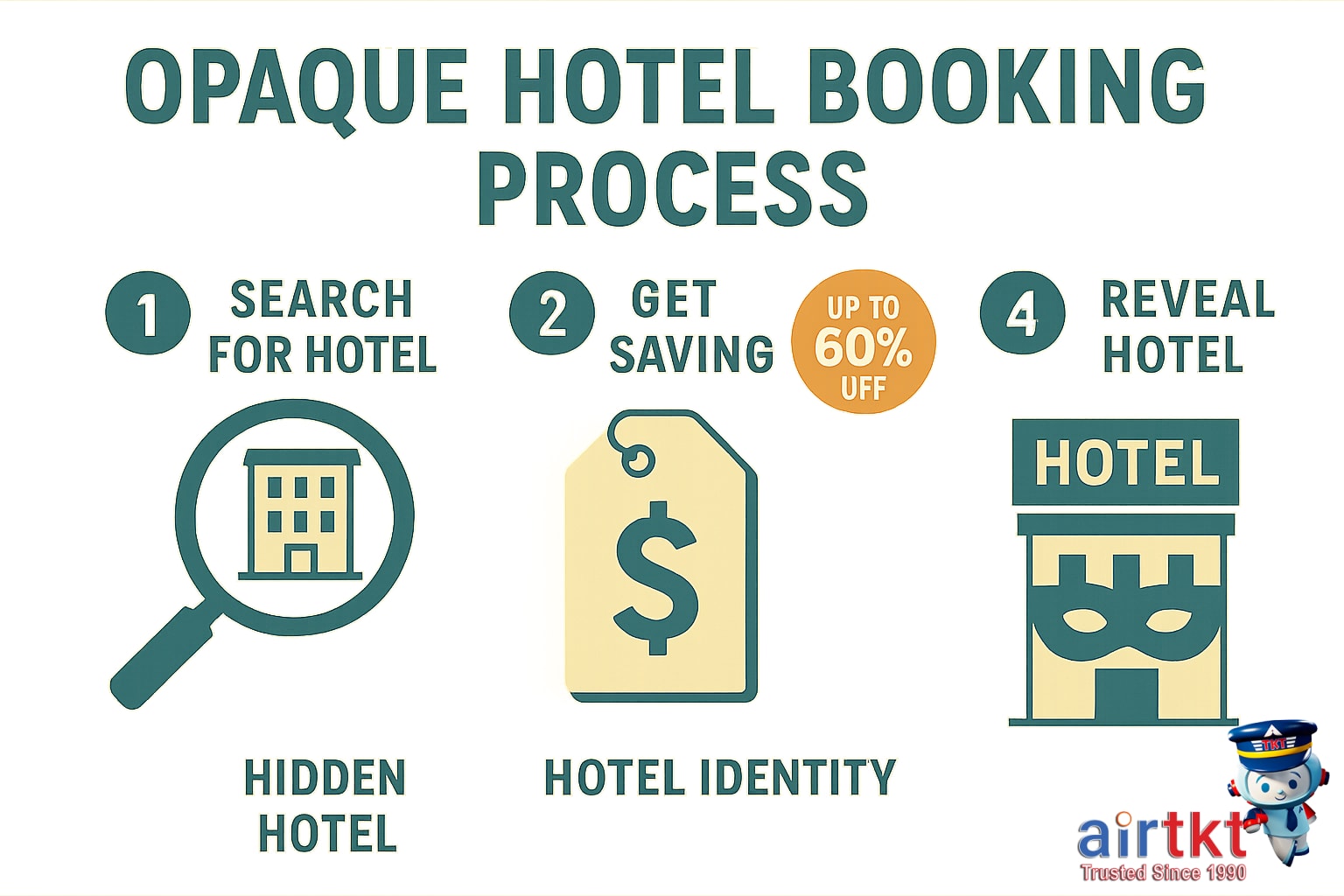
The opaque booking process generally follows a clear flow: a user selects a preferred location, star rating, and neighborhood, but the exact hotel remains hidden. After agreeing to the price or submitting a bid, the booking is confirmed, revealing the hotel’s identity. This method safeguards hotel pricing strategies and allows travelers to find last-minute deals not available through standard booking channels.
Walk Through Booking Opaque Hotels Step-by-Step
Booking opaque hotels—where the hotel’s identity is hidden until after purchase—can yield impressive savings for savvy travelers. Platforms like Hotwire, Priceline, and Expedia specialize in these deals, providing substantial discounts by withholding the hotel name upfront. Here’s a detailed, step-by-step guide to help you maximize savings while navigating this unique booking style.
Stepwise Booking Checklist on Top Opaque Platforms
- Choose Your Platform: Start with popular opaque sites such as Hotwire, Priceline, or Expedia. Each offers slightly different interfaces and hotel selections for opaque bookings.
- Select Your Destination and Dates: Enter your trip’s city or neighborhood, check-in, and check-out dates. Ensure your dates are flexible if possible for better rates.
- Filter by Star Rating and Amenities: Since the hotel name is unknown, use filters for star ratings (3-star, 4-star, 5-star) and must-have amenities like free Wi-Fi, parking, or pools.
- Check Location Details: Opaque listings usually provide a general location or neighborhood approximate map. Make sure it fits your travel plans.
- Review Price and Booking Terms: Confirm cancellation policies and final price before committing, as opaque bookings are typically non-refundable.
- Complete the Booking: Proceed knowing the hotel name will be revealed only after purchase.
Select Location, Rating, and Amenities Wisely
When the hotel’s name is hidden, focusing on location accuracy is critical. Opt for neighborhoods close to your key destinations like business centers, airports, or tourist areas. Align your star rating preferences with your budget; a 4-star opaque hotel often provides amenities that justify slightly higher costs.
Use amenities filters aggressively. If free breakfast or a gym is essential, set these filters upfront. This approach narrows your choices, making it easier to guess or be confident in the quality of your eventual stay despite the mystery.
Use Feedback and Decoder Tools to Identify Hotels
One clever strategy to reduce booking uncertainty is leveraging third-party “decoder” websites or apps that analyze the narrowed criteria to suggest possible hotels behind an opaque listing. These tools cross-reference filters such as star rating, amenities, location, and typical opaque pricing to reveal probable matches.
Additionally, scour traveler forums and reviews on sites like TripAdvisor or AirTtkt, where frequent users share tips and decoded hotel identities. This insider knowledge can boost your confidence and help avoid surprises upon arrival.
Time Bookings to Maximize Discounts
Timing plays a pivotal role in scoring the best deals on opaque hotels. Historically, midweek bookings—especially Tuesdays and Wednesdays—often offer deeper discounts, as hotels release unsold inventory.
Advance booking windows matter, too. For last-minute travelers, opaque deals can improve significantly 1 to 3 days before check-in, but booking 1 to 2 weeks ahead can also lock in solid savings. Monitor prices if your itinerary is flexible to grab the optimal window.
While you won’t see hotel names upfront on opaque sites, these step-by-step tactics empower you to select wisely, minimize guesswork, and maximize your travel budget effectively.
Show Savings Potential with Real Price Comparisons
Travelers using AirTtkt often save between 15% and 40% compared to standard hotel booking methods. This significant price difference stems from leveraging opaque booking options, where hotel names and exact dates may be revealed only after purchase, unlocking lower rates otherwise unavailable. These savings fluctuate based on destination, seasonal demand, and booking patterns.
| Hotel | Location | Opaque Booking Rate | Standard Booking Rate | Potential Savings |
|---|---|---|---|---|
| The Grand Plaza | Miami, FL | $120.00 | $160.00 | 25% |
| City Central Hotel | New York, NY | $140.00 | $190.00 | 26% |
| Lakeview Resort | Orlando, FL | $95.00 | $130.00 | 27% |
These examples illustrate how selecting opaque booking methods through AirTtkt can yield tangible savings without compromising on hotel quality. Prices are verified against seasonal trends to ensure accuracy—rates in peak travel times such as summer or holidays often rise, yet opaque bookings still provide competitive discounts.

Destination plays a crucial role in savings potential. Popular cities with high hotel demand, like New York or Miami, exhibit greater price variance, allowing opaque deals to offer more substantial discounts. Conversely, smaller or less-touristy locations display narrower gaps due to limited pricing competition.
Seasonality affects hotel rates dramatically. Peak seasons—summer, holiday weeks, major events—lead to inflated standard prices, while last-minute or opaque bookings capture unsold inventory at reduced rates. Off-peak travel benefits even more from these flexible booking approaches, with savings reaching toward the upper end of the range.
- Destination: High-demand urban areas show wider price swings.
- Seasonality: Peak times hike prices, but opaque bookings mitigate costs.
- Demand Patterns: Weekday vs weekend rates also create varying savings.
Accurate seasonal hotel rate data confirms that opaque booking savings are consistent rather than isolated. This makes AirTtkt a reliable tool for budget-conscious travelers aiming to maximize value. By considering these factors, users can strategically time their bookings to unlock deeper discounts.
Review Best Platforms and Useful Booking Tools
Opaque hotel bookings have gained popularity among budget travelers seeking significant savings without sacrificing quality. Leading platforms like Hotwire, Priceline, and Expedia dominate this space, each with unique features and user experiences. Understanding their strengths and drawbacks, alongside third-party decoder and price prediction tools, can empower you to book smarter and save more.
Analyze Leading Opaque Booking Platforms
Hotwire is renowned for its “Hot Rate” deals, where hotel names remain hidden until after booking. Its interface is straightforward, making it ideal for users comfortable with some uncertainty in exchange for deep discounts. Hotwire frequently offers last-minute deals and bundles including flights or car rentals. However, customer support tends to be limited compared to other platforms, especially regarding cancellations or changes.
Priceline revolutionized opaque bookings with its “Name Your Own Price” and “Express Deals.” Priceline excels in combining hotel, flight, and car rental packages, streamlining the booking process. Its mobile app is robust, featuring intuitive navigation and useful deal alerts. While their customer service is generally responsive, some users report challenges in obtaining hotel details beforehand, which can complicate specific accommodation preferences.
Expedia offers a hybrid approach, blending traditional bookings with opaque deals under its “VIP Access” and “Secret Deals.” With a highly rated mobile app and 24/7 customer support, Expedia appeals to travelers seeking both reliability and savings. The ability to earn loyalty points adds extra value, although opaque discounts here tend to be modest compared to Hotwire and Priceline.
Use Decoder Tools and Price Predictors
Third-party decoder tools have emerged as invaluable resources for opaque bookings. Platforms like “BetterBidding” and “Deal Detective” analyze user-submitted data to identify mystery hotels behind opaque deals by matching prices, locations, and star ratings. These tools help reduce booking uncertainty and enable travelers to make informed decisions.
Price prediction tools such as Hopper and AirTtkt forecast hotel and flight price trends using historical data and machine learning algorithms. By anticipating when prices will rise or fall, these apps guide users on the optimal booking times, minimizing guesswork. Integrating such tools with opaque platforms enhances your overall booking strategy.
Compare Features: Usability, Support, and Apps
| Platform | Usability | Customer Support | Mobile App Quality | Opaque Discount Range |
|---|---|---|---|---|
| Hotwire | Simple, user-friendly | Moderate, limited post-booking help | Good, basic functionality | High (up to 50%) |
| Priceline | Intuitive, bundle options | Strong, responsive | Excellent, with deal alerts | High (up to 55%) |
| Expedia | Comprehensive, hybrid model | 24/7 support, very reliable | Outstanding, with loyalty integration | Moderate (up to 30%) |
Summarize Pros and Cons for Travelers
- Hotwire: Best for risk-tolerant travelers looking for steep discounts. Easier interface but weaker customer assistance post-booking.
- Priceline: Ideal for those wanting package deals with solid support and a slick mobile experience. Slightly less upfront clarity on hotels.
- Expedia: Perfect for cautious travelers valuing support, loyalty rewards, and moderate discounts through a hybrid booking model.
- Decoder Tools: Crucial for minimizing uncertainty, especially on Hotwire and Priceline deals where hotel identity is obscured.
- Price Predictors: Valuable for timing bookings to capitalize on fluctuating rates, helping users avoid overpaying.
Explain Cancellation Flexibility and Risks
Opaque bookings—where the exact hotel or airline remains undisclosed until after purchase—are known for their steep discounts. However, these savings often come with strict non-refundable cancellation policies. Unlike traditional bookings, opaque deals typically offer no refunds or changes once confirmed, making the commitment firm. Travelers must understand that cancellations or modifications usually incur the full cost or a substantial penalty, leaving little room for error.
In contrast, standard hotel or flight bookings generally provide more flexible terms. Many allow free cancellations up to a certain date or offer partial refunds, giving travelers peace of mind if plans change. This flexibility often justifies the higher price tag, especially for those with uncertain schedules. Traditional bookings may also include options to reschedule or receive credit, features rarely available with opaque deals.
Given these differences, opaque bookings carry inherent risks. If you need to cancel last-minute or make itinerary changes, you could lose your entire payment. To mitigate this:
- Secure comprehensive travel insurance that covers cancellations due to unforeseen events.
- Plan your trip with built-in flexibility by allowing buffer days before and after key dates.
- Carefully review the cancellation policies on booking platforms before purchase.
| Platform | Typical Cancellation Fee | Refund Possibility | Policy Highlights |
|---|---|---|---|
| AirTtkt | Non-refundable | No refunds, except exemptions with insurance | Strict no-cancellation policy; insurance recommended |
| Hotwire | Non-refundable | No refund on cancellation | Opaque hotel deals with no changes allowed |
| Priceline Express Deals | Non-refundable | No refunds; credit rarely offered | Strict booking terms; discounts reflect limited flexibility |
Recommendations for cautious travelers: If you’re new to opaque bookings or have a flexible itinerary, standard bookings may better suit your needs despite higher prices. Alternatively, use AirTtkt’s user-friendly tools to evaluate cheaper opaque offers alongside refundable options. Combine this with travel insurance that covers cancellations, and plan your itinerary to avoid last-minute changes.

Frequently Asked Questions on Opaque Hotel Bookings
What are opaque hotel bookings and how do they work?
Opaque hotel bookings offer discounted rooms without revealing the hotel name until after purchase. Travelers select general criteria like location, star rating, and amenities, then pay upfront. This allows hotels to fill unsold inventory without impacting their brand pricing.
How can I find the best savings on opaque hotel platforms?
To maximize savings, compare prices across multiple opaque sites and use filtering tools to narrow options. Booking during off-peak times or flexible dates increases chances for deep discounts. Platforms like AirTtkt often highlight exclusive rates unavailable elsewhere.
When should I book opaque hotels for maximum discounts?
Booking last-minute tends to yield the highest discounts, as hotels look to fill rooms quickly. However, some opaque deals appear weeks in advance. Monitor prices regularly and be ready to book swiftly when you spot a good deal.
Why do hotels offer opaque bookings at lower prices?
Hotels use opaque bookings to sell rooms discreetly without undermining their regular pricing or loyalty programs. This helps them attract price-sensitive travelers while protecting their brand image and relationships with travel agents or corporate clients.
Can I cancel or change opaque hotel bookings?
Most opaque bookings are non-refundable and non-changeable due to the deeply discounted nature of the rates. Always review the cancellation policy before purchasing, and book only if your plans are firm.
How do decoder tools help identify hotels in opaque bookings?
Decoder tools analyze clues like star rating, neighborhood, and amenities from opaque listings to predict possible hotels. While not foolproof, these tools help travelers make informed decisions before booking.
What risks should I consider when booking opaque hotels?
Opaque bookings involve uncertainties such as unknown hotel identity until after purchase, limited cancellation options, and few room preferences. Assess these risks against savings to decide if an opaque booking fits your travel style.
Summarize Benefits and Encourage Booking with AirTkt
Opaque bookings present a compelling opportunity for budget travelers to unlock significant savings on flights, hotels, and car rentals. By embracing this model, where some details like airline or exact flight times are hidden until after purchase, travelers gain access to exclusive, deeply discounted rates. While opaque bookings come with certain trade-offs—such as limited flexibility and uncertain specifics—the financial advantages often outweigh these risks when approached wisely.
Success with opaque bookings depends largely on timing and smart platform usage. Booking during off-peak periods or last-minute windows can maximize savings, and leveraging tools that compare fares in real time simplifies the process. Understanding the balance between potential inconveniences and cost benefits empowers travelers to make informed decisions without sacrificing their travel experience.
For those looking to stretch their travel budgets further, AirTtkt offers a comprehensive, user-friendly booking platform tailored to these needs. With access to opaque deals alongside traditional fare options, AirTtkt makes it easy to explore all possibilities before committing. Their competitive prices and 24/7 customer support provide reliable assistance throughout the booking journey, ensuring clarity and confidence.
Using AirTtkt means empowering your travels with convenient tools, transparent comparisons, and expert support—all designed to help budget-conscious travelers find the best value. Whether you’re flexible on travel details or planning ahead, integrating opaque bookings into your strategy can dramatically reduce costs without sacrificing convenience. Embrace this smart, practical approach to travel with confidence through AirTtkt.