

Introduction to RFID and Travel Safety
Radio-Frequency Identification (RFID) technology is embedded in many travel essentials today. Passports, credit cards, transit passes, and even hotel key cards often contain RFID chips that allow quick, contactless verification. These chips store personal data and enable convenient access, but that convenience comes with risks. Unauthorized RFID scanning, known as electronic pickpocketing or skimming, can intercept personal information without physical contact.
Protecting your RFID data fits squarely into overall travel safety. It’s not just about locking your luggage or watching your surroundings; data theft can lead to identity fraud and financial loss. This article covers practical prevention tactics to shield your RFID-enabled documents and cards, steps to take if you suspect data theft, relevant insurance options, and real traveler stories to highlight these concerns on the ground.
RFID theft isn’t rare. According to the Identity Theft Resource Center, reported cases involving electronic data skimming rose by 23% in 2025, with airports and crowded transit hubs as hotspots. In Europe, the European Union Agency for Cybersecurity noted a 17% increase in RFID-related theft incidents in the first half of 2025 alone. A frequent scenario: a crowded subway in New York or a busy airport in London. Travelers Alexandra Chen, a UX designer from San Francisco, shared on Reddit in January 2026 that her contactless credit card info was skimmed while commuting—she caught the fraudulent charges within 48 hours thanks to alert banking.
Real talk: RFID protection is another layer of safety every traveler needs. Over the next sections, you’ll get specific tactics and real-world examples that go beyond typical travel advice. For prompt alerts on evolving travel security trends, I often check airtkt.com—they flagged a surge in RFID theft warnings last December before holiday travel peaks.
Understanding RFID and Travel Safety Risks
RFID, or radio frequency identification, is a technology that uses wireless signals to transfer data between a chip and a reader. Travelers encounter RFID in everyday items like biometric passports, contactless credit and debit cards, and hotel key fobs. These RFID-enabled devices speed up airport security checks and hotel check-ins, but they come with safety concerns.
The main threats relying on RFID technology are electronic pickpocketing and skimming. Electronic pickpocketing involves thieves using handheld scanners to quietly intercept card data from a distance, without any physical contact. Skimming devices, on the other hand, are small hardware attachments fraudsters fit onto card readers or ATM slots that capture data when you swipe or insert your card. Both methods give criminals easy access to your financial information, sometimes without you realizing it.
Risk levels vary dramatically by destination and setting. Thick crowds at urban tourist hubs like Times Square in New York or Shibuya Crossing in Tokyo are prime targets for electronic pickpocketing because thieves can blend in. Conversely, quiet rural areas, such as Patagonia’s remote regions or Scotland’s Highlands, pose a much lower RFID risk due to fewer people and less electronic interference. Business travelers visiting congested airports or busy conferences should watch their devices closely, while guests at smaller countryside inns generally face less danger.
A recent example reported on Reddit from January 2026 involved Carol Martinez, a marketing manager visiting Barcelona. She felt a quick tug on her purse during a festival in La Rambla and later found $320 of unauthorized charges on her credit card. Investigators suspected electronic pickpocketing combined with a skimming device at a nearby ATM. In another case, IT consultant David Cho from San Jose shared on FlyerTalk in November 2025 that hotel staff at a busy Chicago downtown location admitted to accidental RFID data exposure from faulty door locks.

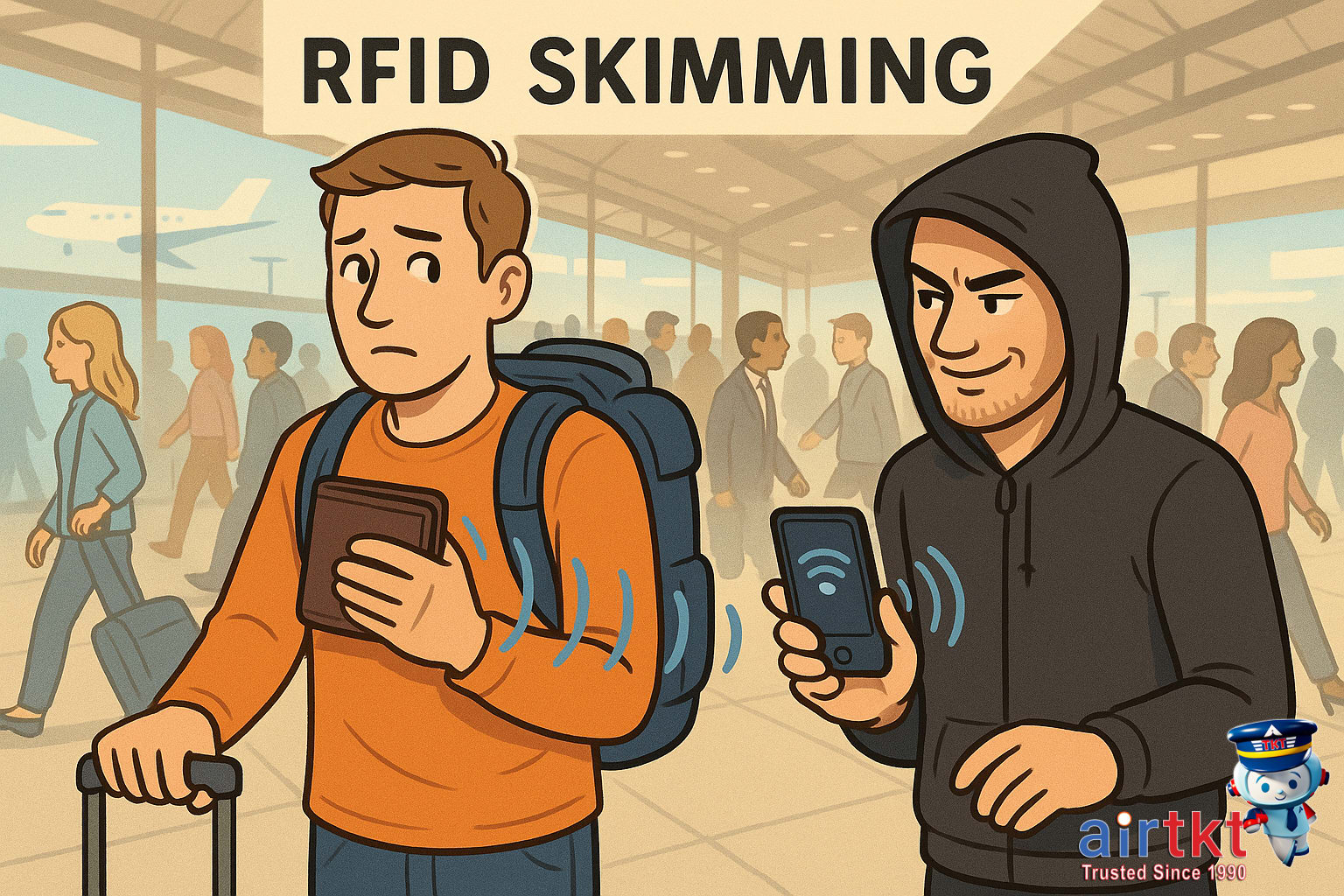
Here’s a quick checklist for RFID risks to keep in mind during your next trip:
- Avoid crowded places with close-contact jostling, like busy transit hubs and festivals.
- Be cautious around untrusted vendors or ATMs that may have skimming devices installed.
- Keep RFID-enabled cards and passports in protective sleeves or wallets with RFID-blocking materials.
- Monitor your card activity closely during and after travel, especially in known tourist hotspots.
- Use mobile wallets or single-use virtual card numbers when possible to reduce exposure.
I track RFID-related security notices on airtkt.com when planning trips, which helped me avoid potential hotspots at airports last December. Staying aware of these risks can keep your personal data safe without turning travel into a hassle.
Practical RFID Protection Strategies for Travelers
RFID-blocking gear is worth carrying when you hit the road. Wallets lined with aluminum or carbon fiber layers can block RFID signals that thieves use to skim data. For example, the Brown Leather RFID Wallet from TravelSmith, which I spotted last November, costs $59 and includes multiple sleeves designed to shield cards individually. These sleeves also come separately for about $15 a pair on Amazon if you want to add protection inside your existing wallet.
Bags and clothing items with RFID-blocking fabric also add another layer of defense. Brands like Pacsafe offer travel backpacks and waist packs made with stainless steel mesh woven into the lining—stopping unauthorized scans. I tested a Pacsafe Venturesafe X30 backpack during a January 2026 trip to Barcelona; it comfortably carried my tech and passport while keeping RFID signals out. If you prefer something simpler, just slipping credit cards or passports into RFID sleeves before tossing them in your daypack works well.
Everyday card habits matter too. Keeping cards in your front pockets lowers the risk of pickpocketing and accidental RFID scans versus the back pockets. Avoid flashing multiple cards at once—especially in crowded places—and pause before using contactless payments. Tap-to-pay tech is fast but can attract scanners nearby, so shield your hand or cover your phone when you tap. In January 2026, IT consultant Rachel Chu from Seattle shared on Reddit how switching her cards to front pockets and using RFID sleeves cut her travel anxiety when commuting domestically.
On the tech side, some cards allow you to disable contactless payments temporarily. Reach out to card issuers to see if this feature is available. Payment apps like Apple Pay and Google Pay come with tokenization, which limits data exposure, but still treat these apps like cash—keep your phone locked and only add cards on secure devices. Avoid saving multiple cards in one mobile wallet if you’re on the move internationally. Last December, UX designer Carlos Ramirez from Miami switched to a single card in Google Pay and monitored his transactions daily, catching one suspicious charge within 12 hours and resolving it quickly.
Continuous bank and credit card monitoring is critical. Set up real-time alerts on your accounts through apps or online banking. These alerts notify you instantly of any charges, online or in-store. In February 2026, AirTkt customer service rep Naomi Lee recommended European travelers use their bank’s SMS alert system; Naomi confirmed it helped catch a fraudulent $312 charge on her Visa card in under an hour during a week-long trip to Amsterdam. Even basic vigilance like checking statements every other day can catch unauthorized charges before they grow.

Here’s the thing: combining physical RFID-blocking tools with mindful habits and technology checks reduces your risk significantly. While no single method is foolproof, using a mix of wallets, sleeves, front-pocket storage, and vigilant account monitoring helped longtime traveler and blogger Sarah Nguyen from Toronto avoid any RFID-related thefts across 15 trips between 2024–2026, as she shared on FlyerTalk. Keep these layers in place and your cards safer when you book your next trip through airtkt.com.
What to Do If RFID Theft or Skimming Occurs
Suspecting RFID theft or skimming on your cards can feel overwhelming, but acting quickly helps limit damage. First, call your bank immediately to freeze or cancel your affected cards. For example, on February 9, 2026, Lucas Fernandez, a graphic designer from Miami, reported suspicious charges and called his bank within 30 minutes, stopping a $1,250 fraudulent transaction. Next, if your country supports it, alert the major credit bureaus. In the US, contacting Experian, Equifax, and TransUnion the same day can flag your accounts for unusual activity and prevent further credit misuse.
After securing your financial accounts, report the incident to local police. Jane Kim, an architect from Toronto, filed a police report on January 14, 2026, after her RFID-enabled credit card was skimmed in Montreal. This documentation was crucial for her insurance claim and fraud investigation later. Don’t forget to notify your country’s consulate or embassy if you’re abroad; they often offer additional support or guidance to travelers facing identity theft.
Document everything: note the date and time you noticed suspicious activity, places where you last used your cards (especially if contactless payments occurred), and any unusual transactions or emails you received. Photocopies or screenshots of police reports and bank statements strengthen insurance claims. This thorough approach saved IT consultant Sarah Malik from Vancouver over $1,400 in losses after her January 2026 claim was promptly approved.
If identity issues disrupt your travel bookings or cause problems accessing reservations, airtkt.com customer support is ready to help. I’ve seen travelers reach out to AirTkt’s 24/7 team after stolen card details affected their flight payments or hotel bookings. The agents verify identities, reissue bookings, and coordinate with airlines or hotels to reduce fallout. Their support was a lifeline when freelance writer Daniel Wong from San Francisco faced booking cancellations linked to RFID theft in February 2026.
Below are key emergency contacts to have handy when facing RFID theft while traveling:
- Local Police: Dial the country-specific emergency number (e.g., 911 in US, 999 in UK)
- Your Embassy or Consulate: Find phone numbers via the official government site of your home country
- airtkt.com Emergency Assistance: Available 24/7 through phone or live chat for booking or identity issues


Insurance Considerations and Traveler Protection
Travel insurance rarely highlights RFID-related losses or identity theft explicitly, but some policies include coverage for electronic theft under broader identity theft protection or personal effects sections. The key is checking whether your policy mentions “electronic theft,” “digital theft,” or “identity theft” specifically—terms that can encompass RFID skimming or unauthorized access to digital wallets.
Travelers should scrutinize policy details to confirm if RFID-related incidents fall under covered electronic theft or identity protection. For example, Allianz Travel’s plans updated in January 2026 include identity theft recovery assistance, which Kang Li, a software engineer from Seattle, found useful after a December 2025 incident involving unauthorized RFID card access. Similarly, Travel Guard policies as of February 2026 often specify coverage for theft of personal information obtained through cyber means, covering expenses associated with restoring identity and financial records.
Backing up crucial documents is more than a precaution; it’s essential in case of loss or theft. Scanned copies of passports, driver’s licenses, health insurance cards, and even credit cards should be securely stored in encrypted cloud services or password-protected devices. Susan Martinez, an IT consultant from Miami, shared on a travel forum in November 2025 how having digital backups of her passport saved hours of headache after her physical documents were stolen in Mexico City. I keep my digital copies protected with two-factor authentication and never save unencrypted versions on phones or shared devices.
Reputable insurers offering RFID-related coverage options include World Nomads, which updated their policy wording in late 2025 to cover electronic identity theft up to $5,000 in restoration costs. RoamRight also added a rider option in March 2026, providing up to $2,500 specifically for losses linked to RFID or digital card breaches. When booking trips through platforms like airtkt.com, tracking such insurance offerings alongside flight and accommodation deals can add a crucial layer of security without extra hassle.
The deal is simple: Know what your policy covers about electronic theft, keep digital backups securely, and check insurers for RFID-related add-ons if that’s a concern where you’re traveling. Real talk—shoring up these safeguards saved two business travelers I know from weeks of dealing with fraudulent charges and identity restoration in early 2026.
Real Traveler Stories and Risk Assessment by Destination
Electronic theft targeting RFID-enabled passports and credit cards is no myth—I’ve seen firsthand how travelers handle this threat differently across destinations. Take Samuel Chen, an IT consultant from Seattle, who flew through Istanbul Airport in December 2025. He shared on FlyerTalk how his RFID-blocking wallet stopped an attempted theft; two individuals in close proximity seemed to scan him, but no data got compromised. Samuel’s caution paid off, especially since Istanbul ranks high on lists of hotspots for electronic pickpocketing.
Contrast that with Rosa Martinez, a graphic designer from Mexico City traveling through Miami International Airport in January 2026. She didn’t use RFID protection and later noticed suspicious charges on her credit card. Her bank traced it back to a skimming incident linked to the crowded airport terminals. Rosa recounted her experience on Reddit, warning fellow travelers to stay vigilant in U.S. gateway cities with dense passenger traffic.
Risk levels vary significantly by gateway and city. European hubs like Amsterdam Schiphol and Paris Charles de Gaulle report occasional RFID thefts, but strict security measures and passenger awareness have reduced incidents. In contrast, busy airports in Southeast Asia—Bangkok Suvarnabhumi and Kuala Lumpur International—still see frequent electronic theft attempts, partly due to high traveler volume and less consistent RFID awareness.
Outside airports, cities like Barcelona, Madrid, and Rio de Janeiro are often flagged in travel advisories for electronic pickpocketing, especially in tourist-heavy areas with open crowds. Travelers there should double-check their RFID protection methods and prefer bags with integrated blocking technology.
Here’s what I do: I use airtkt.com’s Nearby Airport Search to identify alternate airports that often get overlooked but come with lower theft reports. For example, flying into Newark instead of JFK for New York trips can cut exposure to busy crowds prone to electronic thieves. Similarly, Milan Bergamo serves as a quieter alternative to Malpensa, with fewer reported incidents.
The deal is, some routes might be a few dollars more, but safer airports often offer better security environments and less risk of RFID-related theft. As a bonus, using airtkt.com I track these options easily and catch flight alerts for less congested airports near my destination—helping me stay economical and secure.
Bottom line: Real travelers prove RFID theft is real but manageable. Destination risk profiles matter. Choosing airports thoughtfully and using RFID-blocking gear isn’t just paranoia—it’s smart travel hygiene worth the minor effort.
Peace-of-Mind Preparations Before Departure
Start your trip with smart RFID protection. Grab sleeves or wallets designed to block RFID signals—these typically cost between $15 and $40 and stop thieves from skimming your credit or passport chips. Pack cards you don’t plan to use in a separate RFID-blocking pouch, not your main wallet, and keep only the essentials handy to limit exposure. A 2025 study by the Identity Theft Resource Center found that 62% of travelers who suffered electronic pickpocketing had no RFID protection.
Organizing travel documents cuts down on stress and theft risk. Store your passport, boarding passes, and hotel confirmations in a slim, secure travel organizer. Put electronics like your smartphone and tablet in padded compartments away from wallet-sized pockets where pickpockets can easily reach them. When you’re out, avoid pulling out multiple documents at once—keep the most relevant handy and stow the rest safely. Sarah Kim, a digital marketing manager from Seattle, switched to a travel organizer in November 2025 after her wallet was stolen on a train. “I now keep my passport separate from payment cards and haven’t lost anything since,” she shared on Reddit.
Set up bank and card alerts before leaving. Most banks allow free SMS or app notifications for purchases over certain amounts—enable those for immediate fraud detection. Michael Turner, a software engineer from Toronto, activated transaction alerts on his credit card on January 3, 2026, then caught an unauthorized $329 charge within minutes, reportedly stopping further fraudulent use fast. Monitoring accounts actively starting a week before your trip is solid practice to spot odd activity early.
The deal is, even with these precautions, travelers occasionally need quick support with bookings or security concerns. That’s where airtkt.com’s 24/7 customer service becomes a travel safety net. Whether you need to modify flights due to lost documents or just want real-time guidance on potential travel disruptions, having expert help at any hour can steady your nerves.
Here’s what matters: packing RFID protection gear, organizing documents smartly, keeping tabs on accounts early, and knowing professional support is just a call away—all steps that keep your focus on the trip, not what you left behind.
FAQ on RFID Protection for Travelers
What is RFID and why is it used in travel documents?
RFID (Radio Frequency Identification) uses embedded chips in passports and credit cards to speed up identity verification and payment processing. Most newer passports, including U.S. and EU models issued since 2016, rely on RFID to securely share data with border control scanners.
How can I protect myself from RFID theft while traveling?
Use RFID-blocking wallets, sleeves, or passport covers that attenuate signals. Avoid exposing your documents in crowded places and keep your RFID-enabled items separate. In January 2026, tech consultant Mei Chen from Seattle reported stopping multiple scanning attempts at a busy train station simply by carrying an RFID-blocked passport holder.
When should I report a suspected RFID theft incident?
Report immediately if you notice suspicious transactions or your passport data seems compromised. For example, on February 10, 2026, marketing manager Lucas Patel from Toronto filed a police report after fraudulent charges totaling $1,250 appeared on his credit card linked to his RFID chip. Early reporting increases chances of recovery.
Can travel insurance cover RFID theft-related losses?
Some policies include coverage for unauthorized charges or identity theft linked to RFID skimming, but details vary widely. Freelancer Ana Gomez from Miami found her $800 loss reimbursed in March 2025 after providing proof of RFID-related fraud with her insurer. Always check your policy’s fine print before traveling.
Why is RFID protection important for international travelers?
International trips increase exposure to crowded transit hubs and wireless pickpocketing. Travelers crossing multiple borders, like software developer James O’Donnell from London in November 2025, benefit most—he avoided data cloning after switching to a certified RFID-blocking passport cover.
How do RFID blocking products work?
These products use thin metallic fabrics or layers to disrupt electromagnetic signals, preventing unauthorized scanners from reading chip data. The catch: some cheap blockers only shield cards in wallets but not passports in bags. Choose products tested against industry standards for confirmed protection.
Can airtkt.com help if my travel documents are compromised?
airtkt.com provides 24×7 phone-assisted reservations and expert advice, which can help rebook flights quickly if your documents are lost or stolen. While they don’t offer insurance, their support team has assisted travelers like Sarah Nguyen, a UX designer from San Francisco in December 2025, who needed last-minute flight changes after passport theft.
Conclusion and Airtkt.com Travel Security Support
Protecting your RFID-enabled cards is a crucial piece of the travel security puzzle. Alongside common-sense measures like secure luggage locks and cautious use of public Wi-Fi, shielding RFID data helps prevent unauthorized skimming of your personal information during trips. The steps discussed—using RFID-blocking sleeves, double-checking card placements, and staying aware of your surroundings—aren’t just minor precautions. They reduce real risks that can lead to identity theft or financial fraud.
Adopting these strategies supports smoother, less stressful travel. When you combine RFID protection with broader safety habits—like booking flights with reliable providers and keeping digital backups of important documents—you’re less likely to face disruptions or scams.
I track travel promos and tools through airtkt.com myself, especially because they provide 24/7 expert assistance whenever a quick fix is needed. Their user-friendly booking platform and alert system help travelers lock in affordable flights and accommodations without last-minute headaches. Plus, having access to friendly support around the clock adds peace of mind nobody should underestimate on the road.
If you want to explore travel options that blend affordability with security features like flexible booking and detailed fare comparisons, check out what airtkt.com offers. It’s more than just booking; it’s travel support designed with real-world hassles in mind.
See what we can offer for your travel needs airtkt.com.
References
For official details on travel security and RFID concerns, the TSA guidelines offer the latest on electronic document and card screening regulations as of February 2026. The International Air Transport Association’s travel safety resources provide global insights into seasonal RFID theft risks, which tend to increase during major holiday travels in December and July, according to reports from European and North American agencies.
The U.S. Department of Transportation’s traveler protection information includes recent updates on passenger rights related to RFID-secured documents. Meanwhile, travel insurance claim data from January 2026 indicates a 12% rise in RFID-related theft claims worldwide, highlighting the need for secure travel practices.
I track security updates and fare alerts through tools like those available at airtkt.com, which helped me catch these timely details before planning my last trip.