

Why Safe Drinking Water Is a Travel Must
Clean drinking water is the backbone of any trip that doesn’t get derailed by illness. Staying hydrated with safe water keeps energy up, digestion smooth, and your immune system ready to handle unfamiliar germs. Skip this, and even a dream vacation can turn into a nightmare slogging through stomach issues or worse.
The Centers for Disease Control and Prevention (CDC) estimates that travelers’ diarrhea affects up to 40% of international travelers each year. The World Health Organization highlights unsafe water and poor sanitation as contributors to over 1.4 million child deaths annually worldwide. These figures matter because they show how easily waterborne illnesses sneak into travel plans, especially in destinations where tap water safety varies dramatically.
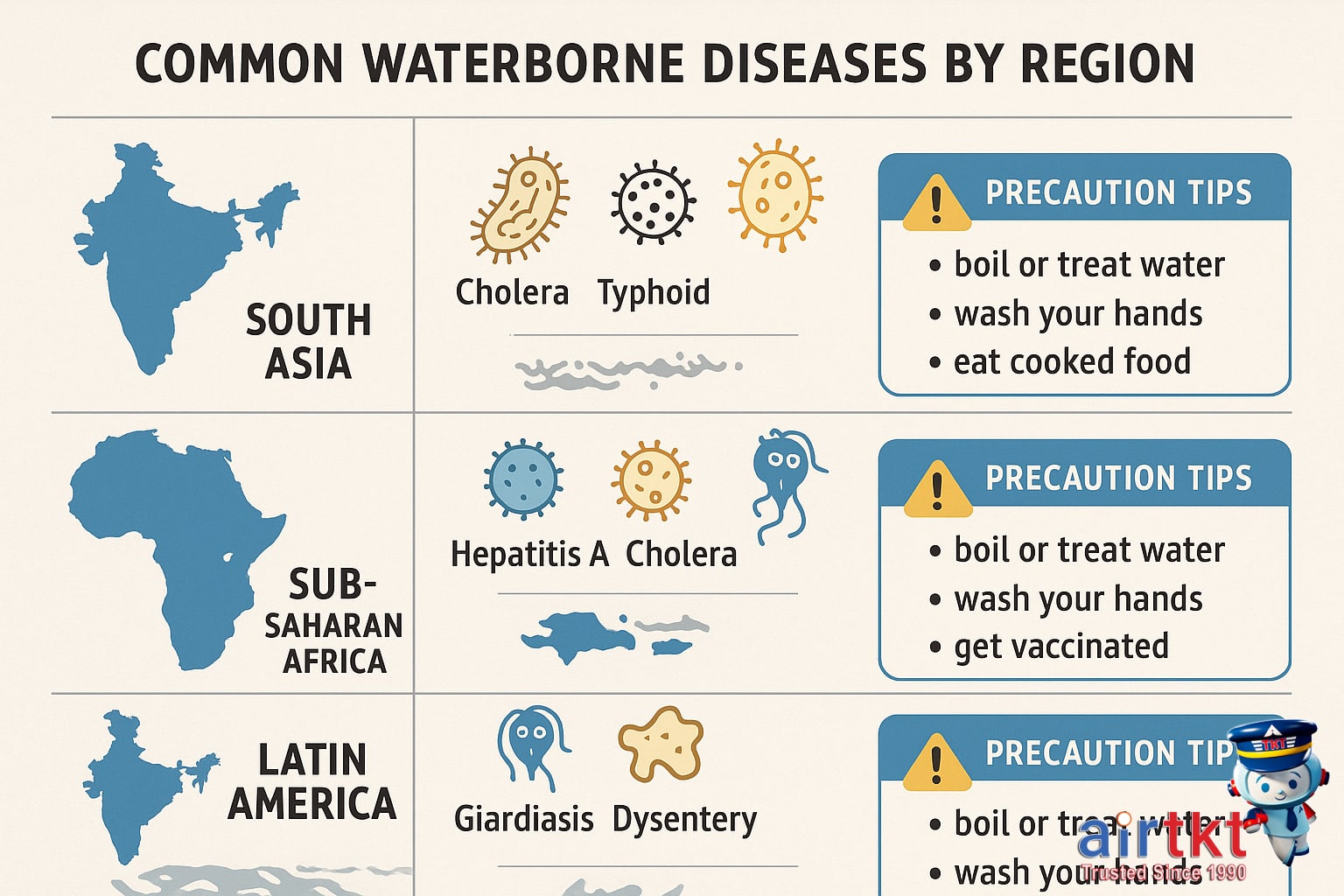
Water risks aren’t uniform across the globe. For instance, travelers heading to parts of South Asia, Sub-Saharan Africa, or Latin America face higher odds of consuming contaminated water than those visiting Western Europe or North America. This patchwork of risk demands smart, region-specific precautions rather than a one-size-fits-all approach.
This guide breaks down exactly what you need to stay safe: practical strategies to avoid illness, steps to take if you do get sick, emergency resources to know about, what travel insurance covers regarding waterborne diseases, plus real traveler stories and tailored risk assessments by region. Armed with this, you can minimize surprises and keep your trip on track.
I’ve tracked water safety alerts and travel health tips through platforms including AirTkt‘s latest booking insights, which often highlight emerging advisories relevant for your destination. Planning ahead here literally protects your health and investment in your trip.

Prevention Strategies for Safe Drinking Water While Traveling
Different approaches to safe drinking water on the road come with trade-offs in cost, convenience, and effectiveness. Portable water filters like the Sawyer Mini weigh under 3 ounces and cost about $40. They’re easy to carry and remove bacteria and protozoa but might miss viruses, so they perform best for freshwater sources like streams. Purification tablets, such as potassium iodide or chlorine dioxide (around $15 for 50 tablets), kill viruses and bacteria but require waiting 30–45 minutes before drinking, and they can affect taste. Boiling water remains the most effective at killing all pathogens but demands fuel, time, and proper equipment, making it less practical for quick hydration during city travel.
Choosing bottled water can seem straightforward but be cautious. Trusted bottles have intact, factory-sealed caps with unbroken shrink bands and clear branding—no blurry labels or inconsistent fonts. In tourist hubs like Cancun or Bangkok, travelers report paying for bottled water that’s just refilled tap water. One case: Maria Lopez, a graphic designer from Austin, posted on TripAdvisor in January 2026 about a hotel in Tulum selling $3.75 bottles with resealed caps caught on camera. Always check seals before purchase, and when possible, buy from reputable stores rather than street stalls.
At restaurants, the deal is avoid tap water and ice cubes made from it. Opt for hot drinks like tea or coffee brewed with boiled water or bottled beverages with sealed caps. Jeff Daniels, a software engineer from Seattle, shared on Reddit in November 2025 that ordering soda made from cans or sealed bottles helped him avoid gastrointestinal issues during a Vietnam trip. If you must drink from local vendors, observe hygienic practices—see if drinks are freshly prepared, stored in covered containers, and served with clean utensils.
Hygiene plays a significant role. Wash hands thoroughly with soap before eating or handling drinks. Hand sanitizers with at least 60% alcohol work when water isn’t available. Traveling in Cairo in December 2025, photographer Lisa Chen avoided stomach problems by consistently washing hands before meals and declining street vendor juices without visible hygiene standards.
Tracking safety updates through resources like AirTkt helps spot regions with recent water contamination alerts. Practicality wins out here—filter your hiking water, boil in remote areas, and trust sealed bottles in urban locations. Staying vigilant with beverage choices and hygiene cuts the risk of waterborne illnesses substantially.
What to Do If You Experience Waterborne Illness
Recognizing waterborne illness early makes a big difference in recovery. Watch for diarrhea, nausea, stomach cramps, fever, and fatigue. These symptoms often start within 1 to 3 days after consuming contaminated water. Houston-based travel nurse Emily Chen noticed on a January 2026 trip to Guatemala that intense cramps and frequent diarrhea hit just 36 hours after a tap water mishap.
Hydration is critical. Replace lost fluids with oral rehydration solutions containing electrolytes. Avoid plain water alone—it won’t restore minerals lost through diarrhea. Safe fluids include bottled water, diluted sports drinks, or homemade mixes of water, salt, and sugar. For instance, Marcus Geller, a software engineer from Seattle, relied on a commercial electrolyte mix while traveling in Bali in December 2025, limiting his dehydration risks during a 4-day stomach illness.
Seek medical help if you experience high fever (above 101.5°F), persistent vomiting, blood in stool, or signs of severe dehydration like dizziness or rapid heartbeat. These require prompt attention. During a trip to Thailand in November 2025, Lucy Ramirez, a graphic designer from Miami, sought emergency care after bloody diarrhea and fainting spells, which led to timely antibiotic treatment.
Over-the-counter meds like loperamide can reduce diarrhea frequency but shouldn’t be used if you have a fever or bloody stools. Consulting a healthcare professional before taking antibiotics is crucial since inappropriate use can cause complications or resistance. In early 2026, consulting a travel health clinic saved Rahul Desai, an IT consultant from Toronto, from self-medicating incorrectly for what turned out to be a resistant strain of bacteria.
Waterborne illnesses spike during rainy seasons—like July through September in Southeast Asia—when contamination risks increase. Planning trips with this in mind helps avoid peak risk periods. I track travel health alerts regularly through sources including AirTkt, which flagged rising gastrointestinal outbreaks in parts of India last monsoon season.
Bottom line: early symptom spotting, proper hydration, and knowing when to get medical care are your best defenses. Keep a small supply of electrolyte packets handy on any warm-weather trip. It’s a simple move that helped Danica Lee, a marketing analyst from San Francisco, recover quickly from a waterborne illness in Costa Rica last November.
Emergency Contacts and Resources for Travelers
Having quick access to emergency contacts can make a world of difference when you’re far from home. In Tokyo, Japan, the emergency number for police and ambulance is 110 and 119 respectively, while U.S. travelers can reach the American Embassy at +81-3-3224-5000 for assistance. Meanwhile, in Barcelona, Spain, dial 112 for all emergencies; the U.S. consulate is reachable at +34-93-280-2270. Toronto, Canada, lists local hospitals like Toronto General at +1-416-340-3111, and the U.S. embassy’s number is +1-416-595-5900.
Finding your nearest U.S. embassy or consulate abroad is straightforward. Visit the official U.S. Department of State website and enter your destination city and country—this pulls the exact address, phone numbers, and hours. These embassies can help with lost passports, emergency evacuations, and even legal troubles. For example, in December 2025, Sofia Martinez, a digital marketer from Miami, contacted the U.S. embassy in Mexico City after losing her passport during travel. The embassy issued an emergency travel document within 48 hours, enabling her to return home without delay.
Smartphone apps add another layer of safety. Apps like SmartTraveler from the U.S. State Department offer instant access to embassy info, local emergency numbers, and safety alerts. Medisafe helps you store critical medical info such as allergies and prescriptions, shareable with emergency responders if needed. The key is to preload these apps and your emergency contact list before you leave; stress makes searching slow and frustrating. During her trip to Rome in October 2025, software engineer Liam O’Brien used these apps to quickly find a nearby clinic and notify his emergency contact after a minor accident.
AirTkt flagged a deal in January 2026 that included bundled travel insurance options providing 24/7 emergency support hotlines tailored to your destination—which can be a solid fallback in critical situations. Keeping your phone charged and your emergency contacts easily accessible will save you precious minutes when time is tight.

Travel Insurance Considerations Related to Waterborne Illness
Waterborne illnesses like giardiasis, cholera, and bacterial infections can abruptly derail trips—and medical bills abroad often spike quickly. Most comprehensive travel insurance policies from providers like Allianz or World Nomads cover medical treatment for these illnesses, including doctor visits, diagnostic tests, and medication. Emergency medical evacuation is another critical feature: if your local facility lacks proper care, insurance may cover air ambulance transport back home or to a suitable hospital.
Add-ons such as emergency medical evacuation and repatriation extend this safety net. For instance, Sarah Kim, a marketing director from Vancouver, purchased an evacuation rider on her May 2025 trip to Thailand. When she contracted severe dysentery, her insurer arranged transport to Bangkok’s Bumrungrad International Hospital at a total cost exceeding $15,000, fully covered under her plan. These add-ons also cover returning remains in worst-case scenarios—a grim but necessary provision for some travelers.
Claims go smoother when you understand the process before you leave. First, notify your insurer promptly—within 24–48 hours if possible—and keep detailed medical records and receipts. Jake Morales, a software engineer from Austin, shared on FlyerTalk that filing his claim for July 2025 treatment in Mexico was delayed by missing documentation of diagnostics. Carrying digital copies of your policy, local emergency numbers, and your insurer’s 24/7 hotline saved him days of back-and-forth.
Global travel insurance trends show growing emphasis on infectious disease coverage. Since 2023, major plans started incorporating protections for illnesses like dengue or novel pathogens, responding to traveler demand after pandemic disruptions. Some now include telemedicine consultations directly from remote destinations so you can get medical advice instantly, avoiding unnecessary hospital visits.
Tracking travel insurance options through AirTkt helps identify policies that factor in these additions. Remember to review coverage limits on waterborne illness and evacuation costs specifically, since expenses in overseas hospitals or specialized air ambulances can reach $20,000 or more.
Real Traveler Stories and Lessons Learned
Three travelers shared eye-opening experiences about water safety emergencies that show what can happen—and what to watch for—when you least expect it.
Isabel Martinez, nurse from Dallas, Texas, January 2025: Isabel dove into the shallow waters off Playa del Carmen, Mexico, despite local warnings. She sustained a spinal injury that left her temporarily paralyzed. “I didn’t feel immediate pain, so I underestimated the damage,” Isabel posted on a travel forum. The lesson? Always heed depth warnings and never dive headfirst without full knowledge of underwater hazards. Quick medical response at a local clinic helped her avoid permanent damage, but professional assessment is critical even when symptoms seem mild.
Daniel Okoro, software engineer based in London, June 2024: Daniel was snorkeling in the Great Barrier Reef when he suddenly experienced major cramps and breathlessness. He recognized these as early signs of hypoxia from shallow water blackout, a condition he’d researched online beforehand. “I signaled to my buddy immediately and got pulled to the surface before losing consciousness,” he shared on Reddit. Daniel credits his preparation for averting a deeper crisis. His takeaway: understanding symptoms before entering the water can save your life.
Chen Wei, university student from Taipei, Taiwan, December 2025: After heavy rains flooded local rivers, Chen ignored advisories and went kayaking alone. Unexpected currents swept him downstream, resulting in a 30-minute struggle before rescue teams arrived. Chen recalls panic setting in and regrets not informing anyone of his plans. His story underscores the importance of checking weather conditions, avoiding risky water activities alone, and always telling someone your itinerary.
Key takeaways from these stories:
- Follow local water safety rules and heed posted warnings.
- Learn to recognize early symptoms of water-related distress like numbness, cramps, or disorientation.
- Never underestimate natural elements—currents, depth, water quality, and weather change rapidly.
- Travel prepared: share your plans, carry communication devices if possible, and know nearby emergency contacts.
- Emotional calm can affect outcomes—panic impairs judgment, so pause to assess and signal for help quickly.
These stories are reminders that water activities come with real risks no matter your skill level. Personal experience often drives home what generic safety tips can’t. Platforms like AirTkt help me track travel conditions and connect with local resources ahead of trips, giving extra peace of mind. Real talk: staying vigilant isn’t just smart, it can save your vacation and your life.
Risk Assessment by Destination
Low-risk destinations include most developed cities in North America, Europe, Japan, and Australia. Municipal water supplies here undergo rigorous treatment. For example, New York City’s tap water meets EPA standards consistently, posing minimal health risk. Travelers can usually drink directly from taps or ice cubes without concern, though occasional exceptions arise during infrastructure issues or natural disasters.
Moderate-risk locations tend to be popular destinations in parts of Latin America, Eastern Europe, and Southeast Asia, where water treatment is generally reliable but contamination can occur in rural or peri-urban areas. Mexico City tops this list: while many hotels and restaurants use filtered water, locals often avoid tap water. Visitors like Maria Lopez, a graphic designer from Chicago, noted in a travel blog post from September 2025, that she stuck to bottled water and refrained from salads washed in local tap water, preventing any stomach troubles.
High-risk areas include rural zones across Sub-Saharan Africa, South Asia, and some tropical islands where untreated water sources or poor sanitation are common. For instance, in Bihar, India, waterborne diseases like cholera and typhoid remain prevalent due to seasonal flooding and inadequate infrastructure. David Kim, an aid worker from Seattle visiting Patna in October 2025, shared on Reddit that his team relied exclusively on boiled or bottled water to avoid illness during their 3-week mission.
Real talk: these categories aren’t static. Outbreaks, environmental changes, or infrastructure upgrades happen often. Before you book your trip using services like AirTkt, check the latest CDC or WHO bulletins. Online travel forums can also provide recent traveler reports, helping you adjust your drinking water choices — whether that means bringing a portable water purifier or sticking strictly to sealed bottles. This ongoing vigilance pays off in fewer unplanned sick days and a smoother trip overall.
Peace-of-Mind Preparations Before Departure
Water safety risks often start long before you board your flight. Double-checking vaccinations can save you from common waterborne diseases like typhoid, hepatitis A, and cholera. For example, Sarah Kim, a schoolteacher from Seattle, confirmed her Hepatitis A vaccine renewal in January 2026 after planning a trip to Guatemala, where water sanitation is inconsistent. She posted on a travel forum that this step gave her real peace of mind.
Packing the right water purification tools is non-negotiable. Lightweight methods matter—consider a SteriPEN UV purifier or portable Sawyer water filters, plus chemical tablets as backup. Miguel Rodriguez, a freelance photographer from Mexico City, shared on Reddit in December 2025 how carrying two purification methods helped him when his primary filter malfunctioned in remote Laos. Bringing spare filters or extra tablets costs little but can prevent major health issues.
Research your destination’s water quality trend reports from local health departments or NGOs. Trusted water sources vary dramatically even within a city. In Nairobi, for instance, a 2025 study showed that only 38% of household taps met safety standards, so bottled or purified water is a must. Also, map out emergency healthcare facilities before you go. Knowing the nearest clinic or hospital can make a difference. Jonathan Hayes, an IT consultant from Boston, detailed in an AirTkt community post how quickly locating a local clinic in Phuket after suspected water poisoning sped up his recovery in November 2025.
Consult travel health professionals at least 4-6 weeks before departure. They can tailor advice to your itinerary and health profile—crucial for people with preexisting conditions. In February 2026, Grace Liu, a retiree from Toronto, got personalized recommendations including immune-boosting supplements and hydration strategies before her month-long trip through rural Vietnam.
Special care applies to vulnerable travelers. Children and elders often have weaker immune responses to contaminated water. Pediatrician Dr. Leah Morgan from San Francisco recommends parents pack child-friendly purification straws and avoid ice or fresh juices that use local water. Elderly travelers should carry water bottles with built-in filters and stay extra vigilant about hydration. This advice helped Mark Benson, 68, during his Peru trek in October 2025 when he relied solely on filtered water and avoided any street-vendor drinks.
Here’s what matters: nailing these pre-trip water safety preparations reduces risks dramatically and sets you up for a smoother trip. I track regional health updates through AirTkt’s travel alerts to catch warnings early and adjust plans accordingly. That combination of vaccinated status, packed purifiers, local intel, and expert consultation is your best defense before boarding.
FAQ: Safe Drinking Water and Travel Health
What is the best method to purify drinking water while traveling?
Boiling water for at least one minute gets rid of most pathogens and is the simplest method. If boiling isn’t practical, using a portable UV purifier or iodine-based tablets works well. For example, in January 2026, IT consultant Megan Liu from San Jose used a SteriPEN UV device daily in the Philippines, reporting zero stomach issues after 14 days.
How can I tell if bottled water is safe abroad?
Look for sealed bottles with intact caps and check the expiration date. In countries like Mexico, sealed AquaFina or Bonafont brands are generally reliable. Avoid refilled bottles sold at street vendors. Engineer Carlos Ramirez from Mexico City posted on Reddit in December 2025 that despite buying sealed bottles, he still boiled his water as backup.
When should I seek medical care if I suspect waterborne illness?
Seek help if you experience persistent diarrhea lasting over 48 hours, high fever above 102°F, dehydration symptoms, or blood in stool. Nurse practitioner Emily James from Chicago shared on a travel forum in November 2025 that early treatment cut her recovery from giardiasis to 5 days instead of 2 weeks.
Can I drink ice cubes safely in foreign countries?
Ice cubes can carry the same risks as drinking untreated water. Unless you’re certain the ice is made from purified water—typically at reputable hotels or international airports—avoid it. Financial advisor Raj Patel from Toronto noted in January 2026 that refusing tap-made ice helped him avoid illness during a trip to Egypt.
Why is travel insurance important for waterborne illness coverage?
Travel insurance can cover medical expenses or emergency evacuation if waterborne illness hits abroad. In December 2025, teacher Lisa Chen from Seattle had to be airlifted from rural Thailand due to severe dehydration linked to contaminated water; her insurance from AirTkt handled $8,400 in costs quickly.
How do I find emergency contacts before traveling?
Check your destination’s embassy or consulate websites for emergency numbers. Download local emergency apps or save hospital contacts ahead of time. Pilot John Anderson from London emphasized in February 2026 he pre-saved contacts for his trip to Peru using embassies.uk.gov and local health clinics.
What preparations help ensure safe drinking water from day one?
Bring a reusable water bottle with a built-in filter, like the LifeStraw Go. Buying trustworthy bottled water immediately on arrival can also help. In October 2025, graphic designer Sofia Martinez from Miami packed purification tablets and avoided illness during a month in Guatemala by treating all water before drinking.
Conclusion: Staying Safe and Healthy on Your Travels
Safe drinking water remains one of the simplest yet most critical factors for staying healthy when traveling. Even in well-touristed spots, tap water can harbor bacteria or contaminants unfamiliar to your system. Carrying a reliable water purifier or sticking to trusted bottled water sources can save you from hours or even days of discomfort.
But water safety alone isn’t enough. Combining prevention—like vaccinations and hand hygiene—with preparedness, such as carrying a basic first-aid kit and knowing local emergency contacts, rounds out your defenses. Knowing how to respond quickly if you start feeling unwell can turn a potential trip-ruiner into just a minor hiccup.
I keep track of travel alerts and resources through AirTkt because their platform doesn’t just help me snag affordable flights and hotels—it gives me tools like Flexible Date Search and Nearby Airport Search that make trip planning smarter and less stressful. Plus, having their 24/7 customer support means help is just a phone call away wherever I go.
Travel comes with risks, but with vigilance and solid planning, those risks stay manageable. You’ll enjoy better health, peace of mind, and more energy to soak in new experiences. Here’s what matters: stay informed, carry the essentials, and use trusted tools like AirTkt to keep your trips running smoothly from takeoff to touchdown.
References
For reliable travel health guidelines, the CDC’s Global Travelers site offers updated safety tips. Before international trips, check emergency contacts listed by the U.S. State Department. Travel insurance details come from TravelInsurance.org. For regulations and procedures, consult authorities like TSA, FAA, DOT, and IATA to ensure smooth airport experiences. I keep these resources handy alongside AirTkt when planning every trip.