

Plan Family Study Abroad Semester Travel
Combining study abroad opportunities with family travel is a rapidly growing trend. Recent data indicates that participation in study abroad programs has surged by over 20% in the past five years, while family trips continue to rank among the top vacation choices worldwide. More families are recognizing the unique value of spending a semester abroad, where educational enrichment meets cultural exploration and quality family bonding.
Choosing the right destination is crucial for a successful family study abroad semester. Families seek locations that blend robust educational programs with leisure activities appealing to all age groups. Think vibrant cities with museums, parks, language immersion, and interactive workshops alongside kid-friendly attractions like zoos, beaches, or nature trails. This balance ensures both parents and children stay engaged and entertained during their stay, fostering learning and fun simultaneously.
Budgeting realistically for a family of four is essential. A thoughtfully planned trip typically falls within a $3,000 to $6,000 range, covering round-trip flights, accommodations, and a mix of educational plus recreational activities. Costs vary depending on destination and length of stay, but planning ahead can yield excellent savings. Prioritize accommodation options with kitchenettes or nearby grocery stores to ease meal costs. Also, look for educational institutions or cultural centers offering family discounts or free entry days.
Leveraging smart booking tools streamlines this process significantly. AirTtkt offers valuable features such as Flexible Date Search to identify the cheapest flying days and Nearby Airport Search for alternate routes that save money. These options make it easier to find affordable airfare within your budget without compromising on convenience. AirTtkt’s real-time fare comparison includes access to over 470 airlines, ensuring transparency and competitive pricing that few other platforms can match.
Moreover, AirTtkt supports travelers with expert 24×7 phone assistance, ideal for families navigating the complex logistics of international semester travel. Whether you need help tweaking travel dates, combining multi-stop flights, or finding last-minute deals, AirTtkt’s tools and support provide confidence and ease to secure the best possible prices.
Select Family-Friendly Study Abroad Destinations
Choosing the right study abroad destination for your family requires balancing safety, cultural richness, educational value, and kid-friendly attractions. Safety is paramount, so pick locations with low crime rates and reliable healthcare systems. Cultural richness ensures your family experiences new perspectives through museums, historical sites, and local traditions that spark curiosity and learning. Kid-friendly attractions like interactive museums, parks, and themed educational venues make the experience enjoyable for younger travelers. Educational opportunities can range from language immersion programs to environmental workshops, providing meaningful engagement beyond traditional classrooms.
Consider some classic examples of family-friendly destinations. European cities such as London, Paris, and Rome boast world-class historical museums and accessible child-focused exhibits. Coastal towns like Monterey, California, or Dubrovnik, Croatia, offer nature preserves and marine life encounters that merge outdoor fun with environmental education. For families seeking a blend of entertainment and learning, theme parks such as EPCOT in Florida or Europa-Park in Germany include dedicated educational zones where kids can explore science, culture, and technology hands-on.


Seasonal variations significantly impact your family’s travel experience and budget. Peak seasons, often summer and holidays, bring larger crowds and higher prices, potentially making popular sites overcrowded and costly. Off-peak seasons offer a calmer atmosphere with discounted rates on flights and accommodations, enhancing comfort and affordability. For example, visiting European cities in early spring or late autumn often means fewer tourists and cheaper airfare. Coastal destinations may be best in late spring or early fall to avoid the summer rush yet still enjoy pleasant weather.
Keeping an eye on crowd calendars can help you avoid major holidays or school breaks when prices soar. Aim for shoulder seasons, which are the transitional periods between peak and low travel times. These periods provide both favorable weather and reasonable rates. It’s a strategic move for families to optimize sightseeing and relaxation without the hassle of long lines or limited availability.
Airfare trends fluctuate with these seasonal patterns, but savvy planning can save your family hundreds of dollars. Typically, flights to Europe are cheapest from November through February, excluding holiday periods. Coastal towns popular with tourists often experience the highest fares in summer, with substantial discounts found in early spring or late fall. Booking flights 6-8 weeks in advance can also secure better prices. Tools from AirTtkt, like Flexible Date Search, reveal the most affordable days to fly, maximizing your savings without sacrificing convenience.


Discover Educational and Recreational Activities for Kids
When planning a study abroad experience for children and teenagers, it’s essential to balance academic commitments with engaging activities that foster learning and fun. Many popular study abroad destinations offer a rich variety of educational experiences tailored specifically to younger travelers, from interactive museums to cultural workshops. These opportunities not only deepen their knowledge but also complement their formal education in meaningful ways.
Explore Kid-Friendly Learning Experiences
Museums and science centers are staples when it comes to kid-focused educational outings. Destinations such as London, Paris, and Tokyo boast world-renowned institutions featuring hands-on exhibits on natural history, technology, and art. Cultural workshops, including language lessons, traditional crafts, or cooking classes, provide immersive learning that encourages creativity and cultural appreciation. These activities help children connect classroom theories with real-world experiences, making study abroad programs more impactful.
Enjoy Fun Recreational Options for Families
Recreation is equally important in enriching a child’s time abroad. Parks and botanical gardens offer safe, open spaces where kids can unwind, explore nature, and learn about local flora and fauna. Wildlife encounters—such as visiting aquariums, zoos, or nature reserves—combine adventure with education about biodiversity and conservation efforts. Family-friendly tours, like city scavenger hunts or guided historical walks, provide enjoyable ways to discover new places while strengthening family bonds.
Compare Destinations with Free or Discounted Entry
| Destination | Free Entry Age | Discount Availability | Examples of Attractions |
|---|---|---|---|
| London | Under 16 | Many museums and galleries | British Museum, Natural History Museum |
| Paris | Under 18 | Discounts on many cultural sites | Louvre, Musée d’Orsay |
| Tokyo | Under 12 | Reduced fares for parks and museums | Ueno Zoo, Miraikan Science Museum |
| New York | Under 12 | Discounted entrance for children | American Museum of Natural History, Central Park Zoo |
Many cities also offer combo tickets or city passes that include multiple kid-friendly venues.
Align Activities with Academic Goals
Integrating these educational and recreational activities with academic programs enhances the overall study abroad experience. Visits to science centers can reinforce lessons in biology or physics, while cultural workshops support language acquisition and history studies. Recreational learning encourages curiosity and socialization, vital for young students adapting to new environments.
This well-rounded approach nurtures lifelong skills beyond textbooks, such as critical thinking, creativity, and cultural empathy. Families can design itineraries that balance classroom time with excursions, allowing children to create memorable connections that enrich their education and personal growth.
Choose Family-Friendly Accommodations with Kitchens
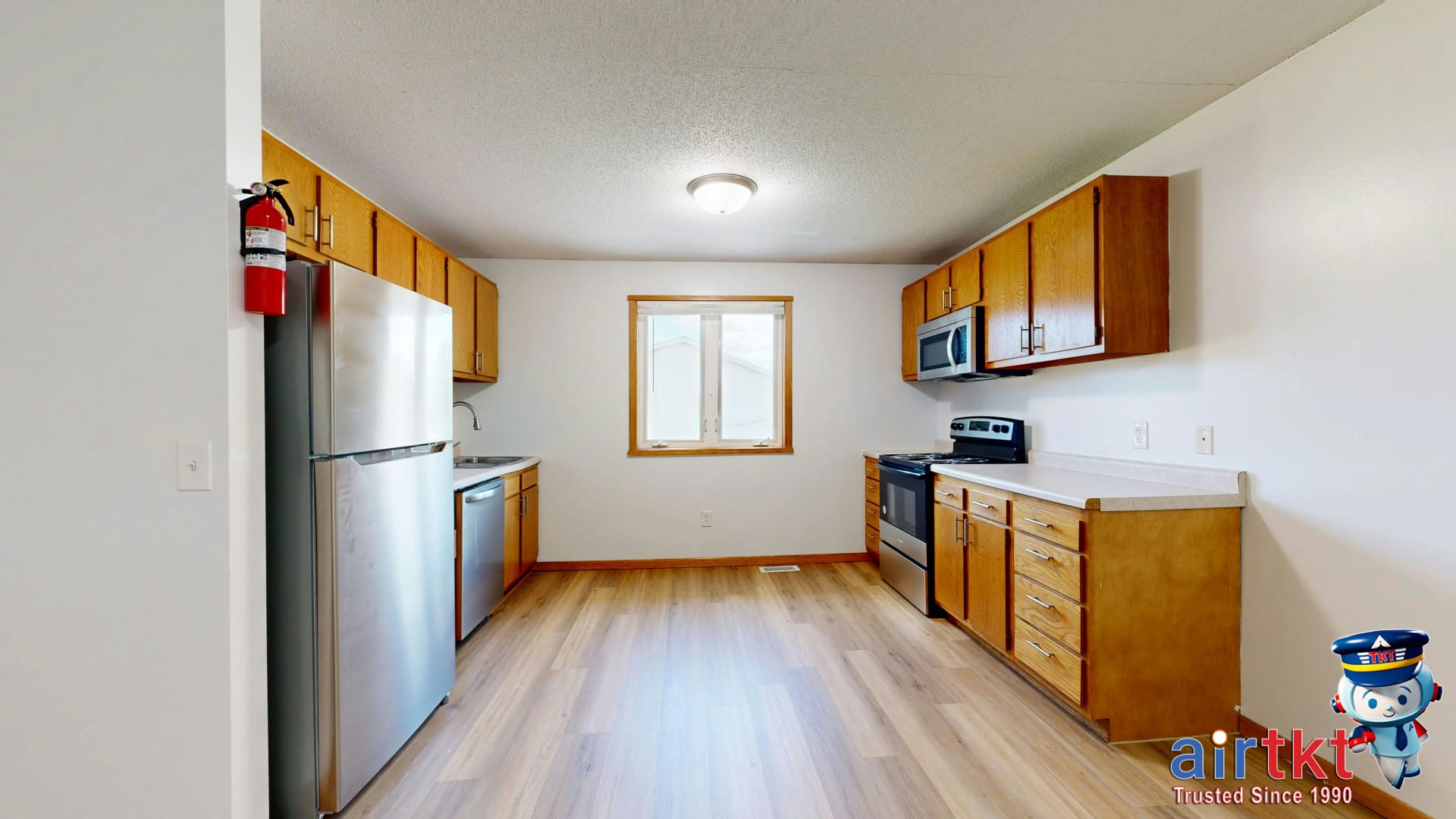
When traveling with family, selecting the right accommodation is crucial for comfort and convenience. Apartments or vacation rentals equipped with kitchens and laundry facilities offer an ideal solution. These spaces provide more room than typical hotel rooms—allowing everyone to relax and spread out after a busy day. Having access to a kitchen and laundry amenities supports family needs, especially during extended stays or study abroad programs.
Self-catering accommodations come with a host of benefits. Preparing your own meals gives you full control over ingredients, which is essential for families managing dietary restrictions or preferences. This flexibility allows you to avoid expensive restaurant meals while ensuring everyone eats healthily and happily. Grocery shopping locally also introduces a cultural experience and can significantly reduce daily food expenses, helping you stick to your travel budget.
Additionally, laundry facilities in your accommodation provide a practical advantage by enabling you to pack lighter and keep clothes fresh throughout your trip. This eliminates the hassle and cost of frequent laundry services or excessive clothing purchases.
Location plays a vital role when choosing family-friendly accommodations. Opt for places near schools or universities hosting your study abroad programs to reduce commute times and daily stress. Proximity to parks, grocery stores, and healthcare facilities further enhances convenience for families, making day-to-day life smoother while away from home.
Safety is paramount when traveling with children. Research neighborhoods thoroughly before booking. Look for family-oriented communities with low crime rates, good lighting, and easy access to public transportation. Reading reviews from other travelers who stayed with families can provide valuable insight. Avoid areas known for nightlife or crowded tourist spots that may not be suitable for young children.

Prepare Practical Flight Tips for Traveling with Kids
Flying with children can be challenging, but with the right preparation, it becomes a smoother journey for the whole family. Start by creating a detailed packing checklist that covers essentials for your kids’ comfort, health, and entertainment. Don’t forget diapers, wipes, extra clothes, and favorite snacks. Include small toys, books, or tablets loaded with games and shows to keep them engaged throughout the flight.
Choosing the right seats is another important factor. For families traveling with young children, bulkhead seats offer extra legroom and space to move around. Aisle seats near the front of the plane enable easier access to restrooms and quicker boarding and deplaning. If your child sleeps while flying, window seats provide a cozy spot with fewer disturbances, but ensure an adult is seated nearby for assistance.

When it comes to strollers and car seats, airline policies vary, but generally, you can check them for free or bring them to the gate for gate check. According to the TSA guidelines, strollers and car seats are allowed through security screening and usually gate-checked right before boarding, helping parents manage toddlers en route to the aircraft. The IATA reinforces checking stroller dimensions in advance to avoid extra fees or issues. Always label your stroller or car seat with your contact information.
Stress reduction during flights and layovers greatly depends on your planning. Build buffer time in layovers to allow kids to stretch and burn off energy. Carry a compact travel blanket and a neck pillow to create a cozy spot for naps. Offer frequent small snacks and hydration to keep moods stable. Keeping a consistent routine—even on planes with designated play or quiet times—helps kids adjust.
- Pack a well-stocked carry-on with essentials and comfort items.
- Reserve seats early, prioritizing bulkhead or aisle seating.
- Understand stroller and car seat gate-check procedures from airlines and TSA.
- Plan layovers with kid-friendly zones or play areas if possible.
- Use screen time strategically but encourage interactive play and snacks.
By focusing on these specific details—packing thoughtfully, selecting smart seating, following stroller/car seat policies, and managing stress with engaging strategies—you can transform air travel with kids into an enjoyable experience. For booking the best family-friendly flights, visit AirTtkt to access affordable fares, flexible search tools, and expert support, making your next trip easier from start to finish.
Build Family Travel Budget and Booking Strategies
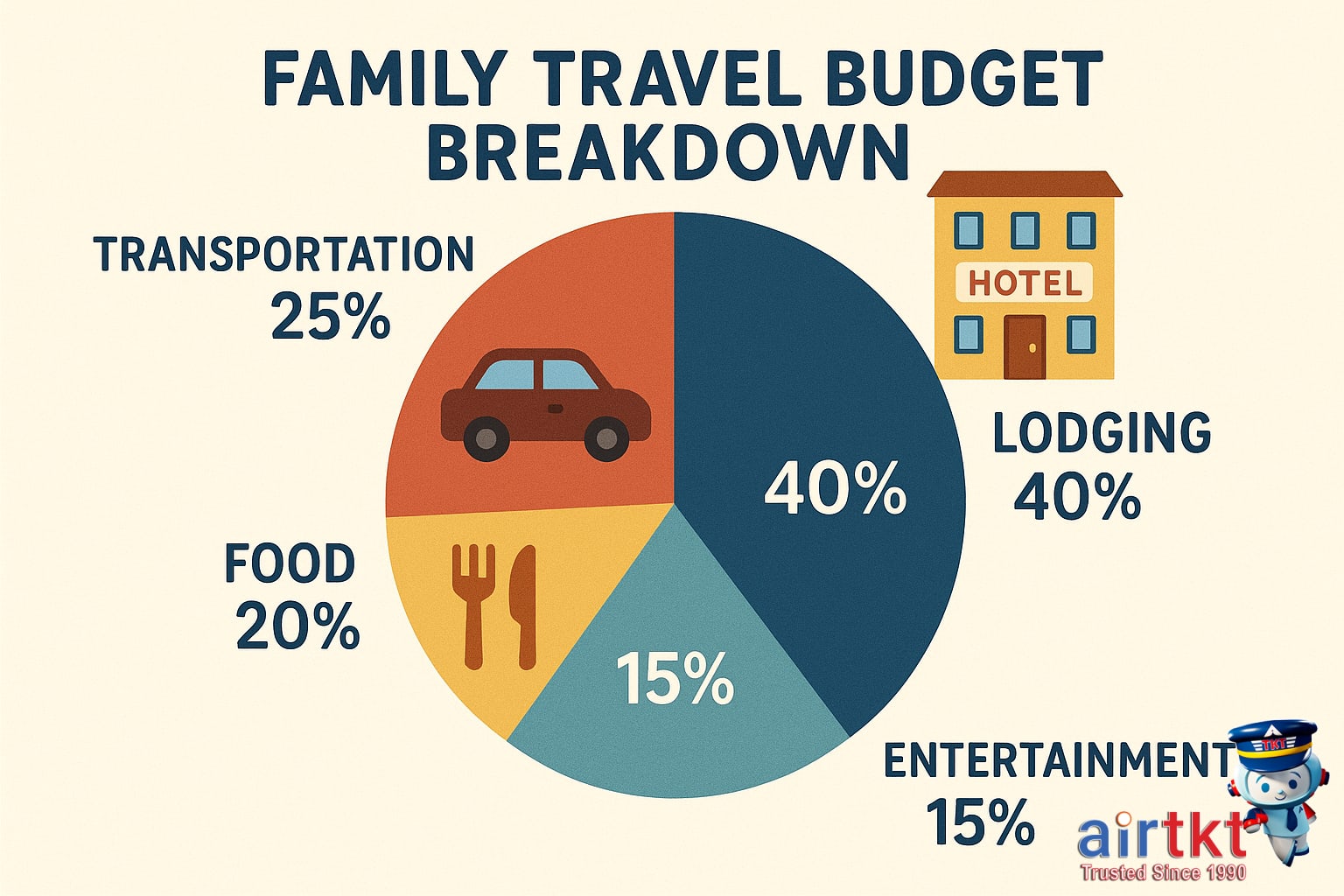
Planning a family trip requires careful budgeting to balance comfort and savings. For a family of four, typical travel expenses fall within a $3,000 to $6,000 range, covering major components like airfare, accommodations, meals, local transport, and activities. Airfares often represent the largest share, ranging from $1,200 to $2,500 depending on destination and timing. Lodging costs vary widely, with mid-range hotels or vacation rentals generally costing between $1,000 and $1,800 for a week-long stay. Budgeting for meals and local transport averages around $500 to $700, while activities and sightseeing can add another $300 to $600, depending on interests.
Timing your bookings is crucial to avoiding inflated prices. Flexible date searches allow families to compare airfare and hotel rates across multiple days, identifying the most affordable travel windows. Crowd calendars reveal busy travel periods to help you steer clear of peak pricing, such as holidays or school vacations. Booking flights 2-3 months in advance for domestic trips and 3-6 months ahead for international travel usually yields the best fares. Accommodations should be reserved early to lock in competitive rates, especially in popular tourist destinations.
AirTkt offers powerful tools tailored to family travelers aiming to stretch their budgets. The Lazy Fare feature uncovers cheaper multi-stop routes without adding unnecessary delays, letting you save significantly compared to direct flights. Nearby Airport Search broadens your options by including alternate airports near your origin or destination where fares may be lower. This approach can slash airfare costs by hundreds of dollars, especially in regions with multiple airports.
Exploring alternate airports and multi-stop routes are proven cost-saving strategies. For example, flying into a secondary airport and taking a short train ride into the city can cut travel expenses without sacrificing convenience. Similarly, selecting flights with a layover can reduce ticket prices considerably if your family doesn’t mind a slightly longer journey. These methods require flexibility but are well worth the savings.
Understanding airline fare classes and their price fluctuations can further enhance your booking strategy. Economy fares may vary from non-refundable basic tickets to flexible options with added benefits. Prices can shift based on demand, seasonality, and how many seats remain at each fare level. Monitoring these changes using AirTkt’s real-time fare comparison helps you choose the ideal time to purchase tickets at the lowest possible price.
Answer Family Study Abroad Travel FAQs
Can I find affordable flights for a family study abroad semester trip?
Absolutely. Using AirTtkt’s advanced tools like Lazy Fare and Nearby Airport Search, you can discover cost-saving routes and alternate airports. Booking early and comparing multiple airlines helps secure the best family fares without sacrificing convenience or comfort.
What is the best time to book flights for family travel?
For study abroad trips, book flights 2 to 4 months in advance to catch the best prices. Mid-week booking, especially on Tuesdays or Wednesdays, often offers cheaper fares. AirTtkt’s Flexible Date Search also highlights the lowest fare days for your itinerary.
How do I prepare for flying with children on study abroad trips?
Plan ahead by bringing entertainment, snacks, and comfort items. Arrive early for smooth check-in and security. Choose seats that suit your family’s needs, and pack essentials in carry-on bags. Staying calm and organized ensures a stress-free experience for kids and parents alike.
When should we plan our accommodations to manage budget and convenience?
Book accommodations as soon as your flights are confirmed to lock in the best rates near your destination. Consider family-friendly options close to schools or cultural sites to save on daily transportation costs and maximize your study abroad experience.
Why is booking flexible travel dates important for family trips?
Flexible travel dates allow you to capitalize on lower airfares and accommodate unexpected schedule changes. This flexibility reduces stress and can save hundreds on flights, which is essential when traveling with children on study abroad programs.
How can I include educational activities for kids during the study abroad semester?
Research local museums, cultural events, and language classes that align with your family’s interests. Integrate visits to historical sites and hands-on workshops to enrich your child’s learning beyond the classroom.
Can I use AirTtkt tools to get the best deals for my family’s study abroad travel?
Yes! AirTtkt offers user-friendly features like Lazy Fare, Nearby Airport Search, and Flexible Date Search to help families find affordable, convenient flights for study abroad. Plus, 24/7 customer support assists you every step of the way.
Plan Safe, Educative Family Study Abroad Trips
Planning a family study abroad trip requires a blend of smart destination selection, engaging educational activities, and accommodations that cater to children’s needs. Choosing a place that offers rich cultural experiences while providing kid-friendly amenities ensures both learning and comfort throughout your journey. Practical travel tips—like packing essentials for all ages and preparing for different time zones—also contribute to a smooth, enjoyable family trip.
Budget-conscious families benefit from strategic timing and well-structured expense planning. Booking flights and accommodations during off-peak seasons or several months in advance can lead to significant savings. Structuring your itinerary to combine educational attractions with free or low-cost activities helps maintain costs without sacrificing value. Always prioritize transparent pricing and look out for discounts or special offers tailored for families.
To simplify and optimize your planning process, take advantage of AirTtkt’s comprehensive booking platform. Its real-time fare comparisons, flexible date searching, and nearby airport options help uncover the most affordable travel routes. Coupled with 24/7 customer support, including free phone-assisted bookings, AirTtkt ensures you secure the best deals effortlessly while having expert assistance on demand. This support is invaluable when tailoring complex family itineraries that balance flights, lodging, and transportation.
For a smooth, safe family semester abroad, consider these final tips:
- Confirm all travel documents and health requirements early to avoid last-minute stress.
- Create a detailed itinerary that balances study time with cultural exploration and downtime.
- Pack light but include essential items like snacks, entertainment, and first-aid supplies for children.
- Maintain open communication with your family and local contacts to ensure everyone’s safety and well-being.
By combining diligent preparation with smart booking through AirTtkt, your family can fully embrace the adventure of studying abroad together. Thoughtful planning turns educational trips into memorable experiences filled with growth, discovery, and joy—all while staying mindful of your budget and safety needs.