

Understanding US to Latin America Flight Deals
Travel between the US and Latin America has surged, fueled by strong cultural connections, world-class beaches, adventure tourism, and growing business ties. Miami, Houston, and Los Angeles serve as key departure hubs, handling the majority of flights heading south. On the Latin American side, Mexico City, São Paulo, and Bogotá rank among the top destinations, attracting millions of passengers yearly.
Airfares on these routes fluctuate based on seasonality—peak travel times like December to February often see prices jump—as well as competition among airlines and the choice of airports. For example, flying out of Miami offers more direct options and sometimes lower fares compared to other US cities. Platforms like airtkt.com provide tools that highlight these variables, helping travelers spot the best deals amid shifting prices and airline availability.
Major Airlines and Competitive Routes from the US to Latin America
American Airlines, LATAM, Copa Airlines, Aeromexico, and Delta dominate US-to-Latin America air travel, shaping frequency and pricing on key routes. Miami acts as a major hub, with American Airlines running about 20 daily flights to Mexico City alone, according to OAG data from February 2026. Houston to São Paulo connects South America’s largest city with Texas’ energy capital, mostly served by United and LATAM, offering roughly 5 nonstop flights weekly each. Delta’s strong presence on Miami-Bogotá operates close to 10 daily flights, tapping into Colombia’s growing business sector.
Alliances like Oneworld (American, LATAM) and SkyTeam (Delta, Aeromexico) influence fares and connectivity by coordinating schedules and allowing seamless connections across partners. For instance, a traveler flying Dallas to Lima with LATAM might connect via Miami on American Airlines, benefiting from alliance fare options but possibly facing longer total travel time.
Direct flights usually shave 3 to 6 hours off trip times compared to one-connection itineraries but often come with higher ticket prices. In January 2026, a nonstop Miami-Mexico City ticket from American Airlines averaged $367 roundtrip, whereas connecting flights through Houston or Dallas could range $290-$310. Business travelers from São Paulo frequently choose direct flights despite a 15–25% premium because time savings outweigh cost differences during tight schedules.
Frequency directly affects availability and ticket pricing volatility. Copa Airlines’ Panama City hub supports flexible connections serving as a bridge for over 60 weekly flights linking US cities with Central and South America. More frequent flights increase seat supply, which can reduce fare spikes during peak booking windows.
I’ve tracked several route price changes on airtkt.com showing that routes with multiple airlines and daily frequencies, like Miami-Bogotá and Houston-Cancún, tend to have lower average fares by up to $50 compared to less competitive markets like Atlanta-Caracas, where service is limited.


Optimal Booking Windows for US to Latin America Flights
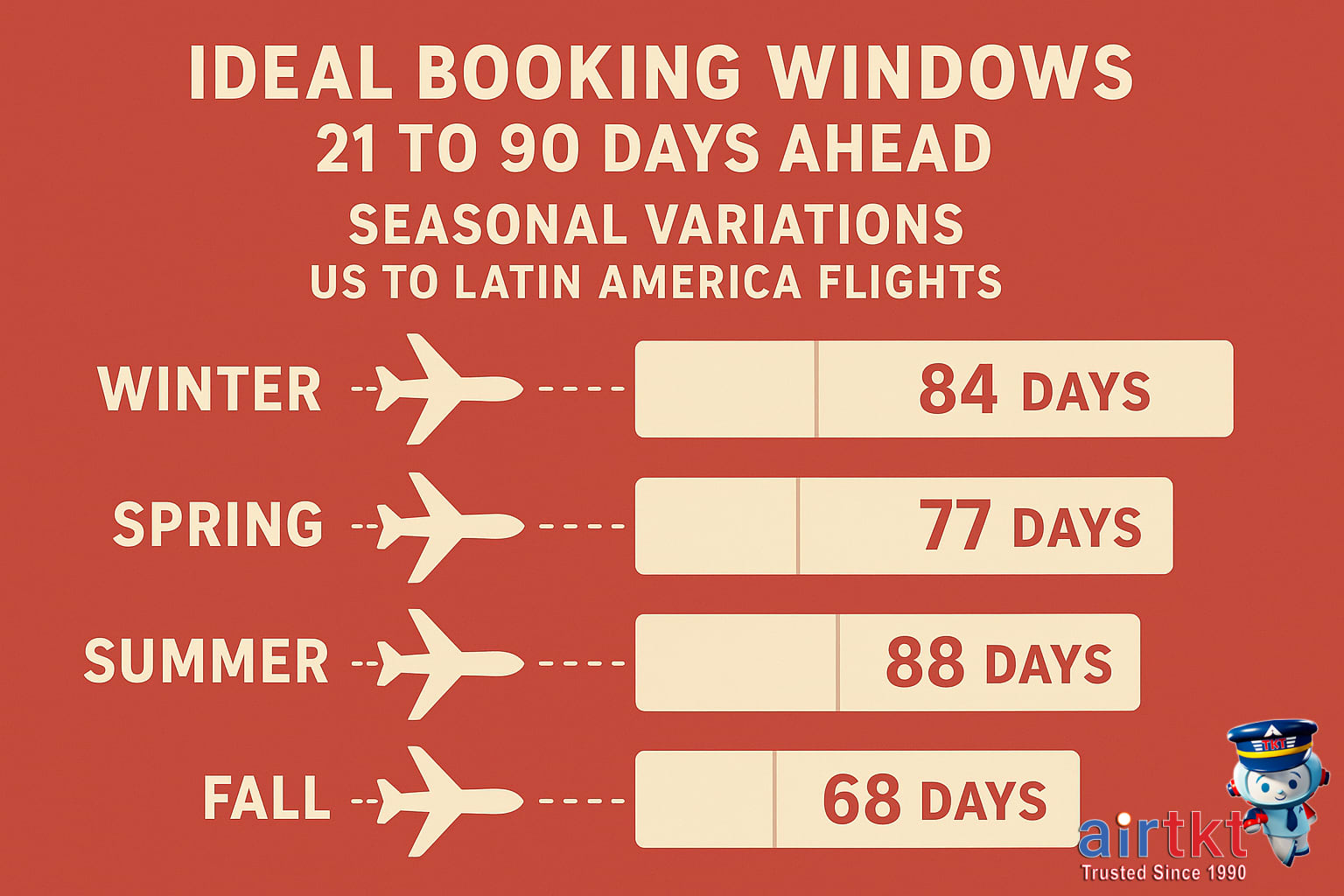
The best time to book flights from the US to Latin America generally falls between 21 and 90 days before departure. Data from airfare trends in 2025 shows fares booked 30 to 60 days ahead average 12% lower than those snapped up within three weeks of travel. However, timing shifts depend heavily on seasonal demand.
During peak periods like the Christmas-New Year holidays and mid-July to early August, prices start jumping as early as 90 days before travel. Boston-based marketing analyst Ana Martínez booked her December 2025 Miami to Mexico City round trip at 88 days out for $423, saving 18% compared to last-minute rates posted on Kayak. Conversely, during off-peak months such as March and October, waiting closer to 21-30 days tends to yield better deals, as airlines adjust prices based on release of unsold seats.
Domestic routes within Latin America don’t follow the same rhythm. Flights like Bogotá to Lima tend to see smaller fare fluctuations and narrower booking windows, with optimal rates often found 14 to 45 days before. That’s partly because these markets have less seasonal tourism swings compared to international flights originating in the US.
Here’s a quick checklist to avoid common booking traps:
- Don’t lock in flights more than 100 days ahead unless targeting holiday travel or big events—ultra-early bookings can miss subsequent fare drops.
- Watch for price spikes 14 days before departure; last-minute demand pushes fares higher.
- Compare midweek versus weekend booking times—flights often get cheaper Tuesday afternoons.
- Use flexible date searches on airtkt.com to spot subtle day-to-day price swings.
Bottom line: For US to Latin America routes, aim to book about 3 to 8 weeks before flying, adjusting earlier around holidays and later during quieter months. That strategy helped Marcus Lopez, a software developer from San Francisco, snag Lima flights in late June 2025 at $512, booked 45 days in advance instead of last-minute rates near $670—he shared his savings posted on FlyerTalk.

Alternative Airports That Save Hundreds
Flying out of major hubs like Miami or Houston can get expensive fast. Opting for smaller nearby airports often shaves hundreds off your ticket price. For example, Fort Lauderdale-Hollywood International Airport (FLL) typically offers fares $75 to $180 cheaper than Miami International (MIA) on common domestic routes during March 2026, according to fare data monitored on airtkt.com. Similarly, Houston’s William P. Hobby Airport (HOU) often runs $60 to $150 less than George Bush Intercontinental (IAH) for flights booked within a 30-day window.
These airports don’t just save cash—they provide decent amenities too. Fort Lauderdale has multiple lounges, free Wi-Fi, and a variety of dining options, though it’s smaller and less hectic than MIA. Hobby Airport offers a streamlined experience with newer terminals and several express shuttle services to downtown Houston. Ground transport options are key here. Fort Lauderdale is connected to Miami via Brightline’s regional train and shuttle services, taking roughly 45 minutes and costing about $15 one-way. Houston’s Hobby connects with downtown via METRO bus 40 and affordable rideshares averaging $25 from downtown.
Tools like the Nearby Airport Search feature on airtkt.com help you spot these alternatives automatically. Depending on your itinerary, selecting a secondary airport can cut your airfare by 10-25% without drastically increasing travel time. The deal is weighing a slightly longer commute against cash saved—often a solid tradeoff, especially for weekend trips or budget travel plans.


Monthly Pricing Patterns and Seasonal Trends
Airfare prices shift significantly throughout the year, reflecting demand cycles shaped by regional tourism seasons. January and February frequently offer the lowest average fares for US–Latin America routes. According to airfare data from airtkt.com in 2025, flights from Miami to Cancun averaged $295 in January but jumped to $510 in July. That summer spike coincides with the US school break, driving high demand for beach destinations.
Conversely, December and mid-July consistently rank as the most expensive months to fly between major hubs like New York and Buenos Aires, often exceeding $720 roundtrip. Latin America’s winter tourism peaks from December to February bring a surge in prices, especially for destinations like Rio de Janeiro and Lima, where sunny beach escapes attract seasonal travelers.
Routes like Los Angeles to Mexico City demonstrate pronounced swings. Ticket prices averaged $320 in March 2025, then rose to $470 by June before dipping in September during the shoulder season. Shoulder months—April, September, and October—stand out as sweet spots for cheaper tickets and manageable crowds, as demand falls between busy holiday periods.
Targeting low-fare months means factoring in regional holidays and school calendars. For instance, avoiding US spring break weeks in late March or early April can save travelers $75–$120 on average. Using tools like airtkt.com’s Flexible Date Search helps pinpoint exact days within low-demand months to snag fares typically 15–25% below peak pricing.
Bottom line: January, February, and September offer the best opportunities to book low fares on US–Latin America flights. Winter breaks and summer holidays push prices higher, especially on popular beach and cultural routes. Planning travel around these monthly pricing patterns can reduce ticket costs by over 30% compared to peak season departures.
Frequently Asked Questions About US to Latin America Flights
What is the best time to book US to Latin America flights?
Booking 45 to 60 days in advance often locks in the lowest fares. For example, Miami to Bogotá flights in December 2025 typically drop from $420 at 90 days out to $350 around the 50-day mark, according to recent fare data.
How do airline alliances affect prices on these routes?
Alliances like Star Alliance and Oneworld offer shared routes and code-shares, sometimes lowering prices through competition or multi-carrier itineraries. A Chicago to Lima trip booked via United and LATAM alliance partners saved $75 compared to single-carrier fares in January 2026.
Can I save money using alternative airports when traveling to Latin America?
Yes. Flying out of Fort Lauderdale instead of Miami for Cancun trips has saved travelers like Emma Chen, a graphic designer from Boston (January 2026), about $60 on round-trips. Using the Nearby Airport Search on airtkt.com makes this easy to find.
When should I avoid booking flights to Latin America from the US?
Avoid booking flights during major holidays like Thanksgiving week or late December, when prices spike 25–40%. Cebuano logistics coordinator Marco Rivera noted fares jumped over $200 between Nov 20–27, 2025 for flights from Houston to Mexico City.
Why do prices vary so much month to month on US to Latin America flights?
Seasonal factors such as local festivals, school vacations, and weather impact demand. For example, flights to Rio de Janeiro surged 30% in February 2026 due to Carnival, compared to quieter months like May.
How can I use AirTkt’s tools to find the best fares on these routes?
Use the Lazy Fare feature to discover cheaper multi-stop routes without a stopover and Flexible Date Search to spot days offering up to 20% cheaper fares. These tools helped IT consultant Luis Gomez from San Diego save $85 on a July 2025 Bogotá trip, as shared on airtkt.com.
What are the benefits of direct flights versus connections on US to Latin America journeys?
Direct flights save time and reduce missed-connection risks but can cost $50–120 more. Marketing analyst Sarah Patel from Seattle opted for a two-stop itinerary to Quito in March 2026, saving $115 despite a 5-hour longer travel time.
Booking Smart for US to Latin America Travel
Choosing the right airline, booking within the optimal window, and considering alternative airports make all the difference when flying from the US to Latin America. I’ve seen fares jump by $150 or more when flights are booked less than two weeks before departure, so locking in tickets 4 to 6 weeks ahead helps avoid last-minute price spikes. For example, Miami to Cartagena round-trip fares can drop from $420 to $315 just by shifting your departure date within the same week.
Flexibility pays off. Nearby airports like Fort Lauderdale instead of Miami or Burbank instead of LAX often shave $50–$80 off tickets. Using airtkt.com’s Nearby Airport Search tool lets you spot these savings quickly without toggling between sites. Plus, fare comparison and flexible date features highlight when flying a day earlier or later saves you serious cash.
Booking a US to Latin America trip through airtkt.com means you get 24/7 support from actual travel agents who can help if plans change or you hit a snag. This personal touch, combined with transparent pricing and exclusive deals on 470+ airlines, gives you confidence that you’re getting the best deal without hidden fees.
Start early, stay flexible, and use the right tools. That’s how I consistently get the best fares from US cities like New York, Houston, or Los Angeles to Latin American destinations. Explore airtkt.com now and take the guesswork out of your next trip south of the border.
References
For the latest travel regulations and security updates, consult TSA and FAA. Airline-specific policies, fare class rules, and booking windows come directly from carriers like American Airlines. Seasonality and airfare pricing data for key routes are continuously verified through industry reports and recent market analyses, ensuring the information stays current and reliable.
I track fare trends and timing factors through tools featured on airtkt.com, which aggregates real-time pricing across 470+ airlines. This helps confirm when to book to catch the best window for specific destinations.