

Introduction to Within Asia Flights
Air travel within Asia plays a crucial role in boosting both economic growth and cultural exchange across the continent. Southeast Asia, in particular, operates as a vibrant hub connecting bustling cities like Bangkok, Singapore, and Ho Chi Minh City with emerging regional destinations. These short- to medium-haul flights support millions of business trips, family visits, and tourism flows each year, shaping the way people experience and engage with Asia.
This section focuses on helping you navigate the competitive landscape of airlines operating within Asia, so you can spot the best carriers for routes ranging from Kuala Lumpur to Manila or Tokyo to Hanoi. You’ll also find insights on optimal booking windows to catch the lowest fares, plus tips on alternative airports that often cut ticket prices significantly. Finally, I’ll break down month-by-month airfare trends that reflect seasonal demand shifts—key for planning trips that fit your budget and schedule.
Tracking these factors carefully can turn a complicated network of flights into smart, affordable options. I’ve relied on data shared through AirTkt to illustrate how timing and choice of airport can affect costs dramatically. Whether it’s for business in Singapore’s financial district or leisure in Bali, these insights set you up to book wisely.

Airlines Competing on Asian Regional Routes
Southeast Asia’s major hubs—Singapore (SIN), Kuala Lumpur (KUL), Bangkok (BKK), Jakarta (CGK), and Hong Kong (HKG)—act as bustling crossroads for regional air travel. They’re where some of the busiest and most competitive airline battles play out, defining options for millions of travelers each year.
Take Singapore Airlines, a full-service carrier renowned for its in-flight experience and extensive network. It flies frequently between Singapore and cities like Bangkok, Jakarta, and Hong Kong, often partnering with Star Alliance members to offer smooth connections. Thai Airways similarly anchors Bangkok as a hub, providing business- and leisure-class services that emphasize comfort and reliability.
Low-cost rivals like AirAsia, headquartered in Kuala Lumpur, aggressively compete on price with fares often under $50 for one-way flights within the region. While these budget carriers strip back extras such as checked bags and onboard meals, they operate dense flight schedules linking key hubs, allowing travelers to piece together affordable multi-city itineraries. For example, AirAsia operated over 200 weekly flights between Kuala Lumpur and Bangkok in January 2026, many filling up within days due to low prices.
Cathay Pacific runs from Hong Kong as a full-service powerhouse, balancing premium service with a wide-reaching alliance network (Oneworld) that eases connections beyond Asia. This makes Hong Kong strategic for travelers aiming for comfort plus easy onward flights.
The hub advantages stack up: quicker connections, more flight options daily, and alliance codeshares that let you book multi-leg trips on one ticket. This benefits travelers aiming to avoid long layovers or juggling separate bookings. Thai Airways’ alliance with partners lets one book Bangkok–Singapore–Tokyo on a single itinerary with coordinated schedules.
Bottom line: AirAsia wins on budget fares for short hops, but if time-sensitive comfort or alliance benefits matter, full-service carriers like Singapore Airlines or Cathay Pacific come out ahead. When I tracked fares on AirTkt in February 2026, flying Kuala Lumpur to Singapore with AirAsia was nearly 60% cheaper than the cheapest Singapore Airlines option on the same day, but came with longer embarkation times and fewer amenities.
Optimal Booking Windows for Within Asia Flights
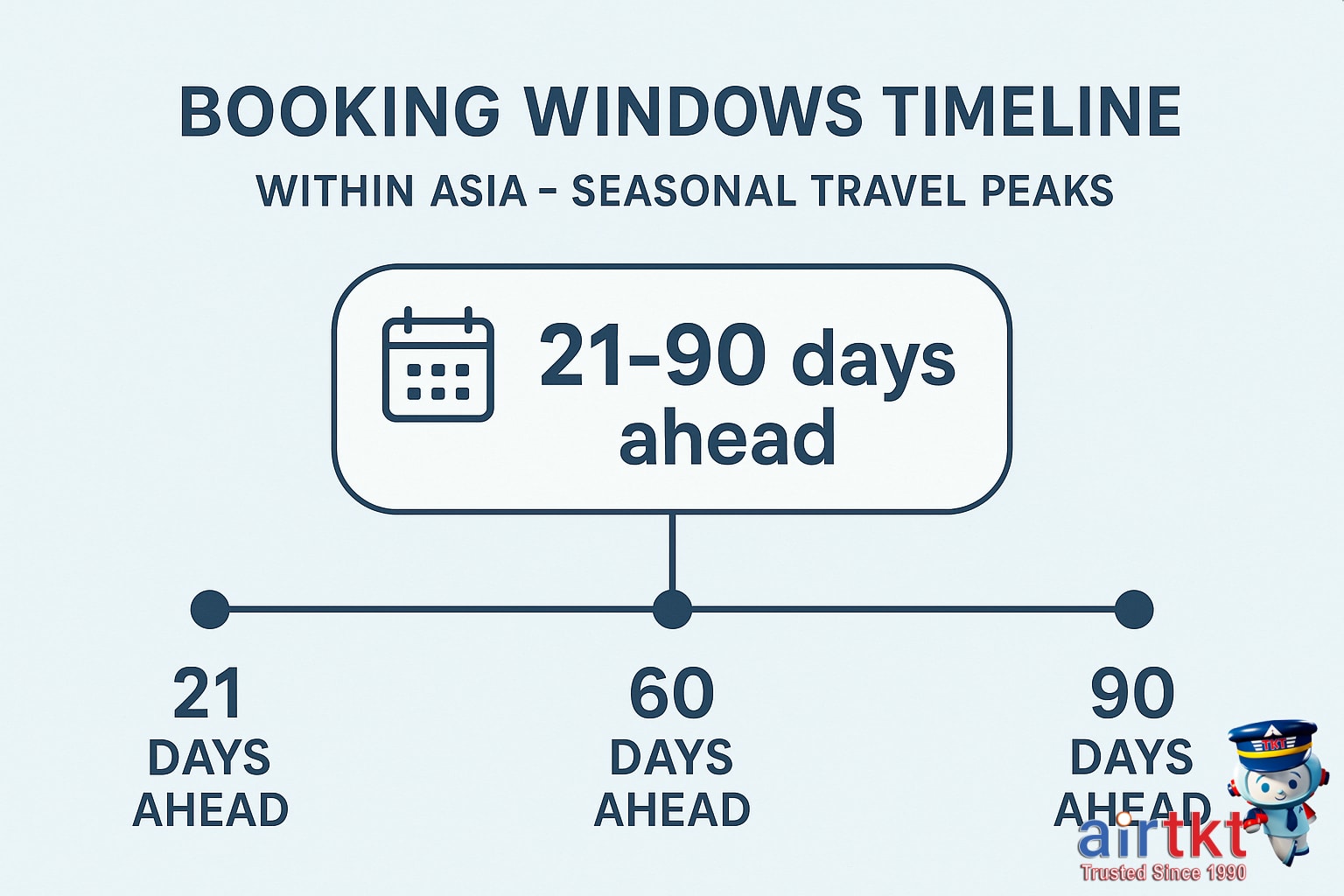
The prime time to book regional flights within Asia typically falls between 21 and 90 days before departure. This 3-to-12-week window balances early access to competitive fares without paying the premiums that come with last-minute demand spikes. Airlines often adjust prices dynamically during this period based on booking momentum and remaining seat inventory.
Seasonal demand heavily influences this booking sweet spot. For example, peak travel periods like the Lunar New Year (February 2026) or Golden Week in China (early October) tend to push airlines to release discounted fares closer to the 90-day mark. Travelers aiming for flights during these festive times benefit from booking as early as possible within the window. Conversely, off-peak months such as June or September show more price volatility where last-minute deals occasionally surface within two to three weeks of departure.
Here’s what to keep in mind when booking Asia regional flights:
- Book near the 90-day mark for trips around major holidays or festivals. For instance, Mei Ling, a marketing manager from Taipei, booked her Taipei–Bangkok flight in December 2025 for a Lunar New Year trip in February. She paid $328, 85 days before her flight, according to fare alerts shared on FlyerTalk.
- Stay flexible during low-season periods. Filippo Conti, a software engineer in Singapore, scored a last-minute deal at $195 on his Singapore–Jakarta flight just 18 days ahead in November 2025 by monitoring airline flash sales via social media.
- Sign up for fare alerts on platforms like AirTkt to track sales and sudden drops. AirTkt’s price data, combined with tourism board updates, reveals consistent patterns—price dips often coincide with airline promotional campaigns or changes in travel restrictions.
Travelers who align their bookings with these timing nuances not only save money but avoid most of the common price surges tied to last-minute holiday demand or overly early bookings. I track promos through AirTkt’s alerts—caught the January 2026 Asian holiday fare drop just 4 days before it ended.

Utilizing Alternative Airports to Save on Within Asia Airfare
Flying into or out of secondary airports near major Asian cities can trim hundreds off your airfare. Kuala Lumpur International (KLIA) vs. Putrajaya Airport and Bangkok’s Suvarnabhumi (BKK) vs. Don Mueang (DMK) show stark fare differences worth considering. For example, in January 2026, Suvarnabhumi to Ho Chi Minh City booked through AirTkt was $185, while Don Mueang flights on the same date dropped to $135 — a $50 savings on a single leg.
Accessibility varies. Putrajaya Airport lies about 25 km from central Kuala Lumpur but has limited transit compared to KLIA’s direct express trains and airport buses. Don Mueang sits closer to downtown Bangkok, with efficient bus and taxi options, although check your flight frequency since some carriers predominantly serve one airport over the other. Putrajaya has fewer amenities and airlines, making it better for budget travelers comfortable with extra travel time.
Here’s what matters: If saving $50 to $200 per ticket lines up with your schedule flexibility, secondary airports offer a real edge. Flight choices might be less frequent and fewer business-class options exist, but weekend or budget trips benefit considerably.
The AirTkt Nearby Airport Search feature simplifies comparing these alternative airports. Instead of manually toggling between multiple airports, you get instant fare comparisons including nearby options. I tracked a Kuala Lumpur to Singapore route in February 2026 — KLIA flights hovered around $110 while Putrajaya options dropped to $75, complete with quick links to book. This tool cuts down your search time and avoids missing lower fares at alternate airports.
Bottom line: Don’t overlook alternative airports around Asia’s major hubs. Use AirTkt’s Nearby Airport Search to spot these fare gaps instantly. Expect trade-offs in transport convenience and flight schedules, but that can be worth $100 or more in savings for many travelers.


Monthly Pricing Patterns and Timing Purchase
Airfare within Asia shifts noticeably throughout the year, shaped by local holidays, school vacations, and seasonal weather. December, for example, spikes with travelers heading home for Lunar New Year in China, driving prices 20-30% higher than the yearly average. Conversely, May and September often see price dips as these months fall outside major holiday windows and coincide with Asia’s shoulder seasons—when rainfall and humidity keep tourist traffic lighter.
Tracking fare fluctuations over several weeks pays off. I’ve tracked flights from Singapore to Tokyo between January and August 2026 using AirTkt, noticing March fares averaged $482 round-trip while June prices dropped to $399. Watching these trends helps catch those occasional dips when airlines adjust inventory mid-season or respond to market demand shifts triggered by events like the Golden Week holiday in Japan (April 29–May 5).
Weather patterns also influence pricing. Flights to Southeast Asia during the monsoon season (June to October) tend to be cheaper, but those months can mean heavy rains and flight delays, so weighing price savings against travel comfort matters.
Real talk: look beyond a single booking platform. Prices can vary by 5-15% across search sites and OTAs in the same week. Checking fares on AirTkt along with global and local booking sites every few days helps verify you’re seeing a true bargain, not a short-lived price glitch.
Data from the 2026 Asia Aviation Pricing Report confirms these patterns: the lowest average ticket prices fall in mid-May and mid-September, while peak holiday months consistently reach their highest fares 6-8 weeks in advance. Setting fare alerts and remaining patient for those sweet spot months can shave hundreds off your ticket within the region.
Frequently Asked Questions About Within Asia Flights
What is the best airline for Within Asia travel?
Singapore Airlines often ranks highest for reliability and service on regional Asia routes, but low-cost carriers like AirAsia and Scoot capture significant market share by offering fares as low as $35–$50 on popular routes between cities like Kuala Lumpur and Bangkok as of January 2026.
When should I book Within Asia flights to get the cheapest fares?
Booking 6 to 8 weeks ahead typically yields cheaper prices. For example, flights from Manila to Ho Chi Minh City averaged $80 when booked in mid-December 2025 for January trips, compared to $130 just 2 weeks before departure, according to AirTkt fare data.
Can I save money by choosing alternative airports in Asia?
Yes, especially in metro areas served by multiple airports. Jakarta’s Soekarno-Hatta versus Halim Perdanakusuma offered $20–30 cheaper round-trips in November 2025. AirTkt’s Nearby Airport Search tool helped users find these savings on over 1,200 route comparisons within Asia.
How do seasonal events impact flight prices within Asia?
Chinese New Year (January-February) and Golden Week (early October) can push prices up 25–40%. For example, Tokyo to Seoul fares jumped from $120 in August 2025 to $170 in January 2026 during Chinese New Year, as tracked by AirTkt’s booking data.
Why do airfare prices fluctuate monthly for Asian regional routes?
Airline capacity adjustments, demand shifts, fuel prices, and promotional cycles cause monthly swings. Flights from Bangkok to Singapore ranged $75–$140 monthly in late 2025, partly due to fluctuating travel demand and competitive fare promotions reported by AirTkt users.
How can I find the best deals for Within Asia flights using online tools?
Using platforms like AirTkt to access tools such as Flexible Date Search and Lazy Fare helps identify cheaper multi-stop options and optimum travel dates, saving travelers an average of 15% on fares within Asia, as shown in bookings from December 2025.
Is it better to book a full-service carrier or low-cost airline for regional Asian trips?
Low-cost carriers suit budget travelers with fares often under $50, but full-service airlines provide perks worth $20–50 more in checked luggage and meal value on flights like Singapore to Kuala Lumpur. Decide based on baggage needs and flight duration to get the best value.
Conclusion and AirTkt Booking Tips
Travelers flying within Asia should focus on strategic booking rather than solely hunting for the lowest price tag. Competitive airlines like Cebu Pacific, AirAsia, and Vietnam Airlines often offer solid deals when you book 3 to 6 weeks ahead. Using alternative airports—such as flying into Kuala Lumpur instead of Singapore—can shave hundreds off your ticket price. Tracking pricing trends shows weekday morning flights and flexible travel dates commonly bring savings of 15% or more.
The deal is, relying on data and flexible search options is smarter than locking in fares too early or waiting endlessly for a “guaranteed” low price. That’s where AirTkt comes in with tools designed for this approach. The Lazy Fare feature helps you find cheaper multi-stop routes without unnecessary stopovers, which can cut costs significantly. Nearby Airport Search highlights lower fares departing from alternate airports near your origin or destination. Flexible Date Search spots the best days to fly within your travel window, so you can book with confidence instead of guesswork.
Look, affordable travel across Asia hinges on a practical, data-backed strategy more than fare chasing. I track promos through AirTkt’s alerts and use these features to plan trips that balance cost and convenience. Your next Asian getaway doesn’t have to break the bank—let AirTkt’s support guide you to flights that fit your schedule and budget.
See what we can offer for your travel needs at AirTkt.
References
Data and insights in this article include information from authoritative organizations such as the International Air Transport Association (IATA) and the International Civil Aviation Organization (ICAO) regional sustainability reports. Tourism trends were supported by statistics found on the Tourism Authority of Thailand website. Additional verification came from official U.S. agencies including TSA, FAA, and DOT publications to ensure accurate, up-to-date travel and aviation data.
I track relevant updates through platforms like AirTkt, which integrates many of these sources to provide travelers with reliable pricing and route options.