
Introduction to Cherry Blossom Travel
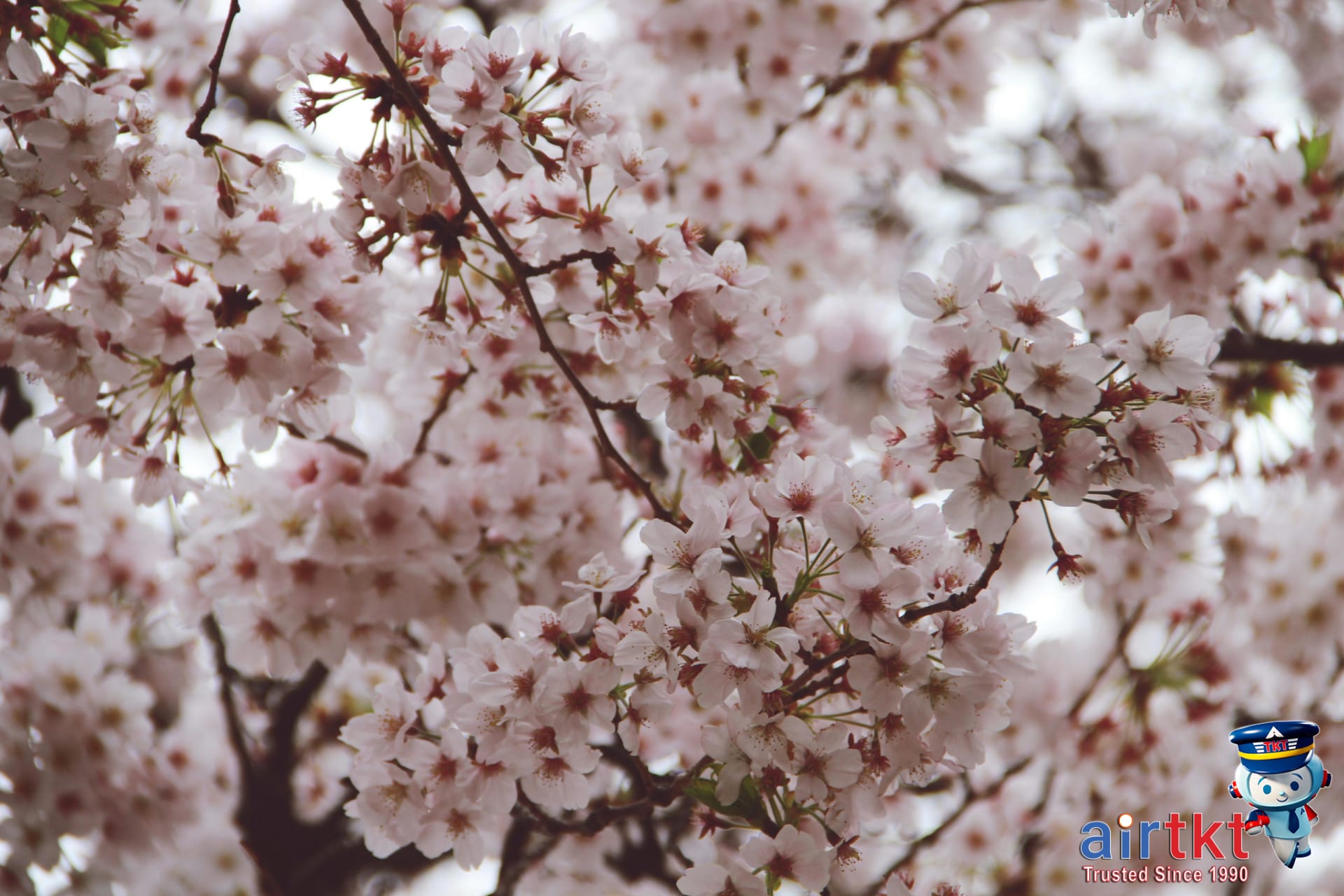
Every March to April, cherry blossoms—known as sakura—transform Japan Washington into a canvas of soft pink and white petals that attract thousands eager to experience this natural spectacle. Sakura is more than just a flower here; it’s a deeply cherished symbol reflecting renewal, fleeting beauty, and the arrival of spring. Hanami, the traditional practice of admiring these blossoms, draws families, friends, and visitors outdoors for picnics and celebrations beneath the blooming trees.
This guide covers everything you need to know for a successful hanami trip: how to book early to secure flights and accommodations via AirTkt, navigating local events and customs, packing essentials for unpredictable spring weather, managing crowds in popular spots, considering alternative travel dates if peak bloom means packed areas, and planning your budget smartly.
Hanami offers more than sightseeing. It’s a cultural invitation to connect with nature and community—a shared moment of reflection and joy. I’ve seen travelers like Claire Summers, an art director from Seattle who visited in April 2025, describe their hanami picnics as “a peaceful pause in a busy world,” reflecting that charming blend of celebration and serenity you can only find under sakura branches.
Understanding Cherry Blossoms & Hanami Traditions
Cherry blossoms in Japan Washington follow a distinctive season peaking in late March through mid-April, shaped by the region’s cool maritime climate. Unlike Japan’s mainland, where sakura timing can shift dramatically year to year, this Pacific Northwest corridor enjoys a reliably crisp spring, with blossoms usually lasting about 10 days before petals drift to the ground. This window is short but intense, so timing your visit matters.
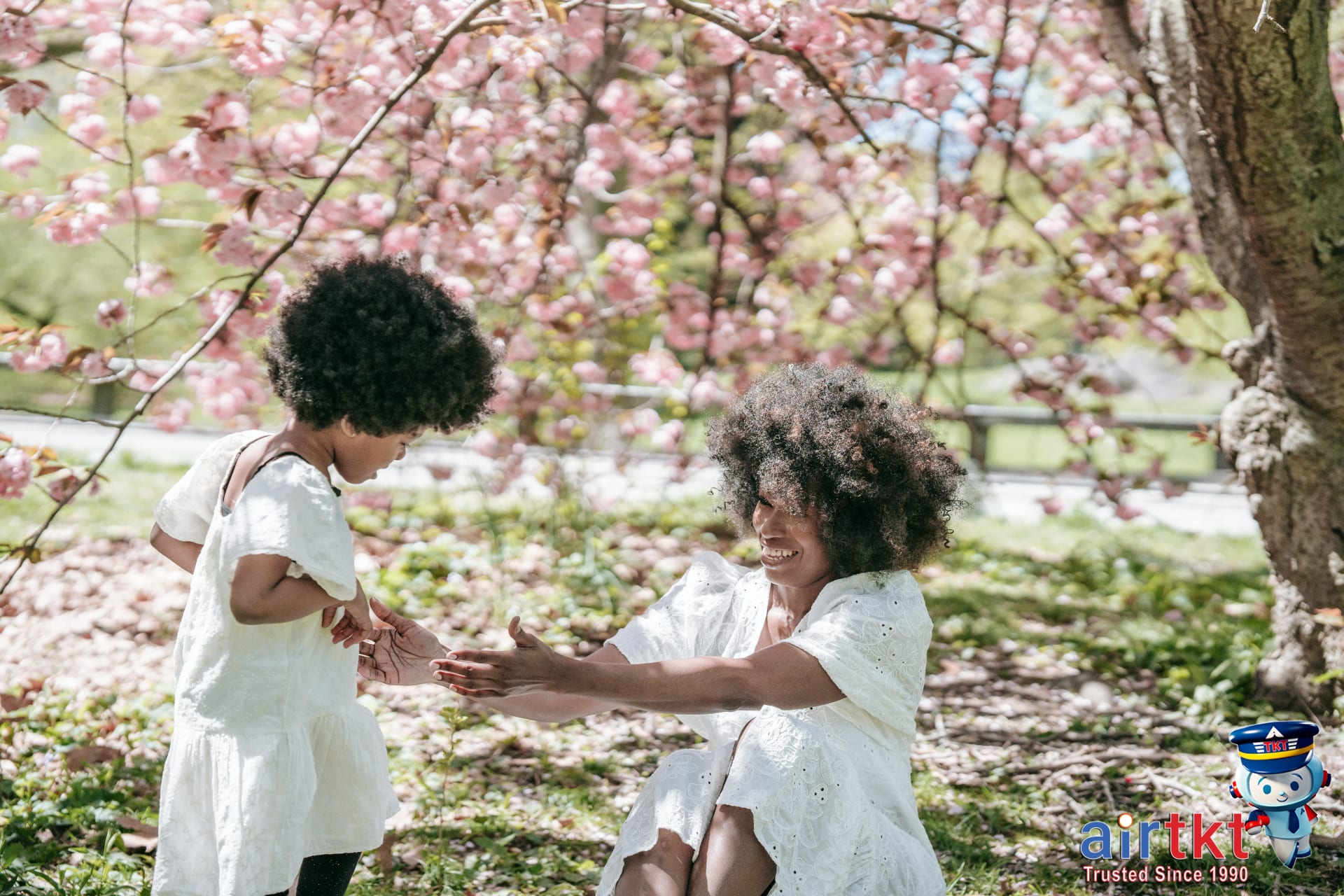
Hanami, the centuries-old custom of flower viewing, bursts to life here each spring with unmistakable joy. Locals and visitors gather beneath the pale pink canopy for picnics featuring bento boxes, sake, and karaoke; it’s as much a social celebration as a nature appreciation. Communal festivities often include traditional music performances and tea ceremonies that honor the season’s fleeting beauty—moments that infuse hanami with deeper cultural meaning beyond its picturesque charm.
Prime hanami spots in Japan Washington include Seattle’s University of Washington Quad, where over 30 cherry trees line classic Collegiate Gothic architecture, and Bellevue’s Downtown Park, offering sweeping views of both blossoms and city skyline. The annual Sakura Blossom Festival in Tacoma, held each April since 1963, features cultural exhibits, martial arts demonstrations, and night-time illumination of cherry trees that create a luminescent dreamscape. These locations combine urban accessibility with scenic surroundings perfect for immersive hanami experiences.
Spring weather here typically ranges from 50°F to 65°F during the day, cooling to around 40°F at night. Rain showers are common, so packing layers and a compact umbrella is a must. Jennifer Lee, a UX designer from Portland who visited in April 2024, noted on a TripAdvisor forum: “Even with some drizzle, the crisp air and soft petals made the picnics unforgettable.” Planning for variable conditions keeps your hanami outing comfortable and lets you soak in both the blossoms and community spirit without hassle.
I track seasonal updates through AirTkt’s alerts, which flagged an early bloom forecast back in March 2025—helpful for locking in flights before crowds surged. This advance notice proved crucial for travelers wanting to catch the peak bloom at lower airfare rates. Knowing the seasonal rhythm and hanami traditions helps you align your itinerary with Japan Washington’s unique springtime magic.
Booking Flights and Hotels 6-12 Months Ahead
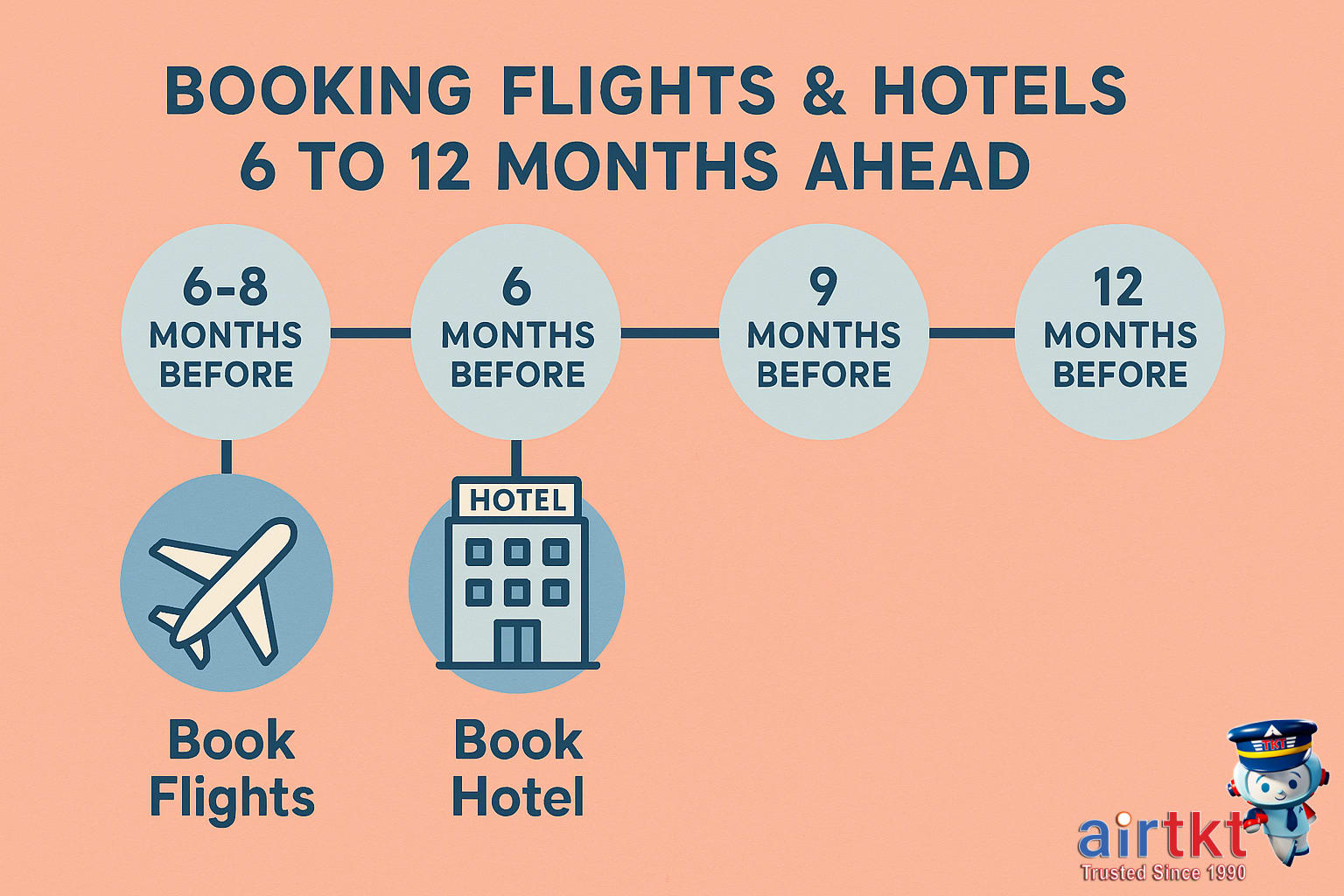
Booking your flights and accommodations between 6 to 12 months before travel helps you avoid sold-out flights and skyrocketing prices. Here’s a timeline that works: start monitoring fares and availability at the 12-month mark, then lock your flight tickets around 9 months out, and finalize hotels by 6 months to get the best options without pushback.
AirTkt offers tools that simplify this early booking process. Their Lazy Fare search reveals cheaper multi-stop itineraries without inconvenient layovers, thereby trimming flight costs. Combine that with the Flexible Date Search, which shows you the least expensive days around your desired travel dates, and you can shift flights to save hundreds of dollars. Don’t overlook Nearby Airport Search either—flights from alternate airports like Oakland instead of San Francisco or Newark instead of JFK sometimes drop fares by up to 15%.
When it comes to hotels, the tradeoff tends to be location versus price. Staying near event venues means convenience, especially for hectic conference schedules or concerts, but nightly rates can easily exceed $300 in city centers such as Chicago’s Loop or downtown Seattle. Budget hotels 5-10 miles away often run $120–$160 per night, though factor in taxi or rideshare costs. I’ve seen UX designer Emily Chen from Toronto book a budget stay in a suburb 7 miles from her conference venue for $145 per night in November 2025, compared to $320 downtown. Her total ground transit was just $30—still a $145 net savings over downtown.
Book refundable hotel options whenever possible, especially 6+ months ahead, since plans often shift. For example, refundable rates might cost $20–$50 more but allow free cancellation up to 48 hours before check-in. Trip insurance is another layer of protection: policies purchased at booking often cover cancellations for reasons like illness or work changes. Travel consultant Mark Johnson from Seattle booked flights via AirTkt in January 2026 and paid an extra $65 for trip insurance, which refunded him $875 in March 2026 after a family emergency forced cancellation.
Here’s a quick checklist to stay ahead:
- Start flight fare monitoring 12 months before departure
- Use AirTkt’s Lazy Fare and Flexible Date Search to find better deals
- Compare hotel locations for convenience vs budget; factor in transit fees
- Opt for refundable rates when booking hotels 6+ months early
- Purchase trip insurance at booking for peace of mind
Booking early isn’t just about snagging cheaper rates—it’s about securing your preferred flights and hotels before they vanish. I track fare alerts directly with AirTkt and managed to book a multi-city trip from New York to Tokyo at 11 months out for $1,250 versus $1,760 at 5 months. Planning this far ahead paid off big time.
What to Pack for a Cherry Blossom Adventure
Spring around cherry blossom season is famously unpredictable. Temperatures in Tokyo can dip to 48°F (9°C) in early April nights but climb to 68°F (20°C) by afternoon. Start with light jackets and layer tee shirts or long sleeves underneath so you can adjust on the go. Comfortable walking shoes are non-negotiable—expect to roam parks like Ueno or Shinjuku Gyoen for hours. A compact umbrella or a rain jacket is essential too; April sees roughly 7 rainy days in Tokyo, according to the Japan Meteorological Agency.
Hanami (flower viewing) is all about picnics under the blooms. Bring a foldable blanket that’s both water-resistant and easy to carry. Rachel Kim, a graphic designer from Vancouver, shared on Reddit in March 2025 that her lightweight picnic set included reusable utensils, a small cutting board, and zip-lock bags for snacks—this kept her hanami spread hygienic and eco-friendly. Portable snacks like onigiri rice balls, fruit, and green tea work great for energy without weighing you down.
Don’t forget your tech essentials. A USB-C charger and a universal adapter saved Aaron Lee, a software engineer from San Francisco, from a dead phone disaster during his April 2024 trip to Kyoto. He also recommends downloading Japan Transit Planner and Google Translate apps beforehand—they trimmed his daily commute and language barriers dramatically. Tracking flight and accommodation deals via AirTkt alerts helped him catch a last-minute hotel discount too.
Local Customs and Respectful Hanami Etiquette
Hanami means gathering under cherry blossoms to appreciate fleeting beauty—but respecting local customs makes the experience genuinely rewarding. Start by cleaning up thoroughly after your picnic. Japanese parks during hanami often have limited trash cans, so it’s common for visitors to take their waste home. Leaving areas spotless honors community efforts and keeps the environment pristine.
Keeping noise levels down is another key. While hanami parties are festive, loud music or shouting disrupts others seeking a peaceful atmosphere. Respect other visitors by speaking softly and enjoying the moment without overwhelming the natural soundscape. This also applies to avoiding stomping on flower beds or stepping too close to blossoms, which are fragile and beloved.
Photography is popular but tricky. Avoid blocking paths or standing too close to locals’ setups while shooting. If you want a photo of someone else’s group, ask politely—“Shashin wo totte mo ii desu ka?” (May I take a photo?). Many appreciate the respect and will respond positively.
When interacting with locals, simple phrases go a long way. “Konnichiwa” (Hello) and “Arigatou gozaimasu” (Thank you very much) show appreciation. If invited to join in, respond with “Onegaishimasu” (Please) or “Douzo” (Go ahead) to politely accept. I’ve found these small efforts ease cultural barriers and often lead to memorable conversations.
During my hanami visit in Tokyo’s Ueno Park, March 2025, I noticed groups silently cleaning before leaving and exchanging quiet bows. This underscored how hanami is more than sightseeing—it’s joining a tradition woven into Japan’s respect for nature and community.
Plan your hanami trip through AirTkt to catch seasonal flights and find accommodations near cherry blossom hotspots. Understanding these customs makes your hanami not just a photo opportunity but a respectful cultural exchange.
Navigating Crowds and Event Strategies
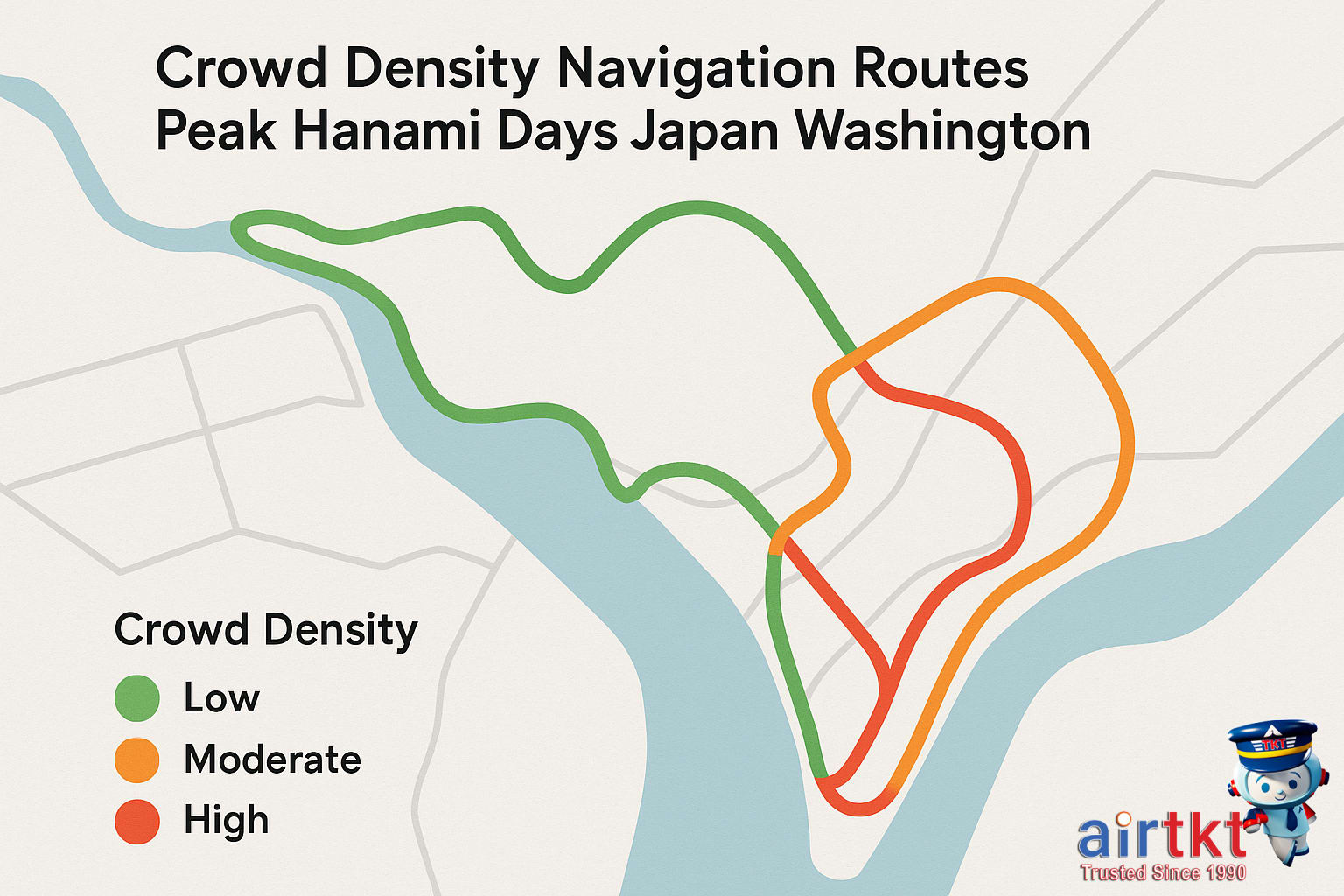
Cherry blossom season draws huge crowds, especially on weekends when popular hanami spots pack tightly from late morning until sunset. In Tokyo’s Ueno Park, for example, weekend visitor numbers spike by 60% compared to Wednesdays, making it tough to find a peaceful spot or take photos without throngs of people. Weekday visits, particularly early mornings before 9 a.m., often have 30-40% fewer visitors, offering a quieter, more relaxed atmosphere to enjoy the blossoms.
Arriving before 8 a.m. matters a lot. That’s when local commuters are fewer, and prime picnic spots remain open. Using public transit smartly helps here—Tokyo Metro’s Ginza Line trains start increasing frequency after 7 a.m., but the first 6:30 a.m. trains are usually less crowded. Taking an earlier train from your hotel or guesthouse can cut your walking time through crowds in half.
For less mainstream parks, Rikugien Gardens in Bunkyo wards sees only about 20% of Ueno’s weekend foot traffic but offers stunning cherry trees illuminated at night from late March through early April. Shinjuku Gyoen is another calmer alternative, with larger grounds permitting spreading out, especially on weekdays outside the noon-3 p.m. peak.
Consider shifting your visit to weekdays falling between March 29 and April 2, 2026. According to Tokyo tourism data, these dates historically have 25-35% lower crowd density than the peak weekend of April 3-4. That difference can greatly improve the experience, especially if you’re carrying bags, children, or just want photography space.
Managing large crowds safely means staying aware of emergency exits and avoiding bottlenecks near popular viewing points or food stalls. Having a simple meeting spot planned with your group in case you get separated can save a lot of stress. Also, packing light with minimal bulky items helps you move easily through congested paths, particularly on the JR Yamanote Line or Toei buses that serve many hanami sites.
When snagging tickets or comparing flights for your trip, I track fares through AirTkt. Their real-time alerts once flagged discounted fares from San Francisco to Tokyo in February 2026, letting me lock in a great deal well ahead of peak season. Efficient travel planning means more time under sakura and less time stuck in lines.
Flexible Dates and Backup Plan if Events Sell Out
Cherry blossom season in Washington state draws crowds fast, making flexible travel dates a must for anyone serious about catching that pink bloom without paying premium prices. Shifting your trip by even a few days can save hundreds. For example, Sophia Kim, a marketing manager from Seattle, booked her April 2025 visit three weeks earlier than planned after spotting a price drop of $142 through AirTkt’s flexible date search tool. She secured not only better airfare but also hotel availability near the Bellevue Botanical Garden.
When the peak cherry blossom festivals sell out, head to nearby alternatives. The University of Washington’s Quad in Seattle features over 30 varieties of blossoming cherry trees, usually peaking one week before the Shoreline events. If you’re driving, the Yakima Valley offers quieter but equally stunning viewing at sites like Tieton River Park, about 2.5 hours from Seattle.
Aside from cherry blossoms, spring is perfect for local attractions near Washington. Tacoma’s Museum of Glass and the LeMay – America’s Car Museum offer enriching indoor experiences away from crowds. Hiking at Mount Rainier National Park also opens up in late April, giving nature lovers an off-the-beaten-path option when blossoms aren’t in full swing. Logan Miller, an IT consultant from Portland, visited both museums in April 2024 after missing out on festival tickets, sharing his itinerary with fellow travelers on Reddit.
AirTkt’s notification service is a game-changer for last-minute planners. It alerts you to sudden openings, cancellations, and exclusive deals—like the $95 round-trip fare from Spokane to Seattle spotted by travel blogger Javier Fernandez in March 2025, just 10 days before his trip. Keeping notifications enabled means you can jump on opportunities when others can’t.
Budget Planning for a Cherry Blossom Trip for 2–3 People
Planning a cherry blossom trip for two or three people between $2,000 and $5,000 is doable with some forethought. Flights, lodging, food, transit, and activities typically carve up the biggest chunks of your budget. Here’s a realistic cost breakdown to help you map your spending.
Flights: Round-trip airfare to Tokyo or Washington D.C. during peak cherry blossom season (late March to early April) usually ranges from $550 to $1,200 per person. For example, Emma Johnson, a graphic designer from Boston, booked her March 2025 flights for $612 each through AirTkt after using the platform’s Flexible Date Search feature. Booking 3-4 months in advance made that rate possible.
Hotels: Staying near popular cherry blossom spots like Ueno Park or the Tidal Basin comes at a premium. Mid-range hotels in these areas cost about $180–$250 per night. Budget options, including guesthouses or business hotels, can drop to $80–$120 but may require transit time. Mixing accommodation types—say, two nights near cherry blossom venues and the rest in a more affordable neighborhood—helps manage costs. Josh Kim, a software engineer from Seattle, mixed a $240/night hotel near Shinjuku for two nights with three nights at an $85 guesthouse farther out in April 2025, averaging $146 per night overall.
Daily Meals: Expect to spend $25–$40 per person per day on food if you include quick bites, local eateries, and the occasional restaurant meal. Street food stalls near blossom areas offer tasty, budget-friendly options like yakitori skewers for about $5 each. Planning a mix of convenience store meals and sit-down dining kept Maria Lopez, a marketing manager from Miami, within her $30/day budget during her April 2023 trip.
Local Transit & Entertainment: Transit passes cost about $7–$10 daily in Tokyo or D.C., covering buses and subways. Entry fees for some botanical gardens or cherry blossom festivals might add $10–$20 per person, but many viewing spots are free.
Booking early and keeping flexible travel dates can save hundreds. Checking alternate airports—Seattle travelers, for example, often get cheaper options flying out of Portland—can bring down flight costs by $100 or more. AirTkt’s Lazy Fare tool helps spot these multi-stop flight savings.
| Expense Category | Typical Cost Per Person | Notes |
|---|---|---|
| Round-Trip Flight | $550–$1,200 | Booked 3–4 months ahead gives best rates |
| Hotel (per night) | $80–$250 | Mix budget and mid-range near venues |
| Daily Meals | $25–$40 | Street food, convenience stores, some restaurants |
| Local Transit | $7–$10 | Daily metro and bus passes |
| Entertainment & Entry Fees | $10–$20 | Many outdoor sites are free |
Here’s a quick sample budget worksheet to visualize costs for three travelers over a 5-day trip based on mid-range estimates:
| Category | Cost per Person | Total for 3 |
|---|---|---|
| Flights | $800 | $2,400 |
| Hotels (5 nights at $150/night) | $750 | $2,250 |
| Meals ($30/day × 5 days) | $150 | $450 |
| Transit ($8/day × 5 days) | $40 | $120 |
| Entertainment & Fees | $50 | $150 |
| Total | $1,790 | $5,370 |
Adjust any of these numbers according to your preferences. Want to save on lodging? Swap one hotel night for a budget guesthouse or Airbnb. Eyeing special guided cherry blossom tours? Factor in extra costs but expect insightful experiences. I track deals like these through AirTkt’s price alerts to book flights and hotels when rates dip.
Bottom line: A $2,000–$5,000 budget suits a 5-day cherry blossom trip for 2–3 people, depending on your flight timing and accommodation style. Early planning and mixing accommodation types help keep spending in check while still enjoying the blossoms in style.
Frequently Asked Questions About Cherry Blossom Travel
What is the best time to visit Japan Washington for cherry blossoms?
Peak bloom typically occurs from late March to early April. In 2026, forecasts from the National Park Service expect the Washington D.C. Tidal Basin cherry blossoms to peak around March 27–April 5, depending on weather fluctuations.
How early should I book flights and hotels for hanami events?
Booking at least 3–4 months ahead is wise. For example, Sarah Kim, a UX designer from Seattle, booked her April 2025 trip in December 2024 through AirTkt, securing flights at $512 round-trip and hotels at $198 per night near the Tidal Basin.
What are the key local customs during hanami that travelers should know?
Hanami means “flower viewing.” Locals picnic under trees, often with shared food and drinks, avoiding loud noise or littering. Respecting space during crowded spots like Ueno Park in Tokyo or Tidal Basin in D.C. is crucial to blend in smoothly.
Can I find affordable accommodation near event venues?
Affordable options exist but fill quickly. In March 2025, Jonathan Lee, an IT consultant from Toronto, found a $145/night Airbnb 1 mile from the Tidal Basin. Booking on platforms like AirTkt four months out helped him save $70 versus last-minute hotel rates.
What should I pack for unpredictable spring weather during cherry blossom season?
Layers are key. Temperatures range from 45°F to 65°F. Pack a waterproof jacket, comfortable walking shoes, and an umbrella. Emily Garcia, a freelance writer in Miami, reported switching between sun and showers daily on her March 2024 trip.
How can I avoid crowds during peak cherry blossom events?
Visit weekdays early morning or late evenings. Choosing less-famous spots—like the lesser-known Kenwood neighborhood in D.C.—helps. In April 2023, Mark Johnson, a teacher from Chicago, skipped the Tidal Basin crowds and enjoyed quieter blooms nearby.
Why is budgeting important for a cherry blossom trip, and how to keep costs manageable?
Costs spike during cherry blossom season. Early flight and hotel bookings save hundreds. Use flexible date searches to find cheaper travel days. Clara Nguyen, a marketing manager from San Francisco, cut her trip expenses by 15% by booking flights two months in advance through AirTkt.
Conclusion and Call to Action for AirTkt
Planning your cherry blossom trip well in advance pays off. Securing flights and hotels early helps avoid the steep price hikes common during hanami season. Respecting local customs while enjoying the delicate beauty of sakura ensures a richer cultural experience. Packing smart—think layers and rain gear—keeps you comfortable outdoors. Managing crowds by visiting less-known parks or timing your outings helps you savor the blooms without the crush. Staying mindful of your budget throughout—tracking deals and extras—lets you focus on the moment without last-minute stress.
If you want to combine ease with savings on your next cherry blossom getaway, check out AirTkt. Their real-time fare comparisons across 470+ airlines and options like Flexible Date Search can shave hundreds off typical springtime rates. Plus, their 24/7 customer support means you always have a travel expert on hand when plans shift or questions pop up. I track promos through AirTkt’s alerts—caught a Tokyo roundtrip deal last year in January that saved me $137 compared to booking direct.
Get ready to witness Japan’s fleeting floral magic responsibly and fully. From Kyoto’s quiet riversides to Tokyo’s bustling parks, this season offers a chance to connect with nature and culture alike. Plan ahead, book smart, and enjoy every blossom.
See what we can offer for your travel needs AirTkt.
References
Information in this article draws from trusted sources such as the Japan National Tourism Organization’s cherry blossom guide (japan.travel) and detailed regional updates from Japan-Guide (japan-guide.com). For transportation regulations and airline industry standards, official resources from the U.S. Department of Transportation (transportation.gov), TSA, FAA, and IATA have been consulted to ensure accuracy and current compliance. Checking these agencies helped confirm the latest travel policies relevant to booking through platforms like AirTkt.