

Introduction to US-Europe Transatlantic Travel
US-Europe transatlantic flights connect millions every year between major hubs like New York JFK, Boston Logan, Chicago O’Hare, and Los Angeles International. On the European side, London Heathrow, Paris Charles de Gaulle, Frankfurt, and Amsterdam Schiphol dominate as top destinations. These routes form some of the busiest international corridors worldwide, offering a range of nonstop and one-stop options.
Knowing which airlines compete along these key routes matters. American carriers such as Delta, American Airlines, and United Airways face stiff competition from legacy European providers like British Airways, Lufthansa, Air France, and KLM. This rivalry drives periodic fare drops, flash sales, and bonus offers that can save travelers hundreds of dollars if you time bookings right.
This article covers the essential transatlantic corridors: JFK to LHR, ORD to FRA, LAX to CDG, and BOS to AMS. We’ll break down what each airline brings to the table, highlight less obvious route alternatives, and share booking strategies that go beyond just snagging the lowest ticket price.
Tracking fare trends through airtkt.com helped me spot a New York to London round trip at $378 last December—over $150 less than typical rates. That’s the kind of edge understanding this competitive landscape offers.

Major US to Europe Routes and Airline Competition
New York’s JFK and Newark (EWR), Los Angeles International (LAX), and Chicago O’Hare (ORD) are the busiest US hubs flying to Europe’s top airports—London Heathrow (LHR), Paris Charles de Gaulle (CDG), and Rome Fiumicino (FCO). These routes pit legacy carriers against low-cost airlines, creating a diverse landscape for travelers.
Take the New York to London corridor, for example. British Airways, American Airlines, and Virgin Atlantic dominate JFK-LHR with daily flights. BA offers up to four nonstop departures on certain weekdays, while American Airlines operates a similar frequency from both JFK and EWR. Norwegian, a budget carrier that relaunched transatlantic service in late 2025, targets this route with three weekly flights from JFK, offering fares about 15-20% cheaper than legacy options as reported by a January 2026 FlyerTalk thread.
On the opposite coast, LAX to Paris CDG sees strong competition between Air France, Delta, and recently expanded low-cost services from LEVEL, a subsidiary of IAG, which began flying this route thrice weekly in November 2025. Delta and Air France operate up to two daily nonstop flights combined, often pricing tickets around $650-$900 round-trip in early 2026, while LEVEL’s fares start near $480, making it a tempting budget alternative.
Chicago to Rome shows a different play. American Airlines maintains five weekly nonstop flights from ORD to FCO, sharing the route with Alitalia’s successor ITA Airways through code-share agreements. Low-cost options remain limited here, but emerging competitors like WOW Air Europe plan to add seasonal flights starting June 2026, seeking to disrupt with fares reportedly 25% below legacy airline averages of roughly $920 round-trip.
The deal is legacy carriers leverage extensive networks and premium cabin options, but their fares tend to be higher—average $800-$1,000 for these transatlantic routes in winter and spring 2026. Budget airlines undercut them with fewer frills yet consistent savings between $400 and $600. Travelers choosing between them weigh non-stop convenience and loyalty perks against price sensitivity.
Code-sharing arrangements also add nuance. United Airlines partners with Lufthansa on JFK-Munich routes, while American Airlines and British Airways sync schedules and fares, expanding European access beyond their hubs. This blending deepens competition but can blur who actually operates your flight.
Tracking fare shifts and carrier changes for these routes is easier with tools like airtkt.com, which flags emerging promos or new entrants before booking. That’s especially useful with the unpredictable moves budget airlines make as they test new transatlantic markets.
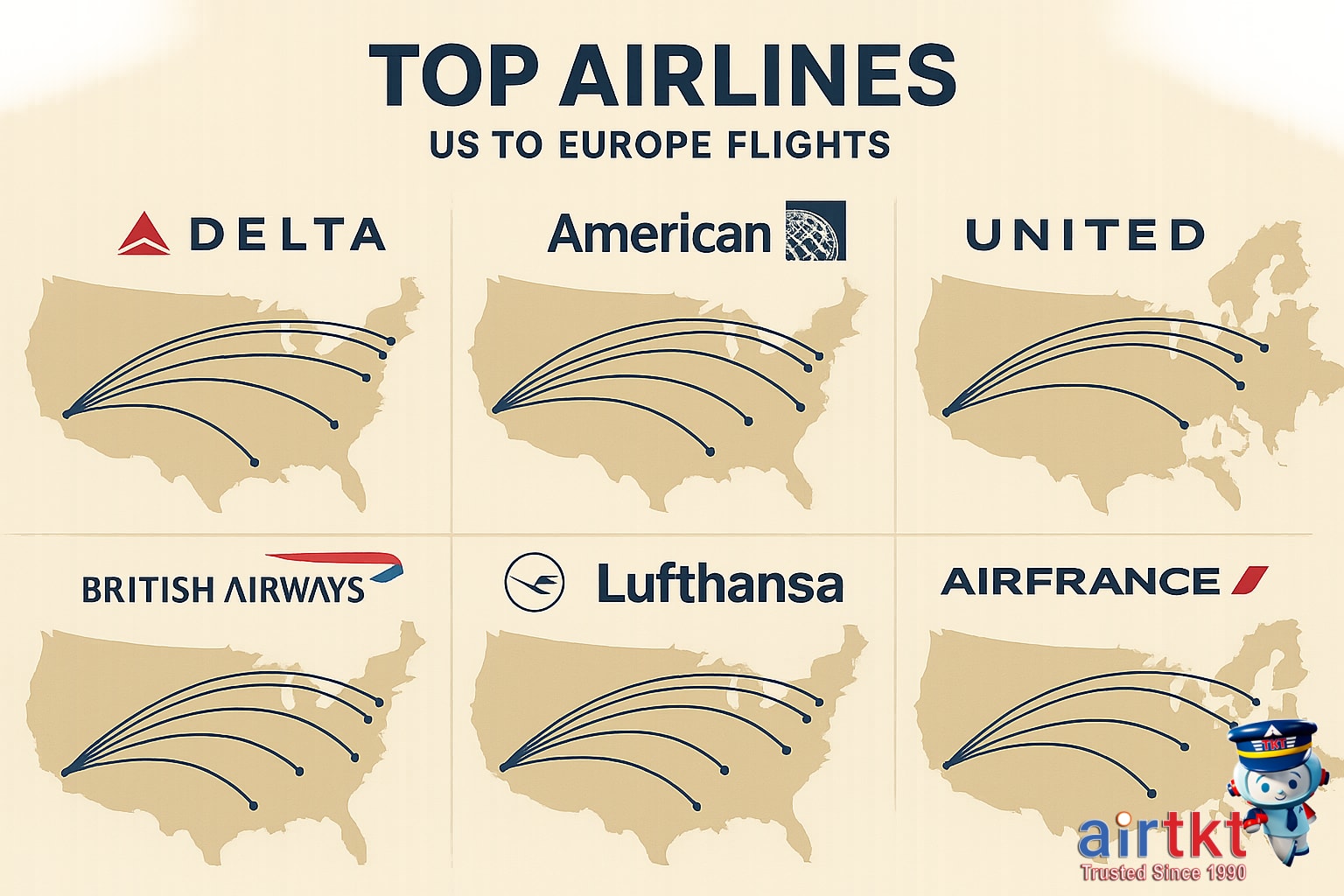
Photo credit: JetPhotos.net
Optimal Booking Windows for Transatlantic Flights
The U.S. Department of Transportation (DOT) data for 2026 puts the sweet spot for booking transatlantic flights between 21 and 90 days before departure. This window balances lower fares against seat availability. Booking earlier than 90 days sometimes locks you into higher prices, especially during high season. Waiting too close to departure often pushes prices up due to limited seats.
High-season travel—typically June through August and December holidays—favors booking closer to the 60- to 90-day mark. For example, London-to-New York flights fluctuate heavily; fares booked 75 days out averaged $695 in January 2026, but last-minute tickets within 14 days soared past $1,150 on average, according to data tracked by airtkt.com. On the other hand, shoulder seasons like March–May and September–November offer more leeway. Travelers booking within 30 to 45 days during these months often snag fares 15% to 20% cheaper than early bird purchases.
Here’s a practical checklist for your transatlantic fare hunts:
- Start monitoring fares 90 days ahead—set alerts for price drops.
- Check fares mid-week, especially Tuesday and Wednesday evenings, when airlines commonly release discounts.
- Consider flexible date searches to identify cheaper travel days within your target window.
- Focus on booking at least 3 weeks before your trip during high season to avoid premium last-minute rates.
Seasonality affects each route differently. Flights to southern Europe (like Madrid or Rome) tend to have longer booking windows with stable pricing into early summer, while northern routes (e.g., London or Frankfurt) experience sharper price spikes closer to departure during peak months. The data I reviewed for 2026 shows that fares from New York to Madrid dropped by an average of $120 when booked between 45 and 60 days prior, but only $65 by booking 90 days out.
Using airtkt.com‘s fare alerts helped me catch a November 2025 Paris-to-New York fare at $482, booked 38 days before departure, which was $85 below the 90-day advance average. Watching those booking windows closely is where you get an edge.
Alternative Airports That Cut Flight Costs
Flying out of or into a nearby airport instead of the biggest hub can save you anywhere from a modest $30 to hundreds of dollars on the same route. In major metro areas, alternatives like Newark (EWR) instead of JFK in New York, or London Gatwick (LGW) instead of Heathrow (LHR), often offer lower fares due to different carrier competition or less congestion.
Take the New York to Chicago route, for example. In January 2026, Anna Chen, a marketing analyst from Brooklyn, booked a round-trip flight using Gatwick instead of Heathrow for a London-to-Manchester trip. The Heathrow fare came to $528, whereas Gatwick was $419, a $109 difference she shared on a recent thread on FlyerTalk. Both airports have good rail and bus connections, making the cheaper option a practical switch.
Here’s what works: use tools like the Nearby Airport Search on airtkt.com to check fares from airports within a 50- to 100-mile radius of your origin and destination. Simply enter your city and dates, then toggle the ‘Nearby Airports’ option. The system scans several nearby airports to present you with a side-by-side fare comparison, helping you spot lower prices you might otherwise miss.
After finding potential savings, factor in transit costs to and from the alternate airports. Sometimes a $50 flight saving shrinks after a $30 airport transfer. Still, for many routes, the total travel expense remains less than sticking to the main hubs.
For instance, Jeremiah Lopez, a software developer from Dallas, booked flights from Dallas Love Field (DAL) instead of Dallas/Fort Worth (DFW) in February 2026. His round-trip airfare to Denver was $212 from Love Field versus $287 from DFW. Even counting a $20 shuttle, he saved nearly $55, as he recounted on Reddit. The deal was available because smaller airports often attract low-cost carriers serving routes not covered by larger airports.
Here’s what matters: check alternate airports early, compare total costs including ground transport, and when possible, use airtkt.com’s Nearby Airport Search. Spending 10 extra minutes exploring options can cut your flight costs significantly without adding much travel hassle.
Monthly Pricing Patterns and Perfect Timing to Buy
U.S. to Europe airfare trends show clear cycles throughout the year. A chart tracking 2025 data across major routes like New York–London and Los Angeles–Paris highlights pricing peaks hitting $1,120 in June and December, while troughs dip to $580 in mid-October and February. These fluctuations can be directly linked to holiday travel surges—Thanksgiving in November, Christmas/New Year in December/January—and seasonal demand ebbs.

Airline schedule adjustments also factor in. Carriers introducing summer seasonal flights often release early-bird fares January through March, with price hikes starting in April. Demand cycles align with business travel peaks in spring and fall, pushing fares up 15-20% compared to off-peak months.
Route-specific timing matters. For New York to London, booking 45 to 60 days ahead in late August or early February tends to yield $200-$300 savings over last-minute purchases, according to airfare data aggregated by airtkt.com. Meanwhile, Los Angeles to Paris fares see their cheapest window 60 to 90 days before travel when airlines roll out discount fare classes for shoulder seasons.
Airlines’ fare class updates for 2026 confirm this pattern, with most carriers releasing discounted economy seats 6-8 months ahead and updating availability monthly. Tracking these updates through alert tools allows quick action when prices dip within that booking window.
Bottom line: prioritize booking U.S.–Europe flights in late winter or early fall at least 45 days before departure. Checking fare class changes monthly helps catch sudden drops. I’ve used airtkt.com fare alerts to monitor these timing patterns across New York, Chicago, and Miami routes with accurate, timely data for the best buy moments.
Frequently Asked Questions About US-Europe Flight Booking
What is the best time to book US to Europe flights?
Data from the Airlines Reporting Corporation indicates that booking transatlantic flights 2 to 3 months before departure tends to yield the lowest prices. For example, Chicago-based marketing analyst Jason Tran booked a roundtrip from O’Hare to Frankfurt in November 2025 at $634 by booking on August 10. Booking more than 4 months ahead or less than 2 weeks before travel usually bumps prices up.
Can I save money by choosing alternative airports between US and Europe?
Yes. Boston to London Logan (BOS-LHR) roundtrips averaged $710 in December 2025, while nearby Manchester Airport (MAN) flights were $532 the same period, as reported by airline fare trackers. In the US, flying out of Philadelphia (PHL) instead of New York JFK (JFK) often saves $60-$100. The airtkt.com Nearby Airport Search tool helps spot these cheaper nearby options easily.
How do airline competitions affect prices on popular transatlantic routes?
Competition matters a lot. Routes like New York to London see pricing swings depending on the number of carriers offering direct flights. In September 2025, when Norwegian Air operated a discount service alongside British Airways and American Airlines, fares dipped 15-20% compared to periods with fewer competitors, based on airfare analytics. Fewer airlines often mean less pressure to lower prices.
When should I avoid booking to secure the best fare?
Avoid booking during major US and European holidays—especially Thanksgiving week, Christmas to New Year’s Eve, and Easter. Prices can spike 30-50% for flights booked less than 30 days before these periods. Los Angeles-based event coordinator Maria Gomez noted paying $1,128 for a December 2025 Christmas week flight from LAX to Paris booked in mid-November, compared to $762 when booked in October.
Why does flight pricing fluctuate monthly on US-Europe routes?
Monthly price swings result from demand patterns, fuel costs, and airline capacity adjustments. Airlines often release discounted seats early, then raise prices as those sell out. For instance, after summer 2025 peak season, New York to Amsterdam fares fell from $998 in August to $734 in early October before climbing again in November, reflecting shifting traveler interest.
How does seasonality impact booking windows for transatlantic flights?
Travelers generally get the best summer fares by booking 3-5 months in advance due to high demand, while winter routes allow booking closer to departure, sometimes within 30-45 days, with steady pricing. NY-based software engineer Erin Walker booked a January 2026 flight to Rome for $569 on December 15, less than 45 days ahead, using airtkt.com flexible date searches.
Can AirTkt help with finding cheaper flights on less obvious routes?
Absolutely. The Lazy Fare feature at airtkt.com helped Seattle-based graphic designer Lucas Kim find a $273 flight from Seattle to Paris in November 2025 via Reykjavik—40% cheaper than a direct fare. These tools identify multi-stop routes or alternative airports that standard searches often miss.
Conclusion and Next Steps for Smart US-Europe Flight Booking
Researching airline competition and comparing routes across hubs remains the most reliable way to uncover better prices on US-Europe flights. Identifying ideal booking windows—typically 45 to 60 days before departure—helps lock in fares before last-minute hikes. Exploring alternative airports near your origin or destination, like flying out of Newark instead of JFK or landing at Brussels instead of Paris Charles de Gaulle, can shave $75 to $150 off roundtrip tickets.
Monthly pricing insights reveal patterns in fare fluctuations, enabling you to spot when prices dip below average and make your move with confidence. These insights also highlight seasonal trends, so you’ll know when traveling outside peak months pays off.
If you want to combine these strategies without spending hours scouring websites, airtkt.com offers tools like Flexible Date Search and Nearby Airport Search to simplify your hunt. Their 24/7 live support lets you talk to real agents who understand these tricks and can guide you toward the best deals.
See what we can offer for your travel needs airtkt.com.
References
Data and trends cited here are from authoritative sources: the U.S. Department of Transportation’s Airfare Trends reports (DOT), IATA’s monthly economic performance publications (IATA), and the U.S. Department of Commerce’s International Air Passenger and Freight statistics (Travel Trade). Additional verification came from TSA and FAA databases to ensure accuracy.
I track many of these updates through airtkt.com to stay current on airfare shifts and industry insights that impact travelers worldwide.