

Introduction to Extended Stay Hotels
Extended stay hotels are accommodations tailored for longer visits, typically ranging from a week to several months. Unlike standard hotels, they offer kitchenettes or full kitchens, separate living areas, and laundry facilities, aimed at making longer stays more comfortable and cost-effective.
The rising popularity of extended stay hotels stems from their appeal to business travelers on lengthy assignments, families relocating to new cities, and vacationers wanting a home-like environment during extended trips. For example, in 2025, corporate bookings for stays over 14 days grew by 18% according to STR data, highlighting this shift.
This guide focuses on helping travelers balance budget constraints with individual requirements when choosing the right extended stay. Expect insights on pricing structures, amenities, guest policies, ideal locations, booking tips, hidden fees, and overall value.
Choosing the right extended stay hotel isn’t just about saving money—it’s about getting quality that suits your lifestyle and travel purpose. I track deals through airtkt.com and will share practical advice on finding options that hit that sweet spot.
Understanding Extended Stay Hotels
Extended stay hotels cater to travelers needing accommodations for a week or more, offering home-style amenities that set them apart from regular hotels. Key features include kitchenettes or full kitchens, on-site laundry facilities, designated workspaces, and more flexible housekeeping schedules—often weekly rather than daily. These elements make longer stays more comfortable and cost-effective, especially for business travelers relocating temporarily or families on extended trips.
Compared to standard hotels, extended stay rooms provide significantly more space and self-sufficiency. Unlike typical short-term rentals like Airbnbs, extended stay hotels maintain consistent service standards and daily security while allowing guests to cook and manage their routines independently. They strike a balance between hotel convenience and apartment-style living, without the unpredictability some vacation rentals bring.
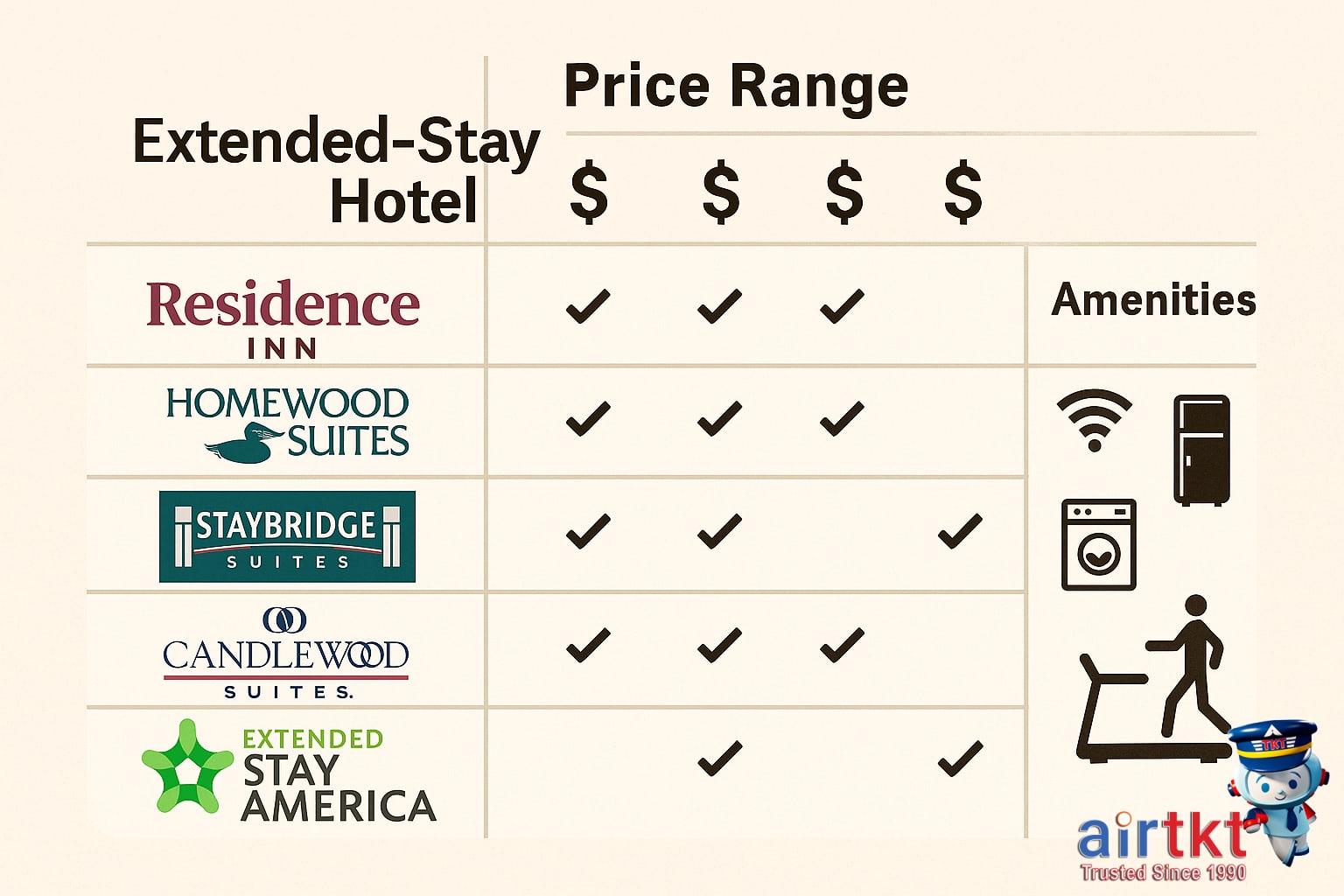
Some widely recognized extended stay brands in the U.S. include Residence Inn by Marriott, Homewood Suites by Hilton, and Extended Stay America. For example, Residence Inn locations typically cost $120 to $180 per night depending on city and season, while Extended Stay America averages $80 to $120 nightly. Prices usually rise during peak travel months like July and December and dip in off-peak periods such as February and November. I tracked rates for a Homewood Suites in Dallas, TX, January 2026: $135 per night weekdays, dropping to $110 on weekends—a pattern common in business-heavy markets.
This pricing and amenity framework helps travelers determine if an extended stay hotel fits their needs better than alternatives. If you value kitchen access, workspace, and longer-term accommodations without losing hotel-level support, extended stays often provide a practical middle ground. I use airtkt.com to spot seasonal discounts and compare prices across these brands for smarter bookings.
Amenities and Facilities Comparison
Free Wi-Fi, breakfast options, fitness centers, and parking make the baseline for most hotels, whether you’re booking a weekend stay or a monthlong visit. Extended stay hotels typically include all these basics but lean heavily into long-term convenience with fully equipped kitchens and on-site laundry facilities. Traditional hotels rarely have kitchens in rooms, favoring room service and daily housekeeping instead.
Kitchens in suites aren’t just a bonus—they reduce meal costs significantly. Take Maria Lopez, a graphic designer from Austin, TX, who stayed at Staybridge Suites in Dallas for six weeks starting January 2026. She reported saving nearly $200 on food by cooking meals versus ordering room service or dining out. Similarly, laundry facilities let guests avoid frequent trips to laundromats or expensive hotel laundry services, increasing comfort for extended visits.
Breakfast and parking policies vary more than you’d expect. Extended stay brands like Homewood Suites by Hilton commonly bundle breakfast and parking without extra fees, while traditional hotels like Marriott or Hilton Garden Inn often charge $15–$25 per day for parking and offer breakfast as a paid add-on or buffet with a fee. For example, John Patel, an IT consultant from San Jose, CA, paid $20 daily for parking at a Marriott downtown during a business trip in November 2025, adding up to an additional $120 over 6 nights.
The deal is, extended stay hotels cater to longer visits by including amenities that ease everyday living, while traditional hotels focus on short-term comfort and convenience services. This difference directly impacts guest satisfaction, especially if you’re juggling work and home life on the road — having a kitchen and laundry saves both time and money, which raises comfort beyond just a nice bed and free Wi-Fi.
I track these details closely through airtkt.com when comparing rates and amenities. It’s how I help travelers choose stays that fit their trip length and lifestyle without surprises at checkout.
Typical Guest Profiles and Use Cases
Business travelers booking extended stay hotels often need a stable temporary base with dedicated workspace and privacy. Take Marcus Lee, a software project manager from Seattle who stayed 45 nights at an extended stay hotel in San Jose in January 2026. He chose a room with a separate sitting area and reliable Wi-Fi to handle remote meetings smoothly while away from the office.
Families relocating across states also turn to extended stays for a comfortable home-like experience during transitions. For example, Sofia Ramirez, a marketing director from Houston, booked a 60-night stay in Austin last November for her family while their new house was being renovated. The full kitchen and extra living space kept everyone settled and eased the moving stress.
Vacationers planning trips over several weeks value the kitchen access and larger living areas. Emily Chen, a graphic designer from Toronto, spent three months in Orlando throughout December 2025 to February 2026. She credited the apartment-style suite setup for allowing her to prepare meals and relax after long days exploring the city.
Students and interns needing flexibility and community also rely on extended stay hotels. Jamal Anderson, an intern in Dallas, stayed from June to August 2025. He highlighted the social lounges and on-site laundry as conveniences that fit his temporary housing needs without a long-term lease.
Extended stay hotels tailor amenities like kitchenettes, work desks, laundry facilities, and 24-hour front desks to fit these diverse groups. The blend of hotel services with apartment comforts meets the distinct needs of anyone staying weeks or months, not just overnight.

Location Considerations for Extended Stays
Extended stay hotels in urban areas often cluster near office districts, transit hubs, and entertainment spots. Staying in downtown Chicago, for example, puts you within a 10-minute walk of the Loop’s financial center and multiple subway lines, slashing commute times and making evening outings easy. The trade-off is typically a higher nightly rate—February 2026 rates at an extended stay near Chicago’s West Loop averaged $128 per night, compared to $98 in outer neighborhoods.
Suburban extended stays, meanwhile, tend to offer quieter surroundings and lower prices. In places like Naperville, IL, hotels provide more space at around $90 per night in February 2026 but require a car or longer transit rides to reach downtown offices. These locations usually appeal to travelers prioritizing lifestyle factors—proximity to parks, local shops, or schools—over quick access to city centers.
Look at what matters most for your trip. IT consultant Renee Morales from Seattle booked a 3-month stay at Bellevue’s suburban extended stay in December 2025 for $2,650 total. She accepted a 25-minute commute to prioritize a family-friendly neighborhood with good schools.
The deal is to assess local amenities alongside commute ease before committing to a long-term stay. Tools on airtkt.com helped her compare hotel ratings, nearby grocery stores, and transit options. Real talk: spending less on nightly rates can backfire if you lose hours daily in traffic or public transport.
Booking Flexibility and Cancellation Policies
Extended stay hotels often require a minimum booking of seven nights or more. For example, Hyatt House properties typically enforce a 7-night minimum, especially during peak travel seasons like December or summer months. This means a weekend trip might not work unless you’re prepared to stay longer or pay for unused nights.
Cancellation policies vary widely but expect fees if you cancel less than 48-72 hours before check-in. Some extended stay chains charge a penalty equal to one night’s stay for late cancellations or no-shows. In January 2026, Lisa Chang, a marketing manager from Chicago, shared on Reddit that she was charged $223 for a late cancellation at a Residence Inn after missing the 72-hour window.
Hidden fees can pop up in unexpected places—think cleaning fees, early departure penalties, or administrative charges. These details often hide in the fine print rather than the headline rates. Always scan the booking confirmation carefully and review terms labeled “policies” or “fees” before completing your reservation to avoid surprises.
To find flexible bookings, filter search results on platforms like airtkt.com for “free cancellation” or “flexible policies.” When possible, call the hotel directly to negotiate terms—some allow exceptions or waived fees for longer stays or corporate bookings, especially off-peak. For instance, in February 2026, David Mitchell, a software engineer from Seattle, secured a waived cancellation fee by discussing his plans directly with the hotel after booking through an OTA.
Staying informed about minimum stays and cancellation fees helps avoid costly last-minute changes. Reviewing policies upfront saves headaches and unexpected charges during longer trips.
Cost Analysis and Hidden Fees
The sticker price you see on hotel booking sites often tells only part of the story. Common charges stack up beyond the base nightly rate, so knowing what to expect can save you real cash.
Typical fees include city or occupancy taxes, resort fees, cleaning charges, and parking costs. For example, a $150 nightly rate in Miami might come with a $25 resort fee plus $15 for daily parking. Meanwhile, a comparable room in Austin may have no resort fee but tack on a $40 cleaning fee for short stays.
Case in point: Jennifer Lin, a UX designer from Seattle, booked a 3-night stay in Orlando for $495 in October 2025. The base rate was $165 per night, but she paid an additional $135 in resort and parking fees combined, according to her review posted on TripAdvisor. That 27% add-on significantly shifted her trip budget.
Strategies to avoid surprise expenses include selecting hotels that include parking in the rate or opting for properties without resort fees, which aren’t standardized and can vary widely by location. Also, long-term rentals or vacation homes sometimes charge cleaning fees upfront but waive daily extras.
Another tip: check if the property offers self-service check-in or cleaning options. At a studio in San Jose last December, Mark Ahn, a software engineer, saved $60 by choosing a place with self-cleaning, as noted on Airbnb’s review section. The fewer staff-operated services, the fewer hidden fees.
Bottom line: spin your budget around the full cost, not just the nightly rate. Tools like the price breakdown feature on airtkt.com help reveal these fees before booking, so you can compare hotels more accurately and avoid sticker shock once you arrive. The deal is, transparency upfront means zero surprises on checkout day.
Best Value Scenarios for Extended Stay Hotels
Extended stay hotels often beat alternatives like Airbnb, traditional hotels, or short-term leases when you need a reliable combination of space, services, and flexibility. Unlike Airbnb rentals, extended stay hotels usually guarantee consistent cleanliness, daily housekeeping options, and on-site amenities like laundry facilities and breakfast—without surprises from hosts. Traditional hotels, meanwhile, come at a premium if you eat all meals out or rely on laundromats. Extended stays typically include kitchenettes and laundry access, cutting food and service costs by roughly 20–30% over four weeks.
Compare that to short-term leases, which demand month-long contracts, security deposits, and sometimes utilities setup. Extended stay hotels offer nightly flexibility with weekly or monthly rates, no long-term commitment, and easy booking. This comes in handy for travelers who need housing on tight timelines without risking deposits or leases.
Take Alex Chen, a consulting analyst from Boston working a 2-month contract in San Jose as of January 2026. He booked an extended stay hotel for $3,850 total, using the in-room workspace and kitchenette to save $450 on meals and co-working costs over two months. Posting on Reddit, Alex noted his alternative Airbnb would’ve cost $4,500 and lacked laundry access, making the hotel “better value every time.”
Then there’s Maria Rodriguez, a graphic designer from Miami relocating in March 2026. She chose an extended stay facility offering privacy and a full kitchen while waiting to close on a new home. Maria paid $4,200 for 6 weeks, saving around $600 compared to a short-term lease. The included laundry cut out trips to local laundromats and saved her weekends.
Finally, consider James Patel, a Vancouver software engineer on a 3-week vacation in December 2025. He booked an extended stay hotel for $1,560, enjoying hotel perks like daily cleaning and a gym, plus enough space to cook and stretch out. He mentioned on FlyerTalk that a traditional hotel charging $2,100 for the same period plus restaurant meals wouldn’t offer the same convenience or price.
Bottom line: extended stay hotels fit budgets best when you want a balance of comfort, cooking facilities, and flexible stay length without hidden costs or lease hassles. I track deals and availability closely through airtkt.com, which flagged Maria’s property weeks before listing sites.
Frequently Asked Questions About Extended Stay Hotels
What are extended stay hotels and who are they best for?
Extended stay hotels offer accommodations designed for guests staying a week or more, with features like kitchenettes and laundry facilities. They suit business consultants on month-long projects, relocating families, and anyone needing longer-term lodging without signing a lease.
How do amenities in extended stay hotels differ from regular hotels?
Unlike typical hotels, extended stay properties provide full or partial kitchens, including refrigerators, stovetops, and microwaves, plus in-room washers or communal laundry rooms. These reduce dining out costs and add comfort over multi-night stays. For example, the Staybridge Suites in Chicago includes free guest laundry and a full kitchen in every room as of January 2026.
When should I choose an extended stay hotel over Airbnb?
Extended stay hotels offer consistent cleaning, 24/7 front desk support, and perks like breakfast buffets. For business travelers needing reliable Wi-Fi and flexible cancellations, they often edge out Airbnbs. According to a December 2025 survey on Reddit, UX designer Elise Martinez from Seattle opted for an extended stay near her client’s office, paying $1,120 for 14 nights with daily cleaning—Airbnb options averaged $950 but lacked daily service.
Why do extended stay hotels require minimum stays?
Minimum stays—usually 5 to 7 nights—help hotels manage occupancy and reduce housekeeping and turnover costs. This policy ensures profitability since extended stays offer discounted nightly rates compared to regular hotels.
Can I cancel an extended stay booking without penalty?
Cancellation policies vary widely. For instance, HomeTowne Studios requires a 48-hour cancellation notice to avoid penalties, while others may hold the first night’s charge as a fee if canceled late. Booking through airtkt.com allows you to compare these policies upfront, helping you avoid surprises.
How do hidden fees affect the overall cost of extended stay hotels?
Additional charges can include cleaning fees, parking, and resort fees. In January 2026, IT consultant Raj Patel from Austin booked a 10-night stay at a Residence Inn for $950 base rate plus $120 in parking and cleaning fees, raising his total cost by 13%. Checking the fine print before booking pays off.
What should I look for in location when booking an extended stay?
Proximity to your work site, grocery stores, and public transportation often matters more than tourist areas. For example, marketing manager Dana Kim from Toronto chose an extended stay 2 miles from her office with direct transit access in November 2025, saving $250 in daily commute costs versus downtown options.
Conclusion and Travel Planning Tips
Choosing an extended stay hotel boils down to weighing a few key factors: the amenities offered, total price including hidden fees, how well the property matches your travel needs, location convenience, and booking flexibility. For example, a longer stay near a major business district might justify a higher nightly rate if it includes kitchen facilities and free laundry, avoiding daily meal expenses.
Balancing budget with personal preferences is essential. If you prioritize quiet and comfort over flashy extras, a well-reviewed mid-range property might serve better than a pricier, trendier option. Meanwhile, negotiating refund policies or cancellation terms can safeguard your trip from unexpected changes.
I track deals through airtkt.com, which blends real-time price comparisons with exclusive discounts tailored to various budgets. Their tools help uncover options that align with your priorities without sacrificing comfort or location. Plus, their 24/7 customer support adds peace of mind during booking.
Before you lock anything in, run your criteria through their platform—it’s a straightforward way to cut through the noise and zero in on the best extended stay hotels for your itinerary. Thoughtful planning upfront = fewer surprises down the road.
References
Key travel information was sourced from authoritative sites including US Travel Docs for visa and passport updates, TSA for security procedures and wait times, and the U.S. Department of Transportation’s Airport-Level Data for detailed passenger and traffic statistics. Additional insights were cross-checked with FAA and IATA resources to ensure accuracy in airport and airline regulations.