
Hotel Price Matching Overview and Benefits
Hotel price matching is a savvy travel strategy that ensures you never overpay when booking accommodations. At its core, price matching means that a booking platform or hotel pledges to match or beat a lower price you find elsewhere for the same room, dates, and conditions. This approach fits seamlessly into modern booking tactics, helping travelers secure the best possible rates without endlessly searching multiple sites.
The purpose of hotel price matching is simple yet powerful: to align with or undercut existing offers you find online. When a hotel or platform matches a competitor’s lower rate, you benefit directly from savings, often without compromising on quality or convenience. This tactic turns price comparison from a time-consuming chore into a straightforward way to maximize your travel budget.
Typical savings through price matching can vary, but travelers frequently save between 5% and 20% compared to standard hotel rates. These discounts might not always seem dramatic, but over multiple nights or for larger groups, they add up significantly. For budget-conscious travelers, families, and frequent flyers alike, price matching transforms the booking experience by combining security with savings.
Using hotel price matching is a smart choice for those who want confidence that they’re getting the lowest rate available. It eliminates the guesswork and safeguards against last-minute price drops. Throughout this article, we’ll dive deeper into how price matching works, its benefits, and how you can effectively leverage this tactic when booking hotels. For travelers looking to stretch their travel budget without sacrificing comfort, price matching with platforms like AirTtkt can be a game changer.
Hotel Price Matching Basics and Platform Policies
Hotel price matching, anchored by the Best Available Rate (BAR) guarantee, is a popular tool designed to ensure travelers secure the lowest price for the same room under comparable conditions. At its core, a BAR guarantee promises that a hotel room rate booked directly or through a platform will not be surpassed by a lower publicly available rate elsewhere. This foundational policy gives guests confidence that they are paying the fairest price possible for their stay.
Both hotels and online travel agencies (OTAs) utilize price matching policies, though their approaches can differ. Hotels often implement BAR guarantees to encourage direct bookings, reducing reliance on third-party platforms and enhancing guest loyalty. These guarantees usually require the guest to find a lower rate elsewhere—such as a competing website or OTA—and submit a claim. Upon verification, the hotel may match the rate or even offer a better deal, sometimes also including perks like room upgrades or waived fees.
On the other hand, OTAs that offer price matching guarantees, like Hotels.com and Expedia, aim to build trust and increase bookings by promising customers the best price across their extensive hotel listings. Their policies typically cover matching lower prices found on other platforms or direct hotel websites, provided the conditions are identical (room type, dates, cancellation policy). These guarantees often come with straightforward claim processes and clear timelines for verification, underscoring the OTA’s commitment to customer satisfaction.
Examples of major platforms with price matching guarantees include:
- Hotels.com Price Guarantee: Matches lower rates found on other websites for the same property, room type, and dates. Customers must submit a claim with proof within 24 hours of booking.
- Expedia Best Price Guarantee: Offers to refund the difference plus $50 if you find a lower eligible rate on another website within 24 hours of booking, ensuring peace of mind on your hotel investment.
Recent industry developments have emphasized regulatory scrutiny concerning rate parity agreements, wherein hotels and OTAs agree to maintain uniform pricing across platforms. While intended to prevent price undercutting and protect brand integrity, some regulators argue these agreements reduce competition and inflate hotel prices. For example, European Union competition authorities have investigated such practices, leading to calls for more transparent, competitive pricing models in hospitality.
In the U.S., legal updates have focused on encouraging open competition while preventing unfair market control through rigid rate parity policies. As a result, some hotels now reserve the right to offer discounts or packages directly without being constrained by OTA parity clauses. This shift benefits travelers by creating more opportunities to access lower prices directly or through alternative booking channels.
Execute Hotel Price Matching Step-by-Step
Smart travelers know that hotel price matching can unlock significant savings, but doing it right requires savvy comparison and precise action. Start by comparing the room rates on the hotel’s direct website, popular online travel agencies (OTAs), and meta-search engines. Each source can have fluctuating prices due to exclusive promotions or dynamic pricing algorithms. Meta-search platforms, like Google Hotel Search or Kayak, aggregate listings and show competitive prices, while OTAs such as Expedia and Booking.com often offer special discounts or bundled deals.
Next, focus on key details to ensure the price match is valid. The rates you compare must feature identical room types, cancellation policies, payment methods, and stay dates. For example, a non-refundable rate on an OTA cannot be matched to a refundable rate on the hotel’s site. Also, ensure taxes and fees are fully included in the price to avoid discrepancies.
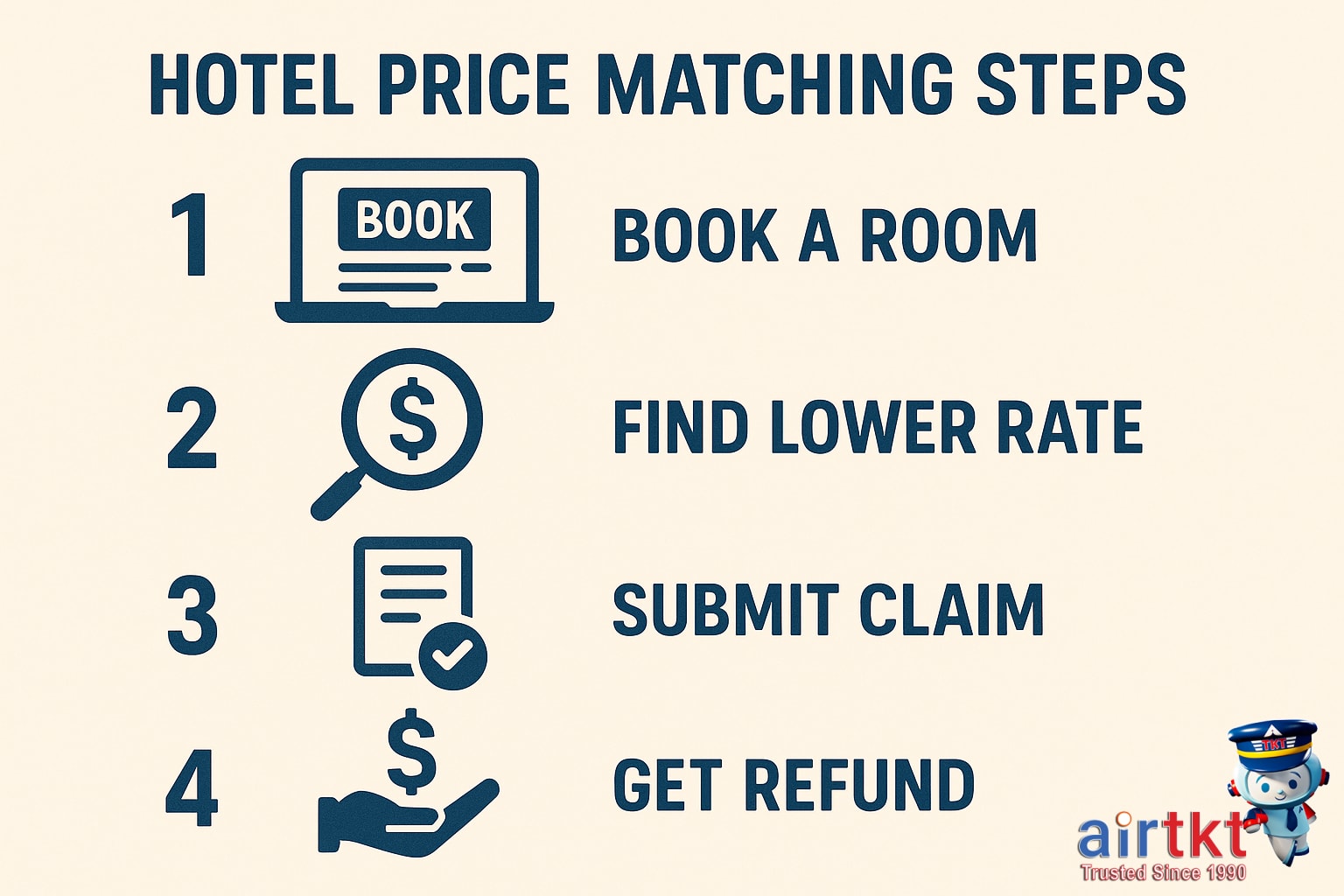
Stepwise Guide to Submitting Price Match Requests
- Gather evidence: Capture screenshots or print web pages showing the lower price, date, and booking terms.
- Review the hotel’s price match policy: Each hotel or OTA has specific rules about which prices qualify, how to submit claims, and deadlines for requests.
- Book the hotel room directly: Most price match guarantees require booking first through the hotel’s direct channel.
- Submit a claim: Use the hotel’s online form, email, or customer service portal. Attach your proof of the lower price and include all required booking details — reservation number, room type, dates, and offer URL or screenshot.
- Follow up: Note the response window, typically 24 to 72 hours, and keep communication polite and clear.
Checklist for Your Price Match Claim:
- Proof of the lower price (screenshot, webpage link)
- Matching stay dates, room type, and cancellation policies
- Booking confirmation details from the hotel site
- Compliance with claim submission deadlines
- Contact information for follow-up
Platform-Specific Claim Procedures and Timelines
Many major hotel chains and OTAs have streamlined their price match processes online, but specifics vary:
- Marriott: Submit claims via their dedicated price guarantee page within 24 hours of booking.
- Hilton: Requires proof within 24 hours, plus a direct booking made on Hilton.com.
- Booking.com: Offers a best price guarantee that must be requested through customer service within 24 hours of booking.
- Expedia: Usually requires claims within 24-48 hours, including rate checks on their platform and verified competing OTAs.
Timing matters; the shorter the window, the quicker you must act. Keep organized documentation and respond promptly to any hotel requests for verification or clarification.

Hypothetical Example: Claiming a Price Match
Imagine you find a deluxe room for $150 per night on the Hilton website but notice $140 per night for the same room, same dates, and refundable policy on an OTA. After booking the direct Hilton rate, you take a screenshot of the OTA’s offer and submit a price match claim on Hilton’s site. Within 48 hours, Hilton confirms the claim and refunds the $10 difference to your original payment method.
Typical Savings and Best Timing Strategies
When it comes to hotel price matching, travelers can typically save between 15% and 40% off standard rates. However, these savings vary based on factors like destination, season, and availability—so while substantial discounts are common, they are never guaranteed. Understanding the dynamics of seasonal pricing and optimal booking windows plays a crucial role in unlocking the best deals.
The contrast between shoulder-season and peak-season bookings is significant. Shoulder seasons—periods just before or after the peak travel times—often feature lower hotel rates due to decreased demand. Price matches during these times can yield savings close to the higher end of the range, sometimes nearing 40%. In contrast, peak-season bookings typically offer slimmer margins as hotels price rooms at a premium to capitalize on heightened demand.
For example, a beach destination might charge $200 per night in summer peak season but drop to $120-$140 during shoulder months like early fall or late spring. Securing a price match claim during these shoulder seasons can amplify your savings by reflecting the lower competitive rates being offered elsewhere.
Booking windows also influence savings potential:
- Early bookings: Reserving rooms weeks or months in advance often provides better rates and more availability, especially during high-demand periods. Price matches requested early may catch lower published rates from competitors before the hotel raises prices.
- Last-minute opportunities: Some travelers benefit from last-minute deals when hotels lower prices to fill vacancies. However, price match claims should be submitted quickly as these rates can disappear fast.
The ideal time to submit a hotel price match claim is as soon as you identify a lower competitor price after booking. Many hotels require claims to be made within 24 to 48 hours of the reservation, so acting promptly maximizes your chances of success. Additionally, keep an eye on cancellation policies to allow flexibility if switching to the matched price.
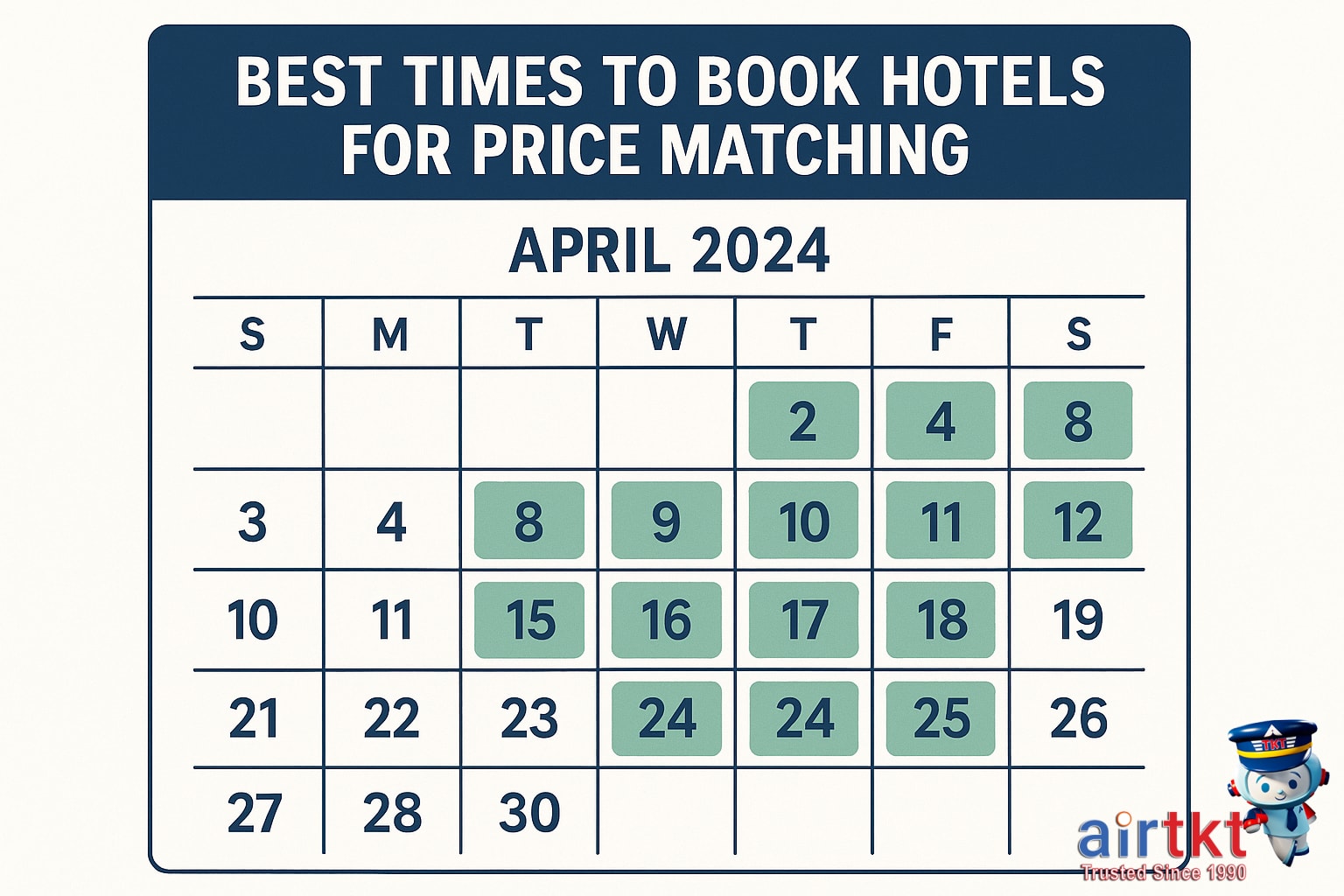
Using a calendar approach can help plan your price match strategy effectively. Track peak travel months and their shoulder-season neighbors, and mark reminders to hunt for competitive rates about 1-3 months before your trip for early bookings. For last-minute savings, watch daily deals around a week or less prior to check-in.
By combining these timing strategies with a keen understanding of seasonal price trends, you can boost your hotel savings dramatically. Before finalizing bookings on AirTtkt, review potential price matches carefully and act fast to maximize discounts.
Best Platforms and Tools for Price Matching
Finding the lowest airfare often requires smart tools and platforms that offer price match assurances or real-time comparisons. AirTtkt is one such platform, combining live price checks with exclusive discounted rates, but it’s essential to understand how other services stack up in the price matching arena.
Popular websites like Google Flights and Kayak provide robust live price comparison features. Google Flights excels in intuitive flight filtering and calendar-based fare trends, allowing travelers to spot the cheapest dates quickly. Kayak, meanwhile, combines meta-search with alerts and price forecasting, promising potential savings by predicting price drops or rises.
When comparing meta-search engines (like Skyscanner or Momondo) with direct Online Travel Agencies (OTAs), meta-search sites pull fares from multiple sources including airlines and OTAs, giving a comprehensive snapshot. However, direct OTAs such as AirTtkt often negotiate exclusive deals not always captured by meta-search engines, making them ideal for final bookings after initial comparisons.
Browser extensions add another layer of price monitoring convenience. Tools like Honey and The Camelizer track flight prices across visits and sometimes trigger alerts for price drops or eligible price match claims. Mobile apps such as Hopper and Skyscanner’s app analyze historical data to recommend the best time to book. Setting fare alerts on these platforms is crucial for travelers aiming to capitalize on sudden discounts.
User reviews highlight the ease-of-use and reliability differences between platforms. While Google Flights is praised for its speed and intuitive interface, some users find that final prices can fluctuate when redirected to airline sites. Meta-search engines receive mixed feedback; their breadth is appreciated, but actual booking often requires moving to OTAs like AirTtkt for better customer support and confirmed savings.
Experts recommend combining tools: start with broad meta-search engines for a comprehensive price view, employ browser extensions or mobile apps for real-time alerts, and finalize bookings on trusted platforms offering price match guarantees. This multi-layered approach increases chances of securing the lowest fares, while providing recourse if you find cheaper prices after booking.
In summary, leveraging platforms like AirTtkt, Google Flights, Kayak, and reputable price monitoring tools empowers travelers to effectively find, track, and claim price matches. Understanding each platform’s strengths and user experiences ensures your booking strategy is as cost-efficient as possible.
Expert Hotel Industry Tips for Price Matching Success
Securing the best hotel rates through price matching requires more than just finding a lower rate online. Industry insiders reveal that selecting the right room type and understanding booking terms significantly boost your chances of successful price matching. Hotels often exclude certain room categories from matches, so aim for flexible, refundable room types rather than non-refundable deals to increase eligibility. Booking standard rooms instead of suites or specialty accommodations usually improves your odds.
Cancellation policies play a crucial role as well. Hotels favor price matches on reservations with easy cancellation or modification options because these bookings present less risk to their revenue management. Rigid, non-refundable bookings can disqualify you from matches or limit negotiations. Combine this approach with loyalty programs: as a member, you may receive exclusive price match guarantees or perks not available to general customers, enhancing your overall savings and experience.
Another insider tip is to contact the hotel directly rather than relying solely on third-party platforms or automated requests. Hotel staff can verify current promotions not visible online or might negotiate price matches manually, especially if you mention competing offers you found on trusted sites. Building rapport with hotel representatives may also lead to added benefits like room upgrades or waived fees when price matching.
Be aware of often-overlooked terms and conditions that can affect price match success. Some hotels exclude flash sales, package deals, or rates requiring prepaid deposits. Others require the lower price to be advertised publicly with identical booking conditions, including check-in/out dates and number of guests. Carefully reading the fine print ensures you meet these criteria and protects you from common pitfalls.
By applying these expert hotel pricing strategies, travelers can maximize their chance of securing the lowest available rates without sacrificing flexibility or convenience. For a smart, hassle-free booking experience, use AirTtkt to compare rates and confirm price match policies efficiently, ensuring you get the best deal possible with confidence.
Cancellation Flexibility and Price Matching Impact
Cancellation policies play a significant role in how travelers approach price matching when booking flights. A fare’s cancellation terms directly influence your eligibility to claim a price match and determine the financial risk involved in making changes or cancellations. When you understand these policies, you can confidently navigate price drops without facing steep penalties.
Flexible refundable tickets typically offer the advantage of easy cancellations and modifications with little to no fees. This flexibility makes it easier to claim a price match and update your booking if a lower fare appears after purchase. Airlines often allow refunds or rebookings within a certain window, so passengers who select these fares can capitalize on price drops while minimizing financial risk.
In contrast, non-refundable bookings lock you into the original fare, making price matching more challenging. Even if you find a cheaper ticket later, the inability to cancel or change your reservation without incurring hefty fees often outweighs the savings from the price difference. Travelers with non-refundable tickets risk losing a significant portion of their money if they attempt to take advantage of price fluctuations.
Balancing savings with cancellation flexibility is essential. Opting for a slightly higher fare with refundable options can save you money overall, especially when travel plans are uncertain or if you anticipate price changes. By choosing flexibility, you reduce the chance of penalties and improve your prospects for a successful price match claim.
Consider this example: imagine you book a non-refundable ticket at $350, then see a similar flight drop to $300 shortly afterward. Changing or canceling the original ticket might cost $150 or more, negating any potential savings. Alternatively, if you purchased a refundable ticket for $400, you could cancel and rebook at the lower $300 fare, effectively saving $100. In this case, the refundable ticket’s flexibility allows you to capitalize on the price drop without additional expense.
Ultimately, cancellation flexibility is a key factor that can unlock real benefits with price matching. Travelers who weigh the risk of non-refundable bookings against the potential gains of refundable fares are better positioned to save money and avoid costly penalties. For budget-conscious flyers, especially those monitoring prices post-booking, understanding cancellation policies is just as vital as securing a low initial fare.
Real Booking Examples Highlighting Price Differences
Understanding price variations when booking hotels can save travelers significant costs. To illustrate this, we analyzed anonymized real-world examples comparing prices from hotel websites, online travel agencies (OTAs), and meta-search engines, factoring in all taxes and fees. These examples reveal how booking platforms, fees, and hidden conditions affect the total price you pay.
| Booking Platform | Base Price | Taxes & Fees | Total Cost | Booking Conditions |
|---|---|---|---|---|
| Hotel Website | $120.00 | $20.40 (17%) | $140.40 | Non-refundable |
| OTA (Booking.com) | $115.00 | $22.50 (19.5%) | $137.50 | Free cancellation (up to 24 hours before) |
| Meta-search (Google Hotels) | $118.00 | $24.50 (20.8%) + $5 booking fee | $147.50 | Free cancellation (up to 48 hours before) |
In this example, booking directly through the hotel website appeared more expensive upfront but avoided higher fees and offered a slightly lower combined tax rate. The OTA provided the best total price with the added benefit of cancellation flexibility. However, the meta-search engine added a visible booking fee, raising the overall cost despite a competitive base price.
| Booking Method | Room Rate | Fees & Taxes | Grand Total | Special Notes |
|---|---|---|---|---|
| Hotel Official Site | $220.00 | $35.20 (16%) | $255.20 | Early booking discount applied |
| OTA (Expedia) | $230.00 | $40.50 (17.6%) | $270.50 | Includes resort fee |
| Meta-search (Kayak) | $215.00 | $42.10 (19.6%) + $10 service charge | $267.10 | No early booking discount |
Here, the hotel’s own site leverages an early booking discount, resulting in the lowest total price despite a smaller tax percentage. OTAs often add resort fees or service charges that dramatically increase costs beyond advertised prices, especially during popular travel times.
Many travelers underestimate how booking conditions influence cost. For example, non-refundable bookings typically offer lower base rates but lack flexibility, while free cancellation options come at a premium. These conditions affect your overall travel risk and budget management.
Using Price Match Guarantees for Savings
Several OTAs and hotel chains provide price match guarantees that can reduce your final cost if you find a lower rate elsewhere. For instance, one case involved a traveler booking a mid-range city hotel through an OTA for $150, then reporting a $140 price found on the hotel’s direct website. The OTA promptly refunded $10 after verification, lowering the total cost by nearly 7%.
Price match policies often require the lower rate to be for identical booking conditions (same dates, room type, cancellation policy). Knowing how to leverage these guarantees can deliver additional savings beyond initial search results.
These real examples confirm that no single booking platform always offers the lowest price. Taxes, fees, booking policies, and discounts dramatically sway final costs. By carefully comparing all elements and using tools like price match guarantees offered by AirTtkt, travelers can ensure smarter, more economical hotel bookings for every trip.
Hotel Price Matching Frequently Asked Questions
What is hotel price matching and how does it work?
Hotel price matching is a guarantee that a booking platform or hotel will match a lower price found elsewhere for the same room and dates. If you find a better rate on a competitor’s site, you can request the original seller to adjust your booking price to that lower amount, ensuring you pay the best available rate.
How to submit a hotel price match claim effectively?
To submit a claim, first verify the competitor’s lower rate matches your exact room type, dates, and cancellation policy. Gather screenshots or direct links as proof. Contact the booking platform’s customer service promptly via email or chat with your evidence ready. Clearly explain your request and be polite; this improves chances of a swift price adjustment.
When should I start looking for price matches?
Begin monitoring hotel prices immediately after booking and continue checking regularly until closer to your travel dates. Many platforms allow price matching only within a set timeframe after booking, often 24 to 72 hours, so acting quickly is essential.
Why is cancellation flexibility important for price matching?
Cancellation policies must align between the original booking and the competing lower rate. If the cheaper rate has stricter or non-refundable terms, price matching might be denied. Flexible cancellations allow travelers to switch to a better deal without penalty, making price matching more practical and fair.
Can I price match across different platforms and hotels?
Generally, price matching applies only to the same hotel and room category across various booking platforms, not between different hotels. Comparing rates on platforms like AirTtkt against others can save money, but the hotel chain or booking site must offer explicit price match guarantees.
How much can I typically save using hotel price matching?
Savings vary but usually range from 5% to 20% off the original booking price. In some cases, deeper discounts are possible during promotions or last-minute deals. Consistently using price matching can add up to significant savings, especially for frequent travelers or family vacations.
What should I watch out for in price match terms?
Carefully review terms including deadlines for claims, required proof formats, eligible rates, and excluded booking types like non-refundable or member-only rates. Some providers exclude special offers or loyalty discounts. Understanding these details helps avoid rejected claims and ensures a smooth price match experience.
Save Money Using Hotel Price Matching with AirTkt
Hotel price matching is a powerful tool for travelers seeking the best possible rates. It allows you to book a hotel at a competitive price with the confidence that if you find a lower rate elsewhere, you can request a match and save money. Typically, savings range from 5% to 20%, depending on the hotel and timing. To maximize these benefits, book early when rates are still flexible and monitor prices closely to catch sudden drops or flash sales.
Using multiple platforms to compare hotel prices is essential. No single site always offers the lowest price, so staying alert to shifts in rates across different providers helps you secure the best deal. Alongside price matching, always review each hotel’s cancellation and price guarantee policies carefully. These terms protect you from unexpected fees and ensure you can cancel or adjust your stay without penalties if you find a better offer.
AirTtkt stands out as a go-to platform for affordable hotel bookings thanks to its real-time fare comparisons and transparent pricing. The platform offers access to extensive hotel inventories worldwide, combined with price matching options that keep your costs low amid fluctuating market rates. Beyond savings, AirTtkt delivers reliable customer support, available 24/7, which can assist with booking adjustments or answer any questions during your travel planning process.
Integrating live price comparison with user-friendly booking tools, AirTtkt helps you make informed decisions quickly. The platform’s clear display of cancellation policies and guarantees means you can book hotels with peace of mind. Whether you’re searching for last-minute stays or booking months ahead, AirTtkt equips you to find competitive hotel rates while leveraging price match advantages effectively.
In summary, hotel price matching is a smart strategy to reduce travel expenses when combined with diligent comparison and flexible booking approaches. By choosing AirTtkt, you not only access competitive rates and savings but also enjoy a secure, supportive booking experience tailored for budget-conscious travelers. Start planning your next stay with AirTtkt today to unlock the best hotel prices and travel confidently.