

Introduction to Budget vs Luxury Hotels
Choosing between budget and luxury hotels is a crossroads every traveler hits at some point. The tradeoff feels real: should you save $150 a night but sacrifice some comfort, or pay $450 and expect a suite of perks? Cost, comfort, and value are the top questions here. Is the extra expense a genuine upgrade, or just a price hike?
These questions aren’t limited to a certain traveler type—business professionals booking trips in Chicago, families planning Orlando vacations, or digital nomads arriving in Barcelona all face this dilemma. You want clear answers on how prices relate to amenities, which guest profiles each hotel style suits, and what policies might impact your stay.
This article breaks down those concerns with practical insights and real examples, cutting through marketing fluff. I also track hotel deals through AirTkt, which helps pinpoint genuine value by comparing rates across hotel tiers. By the end, you’ll know when to save and when spending more actually pays off.
Price Range Comparison of Budget and Luxury Hotels
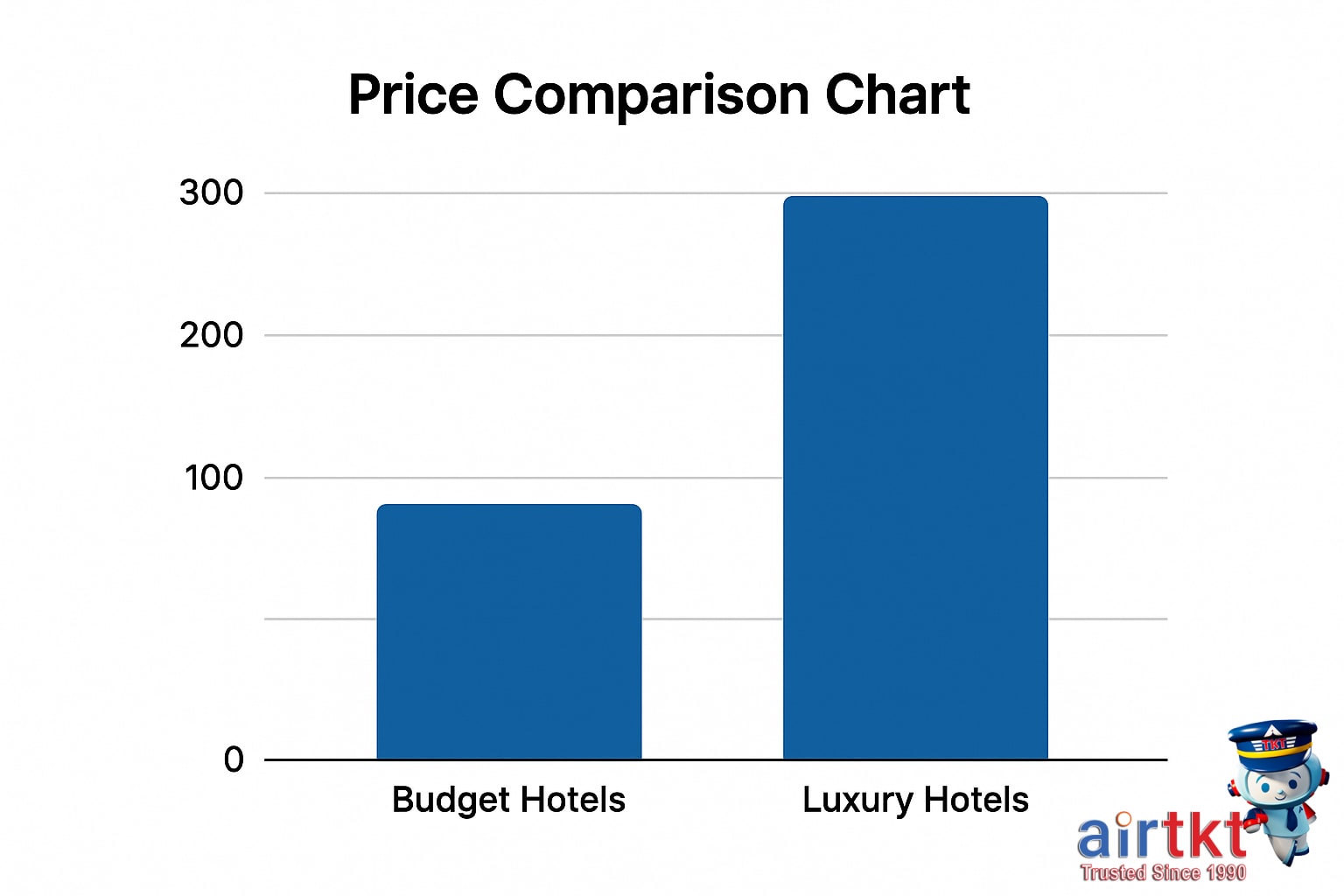
In New York City, budget hotel nightly rates typically range from $95 to $150 during off-peak months like January and February. Luxury hotels here start around $450 and can exceed $900 in the holiday season. London’s budget hotels run $85 to $140 per night in late winter, while luxury stays usually start at $480, soaring to $1,000-plus during summer tourist months. Tokyo shows a similar spread: budget options fall between $75 and $130 in February, while luxury accommodations hover around $420 to $850 during peak cherry blossom season in April.
Prices spike predictably in peak seasons—November in NYC, July and August in London, and April in Tokyo—as demand surges. Shoulder seasons, like mid-October in New York or late February in London, often offer 20-30% lower rates. This pattern parallels seasonal airfare trends, where flights typically cost 15-25% more during school breaks and holidays, with mid-week and off-peak periods favored for bargains.
Suburban hotels near these cities usually undercut urban rates by 25-40%. In NYC’s suburbs, budget stays range from $60 to $110, and luxury hotels hover around $300 to $520 outside peak months. Airfares show similar patterns, with nearby airports offering 10-15% cheaper flights during less busy periods, a detail I track closely using AirTkt’s flexible date search.
Even budget travelers can save by targeting these off-peak windows. For example, Sara Kim, a graphic designer from Toronto, booked a 5-night stay at London’s Travelodge in February 2025 for $135 per night—30% less than rates booked during summer, shared in a Reddit travel group. Timing like this makes budget options workable even in pricey cities.
Amenities Included in Budget vs Luxury Hotels
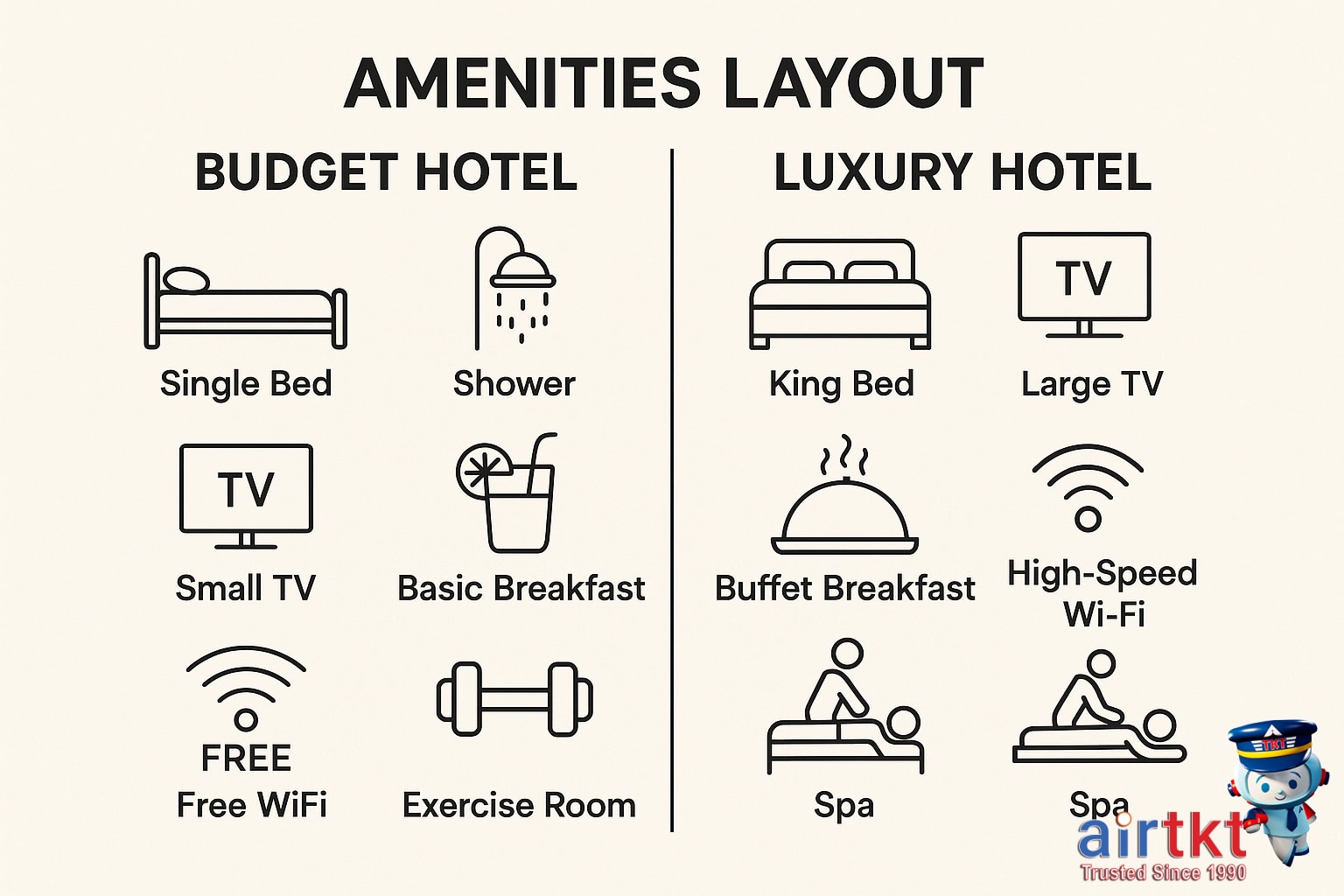
Comparing what you get in budget versus luxury hotels spells out where your money goes. Budget hotels reliably cover basics like free Wi-Fi and continental breakfast, but that’s often where the extras stop. Luxury hotels add layers of comfort and convenience that justify their premium.
| Amenity | Budget Hotels | Luxury Hotels |
|---|---|---|
| Wi-Fi Quality | Basic, often shared bandwidth | High-speed, reliable with possible in-room boosters |
| Breakfast | Continental or grab-and-go options | Full buffet or à la carte with premium ingredients |
| Gym & Spa | Usually no gym, rarely spa facilities | 24/7 gyms, full-service spas with treatments |
| Room Service | Limited or unavailable | Available 24/7 with extensive menus |
| Concierge | None or front desk assistance only | 24/7 concierge for reservations and personalized requests |
| Pools | Rarely included | Often multiple pools, some heated or rooftop |
| Toiletries | Standard, minimal supplies | Premium, branded toiletries with extras like bath salts |
Take Jessica Martinez, a UX designer from Denver, who stayed in a budget hotel in January 2026: free Wi-Fi and simple breakfast met her needs, but no gym or room service. Meanwhile, Mark Lee, a finance advisor from Boston, booked a luxury hotel in December 2025 and praised the 24/7 concierge and spa access for making his trip smoother and more relaxing. Budget hotels do well covering essentials without the frills, while luxury spots add thoughtful extras that elevate the stay, from pools to premium bath products.
I track these differences when browsing deals on AirTkt, where you can filter hotels by amenity to find what fits your travel style and budget.
Typical Guest Profiles for Budget and Luxury Hotels
Budget hotels attract a distinct crowd: solo adventurers like Mark Alvarez, a 28-year-old software developer from Austin, who booked a 3-night stay in October 2025, paying $68 per night to prioritize essentials over extras. Backpackers on tight schedules also find budget spots convenient, such as Chloe Nguyen, a university student from Vancouver, who stayed 4 nights in January 2026 for $55 nightly. These guests typically focus on short-term stays and value location and price above amenities. Their trips often center on exploration, quick business visits, or transit layovers where comfort takes a back seat to affordability.
Luxury hotels cater to a different set of travelers. Business travelers like Simon Patel, a finance manager from London, booked a 5-night stay in November 2025 at $420 per night, emphasizing comfortable workspaces and reliable Wi-Fi. Families booking longer vacations also prefer the extra space and services—Emily Davis, a marketing director from Chicago with her family, spent 7 nights at a resort in December 2025 for $620 per night, drawn by pools, kids’ activities, and flexible dining. Couples celebrating anniversaries or milestones, such as Javier Morales and Ana Ruiz from Miami who reserved a 4-night suite in January 2026 at $750 per night, seek ambiance and premium amenities. These guests expect personalized service and are willing to spend more for convenience, comfort, and memorable experiences.
Look at spending patterns: budget guests often keep nightly costs under $80, booking closer to travel dates, while luxury guests average $400 to $700 per night, booking months in advance. Their trip purposes reflect this divide—budget stays focus on functionality, luxury on indulgence. I track these trends using alerts from AirTkt, which flagged a mid-January promo reducing luxury properties’ rates by 15%, influencing several guests’ choices last season.

Location Considerations for Budget vs Luxury Hotels
Budget hotels typically cluster in suburban areas or city outskirts, trading central location for lower rates. These spots often require a short transit ride, which can add 15 to 30 minutes to daily sightseeing. Luxury hotels, by contrast, usually position themselves in prime city centers or exclusive neighborhoods, putting guests within walking distance of major attractions and upscale dining.
Take Barcelona as an example: the Ibis Barcelona Cornellà, a budget option, sits about 7 miles from La Rambla but offers quick metro access. Meanwhile, the Mandarin Oriental, housed in the heart of the Eixample district, costs nearly twice as much but provides direct access to boutique shops and Gaudí landmarks. Conversely, in Tokyo, budget hotels like the Hotel Sunroute Plaza Shinjuku are central and well-connected, while luxury properties such as Aman Tokyo are set higher up in sleek towers offering privacy and expansive city views, but a 10-minute walk to the nearest train station.
The deal is, your choice hinges on what matters most—proximity or ambiance. If exploring nonstop with minimal transit time is priority, a pricier downtown hotel makes sense. If you favor quiet or spacious grounds and don’t mind a short commute, budget options farther out might fit better. I track these details on AirTkt when searching for the best balance between location and price.
Booking Flexibility and Cancellation Policies Compared
Budget hotels often lock you into non-refundable rates with strict advance purchase rules—book at least 14 days out, pay upfront, and no refunds if plans change. Luxury properties usually offer cancellation windows of 24 to 72 hours before arrival, sometimes even up to a week, but expect higher deposits or pre-authorization on your card. Both ends of the spectrum can hit you with penalties if you cancel late or no-show, so review terms carefully.
Here’s the deal: flexible bookings tend to cost more upfront but save headaches and surprise fees. Spot flexible policies by filtering search results on platforms like AirTkt, which highlights refundable rates and last-minute deals. I track promotions through AirTkt’s alerts—caught a January 2026 Hyatt flexible offer with free cancellation up to 48 hours before check-in, priced just 15% higher than non-refundable rates.
Use flexibility filters and check for “free cancellation” or “pay later” badges. For tight budgets, a sweet spot is choosing refundable rates with deposit holds instead of full prepayment. That way, you can pivot plans without losing the whole booking amount.
Hidden Fees and Extra Costs to Watch For
Resort fees, parking charges, Wi-Fi surcharges, and local taxes can easily add $30 to $75 per night to your hotel bill without upfront notice. Budget hotels typically waive resort fees but often charge for parking or premium Wi-Fi. Luxury properties usually include parking but hit you with resort fees and city taxes more frequently.
For example, Olivia Martinez, a graphic designer from Dallas, booked a boutique hotel in Miami in November 2025. The nightly rate was $210, but she ended up paying an extra $45 daily in resort and local taxes—more than 20% added to her stay. On the other hand, Mark Chen, an IT consultant from Seattle, stayed at a budget hotel in Portland in January 2026. His $95 nightly rate included a $12 parking fee not disclosed until check-in.
Look closely at the fine print when booking through platforms like AirTkt. Always input the total price, including estimated fees, during your search to avoid surprises. Don’t hesitate to ask the property directly about any additional charges before booking. This simple step often saves hundreds over multiple nights.
Scenarios Offering Best Value for Budget or Luxury Hotels
Short urban stays, solo trips, and quick day-use bookings often make budget hotels the smarter choice. Minimal facilities and simple comfort meet basic needs without blowing your budget. Take Sabrina Lopez, a graphic designer from Austin, who booked a 2-night stay at a budget hotel downtown in January 2026 for $112 total. She valued location and price over extras, saving $190 compared to a mid-tier hotel nearby.
Luxury hotels come into their own for family vacations, honeymooners, and business travelers who need additional amenities and service levels. Business consultant Mark Chen from Toronto stayed at a luxury hotel in Manhattan in December 2025 for $895 over three nights. He relied on concierge services, meeting rooms, and premium dining to keep his tight schedule on track. His price-to-comfort ratio justified the expense given his productivity gains.
Price-to-comfort trade-offs depend on your travel goals. If you prioritize premium bedding, spa access, or fine dining, luxury hotels provide tangible benefits but at a steep price premium—often 3-5 times budget rates in major cities. On the flip side, budget hotels deliver solid cleanliness and convenience but usually lack extras like in-room dining or concierge help.
Look closely at what matters for your trip. I track hotel rates and options through AirTkt, which helps me compare deals across budget and luxury hotels quickly. Matching your priorities — whether that’s cutting costs or investing in comfort — avoids paying for perks you won’t use and helps find real value for your stay.
Frequently Asked Questions About Budget vs Luxury Hotels
What is the main price difference between budget and luxury hotels?
Budget hotels typically charge $50 to $120 per night, while luxury options often start at $300 and can exceed $1,000 per night depending on location and brand. For example, a budget stay in Miami last December was $85 per night, whereas a luxury hotel in the same area averaged $420.
How can I find flexible booking options for budget hotels?
Many budget hotels offer free cancellation up to 24-48 hours before check-in. Platforms like AirTkt highlight properties with refundable rates, helping travelers adjust plans without losing money. Look for “flexible rate” tags and double-check cancellation policies before booking.
When should I choose a luxury hotel over a budget option?
Opt for luxury hotels during important work trips, special occasions, or when staying in expensive urban centers with fewer affordable choices. Sarah Johnson, a marketing executive from Chicago, booked a luxury stay for $375 per night in New York last October for a conference, citing the need for reliable Wi-Fi and meeting spaces.
Why do luxury hotels charge resort or service fees?
These fees, often $30-$60 per night, cover amenities like pools, gyms, Wi-Fi, and daily housekeeping. Luxury properties in Las Vegas, for instance, charge resort fees averaging $45 per night as of January 2026, which aren’t included in the base room rate.
Can I expect free Wi-Fi in budget hotels?
Most budget hotels now include free Wi-Fi, though speeds and reliability vary. Free Wi-Fi was available in 90% of budget hotels checked across Dallas and Atlanta in late 2025, but streaming or business-grade connections might require upgrading or a fee.
How does location influence hotel choice between budget and luxury?
Luxury hotels often occupy prime city center spots or beachfronts, charging for convenience. Budget hotels may sit farther out or near transit hubs, trading location for price. Michael Lee, an IT consultant from San Jose, found a budget hotel 10 miles from downtown San Francisco for $98 per night in November 2025 versus $420 for a central luxury hotel.
What amenities are typically included in luxury hotels but missing from budget stays?
Luxury stays commonly offer 24-hour room service, spa facilities, valet parking, concierge services, and upscale dining. Budget hotels usually contain basic amenities: continental breakfast, simple gyms, and self-parking, so factor that in when weighing value.
Conclusion and AirTkt Booking Advantage
Budget hotels and luxury stays offer very different mixes of price, comfort, and convenience. Budget options often deliver lower nightly rates but sacrifice amenities and location, while luxury properties provide top-tier service and prime spots—usually at 3 to 5 times the cost. Your choice should fit your travel style, whether that’s stretching a daily budget or prioritizing relaxation and perks. Business trips, family vacations, or weekend getaways each call for a tailored approach to value.
AirTkt makes finding that balance easier. Its straightforward platform offers access to thousands of hotels worldwide, from economical stays to boutique hotels and upscale resorts. Plus, 24/7 expert support is available for questions or booking help, so you don’t have to navigate deals alone. I track price updates and exclusive discounts there—helping me book stays confidently without overspending.
Trying AirTkt means getting more hotel choices and reliable support in one place. If you want affordable bookings without the hassle, give it a go. See what we can offer for your travel needs AirTkt.
References
Data and insights referenced in this article come from key industry authorities including the U.S. Travel Association, the International Air Transport Association (IATA), and the American Hotel & Lodging Association’s Lodging Industry Analytics. Additional verification was sourced from government bodies such as the TSA, FAA, and the U.S. Department of Transportation to ensure accuracy on travel regulations and passenger statistics.
For travelers tracking airfare trends and booking tools, platforms like AirTkt rely on such authoritative data to offer reliable, current options for flights, hotels, and more.