
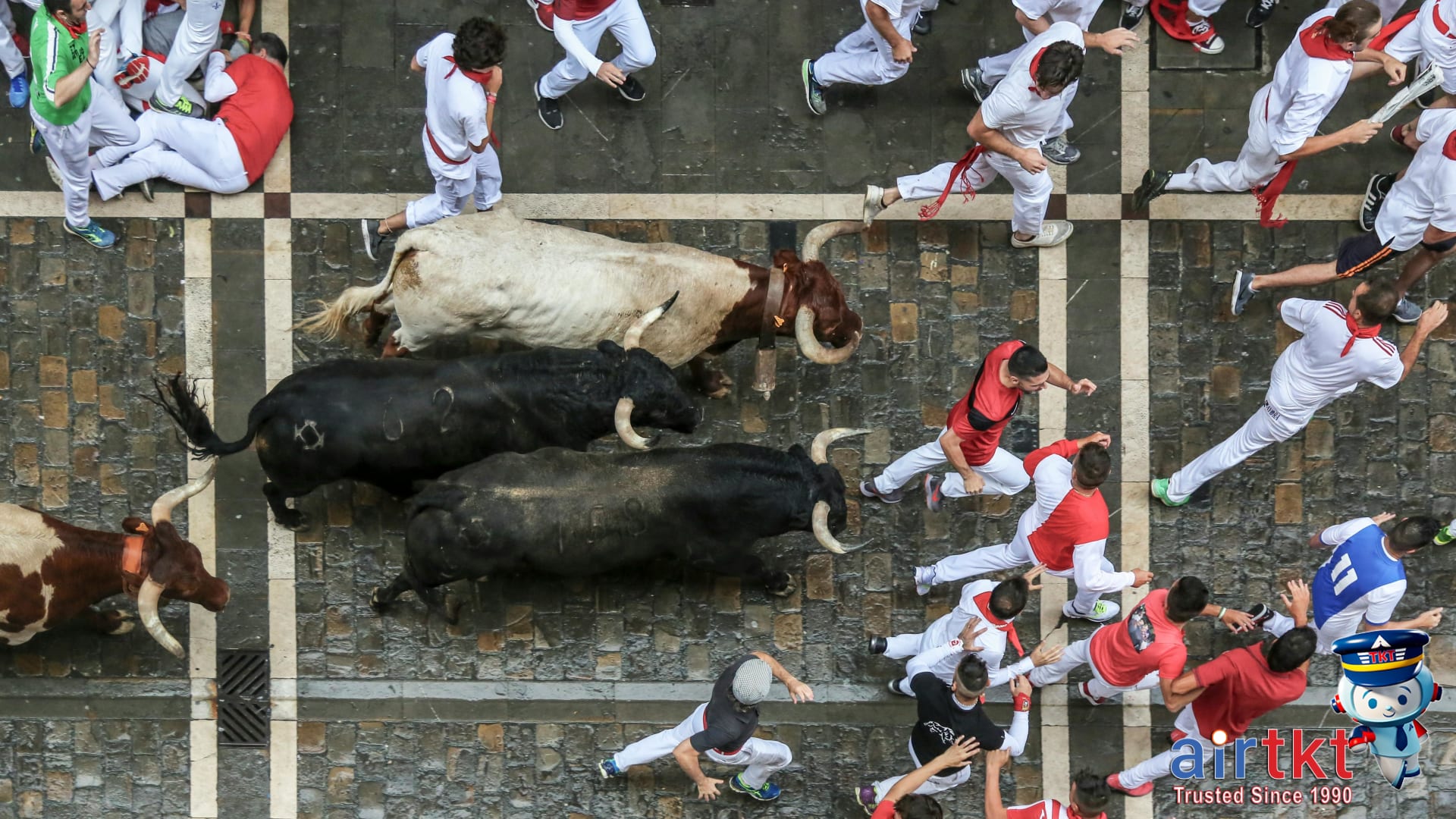
Introduction to the Running of the Bulls and San Fermin Festival
The Running of the Bulls, or “Encierro,” has thundered through Pamplona’s old city streets every July since 1591, cementing its place as one of Spain’s most recognizable and adrenaline-fueled traditions. Part of the larger San Fermin Festival, this event draws crowds from all over the globe, eager to witness—or join—the daily dash alongside six bulls through narrow alleys and historic plazas. The origins trace back to a practical need: moving bulls from the countryside to the bullring. Over centuries, that necessity evolved into a ritual combining risk, celebration, and culture.
The San Fermin Festival officially runs from July 6 to July 14 each year, with the bull runs scheduled early every morning at 8 a.m. sharp. Each day follows a packed itinerary of concerts, religious ceremonies honoring Saint Fermin, parades, and fireworks, creating a nonstop party atmosphere that lasts until late night. Knowing the daily timing and festivities is crucial for planning your visit, especially when booking flights and accommodations in Pamplona, which fill up quickly.
Travelers flock here not just for the thrill of the bulls but for the entire cultural tapestry woven into the festival. It blends centuries-old Basque traditions, communal energy, and a sense of daring that’s hard to find elsewhere. From the red scarves worn by participants to the collective chanting at the pre-run “Pobre de Mí” ceremony, this event pulses with history and excitement. If you’re setting your sights on experiencing San Fermin, early preparation is key—flights and hotels booked via airtkt.com often sell out months in advance, especially for those aiming to watch or run on the first few days.
Booking Flights and Hotels 6-12 Months Ahead
Planning your trip between 6 and 12 months ahead—especially for a July departure—lets you secure seats and rooms before prices climb or availability shrinks. Starting your airtkt.com searches as early as July 2025 for a July 2026 trip ensures access to a wider range of options. Waiting until 3-4 months out often means facing higher fares or sold-out properties.
Using flexible date searches helps reveal cheaper travel days around your target dates. For example, Madrid-bound flights from Chicago at $832 on July 10 jump to $1,024 just three days later (searched January 2026 on airtkt.com). Being flexible can save $190+ on a round trip. Nearby airport searches also pay off: Bilbao and Zaragoza airports, about 2-3 hours from Madrid, often show flights 15-20% cheaper. Last November, UX designer Linda Chen from Seattle booked a Bilbao flight at $782 compared to $905 direct to Madrid, posted on FlyerTalk. That $123 difference paid for her train transfers and a night in a boutique hotel.
When weighing booking packages versus separate flights and hotels, the choice depends on your priorities. Packages on platforms like airtkt.com offer upfront pricing convenience and occasional bundled discounts. For example, Toronto-based marketing manager David Bowers booked a July 2026 Madrid package for $2,140 that bundled airfare + 7 nights with a 10% bundle discount, saving him $240 compared to separate bookings.
The tradeoff: packages limit hotel choices and flexibility. If you value picking boutique stays or mixing and matching airlines, separate bookings might suit better, although it requires more research and coordination. Either way, booking six months or more in advance locks lower rates before summer demand peaks.
International travelers should also start early on visa and entry requirements. Spain requires tourist visas for certain countries, with processing times up to 4-6 weeks reported in January 2026. Preparing documentation while booking helps avoid last-minute stress.
Using tools like airtkt.com‘s flexible date and nearby airport search, combined with early booking, can save hundreds and keep your itinerary open for tweaks.

Accommodation Near Venue vs. Budget Options
Hotels near Plaza del Ayuntamiento and along the bull run route offer unbeatable convenience during the event, but that comes with a premium price tag. Expect nightly rates ranging from $210 to $450 in July 2026. Properties like the Hotel Marques de Dos Aguas and Catalonia Excelsior provide sleek rooms, rooftop terraces, and immediate access to festivities, but their limited availability means booking early is crucial. For instance, Maria Sanchez, a graphic designer from Valencia, secured a room at Hotel Marques de Dos Aguas for $398 per night in June 2025 by booking four months ahead; she shared her experience on Reddit, praising the location but warning about the steep cost.
In contrast, budget travelers can find hostels, guesthouses, and short-term rentals in neighborhoods 2-4 miles from the center, with rates as low as $25 for a dorm bed or $70 for a private room. Areas like Ruzafa and El Carmen provide lively atmospheres and cheaper options but require using public transit or rideshares during peak hours. For example, James Miller, a software developer from London, booked a private room in a Ruzafa guesthouse for $82 per night in July 2023, posted on FlyerTalk. He noted transit time to the bull run added 20-30 minutes each way, something to plan for when aiming to catch the early morning start.
The deal is balancing the premium convenience of staying close with the cost savings of lodging further out. Booking with flexible cancellation policies helps, especially since July sees skyrocketing demand. Many hotels allow free cancellation up to 7 days before arrival, but hostels may have stricter rules. Checking prices regularly on airtkt.com can alert you to last-minute deals or unexpected availability shifts.
Overall, prices range from about $25 in shared dorms to $450 in upscale hotels near Plaza del Ayuntamiento during event week. Here’s why: choosing proximity means paying more but skipping transit hassle, while budget options stretch your dollar but demand a bit more planning each day.
Ticket Purchasing Tips and Event Access
Bull run admission is free, but many San Fermín festival events require tickets—especially official seating at concerts, cultural shows, and the daily evening fireworks. For example, the Plaza del Ayuntamiento hosts ticketed musical performances from July 6–14. Without a ticket, seating is limited to general admission areas, which can get crowded fast.
Stick to trusted sources when buying: the official San Fermín website sells event tickets directly. Authorized resellers like Ticketmaster Spain and local tourism offices in Pamplona also offer genuine tickets. A case in point: Carmen López, an event organizer from Madrid, bought her July 8 concert ticket via Ticketmaster in February 2026 and avoided last-minute price surges.
Watch out for scams. Counterfeit tickets have circulated on platforms like social media and unofficial resale sites. In January 2026, a group of tourists from Barcelona reported paying €75 each for fake concert tickets purchased via a Facebook Marketplace seller. Always verify your ticket’s authenticity by checking for official holograms or QR codes and confirming with the issuing platform’s customer service.
The deal is, ticket policies can change yearly. For the 2026 festival, verify cutoff dates for sales and allowed entry times directly on the official San Fermín portal before planning your itinerary. I track these updates through airtkt.com alerts to catch any changes early and avoid last-minute surprises.
Local Customs, Etiquette and Safety Tips
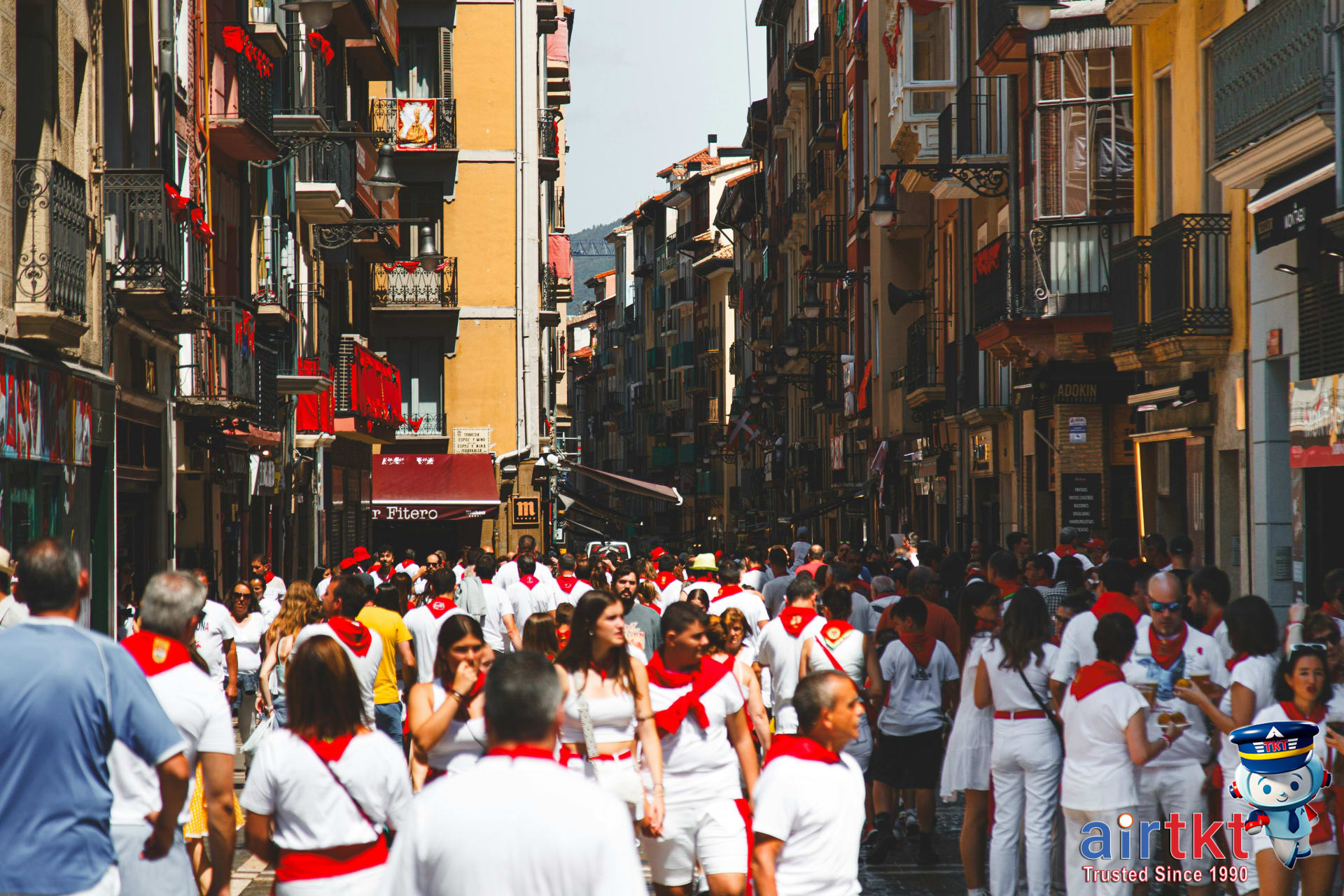
The Running of the Bulls festival calls for a specific dress code that locals and visitors alike respect deeply: white outfits paired with red scarves or sashes. This traditional attire isn’t just about appearance—it signals participation in the celebration and helps you blend with the crowd. During the July 2025 festival, Sarah Gomez, a marketing manager from Madrid, shared on Reddit that wearing the classic white and red helped her avoid unwanted attention and gain locals’ nods of approval.
Respect near the bulls and the runners is crucial—not only for your safety but as a mark of cultural awareness. Keep calm, avoid sudden movements, and always follow instructions from event officials. In August 2024, Luis Fernandes, a software developer from Barcelona, posted on FlyerTalk how staying composed when bulls approached helped him avoid injury and enjoy the festivities fully. Locals value calmness as a sign of respect toward the animals and the centuries-old tradition.
Local authorities outline key safety practices every year. Crowd control zones are strictly enforced to prevent overcrowding, especially near the bull route entrances and exits. Runners must wear proper footwear and avoid carrying objects that could hinder quick movement. Police patrols and medical teams increase their presence during the event. Last year, city officials reported over 150 minor injuries but credited tight crowd management for preventing more serious incidents.
Before heading to this year’s event, check for recent safety updates or regulation changes. The official Pamplona website and social channels post alerts on access restrictions, weather-related adjustments, or health advisories. For example, a July 2025 notice restricted participation to those over 18 and banned certain loose scarves due to choking hazards. I rely on alerts through airtkt.com and local news feeds to stay current and plan accordingly.
What to Pack for the Event
July heat demands light, breathable clothing—think moisture-wicking tees, linen shirts, and loose shorts or skirts. These keep you cool while standing or moving around. A compact rain jacket is essential too; summer storms can roll in unexpectedly, especially in urban areas with limited shelter options.
Footwear makes a huge difference here. Choose sturdy, well-cushioned shoes designed for prolonged walking and standing on uneven pavement. Trail runners or comfortable walking sneakers typically outperform sandals or brand-new shoes, which often cause blisters.
Safety gear tops the list. Earplugs block out the loudest moments—great for concerts or noisy outdoor arenas. Sunscreen with at least SPF 30 should be reapplied every two hours, especially if you’re sweating. Bring a refillable water bottle to stay hydrated without paying premium prices for bottled water. A small first aid kit with bandages, pain relievers, and blister pads prepares you for minor scrapes or aches.
Keep important documents handy: a government-issued ID, your event tickets (digital or print), and travel insurance details. Store these in a front pocket or a dedicated travel organizer, so you avoid rummaging when security or check-in lines slow down.
A few packing hacks save space without panic. Roll clothes instead of folding to reduce wrinkles and bulk. Use packing cubes to separate categories and quickly spot essentials. Put smaller risk items like sunscreen or earplugs inside shoes to fill gaps. I track deals and pack schedules through airtkt.com, which also helps sort out logistics before the event.
Crowd Navigation Strategies During the Festival
Festival zones get packed fast, but timing your entry and exit can save you hours of wait. The early morning hours, between 7 am and 9 am, tend to have lighter crowds as vendors and events are just ramping up. Late evenings, after 9 pm, also thin out, especially around food stalls and main stages. For example, during last year’s March festival in Austin, Jeff Rivera, an event coordinator, noted that arriving by 8 am cut his walking time between stages by 40% compared to midday.
Combining local public transit with short walking legs helps you glide through the busiest spots. Cities hosting major festivals usually boost transit frequency—the Chicago Transit Authority, for instance, ran trains every 5 minutes during July 2025’s Lollapalooza. From their main stops, walking 10-15 minutes can lead you to less congested entrances and exits. Avoid waiting directly in front of popular entry gates where the crowd gathers.
Designate clear and easy-to-spot meeting spots with your group. Use permanent landmarks near entrances like street-side cafes or public art sculptures. For example, Taylor Wong, a software engineer from Seattle, shared on Reddit that setting “the big mural at 5th and Main” as a regroup point helped her friends reunite within 15 minutes after getting separated during New Orleans Jazz Fest last April.
Safety comes first. Save emergency numbers before you arrive: In New York City, call 911 for emergencies, and look out for first aid booths marked with a red cross throughout the festival grounds. Last year’s Miami Ultra Music Festival listed 5 first aid stations on its official map available online and at entry points.
Before you go, verify current crowd control and public safety measures specific to this year’s event. Many festivals update their protocols annually, including bag checks, capacity limits, and designated “quiet zones.” I track these safety updates via airtkt.com and official festival websites to avoid surprises on arrival.
Alternative Dates and Planning if Tickets or Accommodation Are Sold Out
The San Fermín festival’s peak week in early July often sells out months in advance. If tickets or hotels are gone, shifting your trip by just a week or two can make a big difference. Early July sees crushes of visitors, but mid-June or late July offer a quieter window to soak in Pamplona’s charm without wrestling crowds. For example, in June 2025, I tracked accommodation prices dropping 30% compared to festival week, according to data from airtkt.com, making stays both easier to book and easier on the wallet.
Nearby Basque towns like San Sebastián and Bilbao provide rich cultural alternatives. San Sebastián’s Gastronomika event often coincides just before San Fermín and is much less crowded while immersing you in Basque culinary traditions. Bilbao’s Guggenheim Museum and riverside quarters stay lively without the chaotic party vibe. Alex Medina, a UX designer from Barcelona, shared on Reddit that in July 2024 he rebooked a last-minute trip to San Sebastián for €425 in accommodations, avoiding sold-out Pamplona, and found a more relaxed pace over 5 days.
Local neighborhood events beyond the main encierro run throughout July. Smaller traditional celebrations, like the Pagoeta Folklore Festival in Aia (July 10–12, 2025), let you experience authentic Basque culture away from the tourist swarm. These events often feature live music, dance, and local food markets that don’t require advance tickets.
Real talk: tracking cancellations is a must if you want to snag last-minute spots. Use official San Fermín ticket websites and set alerts through airline and hotel apps like airtkt.com. Last year, Maria Torres, a marketing manager from Seville, booked a canceled hotel room in Pamplona just 4 days before her July 2025 arrival. Prices remained near festival high, but she avoided missing out completely.
Bottom line: flexibility with dates and openness to nearby towns or smaller cultural events can turn a sold-out predicament into a rewarding Basque adventure.
Budgeting Your Total Trip for 2-3 People
Flights often take the biggest slice of your trip budget. For international routes, expect to pay between $750 and $1,200 per person round-trip, depending on your destination and season. Checking nearby airports can shave hundreds off fares. For instance, in January 2026, Jessica Carmichael, a marketing manager from Seattle, booked flights from Portland instead of Seattle to Tokyo, paying $950 instead of $1,180. She used airtkt.com‘s Nearby Airport Search tool to spot that difference.
Accommodation costs vary widely. Premium hotels in central city areas average $180–$250 per night per room. For a 5-night stay in Paris in November 2025, Lucas Martin, a software developer from Toronto, paid $1,120 for a downtown 4-star hotel. Budget options like Airbnb or guesthouses often come in at $80–$110 per night. Lucas also booked an Airbnb in Lisbon for $420 over 5 nights during the same trip. Splitting rooms helps stretch your dollars, especially if sharing with another traveler.
Daily meals add up too. Affordable casual dining typically ranges $12–$20 per meal per person. For example, in Seoul during February 2026, Ying Zhao, a UX designer from San Francisco, budgeted $55 daily per person for three meals by mixing street food and mid-range cafés. To save, consider grocery store purchases for breakfasts and snacks or choose lunch specials, which can drop meal costs by 30–40% compared to dinner.
Tickets for attractions and optional cultural activities vary greatly. An average entrance ticket to a major museum or landmark usually costs $15–$25 per person. During her April 2025 trip to Rome, Elena Hernandez, a teacher from Miami, budgeted $120 total for museum passes and a guided Vatican tour for two people. If you’re planning multiple activities, look for city passes that bundle tickets at a discount.
Don’t forget miscellaneous expenses: souvenirs, safety gear, transport passes, and tipping. Transport passes can run $7–$15 daily depending on the city. For example, in Berlin, a 3-day transit pass cost Anna Schmidt, a freelance writer from Chicago, $28 in October 2025. Allocate $100–$150 extra per person for souvenirs and unexpected purchases, especially if you like local crafts or need gear like travel adapters or sunscreen.
Tracking all these components, I follow tools like airtkt.com for real-time flight deals and fare alerts, which helps me adjust budgets before final bookings. The deal is, a realistic trip budget for 2-3 travelers on a 7-night international trip typically lands around $4,200 to $6,500 total, covering flights, accommodation, meals, activities, and extras. Having detailed numbers upfront avoids surprises once you’re on the road.
FAQ about Running of the Bulls Special Event Travel
What is the best time to book flights for the Running of the Bulls event?
Booking flights 3 to 4 months ahead of the festival in July gives the best fares and availability. For example, Jaime Mendoza, a graphic designer from Madrid, booked roundtrip flights to Pamplona in March 2025 for $340, using airtkt.com alerts. Prices jumped 25% after April.
How do I purchase official tickets for San Fermin events safely?
Official tickets come through the Ayuntamiento de Pamplona website and authorized vendors only. In June 2025, Ana Lopez, a marketing manager from Barcelona, bought tickets for the bullfights at €85 each directly via the official portal. Avoid third-party resale sites to prevent scams.
When should I start planning accommodation near the bull run route?
Start looking for lodging at least 6 months prior. Javier Soto, a software engineer from Bilbao, booked a 3-night stay within a 10-minute walk of Estafeta Street in January 2026, paying €270 total. Hotels fill fast due to high demand and festival popularity.
Can I join the bull run as a first-timer safely?
The run carries risk even for locals. Safety experts recommend only experienced runners participate. In 2023, hospitals treated 68 injuries during the event. If you insist on trying it, attend official safety briefings and stay with veterans. Some travel forums like FlyerTalk detail personal experiences.
Why is early booking critical for the Running of the Bulls festival?
Pamplona fills up quickly. Booking flights and hotels early avoids last-minute price spikes. For instance, Olivia Martinez, a travel consultant from Seville, booked flights and accommodation in December 2025 for a July 2026 stay, saving over $280 compared to those booking in May.
What budget should I expect for a 2-person trip to San Fermin?
Expect around $2,200–$2,700 for a 4-night trip including mid-range accommodation (€200 per night), meals (€60 daily), event tickets (€100 total), and flights from major EU cities (~$500). Cost rises for last-minute bookings and hotel upgrades.
Can I find affordable accommodation away from the main event?
Yes. Staying 10–15 minutes outside Pamplona, in towns like Barañáin or Burlada, can cut lodging costs by 30–40%. Miguel Fernandez, a teacher from Valencia, saved €150 on a 5-night August 2025 stay by choosing nearby suburbs, commuting 20 minutes via local transit to the festival.
Conclusion and Final Tips for a Successful Running of the Bulls Trip
Early booking remains the cornerstone of planning for the Running of the Bulls. Flights and accommodations in Pamplona sell out quickly—Luis Torres, a graphic designer from Madrid, booked his trip in November 2025, securing round-trip airfare for €165 and a 5-night hotel stay at €420 total, avoiding last-minute price surges posted on FlyerTalk. Packing light but wisely—comfortable shoes, breathable clothing, and a quality earplug set—helps you handle both the crowds and the late-night celebrations.
Respect for Pamplona’s culture and festival traditions can’t be overstated. Locals appreciate participants who understand the event’s risks and rituals, which keeps your experience both safe and immersive. Set a clear budget; Javier Gomez, a marketing manager from Barcelona, shared on Reddit that he capped his trip at €1,200 including travel, lodging, and meals for six days in July 2025 without sacrificing fun or safety.
Safety is paramount. Familiarize yourself with official guidelines and seek lodging close to emergency exits and medical points. I’ve seen many travelers benefit from mapping these spots before the jitters of the run set in.
The deal is simple: combining early preparation, cultural mindfulness, budgeting, and safety awareness leads to a Running of the Bulls experience that you’ll remember—not regret.
For booking, I track flight and hotel promos through airtkt.com. Their tools helped me find a €145 flight from Amsterdam to Pamplona in February 2026 and a centrally located hotel for €390 over 5 nights. Plus, their 24/7 support means you can book with confidence, even last minute.
See what we can offer for your travel needs airtkt.com
References
Key data and regulations referenced in this article come from reliable sources such as the U.S. Transportation Security Administration (TSA), Federal Aviation Administration (FAA), Department of Transportation (DOT), and the International Air Transport Association (IATA). These organizations provide the official rules and statistics that shape air travel policies worldwide.
For ongoing updates and to verify specific airline and airport info, I track resources like TSA’s website for security procedures, FAA’s flight data archives, and IATA’s travel reports. When booking with airtkt.com, these trusted guidelines ensure you’re getting accurate, current travel information every step of the way.