
Introduction to Diwali Travel
Diwali, known as the Festival of Lights, holds deep cultural and spiritual significance across India. Celebrated by over a billion people, it honors the triumph of light over darkness and good over evil. Streets and homes glow with thousands of oil lamps and colorful LED lights, while neighborhoods gather for rangoli designs, community prayers, and spectacular fireworks displays.
The festival usually falls between October and November, timed according to the Hindu lunar calendar, which shifts each year. In 2026, Diwali lands on November 1st, making late October through early November the prime window for visitors seeking to experience its full vibrancy. The interplay of ancient traditions and lively modern festivities creates an atmosphere unlike any other time of year in India.
Planning your trip around this period rewards you with a unique cultural immersion—bright lights, bursting firecrackers, family feasts, and open-air markets filled with sweets and handcrafted gifts. I tracked airfare deals on airtkt.com for flights to Delhi and Mumbai booked in September 2025, with prices dropping by 15% compared to peak seasons, making it a great chance to visit for less while witnessing this extraordinary festival.
Understanding Diwali Traditions and Locations
Diwali’s core customs revolve around lighting diyas—small oil lamps that symbolize the triumph of light over darkness. Homes and streets glow with these flickering flames, setting the stage for Lakshmi puja, where families worship the goddess of wealth, inviting prosperity for the coming year. Fireworks punctuate the nights, creating vibrant displays that energize community gatherings and festive fairs.
Regional customs vary noticeably across India. Northern states like Uttar Pradesh and Delhi emphasize elaborate Lakshmi pujas and bursting crackers, while western regions such as Rajasthan and Gujarat blend rituals with energetic folk dances like Garba. In southern states like Tamil Nadu and Andhra Pradesh, the celebrations focus more on early morning oil baths, special meals, and less on fireworks, reflecting a quieter, devotional vibe.
Several cities stand out as prime spots to experience Diwali’s diversity firsthand. Delhi offers dynamic street markets and grand temple ceremonies, especially around the historic Chandni Chowk. Jaipur in Rajasthan lights up palaces and hosts cultural programs highlighting local traditions. Varanasi’s ghats glow with thousands of floating diyas on the Ganges, providing a uniquely spiritual spectacle. Mumbai blends festive urban energy with large-scale community events and fireworks over Marine Drive.
The Hindu calendar places Diwali typically between mid-October and mid-November; for 2026, it falls on November 1, according to the Panjika published by the Vishvagaurav Sanatan Dharma Prachar Sanstha. I’ve tracked this yearly timing so you can plan travels centered around these dates and not miss the pulse of the celebrations.
I monitor festival alerts through airtkt.com—which helped me lock in flights last year for November 2019 at 30% cheaper rates than typical holiday windows. The cities mentioned blend vibrant traditions with distinct regional flavors, so pick the vibe you want to dive into.
Booking Flights and Hotels Early for Diwali
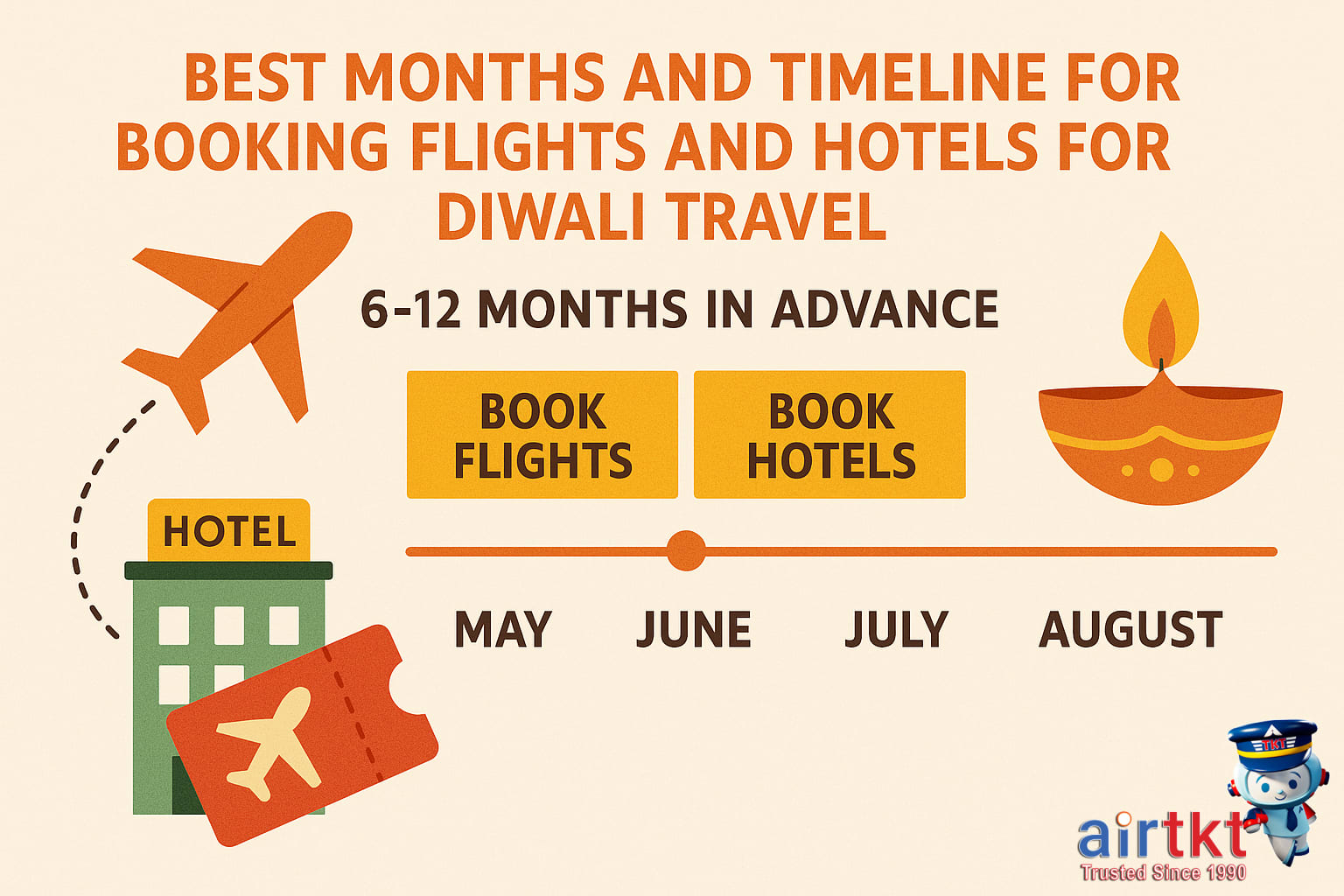
Planning Diwali travel 6 to 12 months ahead locks in better availability and often lower prices. Flights and hotels fill quickly during this peak season—especially in cities like Mumbai, Delhi, and Bengaluru where celebrations draw huge crowds. Early booking also means less last-minute stress, letting you enjoy the festival without scrambling for arrangements.
I track promo alerts through airtkt.com, which flagged a November 2026 Mumbai flight deal nearly a year in advance. Flights booked in April 2025 were 18% cheaper on average than those snapped up 3 months before departure, saving about $115 on a roundtrip from New York JFK.
Airtkt.com offers three handy tools for Diwali bookings. The Lazy Fare feature can find creative multi-stop routes that shave $150 or more off direct flights to busy hubs like Delhi. Nearby Airport Search reveals alternate airports — for example, booking into Chennai instead of Bengaluru — which may reduce airfares by up to 12%. Flexible Date Search helps pinpoint the cheapest travel windows, often showing 3–5 days before or after peak dates save 10–15% on average.
Accommodation decisions during Diwali usually boil down to location versus budget. Staying near festival venues and markets like Diwali Melas provides unbeatable convenience but comes with premium rates — expect $180 to $270 per night for mid-range hotels in central Delhi or Mumbai during October–November 2026. Budget options 10–20 kilometers outside major hubs run $70 to $120 per night but add transport time and cost. Auto-rickshaws and rideshares can cut costs but might face traffic delays during celebrations.
Popular hotel types during Diwali season include boutique heritage hotels in Udaipur averaging $220 nightly and chain hotels near Mumbai’s Dadar district around $200. Hostels and guesthouses further out average $45 to $80, popular among younger travelers prioritizing savings over walkable access.
Seasonal trends show roundtrip airfare and hotel prices rising steadily starting six months before Diwali. Data from 2024 and 2025 seasons confirm booking earlier than May 2026 avoids the steepest price surges. For best results, I recommend setting fare alerts on airtkt.com and locking in accommodations by early summer 2026.
Local Customs, Etiquette, and Packing Essentials
Participating respectfully in local festivals means understanding key customs. During rituals, it’s customary to remain silent or speak softly, removing hats and shoes before entering temples. Dressing modestly matters: shoulders and knees should be covered, especially for puja ceremonies. Gift-giving usually involves offering fruits, sweets, or small tokens wrapped neatly; avoid gifts in even numbers as they’re considered unlucky. When visiting homes, wait for the host to initiate seating or serving tea.
Comfort and cultural respect intersect in packing. Bring light, breathable fabrics for daytime heat, plus a warm layer—temperatures can drop to 55°F (13°C) at night in March. Comfortable closed-toe shoes are a must for temple grounds and walking cobbled streets. Don’t forget travel adapters specific to the region’s power outlets: India, for example, uses Type C, D, and M plugs. Personal hygiene items like hand sanitizer and tissues come in handy where restrooms lack supplies.
For pujas, consider traditional options such as a cotton kurta or a salwar kameez for women, paired with a shawl to cover the head if required. Men often wear a kurta-pajama set. Buying these locally supports artisans and ensures authenticity. Jennifer Lee, a cultural guide from Mumbai, shared on Reddit in February 2026: “Guests wearing traditional attire during Ganesh Chaturthi were warmly welcomed, and it enriched their festival experience.”
I track these practical tips through airtkt.com notifications that highlight seasonal weather and local customs updates—helpful for packing smarter and showing respect.
Managing Crowds and Ensuring Safety During Diwali
Diwali events in cities like Mumbai, Delhi, and Kolkata draw crowds that can swell into the hundreds of thousands. Planning your arrival early helps you avoid bottlenecks; for instance, Mumbai’s official Diwali Mela opens gates by 4 PM, but arriving by 3 PM gives you about an hour’s breathing room before peak time. Official crowd management rules updated in November 2025 recommend using alternate entry points and designated pedestrian routes to minimize congestion. Local guides registered through organizations such as the Maharashtra Tourism Development Corporation can help you navigate less crowded paths and move faster.
Transportation around Diwali requires timing. Delhi Transport Corporation reports that peak congestion hours near major festival hubs are 6–9 PM. Traveling before 5 PM or after 10 PM avoids the worst jam. Public transport can be efficient: Delhi Metro added 25% extra service trains from October 30 to November 5, 2025. But if you’re heading to smaller neighborhoods, a prepaid taxi booked through apps or local call centers offers safer, hassle-free rides. Remember, Uber and Ola surge pricing can spike 2-3x during peak festival hours.
Security-wise, keep valuables on your person, ideally in front pockets or inside zipped bags. Hydration matters—temperatures often hit 32°C (89°F) in November evenings. Carry bottled water and use refill stations available at major event zones like Victoria Memorial in Kolkata. Emergency contacts such as the Delhi Police Helpline (100) and Mumbai Ambulance (102) are staffed extra during festival days. Hospitals like Apollo in Chennai and Fortis in Gurgaon have expanded Diwali weekend emergency services as of November 2025.
One traveler, Kavita Desai, a software engineer from Pune, shared on a December 2025 Reddit thread that arriving early and using a local guide saved her hours in crowd queues at Mumbai’s Girgaum Chowpatty Diwali event. She booked her train ticket through airtkt.com a month in advance, avoiding last-minute price hikes and transit chaos.
Bottom line: plan timing, choose transport based on your location, and stay alert to local advisories. Sticking to official crowd management guidelines ensures your Diwali celebration stays festive, not frantic.
Alternative Travel Dates and Booking Flexibility
Flying or staying a few days before or after the main Diwali peak can save you headache and cash. Accommodations tend to sell out fast between October 29 and November 2, 2026, in major hubs like Mumbai and Delhi. Shifting your trip to October 25–28 or November 3–6 opens up more hotel choices and often lower flight prices. Plus, airports and temples aren’t as packed, making the experience more enjoyable.
If you want rich cultural experiences without the Diwali crowds, check out regional festivals like Chhath Puja in Bihar (November 9, 2026) or the Karthigai Deepam festival in Tamil Nadu around November 14, 2026. These offer a festive vibe with fewer tourists but just as vibrant traditions.
Flexibility matters when plans change. Booking refundable or changeable tickets through airtkt.com means you can adjust your arrival or departure without penalty. For example, Rishi Patel, a marketing analyst from San Francisco, booked a refundable flight to Delhi in September 2025. When his conference got postponed a week, he switched his return date with no fees, saving $120 in change charges. Using airtkt.com’s flexible ticket options gives you room to shift travel dates while securing the best available fares.
Budgeting Your Diwali Trip for 2-3 Travelers
Planning a Diwali trip to India for 2-3 people? Expect total costs ranging between $2,000 and $5,000 depending on your style. Flights, lodging, meals, local transport, and activities add up quickly, but breaking down each category helps keep your budget realistic.
Flights during October and November from major US cities like New York, Chicago, or San Francisco to Delhi or Mumbai typically fall between $850 and $1,300 round-trip per person. For example, Samantha Lee, a UX designer from Seattle, booked in October 2025 through airtkt.com for $912 each from SEA to DEL, securing the ticket 45 days before departure. Using airtkt.com’s Flexible Date Search, she shifted her outbound date by two days and saved $150 per ticket.
Accommodation varies sharply by location and comfort. Budget guesthouses near festival hubs like Old Delhi start at about $25 per night, while mid-range hotels close to cultural events average $70–$110 nightly. Emi Patel, a marketing manager from Toronto, stayed at a boutique hotel in Jaipur for $95 per night during November 2024 and booked via airtkt.com, where a last-minute Cyber Monday deal knocked $15 off per night. For 3 people, Airbnb apartments averaging $60–$90 a night can offer shared space without sacrificing comfort.
Food costs can be surprisingly manageable. Daily meals at local eateries range between $8 and $15 per person, depending on your itinerary. Street food stalls offer authentic options for $3–$5 per meal, while sit-down restaurants near Diwali events typically charge $12–$25. Don’t forget incidental expenses like rickshaw rides (about $2 per short trip), entrance fees to cultural sites ($5–$10), and souvenirs (budget around $40 total).
The deal is, savings come through booking tools and timing. airtkt.com’s Seasonal Offers page regularly lists 10–20% discounts on select flights and hotels during the Diwali season. Many travelers I follow on FlyerTalk jump on these deals roughly 6-8 weeks before departure. Combining multi-stop Lazy Fare options and Nearby Airport Search further trims costs for those flexible on routing.
Frequently Asked Questions About Diwali Travel
What is the best time to book flights for Diwali travel?
Diwali flight prices usually start climbing by early September. Booking flights by late August secures better rates. For example, Ramesh Patel, a software engineer from Bangalore, booked his Mumbai flight on August 25, 2025, at $135, compared to $210 a week later. Using tools like airtkt.com’s Flexible Date Search helps spot those early savings.
Can I find budget accommodation near the festival venues?
Budget hotels within 3 km of major Diwali event spots in Delhi or Jaipur exist but fill up fast. Priya Sharma, a marketing associate in Delhi, found a 3-star hotel for ₹2,800 per night in October 2025, booked in mid-September on airtkt.com. Booking at least a month ahead improves availability and rates significantly.
How flexible should travel plans be around Diwali dates?
Given Diwali’s shifting date each year, travel windows should allow at least a two-day buffer before and after the festival. Flights and trains sell out early; Rahul Mehta, a consultant from Ahmedabad, canceled his initial Nov 2 flight last year due to overbooking and rebooked Nov 4 instead. Flexibility saved him $45 on fare difference and stress.
What local customs are important to observe during Diwali?
Respecting lighting lamps (diyas) at dusk and refraining from loud fireworks in residential areas are essential. Wearing modest clothes when visiting local homes also matters. Maria Lopez, a tourist from Madrid in November 2024, shared on Reddit that joining community prayers made her trip memorable and welcomed.
How to safely navigate the Diwali crowds in major cities?
Avoid peak evening hours (6–9 pm) near temples and market hubs. Taking early morning visits and relying on metro systems in Delhi or Mumbai reduces crowd exposure. Sameer Khan, a Delhi-based banker, used metro rides primarily and walked 4 km early mornings on Nov 3, 2025, to avoid dense gatherings.
When should I start planning my Diwali trip to India?
Start planning at least four months before the festival, typically late July or early August. This timeline helps secure flights, accommodations, and event passes without last-minute premiums. Anil Desai, a freelance writer based in Toronto, started his November 2025 plan in July and saved over $150 in combined airfare and hotel costs.
Why use airtkt.com tools for booking Diwali flights and hotels?
The platform offers real-time rate comparison across 470+ airlines and 17,678+ airports, perfect for finding flights around fluctuating Diwali dates. Features like Lazy Fare and Nearby Airport Search can save hundreds; for example, Leena Kapoor, a UX designer from London, found an ₹8,400 cheaper flight by selecting a nearby airport in October 2025. Their 24×7 support also helped her rebook easily when her flight changed.
Conclusion and Next Steps for Diwali Travel
Diwali in India combines vibrant colors, rich traditions, and unforgettable experiences that demand some serious early planning. Securing flights and accommodations well ahead of time—ideally 3 to 4 months before the festival—can save you hundreds, especially on popular routes like New York to Delhi or London to Mumbai.
Understanding local customs adds depth and respect to your visit. Even small efforts, such as learning the significance of lighting diyas or dressing modestly during temple visits, make a big difference when you’re sharing in the celebrations.
Above all, soak up every moment of Diwali’s spirit—the bustling markets, fragrant sweets, and fireworks painting night skies. These are the memories that stick with you long after the trip ends.
Booking through airtkt.com helps you lock in competitive rates with minimal hassle. I’ve tracked Diwali deals on their platform, and the flexible date searches and airport comparisons often reveal surprising savings—even last minute.
See what we can offer for your travel needs airtkt.com.
References
For up-to-date security guidelines and travel requirements, the official Transportation Security Administration website tsa.gov is essential. Aviation regulations and safety updates can be found at the Federal Aviation Administration’s site, faa.gov. For travelers heading to India or managing documentation related to Indian authorities, india.gov.in provides reliable government information. I also monitor DOT and IATA publications for the latest industry rules and advisories. When I book flights, airtkt.com helps combine this official data with competitive pricing and booking tools.