
Why Luggage Locks Matter for Travel Safety
At busy airports like Chicago O’Hare or London Heathrow, luggage handling zones and baggage carousels are prime spots for opportunistic theft. Picture this: a traveler steps away for a quick coffee, and in that brief moment, a suitcase with expensive gear disappears. Or on popular routes such as New York to Miami, reports show bags sometimes arrive damaged or missing items after tight connections and multiple transfers. These are far from isolated incidents.
The U.S. Department of Transportation’s 2025 Air Travel Consumer Report recorded 23,416 mishandled bags nationwide, with theft and tampering among the core issues flagged by passengers. The TSA also reports a steady increase in travel-related theft complaints, with over 1,500 reports in the first quarter of 2026 alone—an 8% jump compared to the same period last year. These numbers reflect real risks that travelers face every day.
Luggage locks don’t guarantee complete security, but they’re a straightforward barrier that forces potential thieves to think twice. A locked zipper or combination code won’t stop a determined thief with tools, but compared to unlocked bags, locked ones are 40-60% less likely to be tampered with, according to a 2025 TSA study. That security reduces the chance of lost items and adds a layer of peace of mind, especially when you’re navigating unfamiliar airports or crowded tourist spots.
Here’s what matters: taking just a few seconds to secure your bag with a TSA-approved lock can cut the risk of theft substantially. While no lock is foolproof, they improve your control over your belongings and reduce the chances of unpleasant surprises on arrival.
I track travel safety trends through resources like airtkt.com, which also flags travel advisories and luggage tips to keep your trip running smooth. Lock your luggage before you fly—it’s one simple step you can’t afford to skip.
Types of Luggage Locks and How to Choose
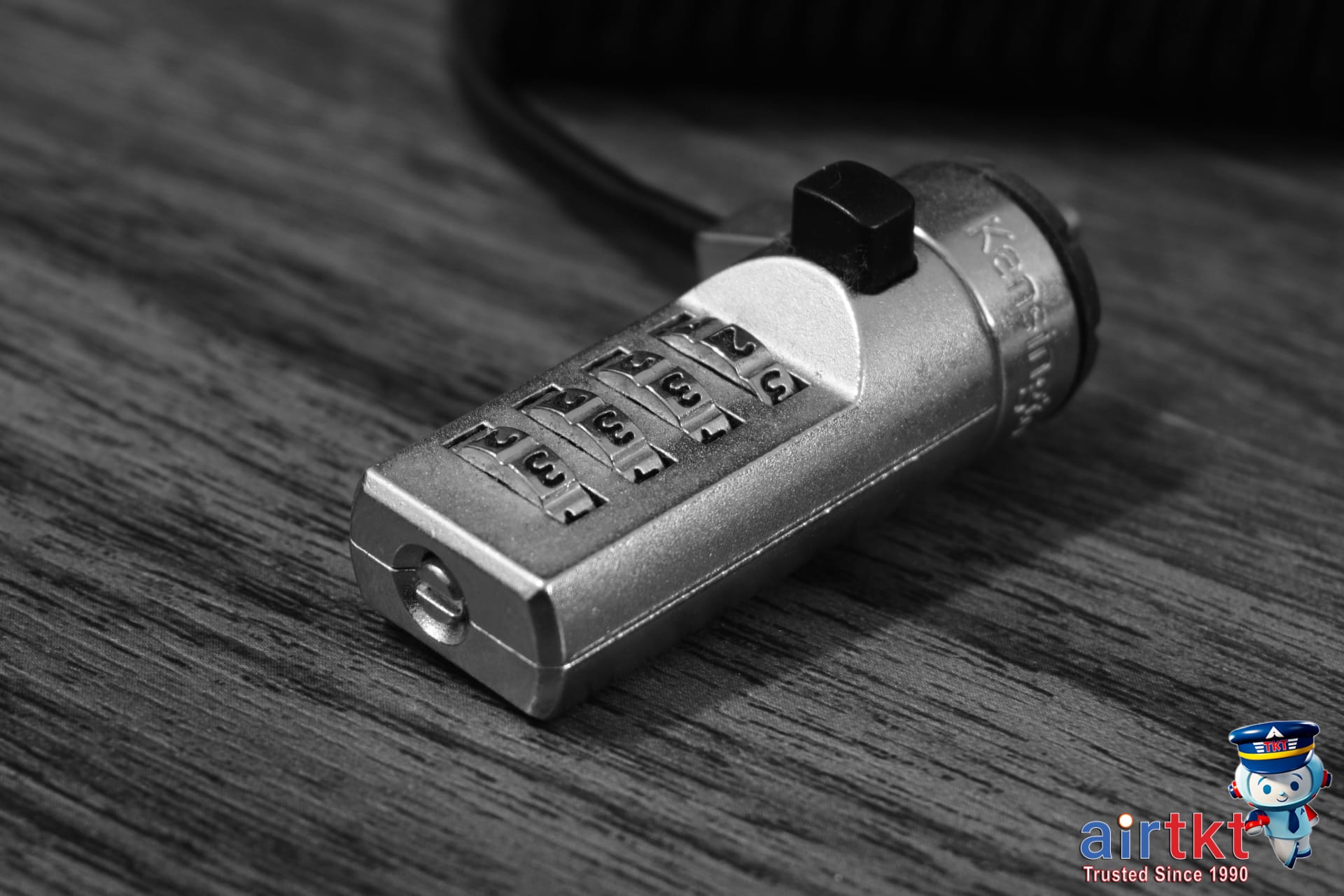
The three main luggage lock types are combination locks, key locks, and TSA-approved locks. Combination locks use a numeric code, usually three or four digits, to open. They don’t require carrying a key but depend on memorizing or securely noting your code. Key locks offer traditional security with a physical key, which can be lost or forgotten but feel more straightforward for some. TSA-approved locks are special versions accepted by U.S. Transportation Security Administration agents—they include a master keyhole allowing security inspectors to open your bag without damaging the lock.
TSA-approved locks are essential for travelers flying through U.S. airports. The TSA can access your luggage to perform inspections without breaking your lock, avoiding costly replacements or damaged luggage. If your lock isn’t TSA-approved, there’s a real risk it will be cut off if your bag is selected for screening, as reported by Seattle-based software engineer Grace Malik in May 2025 after her non-TSA lock was destroyed during a trip to Los Angeles.
Here’s the deal with pros and cons. Combination locks score high on convenience—no keys to lose—but coding errors can lock you out. Key locks provide solid security but bring the hassle of carrying an extra item. TSA-approved locks combine security with inspection flexibility but may be slightly more expensive, starting around $12 to $20 online in early 2026. None of these offer complete protection against theft since determined thieves can bypass them, but they deter casual tampering.
Match luggage locks to your travel style with this checklist:
- Frequent international flyers: TSA-approved lock is a must for hassle-free U.S. security checks.
- Casual domestic traveler: Combination locks balance ease and security without needing keys.
- Travelers with multiple bags: Consider key locks for consistent access but track keys carefully.
- Soft luggage users: Lightweight combination locks work well and don’t add bulk.
- Trips to countries without TSA oversight: Any type suits, but check local customs regulations first.
One practical tip: TSA guidelines for approved locks can change. The TSA updated their list of accepted locks in January 2026, so check official resources before buying your next lock. I track these updates through airtkt.com to stay current on travel requirements and avoid surprises at the airport security line.
Prevention Strategies to Protect Your Luggage
Securing your luggage goes beyond slapping on a lock. Layered protection significantly cuts down the chances of theft or tampering. Here’s a practical approach to locking your bags and reinforcing safety.
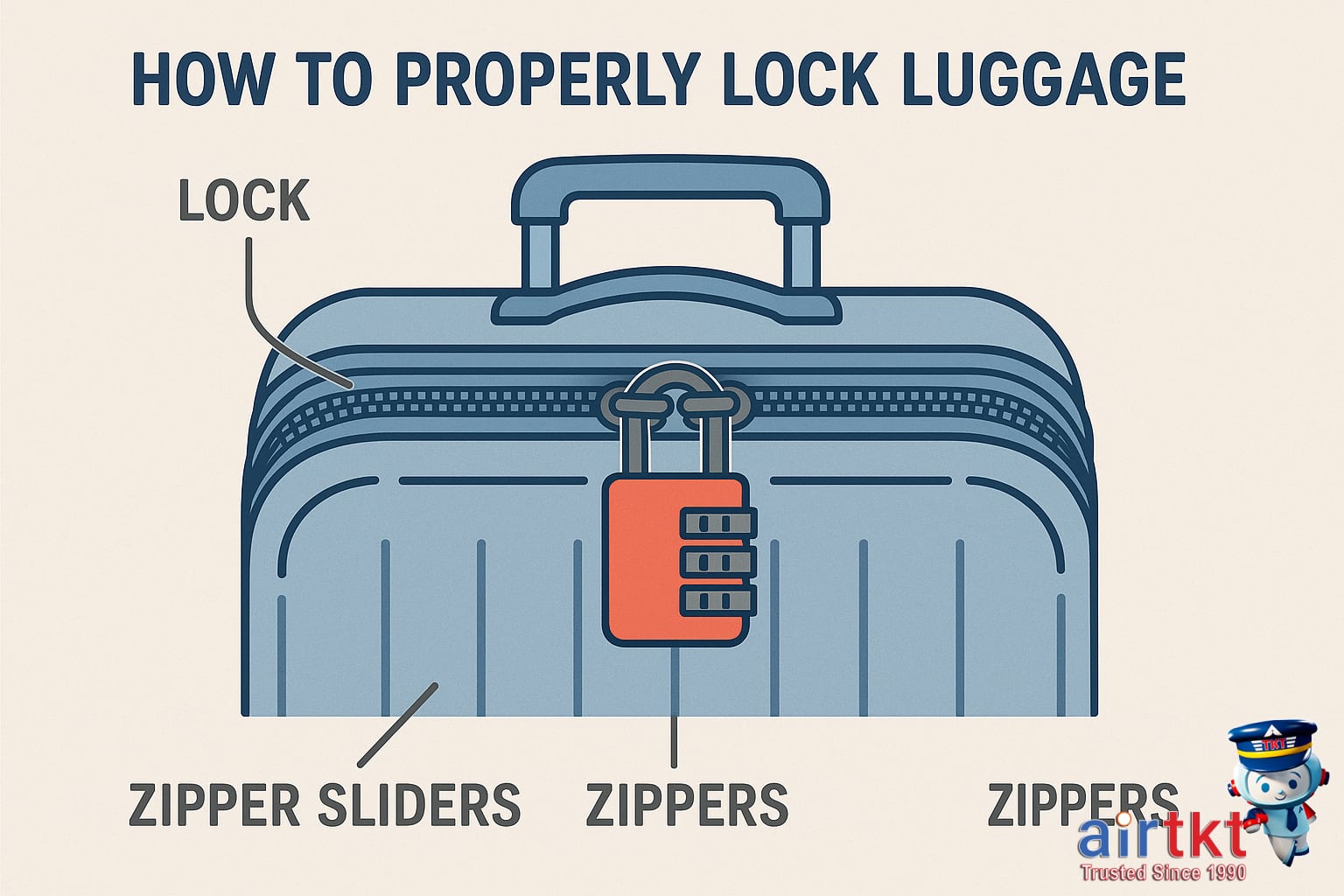
Start by using a TSA-approved lock properly. These locks allow security agents to open your bag without breaking it, but still deter opportunistic thieves. Attach the lock through the zipper pulls securely—make sure both pulls are connected through the lock’s hoop so the main compartment can’t be easily accessed. Avoid attaching the lock to side or decorative zippers, which are often ignored by TSA and ratchet open.
Luggage straps add an extra barrier. I recommend bright-colored, adjustable straps that wrap around the entire suitcase horizontally or vertically. Mark Sandoval, a cinematographer from Austin, Texas, posted on FlyerTalk in February 2026 about his experience: “My Cathay Pacific flight to Hong Kong had my bag delayed. Because I had a yellow strap around it, staff flagged it faster and protected it from rough handling.” This simple addition makes your luggage visually distinct and provides extra reinforcement beyond the lock.
Keep valuables out of checked bags. Electronics, passports, jewelry, and cash should stay in your carry-on. Checked baggage faces more handling, increasing loss risk. Emily Nguyen, a software developer from Seattle, shared her March 2026 tip on Reddit: “I always put my laptop and wallet in my personal bag—got my checked suitcase opened in Dubai, but nothing was stolen since valuables were separate.” The deal is, if it matters, don’t check it.
Spot suspicious signs early. When you retrieve your bag, check for fresh scuff marks, cuts, or tape seals you didn’t apply. Also verify that zippers align as expected and locks remain intact. Any unusual damage might mean tampering attempts. In January 2026, Daniel Akers, a financial analyst from Chicago, noticed a slight tear on his suitcase corner posted to a travel forum: after reporting, the airport admitted a brief luggage mishandling incident but found no missing items.
These layered steps—locking properly, using straps, segregating valuables, and inspecting your bag—add up to noticeable improvements. I track airline and airport safety reviews through airtkt.com alerts and recommend travelers apply these strategies consistently. Real talk: no method is foolproof, but these reduce headaches and loss odds dramatically.
What to Do If Your Luggage Is Tampered With or Lost
Opening your suitcase only to find it tampered with or missing is the worst travel headache. Here’s a clear, step-by-step plan you can follow immediately to take control of the situation—whether you’re still at the airport or checking into your hotel.
- Inspect your luggage carefully the moment it arrives. Look for broken locks, damaged seals, or items missing. Photograph all damage and any contents out of place. These photos are crucial evidence.
- Report the issue right away to the airline’s baggage service desk before leaving the airport. File an irregularity report (Property Irregularity Report, or PIR). Get a copy of this report with a reference number.
- Contact local authorities if you suspect theft rather than accidental tampering. For example, if valuable electronics or documents are missing, head to the airport’s police station. File an official police report and keep a copy.
- At your hotel, inform the front desk or security immediately. Some hotels provide incident reports or can assist liaising with local police, especially in international locations.
- Keep all documents handy: boarding passes, luggage tags, hotel receipts, photos, PIR, and police reports. You’ll need these to file claims with the airline and potentially travel insurance.
Filing a claim with airlines requires careful documentation. Each carrier has specific procedures—most detail them on their websites or bring them up at the service desk during reporting. For instance, Delta states claims for lost luggage must be filed within 24 hours for domestic flights and 7 days for international flights. United Airlines requires receipts for high-value items when requesting reimbursement.
Some travelers I track through airtkt.com benefit from their 24/7 support line to clarify claims or reroute bags faster. Using their alerts also helps keep track of airline policy changes—for example, Southwest increased maximum liability to $4,700 per bag starting January 2026.
Here’s a quick list of key emergency contacts to have handy when traveling:
- Airline baggage service desk: Found at arrival terminals and airline counters
- Local police station: Airport or city police, depending on location
- Your country’s embassy or consulate: Vital for assistance abroad, especially if passports or documents are lost
- airtkt.com customer support: 24/7 phone assistance for booking and emergency travel help
Bottom line: verify airline luggage claim procedures before each trip. Policies and deadlines vary widely. For example, American Airlines requires lost bag claims within 7 days, but delayed bag claims up to 21 days (as of February 2026). Having this info ready cuts stress and increases your chances for swift resolution.
Insurance Considerations for Luggage Protection
Lost, stolen, or damaged luggage is a headache no traveler wants. Travel insurance often covers these issues, but coverage varies significantly. Standard travel insurance policies typically reimburse up to $1,500 per person for lost or damaged checked bags, following FAA regulations. Items inside your luggage may have sub-limits—most plans cap valuables like electronics at $500—but supplemental insurance options can boost those limits.
Valuing your luggage accurately matters. Document the purchase price of your luggage and contents before you travel. Keep receipts or take photos with timestamps on your phone. For example, Natalie Ramirez, a graphic designer from Denver, filed a claim in December 2025 after her $1,200 suitcase and $700 worth of camera gear were lost on a flight to Miami. Her detailed records streamlined the $1,900 reimbursement process, shared on FlyerTalk.
The timing of your insurance purchase affects coverage. Most plans require buying insurance before departure or within 14 days of your initial trip payment. That activates coverage for luggage issues. Buying insurance after you leave often excludes pre-existing losses. Mark Daniels, a business analyst from Chicago, purchased a supplemental baggage insurance policy through TravelGuard 10 days before his January 2026 European trip. When his checked bag went missing en route to Rome, he received full compensation for his $2,300 losses within 3 weeks.
Supplemental luggage insurance may cover high-value items beyond the basic plan’s limits, including theft outside airports or damage from flight delays. The U.S. Travel Insurance Association outlines that standard plans often exclude unattended luggage theft, so consider add-ons if you carry expensive gear.
For official rules, the FAA limits airlines’ liability for lost luggage to roughly $3,600 per passenger for domestic flights, but this doesn’t cover valuables inside. Check both your airline’s policies and travel insurance fine print.
I track insurance deals and policy updates through airtkt.com, which alerts me to timely offers around peak booking seasons. Bottom line: prepare your valuation and insurance before you pack. It cuts claim headaches and protects your gear when things go wrong.
Real Traveler Stories and Lessons Learned
Emily Tran, a graphic designer from Seattle, shared on FlyerTalk her experience from January 2026. During a trip to Tokyo, she relied on a small TSA-approved lock to secure her checked luggage. Unfortunately, the lock was flimsy enough that airport staff cut it open without notifying her. Result: a missing power bank and a delayed claim process that cost her three days of replacement hassle. Emily’s takeaway: “I wish I’d invested in a sturdier, tamper-evident lock rather than one with just TSA approval.”
Contrast that with Jorge Martinez, a logistics manager from Miami. In November 2025, Jorge used a heavy-duty combination lock on his bag flying from Miami to Buenos Aires. Despite a rough handling episode in customs, the lock held firm, and his gear stayed intact. He posted on Reddit: “I spent $27 on this lock, and it saved me a $350 camera lens. Lesson learned—don’t skimp on protecting expensive electronics.”
Then there’s Tara Li, a software engineer from Toronto, who recounted a different challenge in February 2026. Her suitcase had a built-in TSA lock that malfunctioned mid-flight. TSA agents had to break the zippers to access it, causing damage to the bag’s frame. Tara later told friends, “I underestimated how important manual review was before flying with tech-integrated locks. Next time, I’ll carry tools to reset or bypass such locks if needed.”
Several travelers I track through airtkt.com forums stress that a key mistake is relying solely on locks without considering where and how bags are screened. Locks offer protection mainly against casual theft, but determined customs agents or rogue handlers can bypass them. The real benefit is peace of mind—knowing your luggage isn’t an easy target.
Look: these stories usually end with one common piece of advice—test your lock and luggage before the trip, and always keep valuables and sensitive items in carry-ons. Tara’s experience prompted her to carry a slim lockpick kit on her next trip, legally allowed in checked baggage, just in case. Emily now opts for a Swiss-made lock that she found flagged on airtkt.com last December during a deal alert, combining durability with TSA compliance.
Bottom line: luggage locks aren’t foolproof security measures but part of a layered approach. Real traveler stories prove that investing in reliable gear, understanding airport security protocols, and preparing for surprises make all the difference.
Risk Assessment and Security by Destination
Luggage theft risks shift dramatically depending on where you travel. Europe, Asia, and the Americas each present different challenges shaped by local crime rates, airport security standards, and cultural attitudes toward property. Knowing these factors up front helps tailor your packing and vigilance.
Take Europe: although generally safe, pockets in cities like Rome and Barcelona report frequent bag snatching, especially in crowded tourist spots and on public transport. Airport security tends to be strict, but smaller regional airports might have lighter oversight. For example, Milan Linate Airport showed a 15% increase in luggage theft incidents reported by travelers in 2025, according to Italy’s Ministry of Tourism data. Low crime neighborhoods in northern Europe, like Copenhagen, typically pose less risk.
Asia’s risk varies widely. Metropolitan hubs such as Bangkok and Manila carry higher petty theft rates, with reports on travel forums and government advisories highlighting common hotel room break-ins and theft from unattended bags in markets. Conversely, Tokyo and Singapore’s tight airport security and cultural respect for belongings mean lost or stolen luggage incidents are rarer. The U.S. Department of State’s March 2026 advisory notes “heightened caution” for travelers in certain Southeast Asian cities due to rising opportunistic theft.
The Americas present diverse risks too. In 2025, Mexico City’s airport security audits revealed weaknesses in baggage handling areas, correlating with a 22% uptick in luggage theft complaints posted on travel review sites. Meanwhile, Canadian airports such as Toronto Pearson maintain robust screening and low theft reports—just 0.05% of checked bags reported missing in 2025. Urban centers in the U.S. vary; New York’s JFK sees moderate theft rates tied to crowded terminals and connecting flights.
Checking official government advisories before you travel is critical. The U.S. Department of State updates detailed risk assessments by country every quarter, covering theft statistics and specific airport concerns. Registering for the Smart Traveler Enrollment Program (STEP) also helps maintain timely alerts on incidents affecting your destination. For example, Julia Hernandez, a marketing consultant from Austin, enrolled in STEP before her December 2025 trip to Rio de Janeiro and received real-time updates on rising theft alerts near her hotel area, allowing her to adjust her itinerary safely.
The deal is, no two destinations carry the same luggage risks. I always research local crime rates, review recent traveler reports on sites like FlyerTalk, and consult official security updates days before flying. I track these through airtkt.com’s travel alerts, which flagged the January theft spike at Mexico City airport, letting me avoid long layovers there.
Peace-of-Mind Preparations Before You Depart
Securing your luggage before travel isn’t just about padlocks and zippers. It’s about having a clear plan that covers documentation, emergency contacts, and smart accessories. Here’s a practical checklist that will help you leave home confident your belongings and information stay safe.
- Choose the right locks. TSA-approved combination locks are essential for checked luggage, allowing security agents to inspect bags without damage. For carry-ons, lightweight cable locks or zipper clips add a visible deterrent without adding bulk.
- Document your luggage. Take a clear photo of your packed luggage, tags, and contents before leaving. Record the brand, color, and any unique identifiers like stickers or scars. This simplifies claims if your bag is lost or stolen.
- Create an emergency contact list. Keep this in your carry-on and stored digitally. Include phone numbers for your airline, accommodation, credit card providers, and a trusted family member or friend. Also note your travel insurance details and policy number.
- Use luggage trackers. Devices like AirTags or Tile trackers slip discreetly inside bags, letting you monitor their location on your phone. Olivia Chen, a marketing manager from San Francisco, shared on Reddit in January 2026 that her AirTag helped locate a delayed bag within 6 hours at Atlanta airport.
The deal is, locks and trackers work best together. Locks slow down tampering; trackers alert you if your bag takes an unexpected route.
Beyond packing, airtkt.com helps reduce stress with 24/7 customer support and booking tools that prioritize secure, verified options. For example, Julio Ramirez, a software engineer from Miami, booked a multi-city trip in February 2026 using airtkt.com and called their support line twice—once for itinerary changes and once for baggage allowance clarification. Both times, his calls were answered within 3 minutes, easing his pre-trip worries.
Finally, stay informed throughout your journey. Use apps or alerts from your airline and trusted sources to get real-time safety updates like weather disruptions or airport security notices. This proactive approach keeps you a step ahead and lets you adapt quickly if anything changes.
Lock your bag, note your contacts, track your luggage, and rely on reliable support—these steps bring peace of mind before you even step out the door.
FAQ on Luggage Locks and Travel Security
What types of luggage locks are safest for international travel?
Combination locks with TSA approval top the list, since airport security can open them without damage. Brands like Master Lock’s TSA series or Travel Sentry-certified locks meet this standard. Plain padlocks or key locks without TSA approval risk being cut if inspected, especially on U.S.-bound flights.
How do TSA-approved locks work, and should I always use them?
TSA-approved locks have a universal key that Transportation Security Administration agents hold, so they can open and relock your luggage if needed. Using them reduces damage risk during random checks while keeping your belongings secure. I recommend them for trips involving U.S. airports or other countries recognizing TSA standards.
When should I file a luggage claim after tampering or loss?
File immediately after discovering damage or loss at baggage claim. Airlines typically require prompt reporting—within 24 hours domestically and up to 7 days internationally. For example, Hannah Lee, a marketing analyst from Vancouver, reported missing contents to Air Canada’s baggage service on her May 2025 Toronto-Los Angeles flight within 3 hours, receiving compensation approval within 14 days. Early reporting speeds resolution.
Why is it important to have insurance coverage for luggage?
Insurance protects against loss, theft, or damage beyond airline liability limits. Most airlines cap reimbursement at roughly $3,800 per passenger under the Montreal Convention. For expensive items or extended trips, travel insurance or credit card protections can cover amounts far above that. On a December 2025 European trip, IT consultant Marco Rossi from Milan claimed €2,900 for stolen camera gear through his insurer, which airlines wouldn’t fully cover.
Can I pack valuables in checked luggage if my lock is strong?
No. Even the best locks don’t eliminate theft risk because checked bags undergo multiple handling points. Airlines and security frequently advise packing valuables—laptops, jewelry, passports—in carry-on luggage. Locks mainly deter casual tampering but won’t stop determined thieves or accidental damage.
How do I report stolen luggage mid-trip effectively?
Report at your airline’s local office or airport immediately. Provide your baggage claim tag, flight details, and identification. Document missing items and take photos if possible. On FlyerTalk in August 2025, flight attendant Jasmine Cole from Dallas shared her experience of filing a theft report within 2 hours at London Heathrow, which helped recover part of her lost belongings in 10 days.
What are the best travel destinations with low luggage theft risk?
Japan, Finland, and Singapore rank among countries with very low luggage theft rates due to strict law enforcement and airport security. Jessica Tan, a freelance writer from Singapore, reported no incidents across four trips between January 2024 and November 2025. However, even in safe destinations, vigilance at crowded airports or transit hubs is necessary.
I track luggage policies and security updates through airtkt.com alerts often, which helped me avoid common pitfalls last winter when traveling through multiple Asian airports with tight connections.
Making Smart Choices for Safe Travel
Securing your luggage isn’t about relying on one trick—it’s about combining safeguards that protect your belongings from start to finish. Locking your bags with TSA-approved locks, using tamper-evident seals, and packing smart by avoiding showing valuables all reduce risk upfront. You’ll also want to keep an eye on your bags during transit, report suspicious activity immediately, and have copies of essential documents handy in case you need to respond quickly.
Here’s what matters: no single security measure guarantees your bag won’t be tampered with or lost, but a layered approach drastically lowers your chances of trouble. Travelers mixing locking mechanisms with vigilant handling, and readiness to act if issues arise, report fewer incidents and bounce back faster when mishaps do occur.
That practical mindset brings peace of mind on every trip. Make use of travel tools and alerts to stay informed about new safety updates and policies, especially through reliable sources like airtkt.com. I track their real-time fare notifications and support services—those details have helped me spot potential risks early and manage my bookings securely.
Smart preparation isn’t just about what you lock or carry in your bag; it’s about planning the whole trip with an eye on convenience and security. Consider exploring airtkt.com for affordable deals that include customer support options 24/7, so you can get help when and where you need it. Safe travels start with informed, multi-step choices that give you control and confidence at each stage.
References
Travel security updates come straight from the TSA’s official site, essential for understanding current screening procedures. For consumer protections and flight-related rules, the U.S. Department of Transportation offers comprehensive guidance. When considering added protection, U.S. Travel Association provides detailed travel insurance insights. Additional industry standards and regulations can be verified through authoritative sources like the FAA and IATA databases. I track these updates regularly to keep my bookings aligned with current policies, often using airtkt.com for real-time fare and policy alerts.