

Why Health Safety Should Top Your Travel Checklist
Travel excites us with new sights, tastes, and experiences, but health risks shadow every itinerary—from local stomach bugs to altitude sickness in mountain destinations. The reality? According to the World Health Organization’s 2024 report, roughly 30% of international travelers face some form of illness during or shortly after their trip. Even routine business trips or weekend getaways aren’t immune.
Take Emily Davis, a graphic designer from Seattle, who in November 2025 caught a norovirus while visiting New Orleans, resulting in a three-day hospital stay that cost $3,125. Such cases highlight how common health incidents unexpectedly disrupt travel plans.
Many travelers underestimate how straightforward preparation can prevent or reduce these emergencies. Simple steps—like packing a basic first-aid kit, researching destination-specific vaccines, or carrying anti-diarrheal medication—cut health hassles significantly. Yet a survey by the Travel Health Association found only 42% of travelers pack medical essentials regularly.
The deal is this: proactive health safety isn’t just about rare conditions; it’s about managing everyday risks that can throw a wrench into any journey. This guide offers practical advice on prevention, responding to common travel illnesses, and advice on insurance policies that cover health emergencies. It’ll help you stay one step ahead no matter where your plans take you.
Booking flights and hotels through AirTkt? I track health-related travel alerts and keep your coverage needs in mind, so you can focus on the trip rather than the what-ifs.
Common Travel Health Emergencies and Prevention Strategies
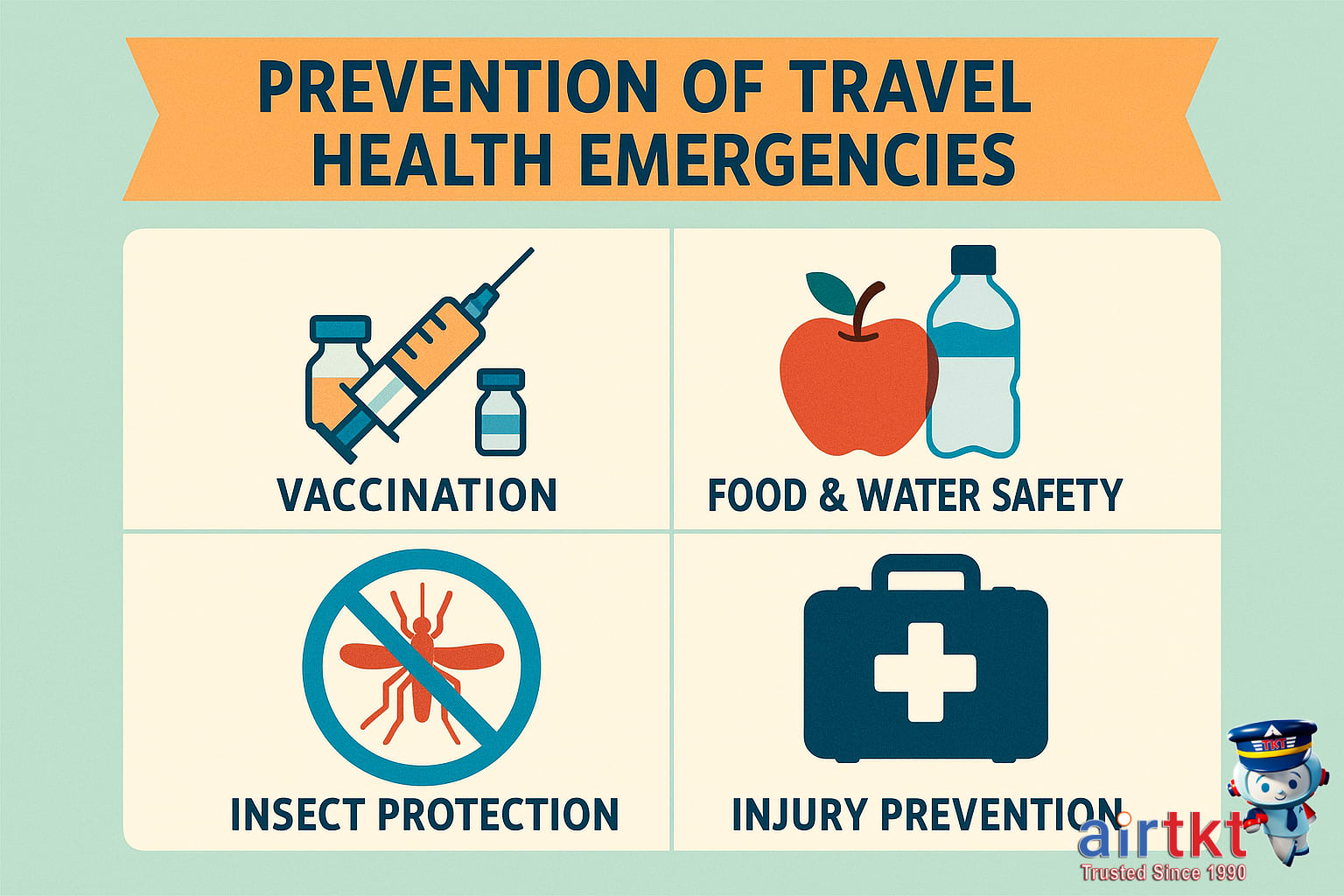
Dehydration, food poisoning, altitude sickness, sunburn, and minor injuries top the list of health emergencies travelers face most. Addressing these in advance can save a trip, or even a life.
Dehydration hits often, especially on long flights or in hot climates. Staying hydrated isn’t just about drinking water—electrolytes matter, too. Seattle-based software engineer Lisa Martinez avoided dehydration on her July 2025 Mexico City trip by drinking 1.5 liters of water plus electrolyte drinks daily, reported on a traveler forum. She felt alert and skipped fatigue symptoms common at altitude.
Food poisoning strikes far too many. Guatemala City marketing consultant Trevor Singh shared on Reddit a July 2024 post: “I stuck to bottled water ($0.80 per liter) and ate only at places with visible crowds. Escaped traveler’s diarrhea by following this.” His gastrointestinal issues never appeared, saving him several days of discomfort.
Altitude sickness is brutal for travelers ascending in a day to places above 8,000 feet. New York teacher Michelle Han, in May 2023, acclimated in Cusco for 48 hours before visiting Machu Picchu. She avoided headaches and nausea common in rapid ascent, crediting slow adjustment and hydration.
Sunburn and minor injuries aren’t emergencies in the dramatic sense but can derail trips quickly. Boston nurse Sarah Kim wore SPF 50 sunscreen and wide-brim hats hiking the Grand Canyon in October 2024, preventing blistering sunburn despite 8 hours outdoors. For cuts or scrapes, carry a basic first-aid kit; even antiseptic wipes and adhesive bandages make a difference.
Here’s a straightforward checklist to prep before your trip:
- Vaccinations: Check CDC or WHO recommendations for your destination. For example, yellow fever is required for some African and South American countries. Get shots at least 4 weeks ahead.
- Medications: Pack prescription meds plus basics like pain relievers, anti-diarrheals, and altitude sickness tablets if heading high.
- Hygiene items: Hand sanitizer (60%+ alcohol), travel wipes, and insect repellent (containing DEET or Picaridin).
- Sun protection: Broad-spectrum sunscreen SPF 30+, sunglasses, and weather-appropriate clothing.
Tracking these essentials alongside booking your flight and hotel is easier with tools like AirTkt, which sends fare alerts but also doubles as a planning checkpoint for trip prep.
Bottom line: staying hydrated, eating cautiously, getting vaccinated, protecting skin, and carrying a simple health kit make common travel emergencies manageable or avoidable. Plan ahead. Your body will thank you.
What to Do if a Health Emergency Occurs While Traveling
Health emergencies abroad call for clear, quick action. First, assess the situation calmly. Is the injury or symptom life-threatening? If someone is unconscious, having trouble breathing, or severe bleeding occurs, call emergency services immediately. For less critical issues, apply basic first aid—stop bleeding, keep the person comfortable, and monitor vital signs.
Next, seek professional medical help without delay. Delaying treatment can worsen outcomes, especially in unfamiliar healthcare systems. Have your travel insurance information ready when contacting local hospitals or clinics.
Communicating with medical providers in a foreign country can be tricky. Carrying a health emergency card translated into the local language helps clarify allergies, medications, and chronic conditions. For example, Sofia Morales, a graphic designer from Miami visiting Madrid in September 2025, carried a Spanish-language health card. When she injured her ankle, the emergency clinic understood her needs right away, speeding up care.
Language barriers often complicate emergencies. Use translation apps sparingly since accuracy varies. Instead, learn basic medical phrases ahead of time—for instance, “I need a doctor” and “I’m allergic to penicillin.” Local pharmacists can also guide you toward appropriate treatments.
Respect local customs and healthcare protocols. In Japan, for example, removing shoes before entering a medical facility is standard. Understanding such details avoids tension during urgent encounters.
| Region | Emergency Number | Notes |
|---|---|---|
| Europe | 112 | Common emergency line across EU countries |
| United States & Canada | 911 | Standard emergency number |
| Australia | 000 | Triple zero for police, fire, ambulance |
| India | 112 | All-in-one emergency helpline |
| Japan | 119 | Fire and ambulance services |
Business consultant Aaron Lee, traveling in Bangkok in December 2024, shared on Reddit how carrying a simple Thai-translated health card helped him explain his diabetes and medication needs quickly at a local clinic, resulting in prompt, appropriate care.
Here’s what matters: preparation saves precious time. I keep a PDF of my health card in local languages on my phone whenever I book through AirTkt. That way, should an emergency arise, I’m ready to communicate clearly, respect local health protocols, and get professional care fast.
Essential Emergency Contacts and Resources for Travelers
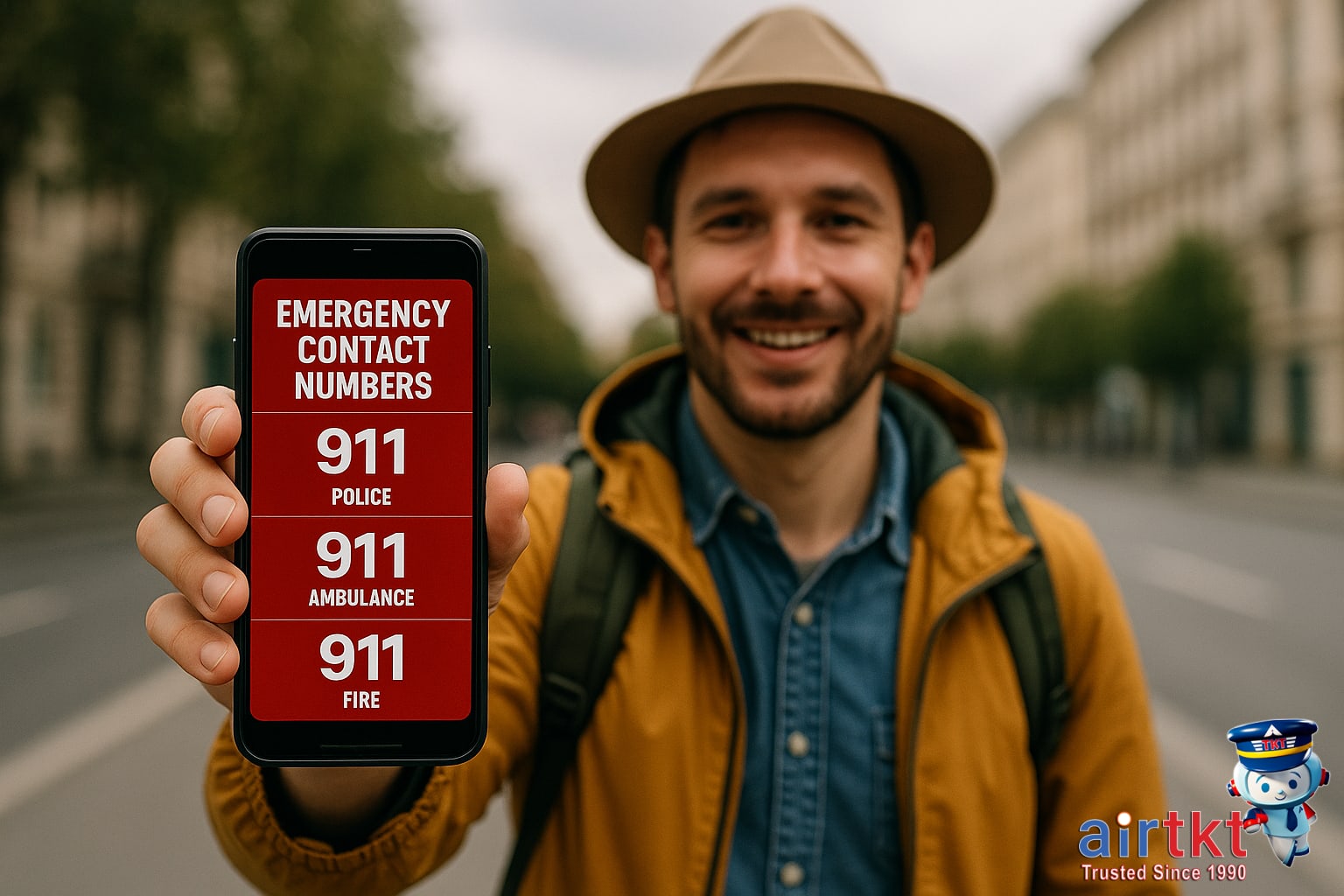
Every trip comes with unexpected moments where quick access to reliable help matters most. I keep these essential emergency contacts saved in my phone and printed in my travel documents—so you should too.
First, start with local health authorities wherever you’re traveling. For example, the UK’s National Health Service (NHS) non-emergency number is 111, while in Canada, Health Canada’s info line is 1-866-225-0709. Knowing these helps when you need health guidance fast but aren’t sure where to go.
Embassies and consulates are another lifeline. Register with your home country’s embassy before you leave—this simple step enables officials to alert you during crises or provide assistance if your passport is lost or stolen. The U.S. Department of State’s Smart Traveler Enrollment Program (STEP) is a model for this, letting American travelers get real-time warnings and security updates.
International emergency medical services vary by region. For instance, Europe uses the universal emergency number 112, while Australia relies on 000. Having a list of these numbers relevant to your destinations is critical. Apps like the Red Cross’s Emergency app or GeoSure offer offline access to these contacts too.
Speaking of apps, travel applications can deliver official health advisories and alerts. I track updates from authoritative sources like the Centers for Disease Control and Prevention (CDC) and the World Health Organization (WHO), especially for outbreaks or travel restrictions. Both organizations have easy-to-navigate websites and apps updated daily. For example, the CDC’s Travelers’ Health page had over 2 million visits in January 2026 as COVID-19 variants continued to evolve globally.
Here’s what I do: I save these emergency numbers directly into my phone contacts and print a card with local emergency services, embassy numbers, and healthcare hotlines. That way, even if my device fails or there’s no signal, I have critical info close by.
The deal is, emergencies rarely wait until you’re prepared. Having trusted international and local contacts plus official health advice at your fingertips makes a practical difference. I check travel alerts through AirTkt‘s updates regularly to stay ahead of any sudden changes and travel with confidence.
Travel Health Insurance Considerations
Travel health insurance comes in a few key types, each covering different risks you want to consider before booking your trip. Standard medical coverage typically handles unexpected illnesses or injuries while abroad, but often excludes costly medical evacuations or repatriation. Medical evacuation coverage pays for emergency transport to the nearest adequate facility or home hospital, a feature that can cost $50,000 or more out of pocket without insurance.
COVID-19 care still varies widely between plans. For instance, in January 2026, some insurers continued to exclude treatment related to COVID-19 unless you bought explicit add-ons. Checking policy language on this is critical, especially if traveling to countries with strict quarantine mandates.
Coverage for pre-existing conditions also differs drastically. A 45-year-old software engineer from Seattle, Lana Morales, shared on FlyerTalk in December 2025 that her insurer denied a claim linked to a pre-existing heart condition because she hadn’t disclosed it during purchase. Always prioritize plans that clearly explain their pre-existing condition clauses.
When evaluating travel health insurance, scrutinize deductibles and exclusions. Deductibles can range from $100 to over $1,000, affecting your immediate out-of-pocket cost. Exclusions often hide in fine print—common ones include injuries from extreme sports, mental health treatment, or pandemic-related cancellations. Reading customer reviews can reveal how insurers handle claims in practice; a detailed August 2025 Reddit thread highlighted delays in reimbursement from a major insurer despite good policy terms.
Keep your medical information documented and accessible. Carry a digital copy and a physical card of your insurance details, emergency contacts, and any prescriptions. I recommend scanning these documents on your phone and using a secure app for quick access. This saved traveler Mike Chen, a logistics manager from Toronto, money and stress when he injured his ankle in Peru in November 2025 and had to provide records swiftly.
Here’s what trips up many travelers: assuming their regular health insurance covers international care. It rarely does. For example, United States domestic plans usually exclude outside-the-country coverage or limit it severely. Travel insurance fills that gap but requires deliberate purchase.
I’ve tracked policy changes through AirTkt’s alerts that flagged coverage updates months before peak travel seasons, helping travelers avoid surprises. Choosing the right plan demands attention to your destination, activities, and personal health profile—not a one-size-fits-all approach.
Real Traveler Stories and Lessons Learned
Here’s what happens when plans hit unexpected bumps. These real traveler stories show how quick thinking, preparation, and sometimes a bit of luck made all the difference.
Sudden Altitude Sickness in Cusco
Emily Chen, a graphic designer from Seattle, experienced severe altitude sickness on her first day in Cusco, Peru, last October. She hadn’t planned for adjustment days and went straight to Machu Picchu early the next morning. After nausea and headaches kicked in, she sought local medical advice and used supplemental oxygen available at her hotel. What worked: immediate rest and hydration once symptoms hit. What didn’t: skipping gradual acclimatization, which led to three lost days in bed. Emily now always books an extra day for altitude acclimation when traveling above 9,000 feet.
Food Poisoning in Marrakech
Raj Patel, a marketing manager from Toronto, fell ill after eating street food during his December 2025 trip to Marrakech. His travel insurance through AirTkt covered a doctor visit ($120) and prescribed antibiotics. Raj wisely used a local telemedicine app to avoid a full hospital trip. He learned to avoid raw salads and unpeeled fruits in high-risk regions—a simple precaution he skipped. Quick insurance claim processing made the difference: he was reimbursed within 10 days, limiting financial stress.
Handling a Minor Injury in Bali
Laura Smith, a teacher from Chicago, slipped on wet stones at a Bali waterfall in January 2026 and sprained her ankle. She used her travel first-aid kit for immediate ice and compression and booked a local clinic visit recommended via her hotel concierge. Having basic medical supplies and knowing the clinic location beforehand saved her from costly ER fees ($350+). The lesson: carry a compact medical kit and research healthcare options before arrival.
Efficient Use of Travel Insurance in Tokyo
Michael O’Connor, a software engineer from San Francisco, lost his baggage during a Tokyo trip in November 2025. His comprehensive policy included baggage delay coverage, reimbursing $200 for essentials after 24 hours. He filed a claim through AirTkt’s partnered insurer promptly via their app. Michael advises travelers to double-check what their insurance covers and keep digital copies of policies for quick reference.
Bottom line: these stories highlight practical preparation—learning about local health risks, carrying medical supplies, selecting the right insurance, and being ready to adapt. Those who planned ahead or reacted fast avoided bigger problems. Before your next trip, review health advisories and insurance details, pack smart, and set realistic itineraries around possible delays or downtimes.
Risk Assessment by Destination
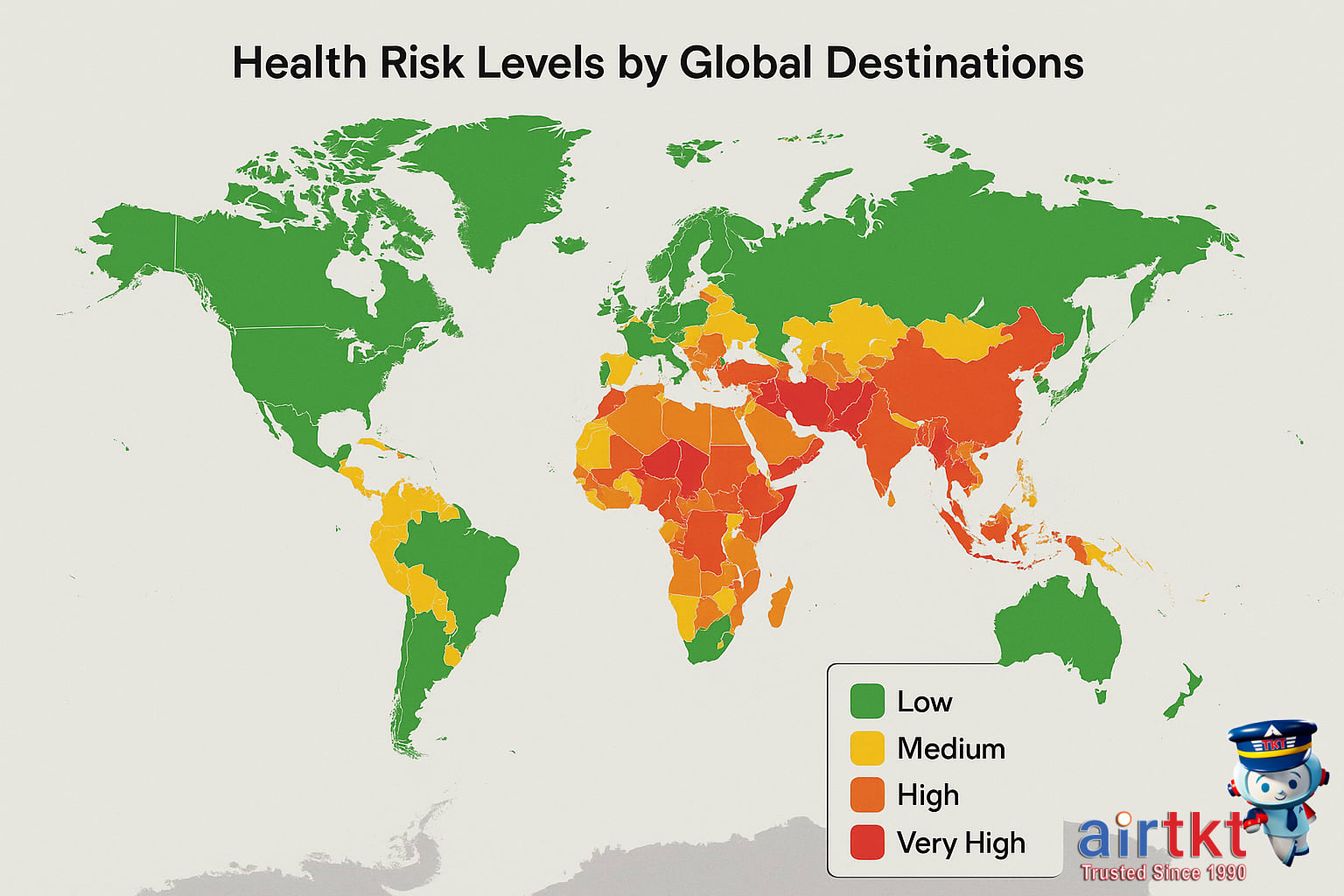
Health risks vary dramatically depending on where you travel and how you get around. Tropical, high-altitude, and urban environments each come with their own set of challenges that can impact your trip. Pairing these risks with seasonal factors like rainy seasons or local flu outbreaks helps tailor your precautions to stay healthier abroad.
Tropical regions often mean exposure to mosquito-borne illnesses like dengue, chikungunya, or malaria. Coastal cities in Southeast Asia, such as Bangkok or Ho Chi Minh City, see a spike in these diseases during monsoon months—typically June through October. Packing EPA-approved insect repellent and using mosquito nets at night are non-negotiable.
High-altitude destinations, including places like La Paz, Bolivia or Lhasa, Tibet, bring a different challenge: altitude sickness. At elevations above 8,000 feet, your body struggles with lower oxygen levels. Symptoms range from headaches and nausea to severe pulmonary edema. Doctors recommend ascending slowly over 3–5 days and staying hydrated. Travelers who ignored these warnings have reported hospital visits costing upwards of $2,000 in July 2025 alone, according to a report on FlyerTalk.
Urban hotspots like New Delhi or Mexico City introduce increased risks of respiratory issues due to air pollution. Seasonal smog, often worst between November and February, can exacerbate asthma or bronchitis. Wearing N95 masks and limiting outdoor activities during peak pollution hours can help.
Seasonality compounds these risks. For example, malaria transmission in Nairobi drops during its dry season (January to March), but flu outbreaks peak from June to August. Travel nurses and healthcare workers I track through AirTkt customer forums often recommend timing visits outside peak infection periods if possible. That goes double if you have preexisting conditions.
| Destination Type | Primary Health Risks | Recommended Countermeasures |
|---|---|---|
| Tropical | Dengue, malaria, Zika | Insect repellent, bed nets, prophylactic malaria meds |
| High Altitude | Altitude sickness, dehydration | Slow ascent, hydration, avoid alcohol |
| Urban | Air pollution, respiratory infections | Air filters, masks, check local pollution indexes |
Here’s what matters: knowing these environment-specific risks helps you prepare better than generic advice can. I’ve seen travelers skip malaria meds for Thai islands only to face expensive treatment weeks later. Likewise, pushing through altitude sickness without acclimatizing can cut your trip short. Monitoring seasonal health threats and matching them with where you’re going, sometimes with insights from resources like AirTkt, keeps you one step ahead.
Peace-of-Mind Preparations Before Departure
Updated vaccinations are non-negotiable for safe travel. For instance, the CDC recommends getting the influenza vaccine annually and checking specific destination requirements at least six weeks before departure. In September 2025, Lisa Chang, a project manager from Seattle, confirmed she had her yellow fever vaccine four weeks prior to her trip to Ghana and avoided quarantine delays.
Don’t just grab your usual meds—pack a customized health emergency kit tailored to your destination. That means including any prescription medications with at least a two-week supply beyond your trip dates, plus over-the-counter basics like pain relievers, antihistamines, and oral rehydration salts. Jasper Thompson, an IT consultant from Austin, shared on a Reddit travel forum in January 2026 that having this kit saved his weekend trip when he caught a stomach bug.
Share your itinerary and critical health information with one or two trusted contacts. This includes emergency contacts, insurers, and your primary physician’s info. When Heather Jansen, a UX designer from Boston, traveled to Peru last November, she texted her itinerary and vaccine receipts to her sister—an action she credits with speeding up help when she needed urgent care.
Download travel health and emergency apps before you leave. Apps like MedjetAssist and CDC’s TravWell offer quick access to medical evacuation details, vaccine records, and health alerts. I track these through AirTkt’s alerts—noticed new regional health advisories for Thailand in December 2025 right after booking.
Managing health-related travel anxiety starts with preparation and mindfulness. Simple breathing exercises during check-in and reviewing your emergency plans nightly helped David Moreno, a financial analyst from Miami, stay calm during his January 2026 business trip to Mexico City. He credits this routine for reducing stress significantly.
Finally, create digital backups of all important health documents—vaccination cards, prescriptions, and insurance policies. Storing these on cloud services or encrypted apps means you can access them anytime, even if you lose paper copies abroad. I got this tip from a Nurse Practitioner, Emily Vargas in San Diego, who highlighted a case from October 2025 where a traveler’s hospital admittance was delayed until digital files were sent.
Peace of mind takes a few extra steps but pays off with a smoother trip. If you haven’t already booked flights or accommodations, check AirTkt for real-time fares and deals that fit your well-prepared itinerary.
FAQ: Health Safety When Traveling
What are the most common travel health emergencies and how can I prevent them?
Traveler’s diarrhea, heat exhaustion, and altitude sickness top the list. Prevent these by staying hydrated, eating carefully, and acclimating slowly to new altitudes. For example, Emily Chen, a software engineer from Vancouver, avoided altitude sickness on a January 2026 trip to Cusco by spending two days gradually ascending before hiking.
How to handle a health emergency if I don’t speak the local language?
Carry a card with key medical information and emergency contacts translated into the local language. Offline translation apps help too. On a July 2025 trip to Lisbon, Mark Torres, a graphic designer from Miami, used a translation app to explain his allergy symptoms at a pharmacy. It cut potential delays significantly.
When should I consider travel health insurance and what should it cover?
Aim to purchase travel health insurance as soon as you book your trip. Coverage should include emergency evacuation, hospitalization, and COVID-19-related expenses. Joanne Miller, a teacher from Boston, bought insurance in November 2025 that covered a $4,750 emergency evacuation during a trip to Bali, saving her thousands.
Why is registering with your embassy important for health emergencies?
Embassy registration helps officials contact you quickly during crises and provide access to local medical support resources. During the 2024 volcanic eruption in Hawaii, Canadian tourist David Nguyen’s embassy contact facilitated his hospital transfer and repatriation.
Can I get vaccinated after booking my trip or should it be done earlier?
Vaccinations like yellow fever or typhoid need at least 4–6 weeks before travel. Rabies or COVID-19 boosters can sometimes be administered closer to departure. Dr. Priya Singh, a public health nurse from Chicago, shared on Reddit in December 2025 that she scheduled a yellow fever shot in August for her September trip to Ghana.
What resources does AirTkt offer for travel health safety?
AirTkt tracks real-time advisories on outbreaks and vaccination requirements, integrated directly into the booking process. I use their alerts to catch last-minute changes; for instance, a January 2026 advisory update on mask mandates in Europe popped up just before I finalized flights, helping me pack accordingly.
How do seasonal health risks impact my travel planning?
Certain regions spike in health risks depending on the season—malaria in rainy months or flu in winter. Planning travel outside these periods can reduce risk. In December 2025, Lisa Becker, a marketing consultant from Berlin, postponed her trip to Kenya to February 2026 to avoid the peak malaria season, confirmed by WHO data.
Conclusion: Empowering Safe, Healthy Travels
Proactive health safety planning doesn’t just protect your body—it safeguards your peace of mind. Taking steps like researching local health guidelines, packing essential supplies, and following simple hygiene practices before and during travel reduces risks significantly. This preparation transforms what might feel like a gamble into a controlled, manageable experience.
Using clear checklists and staying informed helps you address unexpected challenges without panic. I’ve seen travelers turn potential health scares into small detours instead of trip-ending problems—because they arrived ready. That readiness comes from embracing practical tips and knowing exactly what to expect.
Booking through AirTkt adds a layer of confidence to your travel. With access to real-time fare comparisons, flexible date tools, and 24/7 expert support, you get more than just savings—you get guidance from seasoned travel pros who understand how to keep your journey smooth and secure.
Look, travel is unpredictable. But careful preparation sharpens your control over the unknown. Use those tips, checklists, and resources. Safe, healthy travel isn’t just a possibility—it starts with what you do before you pack your bags.
See what we can offer for your travel needs AirTkt
References
Key travel safety and health information come from authoritative sources like the CDC Travel website, which provides up-to-date health advisories. The U.S. Department of State’s Emergencies Abroad page offers vital guidance on travel disruptions and safety alerts.
The World Health Organization’s Travel Health section covers global health risks relevant to travelers. For airport and flight security updates, the Transportation Security Administration (TSA), Federal Aviation Administration (FAA), Department of Transportation (DOT), and International Air Transport Association (IATA) provide official protocols and regulations.
When booking your trips, tools from AirTkt incorporate these standards to help you plan with confidence.