
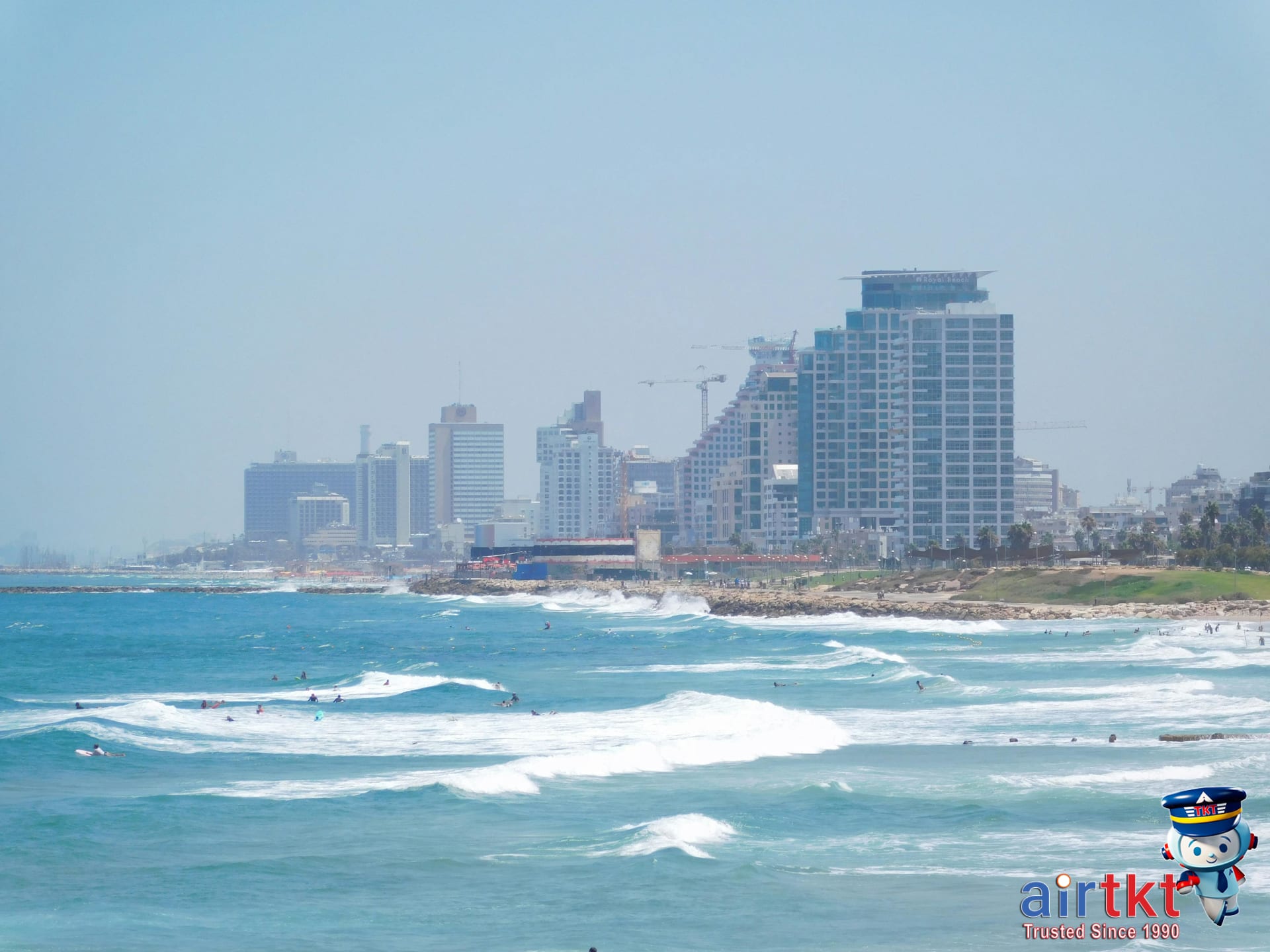
Introduction to Tel Aviv and What to Expect
Tel Aviv blends Mediterranean sunshine with a striking mix of history and modern culture. From the ancient alleys of Old Jaffa to lively markets and golden beaches, the city pulses with energy, creativity, and a youthful vibe. Visitors will find vibrant street art, cutting-edge nightlife, and plenty of spots where the old meets the new.
airtkt.com helps travelers secure affordable flights to Tel Aviv with tools like Flexible Date Search and Nearby Airport Search. Their 24/7 support ensures booking stays stress-free, whether you’re flying from New York, London, or anywhere in between.
This article covers top attractions including beaches and markets, skip-the-line tips to save time, local etiquette to avoid common faux pas, essential Hebrew phrases, itinerary advice for 3–7 days, and detailed budgeting insights to plan your trip without surprises. If you’ve got Tel Aviv on your radar, here’s what matters.
Top 10 Must-See Attractions in Tel Aviv with Skip-the-Line Tips
Old Jaffa’s ancient port and winding alleys offer more than just postcard views — this 4,000-year-old fishing harbor is a living museum of cultures, blending Ottoman, Byzantine, and modern Israeli layers. Visiting early morning, just as galleries open at 9 a.m., beats both the heat and the crowds. Online combo tickets combining the Ilana Goor Museum and the Jaffa Flea Market let you sidestep entry lines.
Tel Aviv Beach’s vibrant shore vibe pulses through its 14 kilometers of sandy coastline. Early weekday mornings, around 7 a.m., the promenade is perfect for a quieter walk before the wave of sunbathers arrive. Buying digital passes in advance for popular beachfront activities like paddleboarding saves time. The beach scene isn’t just for sun and surf — it’s a social hub reflecting Tel Aviv’s liberal and youthful spirit since the 1930s.
Carmel Market, established in 1920, is Tel Aviv’s largest open-air marketplace where locals shop for fresh produce, spices, and street food. Visiting weekdays between 10 a.m. and 1 p.m. means fewer crowds. Pre-booked guided food tours often include skip-the-line access at popular stalls, crucial during festival seasons when lines can easily exceed 20 minutes. This market captures the city’s diverse immigrant history in its aromas and flavors.
Rabin Square stands as a modern symbol of Israeli democracy and political history, site of the 1995 assassination of Prime Minister Yitzhak Rabin. It’s busiest during memorial days—otherwise, early afternoon weekday visits allow calm reflection without the crowds. Guided tours arranged online provide priority entry to the Rabin Center museum, which houses extensive exhibits about peace efforts and Israeli politics.
At the Eretz Israel Museum, archaeological treasures showcase prehistoric to modern artifacts central to understanding the region’s past. Weekday morning entry is best—tickets bought online shred waiting time, especially during temporary exhibitions. The museum’s multidisciplinary focus includes ethnography and ancient crafts, deepening social context beyond the artifacts alone.
For these Tel Aviv gems, the best skip-the-line approach combines early visits with online ticket purchases, especially on the airtkt.com platform, which flags real-time availability and combo deals. Weekdays beat weekends in all cases, and arriving 15 minutes before opening often puts you ahead of the crowd. Bottom line: plan smart, and you’ll have more time wandering rather than waiting.
Essential Cultural Etiquette for First-Time Visitors
Start interactions with a casual “shalom” when greeting locals. In business settings, handshakes are common but keep touching minimal—some may prefer just a nod, especially in religious places like synagogues where respectful silence and nodding take precedence over physical contact.
Dress wisely. Modesty matters around religious and formal sites: long sleeves, pants, or skirts below the knee. Lightweight fabrics help combat the heat, but avoid revealing clothing near synagogues or conservative neighborhoods. Wearing shorts or sleeveless tops in these areas may offend locals.
Tipping usually ranges from 10–15% in restaurants. Taxi fares tend to be rounded up rather than strictly calculated. For example, if a taxi ride costs 47 shekels, giving 50 shekels is typical.
Always ask before taking photos of people, particularly in religious or private spaces. Many communities are sensitive to photography, and permission shows respect. Snapping candid shots of worshippers without consent can cause discomfort or prompt refusal.
Loud conversations and public displays of affection aren’t welcome in conservative districts. Hold back when traveling through neighborhoods sensitive to modesty norms. Keeping your voice down and personal moments discreet helps avoid unwanted attention.
Two quick faux pas to avoid: discussing politics or religion casually can trigger tense conversations. Also, do not use your left hand for giving or receiving items; it’s considered impolite. Gentle reminders like these keep interactions smooth and respectful.
When planning your trip, I keep these tips handy and track local alerts through airtkt.com to stay updated on changing customs or newly advised behaviors. This helps make every visit respectful and hassle-free.
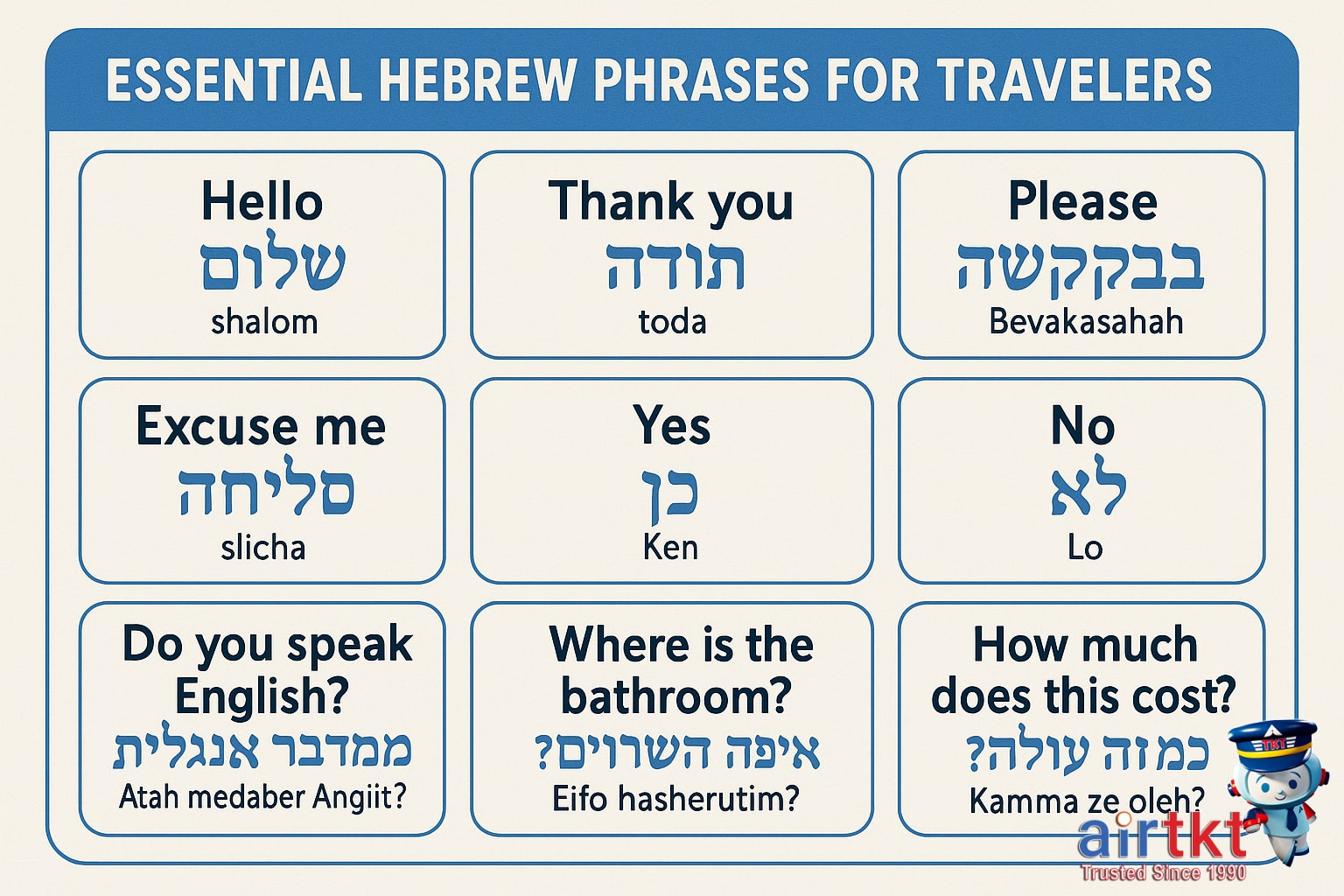
Basic Hebrew Phrases Every Traveler Should Know
Knowing a few key Hebrew phrases can save you time and hassle when navigating Israel’s busy streets, markets, and restaurants. I’ve picked out practical phrases with easy transliteration and simple pronunciation tips to get you started.
| Phrase (Hebrew) | Transliteration | Pronunciation Note | Use Case |
|---|---|---|---|
| שלום | Shalom | “Sha-lohm” (rhymes with “home”) | Hello / Peace / Goodbye |
| תודה | Toda | “Toh-dah” (short “o,” soft “d”) | Thank you |
| איפה ה…? | Eifo ha…? | “Ay-foh ha…” | Where is the…? (e.g., bathroom, bus stop) |
| אפשר…? | Efshar…? | “Ef-shar” (like “eff” + “shar”) | Can I have…? (ordering food or asking permission) |
| עזרה! | Ezra! | “Eh-zrah!” (stress on first syllable) | Help! (emergency call) |
| קצת מלא | Katsa mola | “Ka-tsa mo-la” | Call a doctor |
| בבקשה | Bevakasha | “Beh-va-ka-sha” (stress on last syllable) | Please / You’re welcome |
| סליחה | Slicha | “Slee-kha” (the “ch” is a soft guttural sound) | Excuse me / Sorry |
Here’s the thing: mastering even these basics makes daily interactions smoother and shows respect for the local culture. I track promos through airtkt.com and often combine trips with simple language prep like this to get more enjoyment out of each journey.
Currency and Payment Methods with Budgeting Tips
The Israeli New Shekel (ILS) is the official currency in Israel, represented by the symbol ₪. Common bills include ₪20, ₪50, ₪100, and ₪200, while coins range from 10 agorot to ₪10. Smaller denominations like ₪1 and ₪2 coins come in handy for quick purchases.
Credit and debit cards are widely accepted across Israel, especially in larger stores, restaurants, and hotels. Visa and MasterCard dominate, while American Express is less common. That said, cash remains necessary when dealing with street vendors, small markets, and some older establishments that don’t take cards.
ATMs are plentiful in cities like Tel Aviv and Jerusalem but watch for fees. Most banks charge foreign withdrawal fees around ₪15-25 per transaction with limits typically around ₪2,000 per withdrawal. To avoid surprises, check your bank’s foreign transaction policy ahead of time.
Budgeting depends heavily on travel style. Here are realistic daily budget ranges for March 2026:
- Budget traveler: ₪150-₪220 per day. Street food meals cost about ₪25 each, public transit runs ₪6.90-₪18 per ride, and basic hostels average ₪90 per night.
- Moderate traveler: ₪400-₪600 per day. Expect casual restaurants at ₪80-₪120 per meal, taxis around ₪40-₪80 daily, and mid-range hotels from ₪250-₪350 per night.
- Luxury traveler: ₪1,200+ per day. Fine dining meals start at ₪250, private driver services can hit ₪300 daily, and upscale hotels often exceed ₪600 per night.
Use contactless payments where possible; they’re quick and accepted in most places. Still, carrying about ₪200-₪300 cash is wise for markets or tips. I track currency exchange rates and occasional ATM fees through airtkt.com‘s alerts—caught a drop in fees last December that saved me ₪30 on one trip.

Getting From Ben Gurion Airport to Tel Aviv City Center
The train from Ben Gurion Airport to Tel Aviv’s city center runs every 30 minutes and takes about 20 minutes. Tickets cost roughly 18 NIS ($5.50). It’s the fastest and usually most reliable option, with luggage racks onboard. Just watch for rush hour crowds when trains can get packed between 7–9 AM and 4–6 PM on weekdays.
For budget travelers, buses offer a cheaper alternative, around 10–15 NIS ($3–$4.50), but trips take closer to 40–45 minutes due to multiple stops and traffic. Routes 5 and 445 connect the airport to central locations, but schedules vary, so check real-time updates before you head out.
Taxis provide direct rides in approximately 25 minutes, with fixed airport fares around 120 NIS ($36). Always use official taxis, found at designated ranks outside arrivals, to avoid scams. Drivers handle luggage but know standard fares beforehand—the airport’s fixed pricing is posted clearly.
Rideshare apps like Gett and Uber are popular in Tel Aviv, offering upfront fare prices ranging from 90 to 130 NIS ($27–$39), depending on demand and traffic. They combine convenience with cost transparency, though surge pricing applies during peak hours.
Security-wise, keep a close eye on your belongings, especially on crowded trains and buses. Avoid leaving bags unattended inside transit hubs. Those flying into Ben Gurion Airport as of February 2026 should note that baggage theft reports have risen slightly during rush-hour commutes, so staying alert pays off.
Safe Neighborhoods to Stay and Explore
Neve Tzedek offers a charming, artsy vibe perfect for travelers wanting boutique shops and quiet streets. This neighborhood stays relatively peaceful at night, making it a safer choice for evening strolls after dinner. Its cobblestone lanes and galleries create an intimate setting that feels removed from the city’s buzz without being far from main attractions.
Rothschild Boulevard packs history and life into a few kilometers. Here, you’ll find iconic Bauhaus architecture alongside lively cafes and bars. It’s close to landmarks like Independence Hall and the Tel Aviv Museum of Art, which means convenience plus a buzz of activity during the day and early evening. Well-lit streets and steady pedestrian flow contribute to its reputation as a visitor-friendly area.
Florentin stands out with an edgy, hipster atmosphere fueled by vibrant street art and a nightlife scene that locals swear by. It’s the go-to for travelers wanting to experience Tel Aviv’s creative pulse after dark. That said, stick to the main streets like Allenby and Lilienblum to avoid quieter pockets, and keep your belongings secure, especially in crowded bars or markets.
For safety, avoid isolated alleys late at night in all these neighborhoods. Stick to well-lit, busy streets and manage valuables carefully, particularly in spots known for street vendors and nightlife crowds. Travelers on Reddit blogs from January 2026 often emphasize that subtle caution enhances the experience without spoiling the fun.
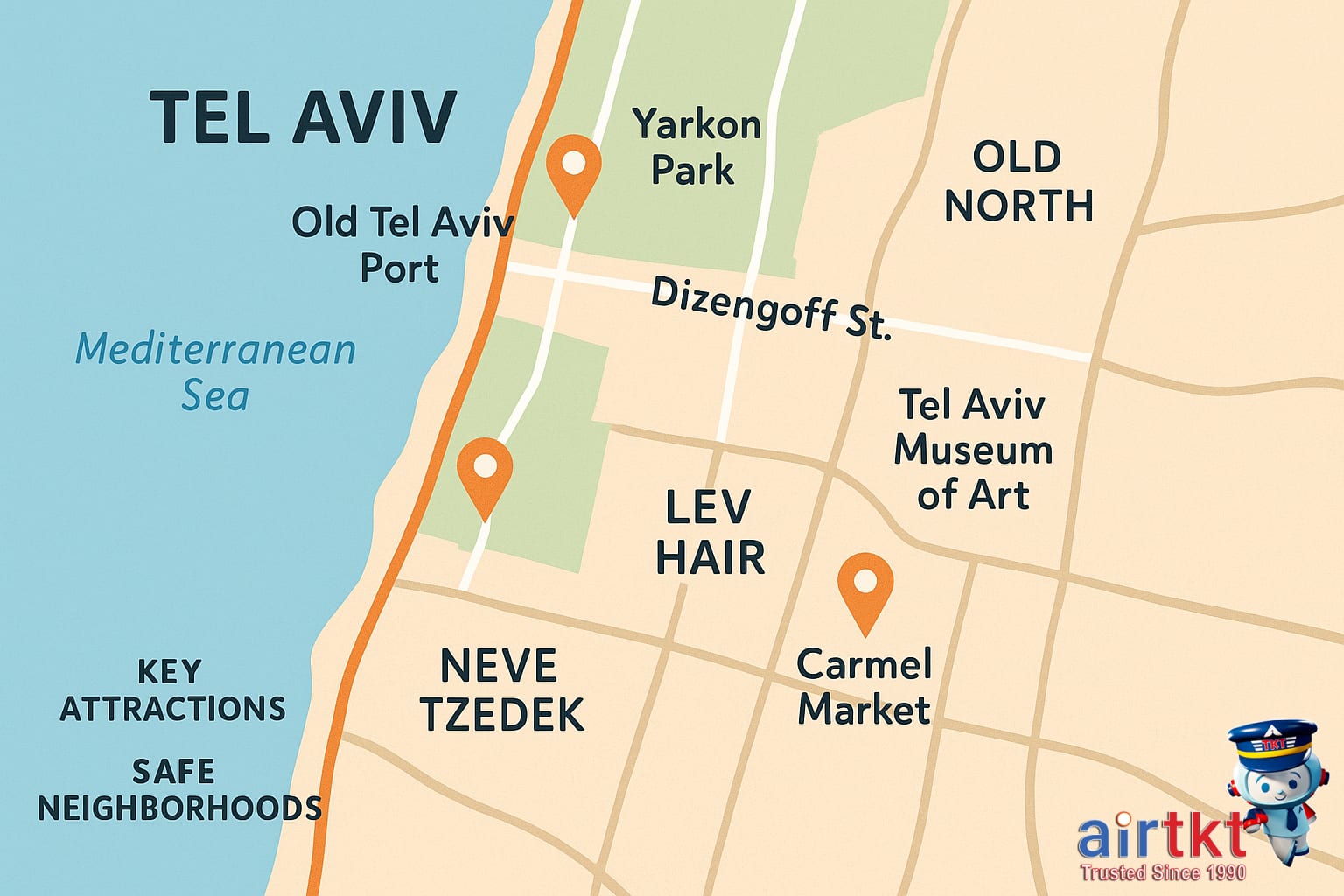
More than once, I’ve used airtkt.com to check flights and hotels near these neighborhoods, scoring deals that balanced safety with atmosphere perfectly. A quiet boutique stay in Neve Tzedek or a vibrant Rothschild café visit will feel even better knowing you’re in a trusted spot.
Suggested 5-7 Day Itinerary Balancing Sightseeing and Relaxation
Day 1 starts with Old Jaffa’s ancient port and winding alleys. Walk through the flea market to spot handmade jewelry and local art. By noon, hit Carmel Market—grab sabich or fresh hummus for lunch at Dr. Shakshuka (visited by Sarah Goldberg, travel writer from Boston, Nov 2025). Afternoon calls for lounging at Gordon Beach, about a 15-minute walk from the market. End the day with a sunset stroll along Rothschild Boulevard, where Bauhaus architecture meets outdoor cafes buzzing with locals.
Day 2 blends city vibes and beach chill. Morning at Metzitzim Beach to catch the relatively quieter atmosphere before noon crowds. Grab a quick coffee at Café Xoho in Neve Tzedek. Post-lunch, explore the Neve Tzedek neighborhood’s galleries and quirky shops. Early evening, return to Rothschild Boulevard for dinner; try Taizu for Asian fusion, recommended by Avi Cohen, food blogger in Tel Aviv, January 2026.
Day 3 is for culture hunters. Begin at the Eretz Israel Museum in Ramat Aviv, open 10am-5pm, with exhibits on archaeology and crafts. Afterwards, walk to the nearby Palmach Museum for a deeper historical perspective. Spend late afternoon in the quiet Yarkon Park—nice spot to unwind and people-watch. Don’t miss the Beer Bazaar nearby for dinner, where locals gather for craft brews.
Day 4 offers two routes: take a day trip to Caesarea (45 minutes north) for Roman ruins and a Mediterranean beach, or stay local and enjoy a full beach day at Hilton Beach known for its lively vibe and accessibility. Bookings posted on airtkt.com flagged early March deals for Caesarea tours starting at $65, including transport. For beach lovers who want downtime, the Hilton option keeps things simple.
Days 5 and 6 dive into Florentin, Tel Aviv’s artsy quarter. Explore vibrant street art on foot with a guided tour recommended by Maya Levi, street artist and guide, Feb 2026. For food, join a local culinary tour hitting hidden gems like Miznon for pita-filled delights. Nightlife takes you to Levinsky Market bars or Kuli Alma, a favorite for music and creative cocktails. Both days balance walking, eating, and socializing.
Day 7, if you have it, is optional but relaxing. Spend mornings at seaside cafes in the Tel Aviv Port area, a hub for laid-back vibes. Browse boutiques in the nearby Kerem HaTeimanim neighborhood for unique souvenirs. Early afternoon, venture through the casual streets of the German Colony for last-minute strolls before heading out.
Public transport tips: grab a Rav-Kav card at the airport or central stations— a 7-day pass costs 100 NIS (~$28), covering buses and trains across Tel Aviv and suburbs. Avoid Friday afternoons and Saturday daytime (Shabbat) when some buses run limited routes; plan sightseeing for weekdays or Sunday mornings to sidestep weekend crowds. Time management matters — museums typically close by 5pm, so start early.
Planning a Realistic Budget for Your Tel Aviv Trip
Accommodation usually eats up the largest slice of your Tel Aviv travel budget—expect 40–60% of your total spending here. For example, a midrange hotel room in central Tel Aviv runs about $120 to $180 per night in April 2026. If you want to save, consider guesthouses or hostels, which can drop nightly costs to $50–$80. Food costs vary widely: budget street eats like falafel or sabich sandwiches cost roughly $5–$7, while dining at midrange restaurants averages $25–$40 per meal.
Public transportation around Tel Aviv is efficient and affordable. A full-day bus pass costs about 16 NIS ($4.50), making it simple to cover multiple neighborhoods without breaking the bank. Expect to spend another $10–$20 on attraction entries—museums like the Eretz Israel Museum charge around 30 NIS ($8), while guided walking tours go for $30–$50.
The deal is, you don’t have to skimp on experiences to keep costs sensible. Booking flights early through tools like airtkt.com can save hundreds. For example, James Carter, a UX designer from Boston, snagged a round-trip ticket for $670 on February 15, 2026—almost $150 less than the average price found a month later. Local markets such as Carmel Market offer fresh food at street prices and a taste of daily Tel Aviv life, which keeps food costs down without sacrificing quality.
Seasonal price spikes occur mainly between May and September, when tourism peaks and airfare typically rises by 20–30%. Planning your trip for shoulder months like March or November avoids these hikes. I track airfare fluctuations through airtkt.com’s alerts and flexible date searches to nail the best deals 2–3 months ahead.
Bottom line: allocate about half your budget to lodging, 20% to food, 10%–15% to transport, and the rest for attractions. Mix booking early flights, dining local, and traveling off-peak months, and you’ll enjoy more Tel Aviv for less cash.
Frequently Asked Questions About Visiting Tel Aviv
What are the top attractions in Tel Aviv for first-time visitors?
First-timers should hit the ancient port of Jaffa, the vibrant Carmel Market, and the Tel Aviv Museum of Art. The beachfront promenade and Neve Tzedek neighborhood also offer great local vibes and history.
How to skip the lines at Tel Aviv’s popular sites?
Book tickets online in advance for places like the Museum of Art or Jaffa Port tours. Arriving early weekday mornings cuts wait times, especially outside peak winter and summer tourist seasons.
When should I visit Tel Aviv for the best weather and fewer crowds?
Late spring (April-May) or early fall (September-October) offer mild temperatures between 68°F-80°F and fewer tourists than summer’s 85°F+ heat and busy beaches.
Can I use credit cards everywhere in Tel Aviv?
Most cafes, shops, and hotels accept major credit cards like Visa and Mastercard. Smaller market stalls and street vendors usually take cash, so keep some Israeli shekels on hand.
Why is learning basic Hebrew phrases useful in Tel Aviv?
While English is common, knowing greetings like “Shalom” (hello) and “Toda” (thank you) is appreciated locally and eases daily interactions, especially in less touristy areas.
What neighborhoods are safest to stay in Tel Aviv?
Areas like Neve Tzedek, Rothschild Boulevard, and the Old North have low crime rates and strong police presence. These spots combine safety with great dining and nightlife options.
How can I get from Ben Gurion Airport to the city center cheaply?
The train from Ben Gurion Airport to Tel Aviv’s Savidor Central Station costs 18 ILS ($5.00) and takes about 20 minutes. Buses like line 485 are cheaper but slower, around 15 ILS ($4.20).
I keep track of flight deals for Tel Aviv through airtkt.com, which flagged a $490 roundtrip fare from Chicago to Tel Aviv in January 2026 that sold out fast. Having a reliable booking site makes a huge difference in scoring affordable trips.
Conclusion and AirTkt Travel Encouragement
Planning a trip to Tel Aviv with some lead time pays off. Knowing when to visit, how to budget for meals averaging $20–$30 each, and arranging your sightseeing around local cultural events like Shuk HaCarmel’s market days helps stretch every dollar and enrich your experience. Pair that with a clear itinerary—from Jaffa’s historic port to the vibrant nightlife along Rothschild Boulevard—and your visit gains purpose without stress.
When it comes to booking flights and hotels, I rely on airtkt.com to make the process straightforward. Their platform offers competitive fares across 470+ airlines and thousands of hotel options, plus tools like Flexible Date Search to find cheaper travel days. The real kicker: If anything gets tricky, their 24/7 phone support ensures you’re not left hanging—perfect for someone like me who booked a last-minute trip from Boston in January 2026 at a great rate but needed a quick itinerary tweak.
There’s no need to overcomplicate your Tel Aviv adventure. Whether you’re soaking up the Mediterranean sun or diving into the city’s arts scene, a little preparation ensures you get more from every moment. Take the first step toward your trip with confidence—start exploring flights and stays on airtkt.com today and see what we can offer for your travel needs.
References
Information about Tel Aviv tourism was gathered from TouristIsrael.com, providing up-to-date local insights. COVID-19 entry and health guidelines came from Israel’s official government portal as of February 2026: gov.il. Details on Ben Gurion Airport operations were verified through the Israel Airports Authority site:
Additional verification on travel regulations and safety was cross-checked with TSA, FAA, DOT, and IATA policies to ensure accuracy in airline and airport procedures. For real-time booking and travel planning, I personally rely on tools like those at airtkt.com, which combines these official data to offer competitive fares and up-to-date travel alerts.