

Walk-in Hotel Rates Overview
Walk-in hotel rates refer to the prices offered to guests who arrive at a hotel without a prior reservation. Unlike advance bookings, where rates are set and often higher due to guaranteed availability, walk-in rates can fluctuate based on real-time room availability and hotel occupancy levels. This approach lets travelers access potentially significant savings—typically ranging from 15% to 40%—by capitalizing on last-minute vacancies.
One of the key advantages of walk-in rates is flexibility. Guests aren’t locked into pre-paid, non-refundable reservations. Instead, they can decide closer to their travel dates or even upon arrival where to stay, which can be especially convenient for spontaneous trips or when travel plans are uncertain. This flexibility often comes with negotiable pricing and upgraded room options that hotels use to maximize occupancy during slower periods.
However, walk-in booking requires some strategic planning and understanding of hotel policies to fully benefit from the savings. This article aims to equip you with practical methods to secure walk-in deals confidently. We’ll explore effective steps for booking walk-in hotels, how to maximize your savings, the essential tools and apps that simplify the search, and when to time your arrival for the best prices.
Additionally, we’ll dive into insider tips for negotiating rates directly with hotel staff, cancellation policies that apply to walk-in stays, and share real-life examples demonstrating how these strategies work in various destinations. Whether you’re a last-minute planner or just looking to stretch your travel budget further, mastering walk-in hotel rates is a savvy way to travel smart without sacrificing comfort.
For travelers looking for a seamless booking experience with access to exclusive discounted rates, consider using AirTtkt. From flights to hotels and rental cars, AirTtkt offers real-time comparisons and expert support to help you find the best deals quickly and with confidence.
Walk-in Hotel Booking Process Explained
Booking a hotel room in person can seem daunting if you’re used to online reservations, but walk-in bookings remain a practical option for many travelers. Whether you’re on an unexpected business trip or planning a spontaneous weekend getaway, understanding the walk-in booking process helps you secure a room efficiently and even snag better rates. Here’s a detailed step-by-step guide to help you navigate the process with confidence.
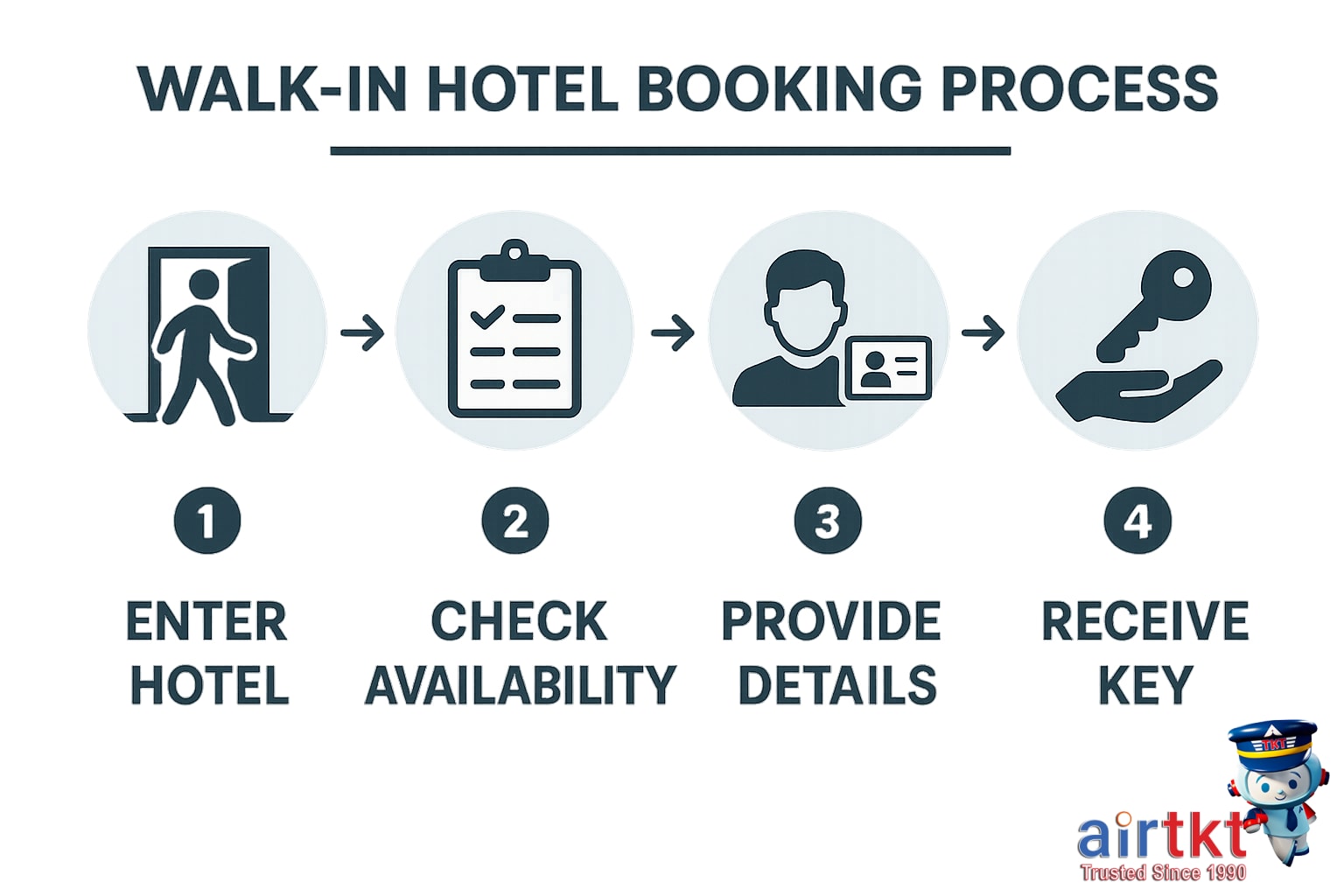
Step 1: Approach the Hotel and Make an Initial Inquiry
Begin by visiting the hotel’s reception. Greet the front desk staff politely and express your interest in booking a room for the night or the duration you require. Avoid rushing; a friendly, clear approach often encourages helpful responses. Confirm basic details such as check-in times, the types of rooms available, and if rooms are currently vacant.
Step 2: Ask Tactfully About Walk-in Rates and Availability
Next, inquire specifically about walk-in rates. These rates can sometimes be better than online prices, especially during off-peak periods or if the hotel has unsold rooms they want to fill quickly. Phrase your questions politely—try:
- “Could you please let me know about your current walk-in room availability and rates?”
- “Are there any discounts for booking a room directly here compared to online?”
This approach signals you’re a direct customer without appearing confrontational, opening the door to possible rate negotiations.
Step 3: Understand Front Desk Policies on Walk-ins and Negotiations
Each hotel has policies regarding walk-ins. Some properties are strict with fixed prices, especially chain hotels, while smaller or independent hotels may offer flexibility. Front desk agents often have limited authority to provide discounts but can sometimes upgrade your room or waive fees. If rates seem high, you can ask:
- “Are there any special promotions available today?”
- “Is it possible to get a better rate if I pay in cash or stay multiple nights?”
Being polite and professional maximizes your chances of securing a beneficial deal.
Practical Scenarios for Walk-in Hotel Bookings
Walk-in bookings are especially useful in various travel scenarios:
- Last-minute business trips: When scheduling is unpredictable, walking in lets you get a room immediately without advance booking hassle.
- Weekend travel: Some hotels lower rates during weekends to attract leisure travelers, making walk-in deals attractive.
- Special events nearby: Arriving early to ask about cancellations or no-shows can sometimes result in unexpected availability.
In contrast, walk-ins during high-demand seasons or at popular destinations carry a higher risk of no vacancies or inflated rates. In those cases, advance booking—especially through platforms like AirTtkt—is safer and often more affordable.
Walk-in Hotel Rate Savings Explained
Hotels often face the challenge of filling unsold rooms, and walk-in rate savings offer a strategic way to reduce this vacant inventory. When guests arrive without prior reservations, hotels may adjust prices on the same day to attract last-minute bookings. These walk-in discounts can range from 15% to 40%, reflecting a hotel’s desire to maximize occupancy rather than leave rooms empty at full price.
For instance, in major U.S. cities like New York or Chicago, a standard room booked weeks in advance may cost around $200 per night. The same room offered as a walk-in deal might be available for $140 to $170 depending on the date and hotel. Similarly, international cities such as London or Tokyo see walk-in rates drop from an advance price of $180 to closer to $120-$150 on the day of stay. The key factor here is the hotel’s inventory status—when many rooms remain unsold, walk-in discounts become more attractive to both parties.
Seasonality plays a significant role in these pricing trends. High travel seasons, holidays, and popular events generally tighten hotel occupancy, causing walk-in discounts to shrink or disappear. Conversely, during off-peak periods, such as midweek days or shoulder seasons, hotels are more inclined to offer steep walk-in savings. This is because demand drops, and hoteliers prioritize filling rooms over maintaining higher room rates. For example, a beach resort might cut walk-in rates by up to 40% after the holiday rush when fewer travelers are booking last-minute stays.
Dynamic pricing technology underpins these daily rate adjustments. Hotels use sophisticated algorithms analyzing data such as current bookings, historical occupancy, local events, and competitor pricing. This allows them to flexibly set walk-in rates that respond in real-time to changing demand patterns. Dynamic pricing models ensure that the room rate is never static but adapts continuously to market conditions, delivering optimal revenue management.

By understanding these factors behind walk-in hotel rates, travelers gain an edge in timing their bookings to capture meaningful savings. Whether it’s a last-minute weekend getaway or a spontaneous business trip, being aware of seasonality and demand fluctuations can help you pinpoint when walk-in discounts are most likely to emerge.
Best Booking Platforms and Tools for Walk-in Rates
When seeking the best walk-in hotel rates, using reliable online platforms and apps can make a significant difference. Whether you’re checking prices before arriving or comparing rates on the spot, several tools offer real-time availability and competitive deals.
Popular booking sites like Booking.com provide extensive hotel listings with up-to-date walk-in rates. Their flexible search filters let travelers identify last-minute offers and discounted rooms easily. Another top choice, HotelTonight, specializes in last-minute deals and caters to spontaneous travelers by offering exclusive discounted rates for same-day bookings.
AirTtkt also stands out as a comprehensive travel platform, combining real-time price comparisons with intuitive search tools. It integrates hotel, flight, and rental car data, making it easier to bundle services and find the best available rates, including for walk-ins. With features like instant booking confirmation and 24/7 customer support, AirTtkt empowers travelers to secure affordable accommodations quickly and confidently.

For a broader search, meta-search engines like Kayak and Trivago aggregate data across multiple booking sites, giving you a quick overview of price variations and walk-in availability. These tools are especially useful for comparing prices in real-time without visiting individual hotel websites.
Many apps now include essential features designed specifically for walk-in rate hunters:
- Last-minute deal alerts: Notifications notify you when rates drop for nearby hotels within your travel dates.
- Price comparisons: Side-by-side comparisons highlight which platforms offer the best value.
- User reviews: Authentic traveler feedback helps identify hotels that frequently update walk-in availability and have flexible policies.
To maximize savings, combine online searches with onsite inquiries. Checking the platforms mentioned above before heading to the front desk enables you to negotiate better or request a match to the best online rate. Travelers can also leverage mobile apps while standing at reception to verify last-minute discounts or cancellations instantly.
By strategically using these tools along with traditional walk-in tactics, you ensure you’re never overpaying and always have access to the most current deals available in your destination.
Timing Strategies for Walk-in Hotel Deals
Securing attractive walk-in hotel rates often depends greatly on when you arrive. Hotels typically have fluctuating room availability and pricing policies that can work in your favor if you time your arrival strategically. Late afternoon or evening arrivals are especially advantageous because front desk staff have a clearer picture of unsold rooms and may offer better discounts to fill vacancies before the night ends.
Arriving after the mid-afternoon check-in rush allows you to negotiate or request last-minute deals without the pressure hotels face earlier in the day. This timing often coincides with hotels reassessing their occupancy and looking to minimize empty rooms, enabling you to capture reduced rates or upgraded accommodations.
Weekday vs. Weekend Price Patterns
Walk-in hotel rates vary significantly between weekdays and weekends. Business hotels tend to fill up Monday through Thursday, driving rates higher due to corporate travel demand. Conversely, weekends can offer more flexibility, especially in business-heavy locations, as occupancy dips and hotels aim to attract leisure travelers.
On the other hand, hotels in popular vacation destinations may see weekend prices spike due to leisure traveler influx. Knowing the local market is key: if you’re staying in a city known for business traffic, aim for weekend walk-ins. In leisure hotspots, weekdays might offer better spontaneous deals.
Shoulder and Low Seasons Impact Deals
Seasonality dramatically affects walk-in hotel availability and price discounts. Shoulder seasons—times just before or after peak travel periods—often yield the best walk-in rates. Hotels reduce prices to encourage bookings, and room availability tends to be less constrained. Similarly, low seasons, like winter in warm-weather destinations or summer in colder regions, typically mean more rooms and better walk-in discounts.
Travelers who plan their visits around these off-peak windows can capitalize on hotel incentives aimed at boosting occupancy. However, during peak seasons, last-minute walk-ins risk paying premium prices or finding limited room options.
Walk-in Timing Checklist
- Arrive in late afternoon or early evening for maximum negotiation leverage.
- Choose weekdays for leisure destinations; weekends for business hubs.
- Target shoulder and low seasons to access deeper discounts and more availability.
- Check local events or holidays that might affect hotel occupancy before planning.
- Be flexible with room types to increase chances of securing a walk-in deal.
- Have a backup hotel list ready in case your first choice is fully booked.
Insider Hotel Industry Tips for Walk-in Discounts
Negotiating walk-in hotel rates may seem daunting, but with the right approach, you can secure significant savings. When you arrive at the front desk, be polite and friendly—front desk agents have discretion and appreciate respectful interaction. Start by inquiring about any unpublished rates or last-minute deals. Expressing flexibility with room types or upgrades can also open doors to better pricing.
Understanding the difference between hotel types is key. Chain hotels tend to have strict pricing policies and less wiggle room, as their rates are often set centrally. Independent hotels, however, usually have more liberty to offer discounts, especially during slow periods or unexpected vacancies. Target smaller, independent properties if your goal is to negotiate a walk-in deal.

Loyalty programs play a pivotal role in walk-in discounts. If you hold elite status with a hotel chain, mention it upfront. Agents often prioritize returning guests and might offer complimentary upgrades, waived fees, or exclusive walk-in rates. Even for non-elite members, signing up for a free loyalty program before arrival can provide access to discounted pricing or additional perks that are otherwise unavailable to walk-ins.
Be cautious of common pitfalls when requesting discounts. Avoid demanding a lower price outright, which can put front desk staff on the defensive. Never mention competitor prices aggressively; instead, focus on your desire to find the best possible rate for your stay. Also, do not expect discounts during peak seasons or events, as hotels typically sell out and prices remain firm.
Cancelation Policies with Walk-in Bookings
Walk-in hotel bookings often come with strict cancellation policies that differ significantly from advance reservations. Typically, walk-in stays tend to be non-refundable or allow cancellations only within a very limited time frame before check-in. This rigidity exists because hotels leverage walk-in demand to maximize occupancy without committing to flexible terms.
In contrast, advance bookings made through platforms like AirTtkt usually offer more generous cancellation windows. Many pre-booked reservations include options to cancel up to 24 or 48 hours prior to arrival without penalty. Some hotels even extend more flexible policies for refundable room rates, giving travelers peace of mind to adjust plans if needed.
For 2026, many hotels continue to refine cancellation rules as they recover from past pandemic-driven disruptions. There’s a growing trend toward offering tiered pricing: non-refundable rates at cheaper prices, alongside refundable options at a premium. This model balances affordability with flexibility, catering to both budget travelers and those prioritizing changeable schedules. However, walk-in customers rarely benefit from such tiers and usually face the toughest terms.
To mitigate risks associated with non-refundable walk-ins, travelers should consider purchasing travel insurance that covers hotel cancellations or disruptions. Additionally, when booking early, selecting refundable rates—even if slightly more expensive—can save substantial hassle and expense. Using AirTtkt to compare these cancellation policies upfront empowers travelers to make informed choices and avoid unexpected costs.
Ultimately, if flexibility is a top priority, securing advance reservations with refundable options through trusted platforms is the safer route. Walk-in stays cater more to spontaneous trips but require careful risk assessment given strict cancellation rules.
Real-World Price Comparisons Across Booking Methods
When planning hotel stays, the booking method can significantly impact the total cost. Comparing walk-in rates, online advance bookings, and direct hotel bookings reveals important patterns, especially across different hotel categories and locations. Below, we examine actual pricing data and traveler experiences to uncover where the best savings truly lie.
| City | Hotel Category | Walk-In Rate (Nightly) | Online Advance Rate | Direct Hotel Booking Rate | Best Price |
|---|---|---|---|---|---|
| New York | Budget | $130 | $105 | $110 | Online Advance Booking |
| New York | Midrange | $210 | $185 | $190 | Online Advance Booking |
| Los Angeles | Budget | $115 | $98 | $102 | Online Advance Booking |
| Los Angeles | Midrange | $190 | $175 | $180 | Online Advance Booking |
| Miami | Budget | $100 | $95 | $93 | Direct Booking |
| Miami | Midrange | $185 | $180 | $175 | Direct Booking |
| Chicago | Budget | $120 | $110 | $115 | Online Advance Booking |
| Chicago | Midrange | $200 | $185 | $190 | Online Advance Booking |
This table highlights a consistent trend: online advance bookings usually offer the best rates, particularly in large cities and for midrange hotels. However, exceptions exist. For example, in Miami, direct hotel bookings edged out online platforms by a slight margin, especially for midrange accommodations. Walk-in rates, by comparison, are generally the highest, reflecting last-minute availability premiums.
Case Study: Budget Traveler in New York City
A budget-conscious traveler visiting New York wanted a room for two nights. They first checked walk-in rates and found a budget hotel charging $130 per night. Checking online through platforms like AirTtkt a week in advance revealed discounted rates of $105 per night. The traveler booked online, saving $50 for their stay. Attempting direct hotel booking showed slightly higher prices, around $110 nightly.
Case Study: Family Booking Midrange Hotel in Miami
A family planning a weekend trip to Miami opted for a midrange hotel. They waited to try a walk-in booking, expecting last-minute savings. However, they found walk-in rates at $185, while online advance booking offered $180, and direct booking with the hotel negotiated a $175 rate. Here, contacting the hotel directly produced the best price, especially since the family booked multiple rooms and received a small loyalty discount.
When Walk-Ins Can Save Money
Walk-in hotel bookings sometimes result in lower prices, notably during off-peak times or in less congested markets. Hotels may reduce rates to fill rooms last minute, especially on weekdays or in smaller cities with less travel demand. However, this strategy is risky and often limited to flexible travelers willing to gamble on availability and price.
When Advance Booking Outperforms
Generally, booking online well in advance secures the lowest rates, particularly in popular destinations and busy seasons. Early bookings allow travelers to benefit from promotional discounts, loyalty program offers, and price comparison tools like AirTtkt that aggregate deals across multiple platforms.
Direct Booking Advantages and Drawbacks
Booking directly with hotels sometimes provides competitive pricing, especially for midrange to upscale properties seeking to foster customer loyalty through perks, upgrades, or flexible cancellation policies. However, direct rates can be higher if hotels do not offer exclusive discounts or if online travel agencies run special promotions.
Walk-in Hotel Rates FAQs
What Are Walk-in Hotel Rates?
Walk-in hotel rates are prices offered to guests who arrive at a hotel without a prior reservation. Unlike advance bookings made online or by phone, walk-in rates can fluctuate based on current hotel occupancy and demand. These rates can sometimes be cheaper, especially when hotels aim to fill vacant rooms last minute.
How Do Walk-in Rates Differ from Advance Bookings?
Advance booking rates are usually fixed and often discounted when reserved ahead of time through platforms like AirTtkt. Walk-in rates, on the other hand, are variable. They depend on real-time availability and can be higher or lower, influenced by local events, seasonality, or hotel policies.
How Can I Find the Best Walk-in Hotel Rates Near Me?
To find competitive walk-in hotel rates, consider these tips:
- Visit hotel front desks directly for potential unpublished discounts
- Use apps or websites that show live room availability and last-minute deals
- Check hotels slightly outside busy districts for better pricing
- Reach out to local hotels early in the day when availability is high
Using AirTtkt to compare hotel prices can also reveal current rates close to your location.
When Should I Consider Booking a Walk-in Hotel Instead of Online?
Walk-in bookings can be advantageous when plans are spontaneous, or when you seek flexibility. If you arrive in a city without a reservation or your schedule is uncertain, walking in allows you to assess the hotel’s condition and negotiate directly. However, for guaranteed availability during peak seasons or special events, online booking remains safer.
Why Is It Beneficial to Negotiate at the Front Desk for Walk-in Stays?
Negotiating at the front desk often results in personalized deals. Front desk staff may offer upgrades, waive fees, or provide discounts to fill unsold rooms quickly. Hotel managers want to maximize occupancy, so polite negotiation can lead to savings not advertised online.
Can I Cancel Walk-in Bookings Flexibly?
Walk-in bookings generally come with more flexible cancellation terms since they are often not pre-paid. However, policies vary among hotels, and some may require immediate payment or deposit. It’s always best to confirm cancellation rules directly at check-in to avoid surprises.
How Much Can I Typically Save with Walk-in Hotel Rates?
Walk-in hotel rates can save you between 10% and 30% compared to standard advance booking prices, especially during off-peak times. Savings depend on the hotel’s urgency to fill rooms and seasonal demand. While not guaranteed, careful negotiation and timing boost your chances of accessing better deals.
What Platforms Can I Use to Check Walk-in Hotel Availability?
Several platforms offer real-time hotel availability suitable for walk-in travelers:
- AirTtkt – for immediate hotel price comparisons and last-minute offers
- HotelTonight – specializes in same-day hotel deals
- Booking.com and Expedia – filter for last-minute hotel rooms
These tools help you plan or verify options before approaching hotels in person.
Maximize Savings with Walk-in Hotel Rates
Throughout this article, we’ve explored how walk-in hotel bookings can unlock significant savings for savvy travelers. By visiting hotels in person, negotiating directly with front desk staff, and timing your arrival strategically—especially during off-peak hours or last-minute windows—you can access rates often lower than what’s advertised online. This hands-on approach gives you flexibility, bargaining power, and the chance to seize exclusive deals not available through standard booking platforms.
While the walk-in method offers great value, combining it with thorough online research creates the best of both worlds. Start by comparing prices on trusted platforms, then use those figures as leverage when negotiating on-site. This dual strategy ensures you can confidently assess whether the walk-in offers genuinely deliver better rates or perks.
AirTtkt streamlines this process by providing real-time price comparisons across thousands of hotels worldwide. Its user-friendly interface and exclusive discounted rates empower you to find competitive deals before you even arrive at your destination. Plus, with 24/7 customer support and phone-assisted booking, AirTtkt helps travelers minimize hassle and maximize savings every step of the way.
Don’t hesitate to blend the best online tools with walk-in inquiries to secure your ideal stay at a fraction of the cost. Embrace the power of flexibility, research, and negotiation—then use AirTtkt as your trusted partner to book smarter, not harder. Armed with these tips, you’re well-positioned to enjoy budget-friendly travel accommodations without compromising comfort or convenience.