
Introduction to Phone Theft Risks in Travel
Mobile phone theft tops the list of travel-related crimes worldwide, with the United Nations Office on Drugs and Crime reporting over 6.3 million incidents globally in 2024 alone. In major tourist hubs like Barcelona and New York City, police data show that phones account for nearly 40% of stolen property during peak travel seasons. That’s a lot of disrupted trips—and not just because of the financial loss.
When Sarah Kim, a graphic designer from Seattle, lost her phone on a Madrid metro in January 2026, she didn’t just lose a device. She lost access to her contacts, digital boarding passes, hotel confirmations, and precious photos of her trip so far. She shared on Reddit how the emotional toll and scramble to reset passwords wiped out her vacation’s flow for almost two days.
Phones aren’t just gadgets; they’re a travel lifeline. Losing one can turn a smooth trip into a logistical and emotional mess. That’s why staying alert and preparing in advance is crucial. Using protective apps, avoiding risky spots, and backing up important data before departure are small steps that pay off.
Booking travel through airtkt.com adds a layer of security, too. Beyond competitive fares, the platform offers resources and alerts to help travelers make safer choices on routes and accommodations. Plus, their 24/7 support team is ready to help if something goes awry mid-trip. Staying one step ahead keeps travel stress low, even when unexpected hiccups happen.
Understanding Phone Theft Risks While Traveling
Pickpocketing and phone snatching thrive in specific spots and situations, especially when you’re juggling luggage, directions, and sightseeing. Crowded markets often become arenas for skilled pickpockets—think Barcelona’s La Boqueria market or Bangkok’s Chatuchak weekend market—where your phone can disappear from your pocket or bag without a hint. On packed public transit in cities like Mexico City or Rome, thieves execute quick snatches, grabbing phones as riders board or exit trains and buses.
Distraction scams at festivals and events are another common method. For example, at the Oktoberfest in Munich or Rio’s Carnival, thieves work in teams: one distracts you with a question or gesture while another swipes your phone. These moments catch travelers off-guard because excitement and unfamiliar surroundings lower vigilance.
Stealing phones spikes at certain hotspots across the globe: airports such as London Heathrow and New York JFK, large train stations like Paris Gare du Nord or Tokyo Station, iconic tourist spots including the Eiffel Tower or Times Square, and densely packed city centers like Mumbai or Istanbul. These are zones where crowds, haste, and confusion give thieves an edge.
Your risk rises with certain behaviors and environments: dense crowds simplify pickpocketing; distracted tourists fumbling with maps or cameras provide openings; and visibly flashy phones or open usage in public attract attention. I’ve tracked crime data from the UK Office for National Statistics and the U.S. National Crime Victimization Survey for 2025, showing phone theft incidents in London’s central districts topped 4,200 cases, while New York City reported approximately 3,800 stolen phones in similarly busy areas within the same period.
| City | Theft Cases (2025) | Primary Hotspots |
|---|---|---|
| London | 4,210 | Train stations, markets, tourist zones |
| New York City | 3,800 | Subways, Times Square, airports |
| Barcelona | 3,400 | La Rambla, markets, beaches |
| Tokyo | 900 | Train platforms, busy shopping streets |
A recent example: Maria Hernandez, a graphic designer from Mexico City, shared on Reddit how on January 7, 2026, in Madrid’s Atocha station, a man bumped into her with a newspaper while she focused on her phone’s map. That distraction was enough—her phone vanished before she noticed. Similar tactics appear worldwide and highlight how transit hubs are prime zones for these thefts.
Bottom line: staying aware in busy places and steering clear of obvious distractions drops your risk. And I track alerts for recent crime waves near popular destinations through airtkt.com to spot any travel advisories related to device safety.
Prevention Strategies to Protect Your Phone
Phone security starts the moment you step out with your device. Physically, using bags with hidden zippers or compartments reduces pickpocket risk significantly. I’ve noticed travelers like Javier Martinez, a graphic designer from Miami, consistently opt for anti-theft backpacks with concealed zippers on trips—he shared on Reddit in February 2026 that it prevented a potential theft attempt during a crowded festival. Keeping your phone in front pockets or securing it with a wrist strap also cuts down on grab-and-run thefts, especially in busy areas like airports or public transport hubs.
Digitally, activate features such as “Find My Device” on Android or “Find My iPhone” on iOS before you depart. Emily Chen, a software engineer from Toronto, posted on FlyerTalk in January 2026 about how these tools helped recover her phone lost at San Francisco International Airport. Strong passwords or biometric locks are critical. Avoid simple PINs like “1234” or birthdates—use at least six characters combining letters, numbers, and symbols. Also, disable auto-connect for Wi-Fi and Bluetooth in public places. Open connections can let hackers intercept data or inject malware; turning off these settings helps prevent unwanted access.
Simple habits matter. Avoid pulling your phone out unnecessarily in crowded or sketchy spots. Tour guide Liam O’Connor from Dublin noted in a January 2026 blog that concealing phones during street tours deterred thieves targeting tourists flaunting high-end devices. Don’t flash your phone visibly in high-theft cities—keeping it tucked away or swapped for a less flashy backup device can lower risk.
Tech tools like phone locks and remote wipe apps add layers of protection. For instance, Samsung’s Find My Mobile lets you erase data remotely if your phone goes missing. Insurance also eases financial strain. Anna Rodriguez, a marketing manager from Chicago, shared through a travel forum in December 2025 how phone insurance covered $1,150 after theft in Mexico City, saving her weeks of replacement hassles.
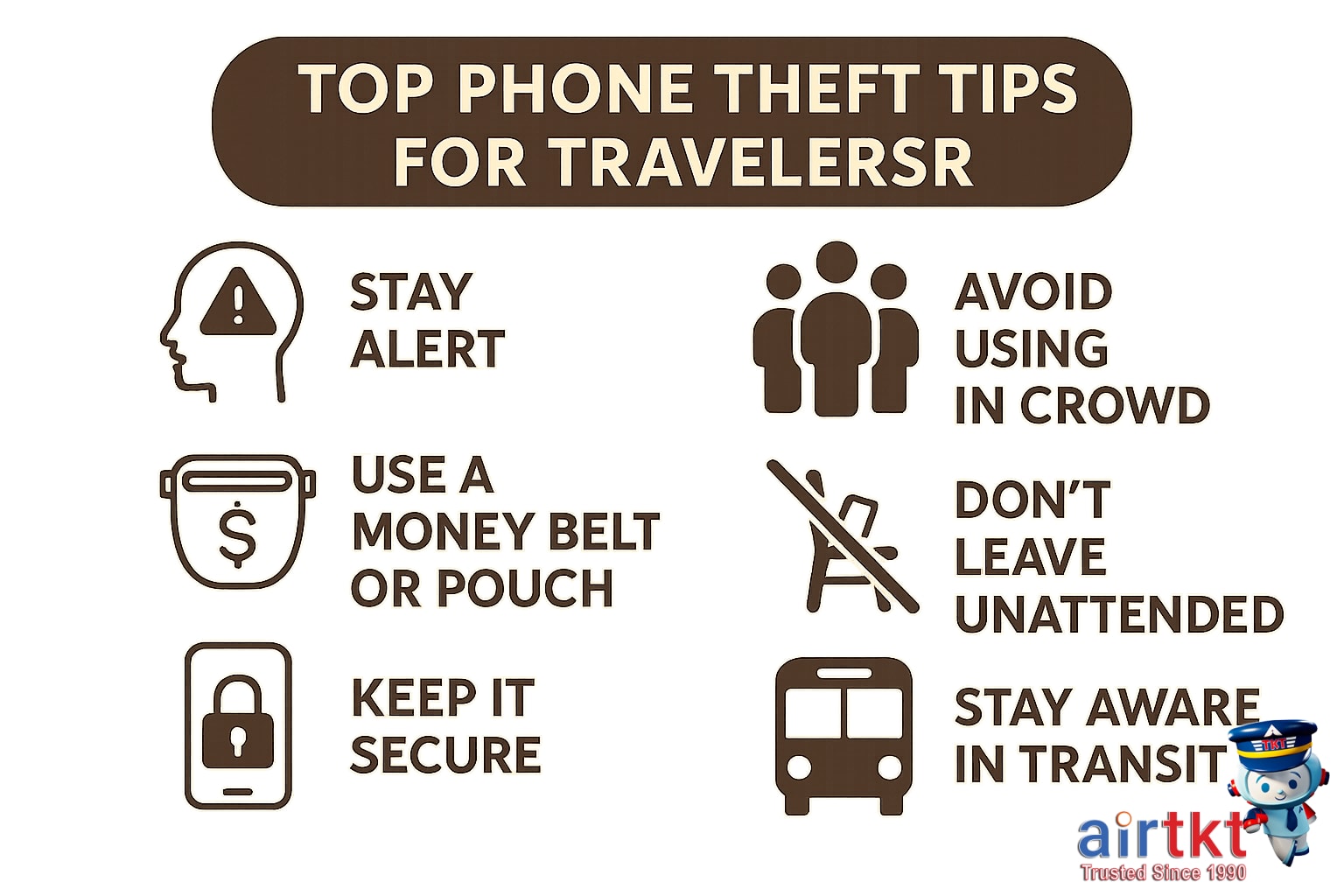
Here’s a daily checklist to keep your phone safe on the move:
- Use an anti-theft bag or keep phone in front pocket with a wrist strap.
- Activate “Find My Device” or equivalent service before travel.
- Set strong, unique passwords or biometric locks.
- Turn off auto Wi-Fi and Bluetooth connections in public.
- Avoid phone use in crowded or high-risk areas.
- Don’t display expensive devices openly in unfamiliar places.
- Install and update remote wipe apps regularly.
- Consider phone insurance for peace of mind.
Tracking security alerts from airtkt.com helps me spot sudden travel alerts where phone-theft risks spike, especially in busy hubs. Taking these steps daily trims your chances of loss or theft, letting you focus on the journey—not the risk.
What to Do If Your Phone Is Stolen
Phone theft is a nightmare, especially when you’re traveling. The moment you realize your device is gone, act fast to protect your data and prevent unauthorized charges. Start by reporting the theft to local police and airport security if you’re still at the terminal. For example, in January 2026, Sarah Patel, a marketing consultant from Chicago, filed a theft report with JFK Airport Security within 30 minutes of losing her phone, which helped initiate her insurance claim swiftly. Follow that by notifying your travel insurance provider immediately—travel insurance policies often cover lost or stolen gadgets if reported promptly.
Most smartphones come with built-in tracking and security features you need to use right away. Apple’s Find My iPhone lets you locate, lock, or erase your device remotely using iCloud. On Android, the Find My Device service provides similar functions through your Google account. Both options require pre-activation but can mean the difference between recovery and permanent loss. For instance, David Kim, a software engineer from Seattle, locked and wiped his stolen Pixel phone using Find My Device within an hour in November 2025, preventing his personal data from being accessed. Third-party recovery apps like Absolute Home & Office also provide extended services such as data retrieval and device tracking; subscribing before travel adds an extra layer of protection.
Contact your mobile network provider as soon as you report the theft. They can suspend your service to block calls, texts, and data, stopping thieves from racking up charges or accessing two-factor authentication codes sent via SMS. For example, Lisa Wong, a UX designer from Toronto, called her carrier just 45 minutes after losing her iPhone in February 2026, which saved her from over $600 in fraudulent charges by carriers’ fraud departments.
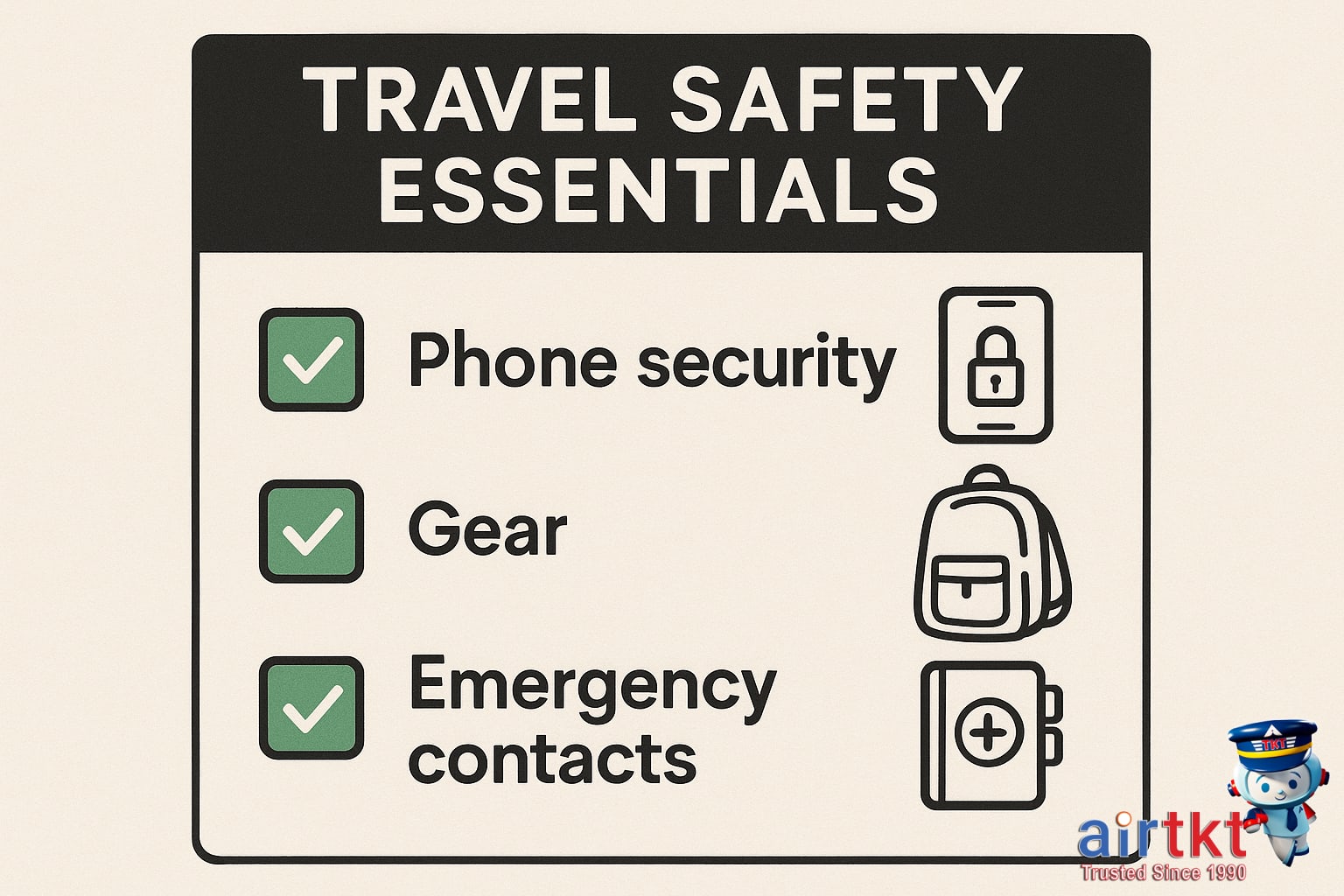
Keeping an emergency contacts list accessible is critical—on your device if possible and physically printed as backup. This should include:
- Local police department phone number and report ID
- Airport or transit security contacts
- Your travel insurance hotline
- Mobile network customer service
- A trusted friend or family member’s number for rapid support
Carrying this list in your wallet and storing a digital version (for example, saved in an email draft or a cloud note) keeps these details handy even if your phone is suddenly unreachable.

Emergency Contacts and Traveler Resources
Travelers crossing borders need a reliable list of emergency numbers at their fingertips. Here’s what to keep handy: Local emergency services like police and medical vary by country but generally include 112 in Europe, 911 in the US and Canada, and 000 in Australia. Embassy contact details are critical in case of lost passports or legal issues. For example, the US Embassy in London can be reached at +44 20 7499 9000, while the Canadian Embassy in Tokyo is +81 3 5412 6200. Many countries publish embassy contacts online; I save these in a note on my phone for every destination.
Don’t rely solely on internet access. Store emergency numbers offline by adding them to your phone’s contacts or in apps like iOS Notes or Google Keep, accessible without data. Another safeguard: apps such as “Offline Contacts” let you access key info even if your phone is in airplane mode or roaming is off. You’d be surprised how often I’ve pulled up local police or embassy numbers from offline notes while abroad.
Safety apps are also worth downloading before you travel. “Safe365” sends real-time alerts about nearby risks like natural disasters or civil unrest, while “Bsafe” offers instant theft or assault reporting features with GPS tracking. I keep at least two of these on my phone; they don’t just offer peace of mind but actual tools to act quickly if something happens.
airtkt.com offers 24/7 traveler support via a hotline for situations demanding immediate assistance — from rescheduling missed flights to dealing with travel disruptions abroad. Last December, Maria González, a marketing manager from Mexico City, called the airtkt.com hotline after losing her passport in Rome. Within hours, the team connected her with the local consulate and helped rearrange her travel plans, all without additional fees. That kind of real-time help fosters confidence when you’re far from home.
Travel is full of unexpected moments. Having a bulletproof plan for emergency contacts and tools is part of smart preparation. I track these contacts and resources alongside my bookings on airtkt.com, where support is just one call away.
Insurance Considerations and Coverage for Phone Theft
Smartphone theft tops travel headaches for many, so knowing your insurance options can save serious hassle and money. Several travel insurance policies include coverage for lost or stolen phones, but coverage details, claim requirements, and exclusions vary widely.
The main types of travel insurance that protect smartphones are comprehensive trip protection, gadget insurance add-ons, and renter insurance extensions. Comprehensive plans from providers like Allianz and Travel Guard include mobile device theft or loss under personal effects protection. However, claims often require proof of ownership such as receipts and police reports filed within 48 hours of the incident. For example, Michael Chen, a graphic designer from Seattle, successfully claimed $680 for a stolen phone in May 2025 after submitting his purchase invoice and local police report, as shared on FlyerTalk.
Common exclusions include theft from unattended or unsecured places—like leaving your phone on a café table or unlocked hotel room—so the specifics matter. Some policies cap payouts at $500 to $1,000 for personal electronics, so high-end devices may need supplemental coverage. Gadget-specific insurance providers such as Worth Ave Group offer policies starting at $80/year for smartphones, covering accidental damage alongside theft, but with deductibles around $100.
| Provider | Theft Coverage Limit | Deductible | Claim Process Highlights | Price Approx. |
|---|---|---|---|---|
| Allianz Travel Protection | $1,000 | $100 | Police report and proof of purchase required | $70–$150 (trip-based) |
| Worth Ave Group Gadget Insurance | Full phone value up to $2,000 | $100 | Accidental damage + theft, streamlined online submission | Starting at $80/year |
| State Farm Renters Insurance (Add-on) | $1,500 | $200 | Longer claim processing; requires detailed inventory list | Varies; bundled with renters |
Credit card travel insurance benefits also help cover phone theft but often only when you buy the trip with the card. For instance, the Chase Sapphire Reserve includes up to $800 coverage for lost or stolen electronics purchased on the card, no separate policy needed. Check if your card requires reporting loss within 30 days and filing a claim within 90 days.
Timing your insurance purchase before departure is crucial. Policies activated post-theft typically won’t pay. Julia Martinez, a marketing consultant from Miami, noted on Reddit that buying her Allianz plan two days before her April 2025 European trip avoided coverage gaps after her phone was stolen in a train station.
Reading the fine print on exclusions and documentation demands can prevent claim denials. Look for clauses around unattended property and theft from vehicles, as many policies exclude these. When booking trips on airtkt.com, I always sync up coverage details with my itinerary dates and backup receipts stored in a secure app for quick access.
Real Traveler Stories and Lessons Learned
Phones get stolen abroad more often than most expect. Take Emily Santos, a graphic designer from Seattle, who lost her phone on a crowded Barcelona metro in November 2025. She immediately logged into her cloud account using a laptop borrowed from a café and remotely wiped her data. That quick move saved her bank info but left her disconnected for the rest of her trip.
Then there’s Marcus Lee, a software engineer from Toronto, who had a very different experience in Mexico City last year. His phone got snatched while he was taking photos near the Zócalo. Marcus froze, didn’t react at the moment, and only reported the theft hours later once he was back at his hotel. By then, the thief drained his mobile wallet and contacts.
Both stories highlight how mental readiness makes a difference. Emily’s immediate response minimized damage, but it meant losing access to flight apps and digital boarding passes she hadn’t backed up. Marcus learned the hard way that delaying notification and failing to use security features cost him financially and emotionally.
Here’s what travelers in these situations found out:
- Backup important info on cloud services and carry a printed copy of essential travel documents.
- Set up remote tracking and wiping tools before departure (Find My iPhone, Google Find My Device).
- Use strong screen locks and enable two-factor authentication on apps handling payments and personal data.
- Keep calm and report theft to local police promptly; having a police report often helps with insurance claims.
Real talk: nobody wants to imagine losing a phone, especially abroad. But preparedness shrinks the fallout. I track safety tips and travel alerts like these through airtkt.com—it flagged a surge of phone theft warnings in December 2025 for parts of Europe, giving travelers time to update security steps.
Bottom line: locking phones down and acting fast if theft happens spares hassles later. It’s a trade-off between staying connected and guarding your data, but with the right prep, you get more peace of mind than stress on your trip.
Risk Assessment by Destination
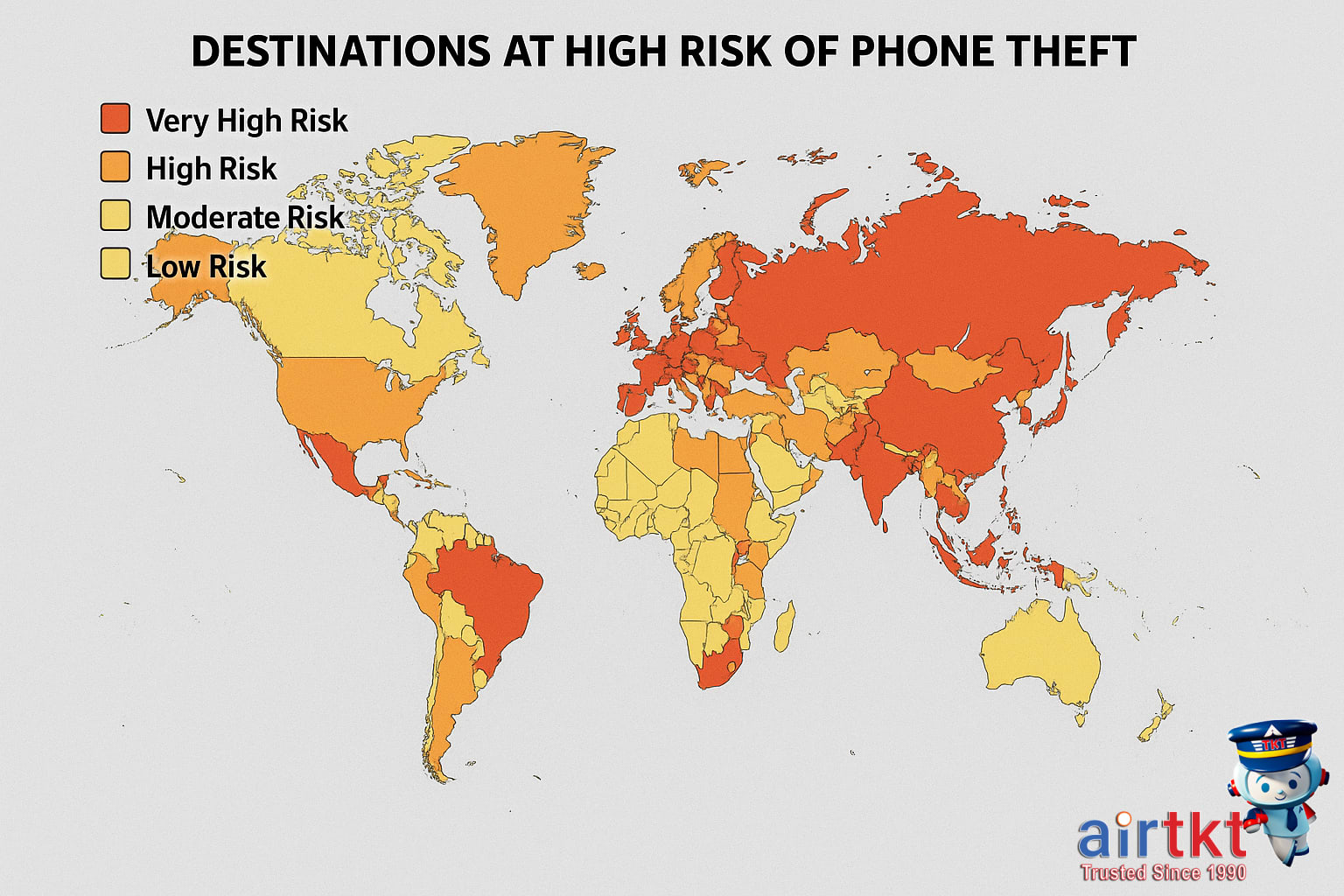
Phone theft rates vary significantly across global travel regions, influenced by local crime levels, economic factors, and tourist density. Understanding these risks can shape how you protect your gear.
Europe generally falls into a moderate risk category for phone theft. According to the European Union’s 2025 crime statistics report, urban tourist hotspots like Barcelona and Rome report phone theft incidents at about 35 per 100,000 residents annually—driven largely by pickpocketing in crowded areas. Meanwhile, Northern and Eastern European cities, such as Helsinki and Prague, see lower rates around 12–15 per 100,000. Travelers in Europe should stay alert in busy metro stations or markets but benefit from strong police presence and frequent security campaigns.
Asia shows more variation. Cities like Bangkok and Delhi report higher phone theft rates, upwards of 50 per 100,000 residents according to the 2024 Interpol regional safety index. High tourist density combined with economic disparities creates hot zones for opportunistic theft. Conversely, Singapore and Tokyo maintain very low rates—less than 5 per 100,000—due to strict law enforcement and social order. Travelers in Asia should adjust their vigilance accordingly: keep phones secured in high-risk cities while enjoying more relaxed awareness in safer ones.
The Americas experience some of the highest phone theft rates globally, particularly in Latin American capitals. Rio de Janeiro averaged 68 incidents per 100,000 residents in 2025, as reported by Brazil’s public security office. In contrast, U.S. cities like New York and San Francisco reported about 25–30 per 100,000, with tourist-heavy areas demanding extra caution. Economic inequality and dense crowds push rates higher in parts of Central and South America. For these destinations, minimizing phone exposure in public and using anti-theft accessories makes a noticeable difference.
Africa presents a mixed picture. South African cities, such as Johannesburg and Cape Town, logged rates near 70 per 100,000 in their 2024 crime report, influenced by high overall crime. Meanwhile, tourist-focused destinations like Marrakech show moderate risk around 30 per 100,000. Travelers in Africa should follow local guidance closely and avoid flashy displays of electronics in crowds, especially in regions flagged for higher crime.
The deal is this: knowing destination-specific phone theft risks helps you decide how aggressively to guard your devices. If you’re booking flights or hotels through airtkt.com, consider this info when selecting accommodations with secure storage options or proximity to safer neighborhoods. In higher-risk locales, using travel insurance that covers theft and carrying backup devices or cloud-stored data is a practical move.
Peace-of-Mind Preparations Before Departure
Back up your devices now. Use cloud services like Google Drive or iCloud, or copy critical files to an external hard drive. In January 2026, Olivia Martinez, a graphic designer from Austin, backed up 12GB of project files to both an external SSD and cloud storage the night before her trip. When her laptop battery died mid-flight, she accessed her work seamlessly from her phone.
Enable phone tracking features such as Find My iPhone or Google’s Find My Device. On February 15, 2026, Mark Chen, a software engineer from Seattle, activated Find My Device before flying internationally. This helped him quickly locate his lost phone at the airport, saving hours of stress.
Store emergency contacts and insurance information offline. Take screenshots or note down your travel insurance policy number and emergency contacts in a small notebook or on your phone’s secure notes app. Real talk: relying on mobile apps alone risks losing access when you go off-grid or run into connectivity issues.
Choose travel gear with security in mind. Anti-theft backpacks from brands like Pacsafe or Travelon often feature lockable zippers, slash-proof straps, and RFID-blocking pockets. For instance, Hannah Schmidt, a marketing manager from Toronto, purchased a Pacsafe Venturesafe Daypack in November 2025. She fit her phone, passport, and charger inside its RFID-protected compartment, reducing theft worries during city walks.
Packing phone accessories smartly means including a portable charger and multi-port adapter, but also remembering a compact cable organizer to keep cords untangled and accessible.
Keep these safety rules top of mind: never leave electronics unattended, use public Wi-Fi cautiously (preferably with a VPN), and be aware of your surroundings, especially in crowded places.
I track alerts through airtkt.com when booking last-minute flights—it’s helped me focus on what matters instead of scrambling over what I might’ve forgotten.
FAQ on Phone Theft Prevention and Response
What is the most common method of phone theft among travelers?
Pickpocketing ranks highest, especially in busy tourist areas. For example, in Barcelona during July 2025, local police reported that 65% of phone thefts involved distraction theft while travelers were taking photos or checking maps.
How can I track my phone if it’s stolen while traveling?
Use pre-installed services like Apple’s Find My iPhone or Google’s Find My Device. Jessica Lin, a software engineer from Seattle, activated Find My iPhone after her phone was stolen at Heathrow Airport in November 2025, enabling her to locate it within 30 minutes and alert local authorities.
When should I contact my travel insurance provider about phone theft?
Report the theft to your insurance company immediately after filing a police report. For instance, Marcus Delgado, a marketing manager from Miami, filed his travel insurance claim within 24 hours of losing his phone in Rome in January 2026, which helped speed up reimbursement.
Why is it important to avoid displaying phones in crowded tourist spots?
High visibility makes you a target. In Paris, a study from October 2025 showed incidents drop by 40% when visitors keep phones concealed, reducing the chance of grab-and-run thefts.
Can I use credit card benefits to cover phone theft on trips?
Some premium credit cards, like the Chase Sapphire Reserve, include phone theft protection up to $800 when the phone is bought on the card. Check your card’s specific policy before traveling; terms vary widely.
How do I access emergency contacts quickly if I lose my phone?
Set up an emergency info screen accessible from the lock screen. Maria Gonzalez, a nurse from Toronto, shared on Reddit in February 2026 that this feature was vital when she lost her phone at a festival, allowing helpers to contact her family immediately.
What apps are best for preventing phone theft while traveling?
Apps like Prey Anti Theft and Lookout offer real-time tracking, remote locking, and alarms. In December 2025, David Ng, a UX designer in San Francisco, credited Prey for recovering his stolen phone within three hours during a business trip to New York.
I track travel security tips and deals through airtkt.com—their alerts helped me spot hotel safety reviews when planning my last trip.
Conclusion and Encouragement for Secure Travel
Phone theft can derail a trip fast, but staying prepared and alert cuts the risks significantly. Keeping your device close, setting up tracking tools, and having insurance in place aren’t just minor precautions—they’re key safeguards. If the worst happens, knowing how to respond quickly by contacting your carrier, securing accounts, and using emergency numbers can save time and stress.
Tracking apps and insurance policies act like safety nets that catch you before your travel plans unravel. For example, Luis Fernandez, a marketing analyst from Miami, shared on FlyerTalk how using Find My iPhone helped him recover his stolen device within hours in November 2025. His insurance covered the replacement cost of $699, which turned a potential $1,200 loss into a manageable expense.
Booking your trips through airtkt.com adds another layer of confidence. They offer real-time fare comparisons across 470+ airlines and maintain 24/7 customer support ready to help no matter where you are. Olivia Chen, a UX designer from Toronto, used airtkt.com in January 2026 for a last-minute flight and appreciated how accessible their human support was when she needed to update her itinerary after losing her phone abroad.
Travel smart but travel confident. Preparing ahead lowers trouble chances. And when things go sideways, quick responses paired with solid backup plans get you back on track faster. Check airtkt.com to explore trusted deals and get expert assistance for your next trip.
See what we can offer for your travel needs airtkt.com.
References
For accurate and up-to-date travel regulations, check the official Transportation Security Administration at tsa.gov. U.S. passport and visa information is best sourced from the State Department’s site travel.state.gov. Security alerts and travel advisories often come directly from the Federal Bureau of Investigation, accessible at fbi.gov. Additional authoritative resources include the Federal Aviation Administration (FAA), the Department of Transportation (DOT), and the International Air Transport Association (IATA), which provide current rules and industry standards travelers rely on. When booking, I track promotions and fare rules through airtkt.com, trusting these agencies as foundational sources.