

Explore Regional Airfare Variations and VPN Basics
Airline ticket prices often differ widely depending on where you’re searching from. This variation arises from deliberate airline pricing strategies that take into account local factors such as demand, currency exchange rates, and tailored marketing offers. Airlines adjust fares to match the purchasing power and travel trends typical of each region, sometimes offering localized discounts or promotions not visible outside those markets.
For example, a flight priced in US dollars for a New York customer might cost more than the same flight listed in Indian rupees for a user browsing from Mumbai. This happens because airlines use dynamic pricing models that consider the economic environment, competition, and customer behavior specific to each geographic area.
Understand VPN Technology for Booking
Virtual Private Networks, or VPNs, are tools that let users mask their real IP address and appear as though they’re browsing from a different country or region. Essentially, a VPN routes your internet connection through servers in other locations, allowing you to “spoof” your location. This can be useful when booking flights, as it may reveal alternate price points offered exclusively to travelers from those regions.
By switching locations with a VPN, you might uncover cheaper fares on booking platforms or airline websites, accessing deals that wouldn’t normally show up based on your true geographic location.
Exercise Caution When Using VPNs
While VPNs can be a powerful tool for finding regional price variations, they demand some technical know-how. Incorrect setup or careless use can lead to slow browsing speeds, security risks, or even booking complications if an airline detects inconsistencies between your payment details and browsing location.
Experts recommend using reputable VPN services with strong privacy policies, switching servers strategically, and verifying all booking details carefully before purchase. Remember, savings found through VPN browsing aren’t guaranteed, but for those comfortable navigating the technology, the effort can pay off.
Examples of Airlines and Platforms with Regional Pricing Differences
Popular booking websites like Expedia and Skyscanner often display fares varying by country. Airlines such as Emirates, Lufthansa, and AirAsia have also been noted to adjust prices by market, rewarding local customers with specific promotions.
AirTtkt helps travelers by offering transparent access to these regional deals, coupled with easy-to-use tools and dedicated customer support. This makes it simpler to explore airfare options and compare prices worldwide without extensive technical hurdles.

Factors Behind Regional Price Differences
Airfare pricing varies significantly across regions due to a complex interplay of factors such as currency exchange rates, local competition, and purchasing power. When airlines set prices, they must consider the economic landscape of each market. For example, if a currency weakens against the US dollar, airlines often adjust fares upwards in that country to maintain profitability. Conversely, in countries where purchasing power is lower, airlines might offer more affordable prices to attract travelers, balancing revenue with market demand.
Local competition also plays a pivotal role in determining flight prices. Regions with multiple airlines vying for customers tend to have more competitive pricing, driving fares down. In contrast, regions dominated by a single carrier or limited flight options generally experience higher ticket prices due to lack of competition. This dynamic illustrates why flights from the same airline can cost dramatically different amounts depending on the departure country or region.
Another often overlooked factor is how airlines and booking platforms display prices based on the user’s IP location. Many online travel agencies and airline websites detect where visitors are browsing from and tailor prices accordingly. For instance, a user searching for flights on the AirTtkt platform from the United States might see different fares compared to someone accessing the site from a European country. This strategy, known as geo-pricing, allows airlines to capitalize on regional willingness to pay and adjust availability or promotions based on market behavior.
Some airlines even restrict certain promotional fares or availability depending on IP addresses. Budget carriers might offer exclusive local deals that are invisible to international users, while international travelers may encounter higher base prices plus extra fees that don’t apply domestically. This variance underscores the importance of comparing prices across multiple regions, sometimes using VPN services or regional versions of booking sites to uncover the lowest fares.
International taxes, fees, and surcharges constitute a large portion of the overall ticket price and vary widely by country. Government-imposed levies such as airport taxes, security fees, and passenger service charges differ according to local regulations and infrastructure costs. For example, travelers departing from the United Kingdom often pay additional Air Passenger Duty, which can significantly increase ticket prices compared to flights from countries without such levies. Similarly, some regions impose hefty fuel surcharges or environmental fees that add to the final cost.
These extra costs are typically embedded in the fare but may also appear as separate line items during checkout. When booking internationally, it is crucial to consider these variations because two identical flights from different countries may have disparate total prices solely due to taxes and fees. Platforms like AirTtkt carefully display tax breakdowns, helping travelers understand how these charges affect their budget.
Seasonal trends also drive regional airfare fluctuations. In peak travel seasons—such as summer holidays, winter breaks, or major local festivals—higher demand causes airlines to raise prices accordingly. Conversely, during off-peak periods, airlines commonly lower fares to stimulate bookings and fill seats. Importantly, these seasonal cycles vary by region; a destination popular during Northern Hemisphere winter might experience a travel slump during the summer months, with lower fares reflecting that shift.
For example, flights to Caribbean islands spike in price during the US winter as travelers seek warmth, while Mediterranean destinations see higher rates in summer due to European vacations. Additionally, emerging markets often experience less pronounced seasonal pricing swings, but prices can still vary based on local holidays or events.
Understanding these regional price dynamics empowers travelers to strategically time their bookings and select departure points for optimal savings. Using smart tools like AirTtkt‘s fare comparison and regional pricing insights can reveal opportunities to avoid inflated ticket costs caused by currency fluctuations, hidden fees, or local demand cycles.
Using VPNs for Flight Price Comparisons
Comparing flight prices from different locations can reveal surprising savings, and a Virtual Private Network (VPN) is a powerful tool to unlock those deals. By changing your IP address to appear as if you’re browsing from another country, you can test if airlines or booking platforms show varied prices for the same itinerary.
Here’s how to use a VPN for flight price comparisons effectively.
Select and Set Up Reliable VPN Apps
Start by choosing a VPN app that matches key technical criteria:
- Speed: Fast connections reduce delays when loading flight search pages.
- Security: AES-256 encryption and a strict no-logs policy protect your privacy while you browse.
- Server Variety: Access to multiple countries ensures broader testing across pricing regions.
- User-Friendly Interface: Easy app navigation saves time when switching locations.
Popular VPNs like NordVPN, ExpressVPN, and Surfshark fit these criteria well.
After selecting your VPN, download and install the app from its official website or trusted app store. Launch it and sign in or create an account as required.
Connect to Different Country Servers for Searches
Use the VPN app to connect to servers in different countries before searching flights. This simulates browsing from those locales, potentially influencing airfare pricing based on regional demand or sales policies. For example:
- Open the VPN app.
- Select “Connect” or “Choose Location.”
- Pick a server in a country where you want to simulate browsing, such as the U.S., Germany, or India.
- Once connected, open an incognito browser window to avoid cached data or cookies impacting results.
- Visit your flight booking site, like AirTtkt, and run your search for the chosen itinerary.
Compare Prices Across VPN Locations
Repeat the process by switching VPN server locations one by one to compare airfare prices. Test multiple regions including cities or countries known for lower travel booking rates. You might find, for example, that a flight from New York to London costs significantly less when your IP address is set to a European server versus a US or Asian one.
Below is a comparative summary of search results for a round-trip flight between Los Angeles and Tokyo, with prices displayed in US dollars from the same date range, accessed via VPN servers in different countries:
| VPN Server Location | Flight Price (USD) |
|---|---|
| United States (California) | $720.50 |
| Japan (Tokyo) | $695.20 |
| Germany (Frankfurt) | $678.75 |
| India (Mumbai) | $662.00 |
This example shows a drop of almost $60 when switching from a US IP to an Indian IP address, highlighting the savings potential.
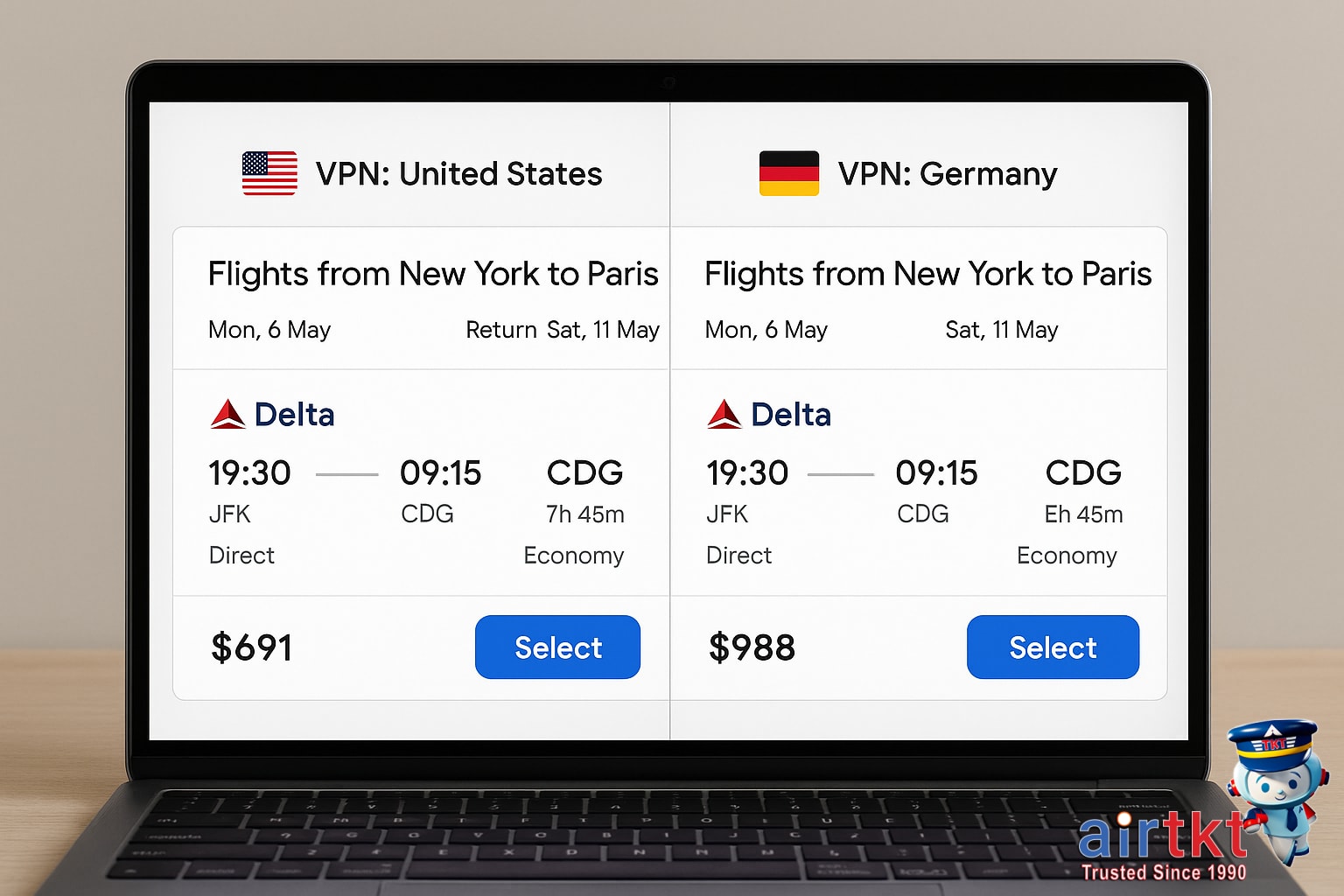
By using a VPN to test flight prices from various locations, you gain a valuable edge in negotiating the best travel deals. It’s a straightforward process that requires only a reliable VPN, a few clicks, and careful price tracking to identify where your trip can cost less.
Payment Methods and Booking Challenges
When using VPNs to find cheaper flights by changing your virtual location, choosing the right payment method becomes crucial. Many travelers don’t realize that payment options and billing details can directly impact whether your booking is approved or rejected. Airlines and booking platforms often flag transactions where the payment source doesn’t align with the IP location or billing information, causing frustrating declines.
To avoid these issues, it’s best to use credit cards or payment gateways widely accepted for international transactions. Major credit cards like Visa, MasterCard, and American Express usually process payments smoothly across borders. Digital payment services such as PayPal can also offer extra layers of protection and flexibility, especially when booking from different countries.
Another factor to consider is currency conversion fees. When your card charges in a currency different from your home currency, your bank may apply foreign transaction fees ranging typically from 1% to 3%. Over several bookings, these fees can add up, negating some of the savings gained through VPN deals. Some credit cards waive foreign transaction fees—choosing one of those cards can help keep costs down.
Booking platforms may also reject payments if there’s a discrepancy between your IP address location and your billing address. For example, if you appear to be booking from a UK IP but your payment card’s billing address is in the U.S., the system might flag this mismatch as fraudulent activity. To minimize this risk:
- Use billing addresses that match your payment method’s official address on file.
- Avoid mixing VPN locations with cards whose billing addresses don’t correspond to those regions.
- Consider booking from your home country IP or turning off your VPN during payment confirmation if you suspect issues.
Setting up travel-friendly accounts can streamline your booking experience. This means having credit cards linked to your primary country of residence, with billing details up to date and easily verifiable. Some travelers also maintain secondary cards from other countries to accommodate bookings that require regional payment sources. For those frequently booking internationally, digital wallets and multi-currency accounts can offer convenient options to manage payments without triggering blocking filters.
Keep in mind that each airline or travel site may have specific payment policies. Platforms like AirTtkt provide consistent support for multiple payment methods and clear guidelines to help travelers avoid booking setbacks due to payment discrepancies.
Risks and Limitations of VPN Pricing Hacks
Using a VPN to access region-based airline fares may seem like a clever way to unlock hidden discounts. However, travelers should be aware of several risks and limitations before relying on such pricing hacks. Many airline websites actively detect VPN use through IP tracking and device fingerprinting. Once detected, websites might block your access, display inaccurate prices, or restrict booking options altogether. This can disrupt your booking process, making it frustrating or impossible to complete a transaction.
Even if you successfully book a flight at a lower fare using VPN workarounds, airlines reserve the right to verify the passenger’s information at check-in. Some airlines have strict policies regarding ticket validity when booking uses mismatched user data or originates from a different region than your actual location. In these cases, your ticket could be canceled, or you might even be denied boarding if discrepancies arise, especially for international flights with stringent security protocols.
It’s important to understand that VPN pricing hacks don’t guarantee cheaper fares every time. These tactics should never replace thorough fare comparison across multiple sources and websites. Prices fluctuate frequently due to demand, promotions, and booking windows, so verify any savings through legitimate channels to avoid surprises. Blindly trusting a cheaper price found via VPN without cross-checking can lead to disappointment or hidden fees later.
Additionally, strict compliance with airline booking terms is essential when attempting any fare-saving strategy. Review baggage allowances, refund policies, and identification requirements explicitly. Failure to follow airline rules could result in canceled reservations or forfeited payments. Traveling with a ticket purchased under questionable circumstances might cause significant inconvenience, including having to purchase a new ticket at full price.
For travelers committed to saving money and avoiding pitfalls, a safer approach is to use trusted fare aggregators and comparison tools like AirTtkt. These platforms monitor real-time pricing and legitimate discounts without risking booking complications. Armed with verified information and compliance awareness, you can confidently find affordable flights without exposing yourself to cancellation risks or last-minute issues.
Best Practices for Smart VPN Flight Booking
Using a VPN can unlock insights into regional pricing differences that airlines use to set airfare rates. By masking your location, a VPN might reveal lower fares available to customers browsing from alternate regions. However, this tactic doesn’t guarantee unbeatable prices every time. It’s vital to remember that VPN flight booking is a supplementary strategy, best combined with thorough price comparison methods to maximize savings.
Travelers should approach VPN experimentation responsibly. Test various regions and clear your browser cookies to avoid biased price tracking. But avoid relying solely on “VPN hacks” as the go-to method for finding deals. Airline pricing algorithms are complex and dynamic, often factoring in many elements beyond your IP location. Traditional search techniques—like flexible date searches, alert subscriptions, and multiple booking platforms—remain essential.
Alongside VPN use, always cross-check flight prices on reliable platforms such as AirTtkt. Carefully review the fare rules and terms before confirming your booking. Being mindful of baggage fees, cancellation policies, and seat selection charges helps prevent unexpected costs. Prioritize secure payment options during checkout to protect your personal and financial information.
It’s also important to stay aware that airline and booking site policies evolve frequently. Some platforms may restrict or limit VPN usage, while others adjust dynamically to detect IP address changes. Keeping informed on these shifts will help you adapt your approach and avoid booking mishaps. Following trusted travel blogs and forums or official airline news channels can provide timely updates.
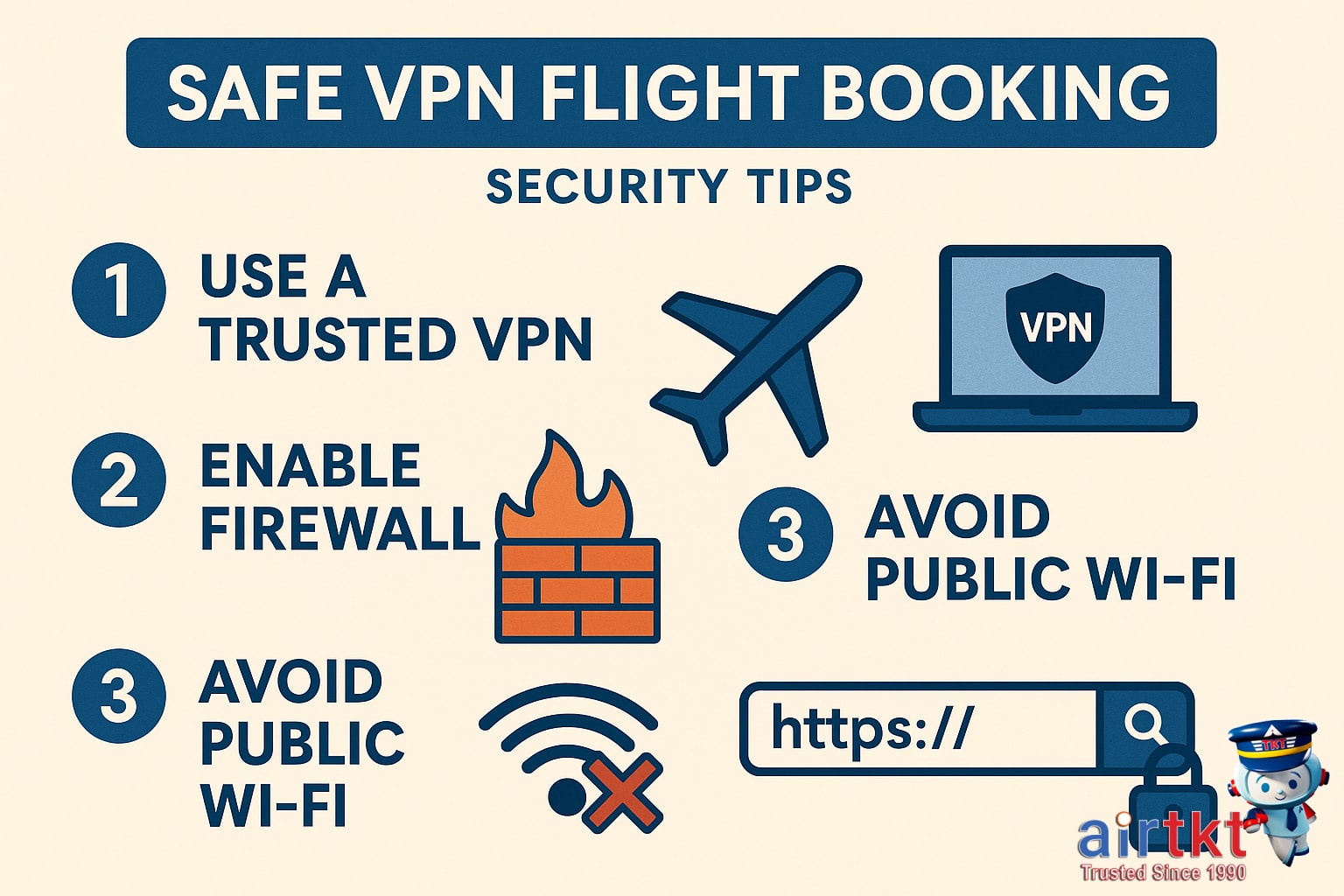
In summary, smart VPN flight booking means blending this tool with trusted search platforms, verifying fare details carefully, and employing safe payment methods. Experiment confidently but never overlook the value of traditional strategies for comprehensive airfare deal hunting. For a streamlined process that safeguards your booking, use AirTtkt‘s hassle-free fare comparison and secure checkout services.
Frequently Asked Questions About VPN Flight Pricing
Can I use a VPN to get cheaper flight prices?
Yes, using a VPN can sometimes help you access lower flight prices by changing your virtual location. Airlines and booking sites may display different fares based on geographic regions. However, the savings vary and are not guaranteed. Combining VPN use with other price comparison tools like AirTtkt can help maximize your chances of finding a good deal.
What is the best way to test VPN flight pricing regions?
Start by selecting popular countries known for lower airfare, such as India, Mexico, or Malaysia, and compare prices with those shown when your VPN is off. Clear your browser cookies or use incognito mode for accurate results. Run multiple searches during different times of day to spot price fluctuations linked to specific IP locations.
When should I try changing my IP location for flight searches?
Try changing your IP location during the early or late hours of the day when airlines update fares. It’s especially useful when searching for international tickets or flights originating from countries where travelers might pay higher rates. Experimenting before finalizing your purchase can uncover cheaper options through VPN flight pricing.
Why is my booking declined after using a VPN for pricing?
Some airlines and travel platforms flag bookings made via VPNs as suspicious due to mismatched locations between your IP address and payment method. This can lead to declines or cancellations. Always disable your VPN when entering payment details and verify that your billing address matches your payment information to reduce this risk.
How do payment methods affect VPN-obtained airfare deals?
Payment methods linked to your home country can sometimes trigger fraud alerts when using a VPN to book from a foreign IP. Using international credit cards or payment services like PayPal can ease these issues. Some travelers prefer virtual cards issued in the VPN’s country to fully benefit from localized pricing.
Can I avoid currency fees when booking flights with VPNs?
Booking flights through VPNs might show prices in foreign currencies, which can lead to conversion fees on your credit card. To avoid extra costs, use cards with no foreign transaction fees or select payment options that support currency conversion at better rates. Always review the final price in your payment currency before confirming.
What risks come with VPN flight pricing tricks?
While VPN flight pricing can save money, it carries risks such as potential booking cancellations, issues with customer support, or undetected fare differences. Airlines may also change their policies to block VPN users. Travelers should weigh these risks and consider using trusted platforms like AirTtkt that offer competitive fares without complexity.
Save Money Safely Using VPN Flight Booking
Using a VPN to book flights offers an innovative way to uncover regional price differences that airlines sometimes apply based on user location. By masking your IP address and selecting different countries through a VPN, you can often access fares that would otherwise remain hidden, potentially saving a significant amount on airfare. However, it is essential to approach this strategy with caution. Airlines may have varying pricing rules or restrictions depending on the region, and prices found through a VPN aren’t always guaranteed to be valid when booking.
To maximize savings, combine VPN testing with a comprehensive flight search strategy. Use multiple VPN locations to compare fares and note the best deals, but always verify final prices directly on trustworthy platforms before booking. Relying solely on VPN-discovered fares isn’t foolproof—fluctuations in currency, booking fees, and fare availability may adjust the ultimate cost. Pair this method with flexible travel dates, alternative airports, and general market monitoring for a well-rounded approach to snagging low-cost tickets.
When it comes to booking your flights confidently and securely after your research, AirTtkt provides a reliable platform to finalize your purchase. Designed to offer competitive prices with a user-friendly experience, AirTtkt combines real-time fare comparisons with trusted payment security measures. This ensures that the savings you discover through your VPN explorations and other search tactics translate into solid, hassle-free bookings without compromise.
The synergy of tech-savvy research and practical booking tools is a powerful formula for budget-conscious travelers. Using a VPN to check regional airfare variations is smart, but it’s just one piece of the puzzle. Incorporating this technique alongside trusted flight aggregators like AirTtkt guarantees that you are not only chasing low prices but also securing them safely.
Explore AirTtkt as your go-to travel partner to confidently find and lock in affordable airfare deals. With smart strategies and the right platform, you can enjoy peace of mind while getting the best value for your next trip.