
Use Opaque Hotel Bookings to Save Money
Opaque hotel bookings have become an increasingly popular tool for savvy travelers looking to slash accommodation costs without sacrificing quality. But what exactly are opaque bookings? Simply put, these are hotel reservations where the hotel’s identity remains hidden until after the purchase is complete. This unique approach allows travel platforms to offer rooms at significantly discounted rates—often between 15% and 40% less than standard prices.
Why do hotels agree to such arrangements? The concealment helps hotels sell excess inventory discreetly without diluting their brand value or undermining retail pricing. For travelers, this creates a win-win: access to deeply discounted rooms at reputable hotels with a bit of mystery attached.
In the sections ahead, we will unravel everything you need to know about opaque hotel bookings. You’ll learn step-by-step how to secure these deals, understand the typical savings you can expect, and discover the best platforms where these bookings are available. We’ll also explore timing strategies to maximize discounts, share insider tips from the hotel industry, and clarify cancellation policies that might apply. Real-world price comparisons and booking examples will help you gain confidence in this method.
At AirTtkt, we are committed to empowering budget-conscious travelers with reliable, actionable advice. Using opaque hotel bookings effectively can unlock some of the best discounts available online, allowing you to enjoy your trips without straining your wallet. Stay with us to learn how to book smart, save big, and travel with peace of mind.
Explain Opaque Hotel Booking Features
Opaque hotel bookings are a unique way to secure discounted accommodations where the hotel’s name remains hidden until after you’ve completed your purchase. This anonymity distinguishes opaque bookings from traditional hotel reservations, where you know exactly which hotel you are booking before you pay. By concealing the hotel brand upfront, opaque bookings enable travelers to access lower rates on quality hotels without hotels risking their brand image or pricing integrity.
Hotels often use opaque platforms to manage unsold inventory efficiently. When rooms remain vacant close to the check-in date, hotels list them at slashed prices on opaque channels to fill those vacancies without publicly lowering their standard rates. This approach protects their brand’s pricing structure by offering discounts discretely, targeting budget-conscious travelers without diluting the hotel’s perceived value in the marketplace.
Traditional bookings show all hotel details, including the name, location, and star rating, letting travelers make an informed choice before payment. In contrast, opaque bookings reveal only essential information such as a general location, star-level category, and amenities. Only after payment is the exact hotel identified. This model benefits deal seekers willing to trade some upfront transparency for significant savings and benefits hotels by offloading excess rooms without damage to their normal pricing.
Popular platforms that specialize in opaque hotels include Hotwire, Priceline, and Agoda Express. These sites aggregate unsold rooms from numerous hotels and auction them at steep discounts. Travelers can filter results by star rating and area but won’t know the brand until the booking is complete—this tradeoff unlocks exceptional prices not typically available through direct hotel websites or traditional travel agencies.
Seasonal fluctuations heavily impact opaque deal availability and pricing. During off-peak seasons or weekdays, opaque discounts tend to be more abundant and valuable as hotels aggressively seek to fill rooms. Conversely, major holidays and peak travel periods often reduce opaque availability or increase prices since demand generally outpaces supply. Budget travelers who monitor opaque platforms regularly can spot these pricing trends and book strategically to maximize savings.
Opaque hotel bookings also come with certain restrictions. Most often, these reservations are non-refundable and non-changeable, reflecting the deeply discounted rates. Cancellation options are usually limited or unavailable, requiring travelers to commit firmly before booking. Understanding these eligibility rules upfront is essential to avoid surprises. Travelers should review terms carefully, as arriving late or changing plans may forfeit the entire payment on an opaque booking.
Demonstrate How to Book Opaque Hotels
Booking opaque hotels can save you significant money, but it requires a clear understanding of the process. Major platforms like Hotwire, Priceline, and Agoda Express specialize in opaque bookings where the hotel’s name is hidden until after purchase. Here’s a detailed, step-by-step guide to confidently secure these deals while meeting your travel needs.
Search and Select Star Ratings on Hotwire
Start by visiting Hotwire’s opaque hotel section. Enter your destination and travel dates, then set filters for star ratings and preferred neighborhoods. Hotwire lets you choose from 1 to 5 stars and often highlights specific areas like downtown or near the airport. The hotel name remains undisclosed until after payment, but this filter guides your expectations on quality and location.
Next, review the amenities list—hotels often list features like free WiFi, pools, or breakfast. Confirm these meet your “must-have” criteria to avoid surprises later.
Book Hidden Hotels via Priceline
Priceline’s “Express Deals” works similarly. After entering your destination and dates, select your desired star level and general area without seeing the exact hotel name. The platform will display rates, cancellation terms, and some guest ratings for transparency. When ready, add guest details and proceed to payment on a secure page.
Use Agoda Express for Opaque Booking
Agoda Express provides a similar service with an emphasis on competitive pricing in Asia and worldwide. Input your dates and location, then filter by star rating and neighborhood. Agoda also shows key amenities and cancellation policies upfront. Once you select a deal, complete the booking by paying with your preferred method. Avoid booking if cancellation terms don’t meet your flexibility needs.
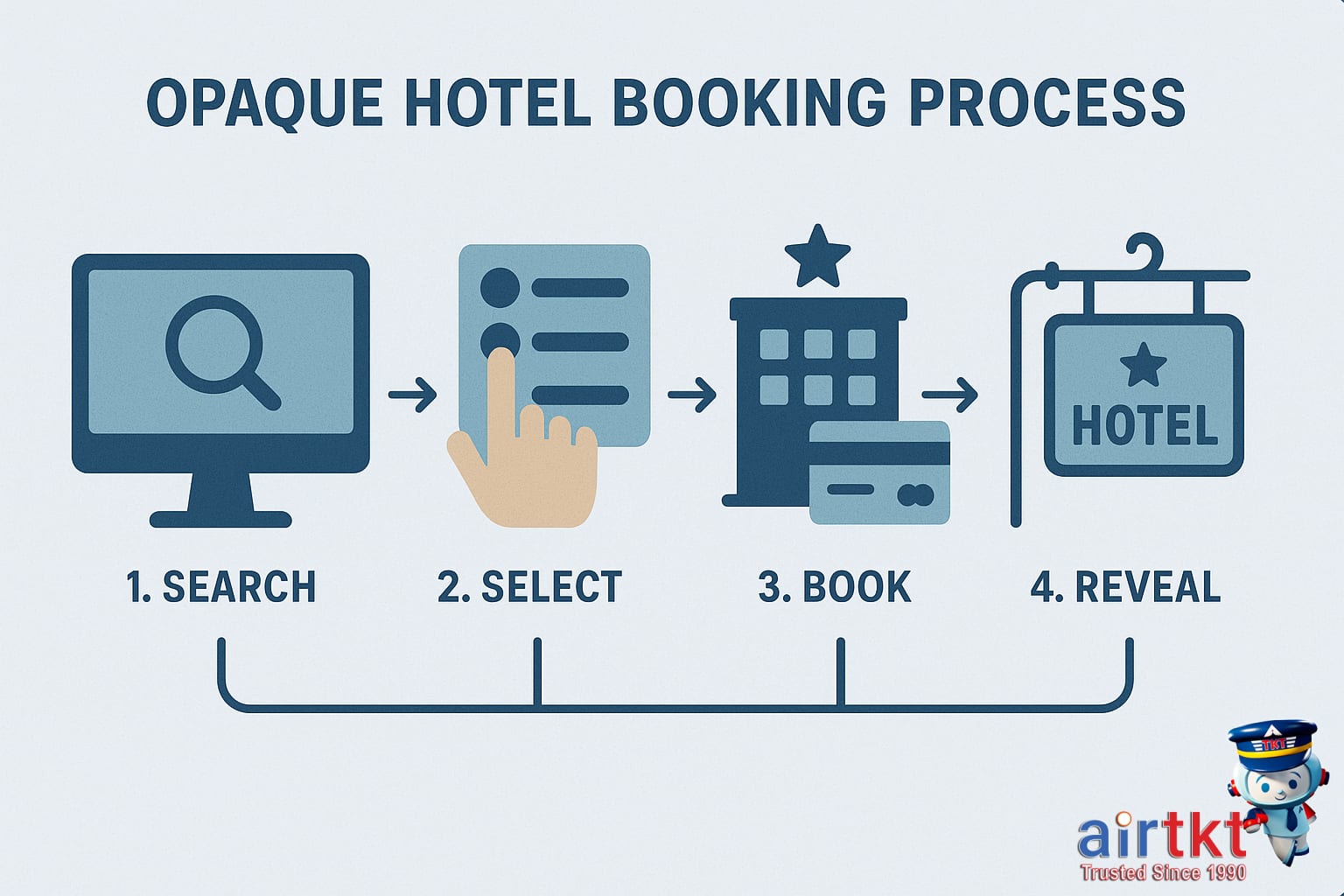
Step-by-Step Booking Process
- Enter your destination and travel dates in the opaque hotel platform.
- Select star rating and preferred hotel area or neighborhood based on your priorities.
- Review key hotel amenities to ensure essential features are included.
- Check cancellation and refund policies thoroughly—some deals may be non-refundable.
- Proceed to payment and finalize booking securely.
- Receive confirmation with the hotel’s name revealed after purchase.
Opaque Hotel Booking Checklist
- Confirm travel dates: Ensure exact check-in/out days before searching.
- Select preferred star level: Match quality expectations with your budget.
- Choose desired neighborhoods: Research the area to align with your plans.
- Verify must-have amenities: Wifi, breakfast, parking, or pool access—know your essentials.
- Review cancellation/refund terms: Check flexibility, especially post-pandemic where some platforms offer leniency.
Show Savings and Price Differences Clearly
Opaque hotel bookings offer travelers impressive savings, typically ranging from 15% to 40% compared to standard rates. These deals are unlocked by sacrificing some booking transparency, often revealing the hotel name only after purchase. To illustrate, a mid-range hotel in Miami offered at $180 per night through traditional booking might be available for just $120 using an opaque deal—saving nearly 33%. Similarly, a boutique London hotel charging $250 in a standard booking could drop to $175 opaque, a 30% reduction.
Below is a side-by-side comparison of identical hotel stays on the same dates, showcasing clear cost benefits:
| Destination | Hotel Category | Standard Booking | Opaque Booking | Approximate Savings |
|---|---|---|---|---|
| New York City | 3-Star | $200/night | $140/night | 30% |
| Paris | 4-Star | $310/night | $195/night | 37% |
| Tokyo | Mid-Range | $180/night | $130/night | 28% |
| Sydney | Luxury | $450/night | $315/night | 30% |
Visualizing typical savings, the chart below summarizes the percentage discounts travelers can expect from opaque bookings:

The degree of savings varies significantly due to several factors. Popular destinations with high hotel demand, like New York or Paris, tend to yield deeper discounts through opaque channels because hotels aim to fill unsold rooms without publicly reducing rates. Conversely, less-traveled locations may offer smaller savings.
Seasonality greatly influences opaque rates as well. Booking in the off-peak season typically presents larger discount potential—hotels reduce prices aggressively to attract guests during quiet periods. In peak travel months, savings narrow as occupancy rises.
Timing your booking is another critical variable. Last-minute opaque deals often provide the greatest markdowns as hotels look to fill remaining rooms quickly. On the other hand, early bookings can secure low opaque prices during promotional periods but usually with less volatility than conventional advance purchases.
Travelers noticing opaque hotel savings will often find a similar trend mirrored in seasonal airfare pricing. Discounts during shoulder seasons or last-minute bookings frequently apply across both flights and hotels, making comprehensive trip planning with flexible dates a prime strategy for maximizing savings.
Recommend Top Platforms and Helpful Tools
When booking opaque hotels—where the property details are revealed only after purchase—choosing the right platform is essential for saving money while minimizing risks. Here are some of the best opaque hotel booking platforms, along with emerging tools and tips to maximize your bargains.
Major Opaque Booking Platforms Reviewed
- Hotwire
- Pros: User-friendly app and website; discounted rates at many well-known hotel chains; easy-to-navigate interface with clear filtering options.
- Cons: Limited information before booking—guesswork needed; some cities have sparse opaque deals; occasional price disparities compared to standard rates.
- Priceline
- Pros: “Express Deals” offer substantial savings; useful bidding feature allows greater control over price; frequent special promotions enhance affordability.
- Cons: Bidding can be complex for new users; opaque details limit itinerary customization; cancellations and changes are generally non-refundable.
- Agoda Express Deals
- Pros: Strong presence across Asia-Pacific with competitive rates; integration with Agoda’s loyalty program; mobile app designed for fast booking.
- Cons: Limited opaque deals outside Asia; hotel quality can vary widely; booking policies sometimes unclear before final purchase.
Emerging and Niche Opaque Platforms
Besides these well-established sites, travelers seeking specialized deals may explore lesser-known platforms targeting niche markets. For example, HotelScan aggregates multiple opaque offers focusing on boutique and luxury hotels. Meanwhile, apps like LastMinute appeal to spontaneous travelers hunting last-minute opaque deals tied to specific traveler profiles like families or solo adventurers.
These specialized platforms can provide hidden gems tailored to unique preferences, although the user base and support might be smaller than mainstream giants.
Use Fare Alerts and Price Monitoring Tools
Tracking opaque hotel deal fluctuations manually can be time-consuming. Subscribing to fare alert services or using automated price monitoring tools helps capture price drops and flash sales promptly. Options like Kayak Price Alerts and Trivago track both opaque and standard hotel offers, sending notifications when prices dip within your set criteria. Some tools also include opaque-specific filters to streamline deal discovery.
Combine Opaque Bookings with Rewards and Cashback
While opaque bookings often prohibit changes and refunds, savvy travelers can still leverage loyalty programs and cashback portals to stretch their budget further. For example, booking through platforms affiliated with major hotel chains’ reward programs can let you earn points even on opaque stays. Additionally, cashback websites like Rakuten or Honey may offer rebates for opaque bookings, depending on the platform’s policy.
Always verify terms and conditions beforehand to ensure that loyalty and cashback benefits apply. Keeping an eye on payment method promotions, such as credit card travel rewards, can also add extra value.
Verify Legitimacy and User Reliability
Book opaque hotels only from reputable platforms with strong user reviews and clear customer service policies. Platforms like AirTtkt are committed to transparent booking experiences backed by reliable support, helping travelers confidently secure the best opaque hotel deals without unpleasant surprises.
Look for consistent feedback on third-party review sites and travel forums to avoid scams and misleading offers.
Advise Best Timing and Insider Booking Tips
Booking opaque hotels can deliver impressive savings if timed right. The best windows are often last-minute bookings, off-peak seasons, and shoulder periods—the times just before or after peak travel when demand is moderate. Hotels lower prices during these intervals to fill rooms that might otherwise remain empty, offering savvy travelers a chance to snag premium stays at a fraction of the usual cost.
Industry insiders reveal that hotels strategically allocate rooms to opaque channels, like last-minute deal sites, to protect their standard rates. They use dynamic pricing, constantly adjusting opaque inventory based on current bookings and market conditions. This means prices can rapidly decrease as the check-in date approaches, especially if occupancy is low. Being flexible with your travel dates allows you to catch these fluctuating prices and maximize savings.
Another key factor is how cancellations impact opaque deals. When guests cancel, rooms once assumed sold become available again, often triggering hotel systems to lower prices further to fill them before the last minute. However, cancellations can also cause price volatility—sometimes discounts vanish quickly as algorithms recalibrate. Travelers who monitor rates regularly stand a better chance of spotting these sudden opportunities or avoiding last-minute price spikes.
Flexibility is crucial. Being open to shifting travel dates or destinations can unlock better discounts. Consider midweek stays or adjusting your check-in day by a few days to catch lower opaque prices. Use AirTtkt’s real-time search tools to track fluctuating rates and set alerts for price drops.
Recent industry reports back these strategies. A 2024 analysis by travel market researchers found that bookings made within 3 to 7 days of arrival during shoulder season yielded the highest opaque hotel discounts—often as much as 40% below standard rates. Moreover, cancelation-driven repricing events were identified as prime moments to score exclusive deals.
By understanding how hotels manage opaque inventory, tracking cancellations, and maintaining flexible travel plans, you can confidently harness opaque bookings to secure remarkable hotel savings. For travelers looking to capitalize on these insights, AirTtkt simplifies the process with up-to-date offers and expert support tailored for budget-conscious travelers.
Understand Cancellation Rules and Risks
Opaque hotel bookings, while often cheaper, come with stricter cancellation and refund policies compared to traditional reservations. Typically, these bookings are non-refundable and non-cancellable once confirmed. Unlike standard hotel reservations that may offer free cancellation up to a certain date, opaque deals lock in the price by hiding the hotel’s identity until after payment. This trade-off means you might save money but sacrifice flexibility.
In contrast, regular hotel bookings often allow cancellations without penalty up to 24 or 48 hours before check-in, giving travelers reassurance if plans change. With opaque bookings, however, the risk of losing your entire payment if you must cancel is much higher. To manage this risk, it’s crucial to evaluate your trip’s certainty before opting for an opaque deal.
Here are practical steps to mitigate risks when using opaque hotel bookings:
- Assess your travel plans: Only choose opaque bookings if your itinerary is firm and unlikely to change.
- Purchase travel insurance: Select policies that cover non-refundable expenses and unexpected cancellations.
- Know the booking’s fine print: Carefully read cancellation and refund terms before confirming. Watch for exceptions or hidden fees.
- Keep backup arrangements: If possible, have a flexible alternative option in case changes arise.
Beyond hotel policies, travelers should also be aware of rights related to cancellations governed by government agencies when flying or dealing with other travel components. The U.S. Department of Transportation (DOT) enforces regulations requiring airlines to offer refunds for cancelled flights, even for non-refundable tickets, if the airline cancels the service. The Federal Aviation Administration (FAA) and Transportation Security Administration (TSA) also provide traveler protections, but these focus more on safety and security than refunds. While these rules help protect flight customers, lodging generally falls under different vendor policies, so travelers should not assume the same leniency applies to opaque hotel bookings.
Understanding these distinctions empowers travelers to make informed choices and manage uncertainties effectively. Careful review of the booking terms and awareness of federal travel protections are critical steps to reduce financial loss and stress. For travelers valuing flexibility, traditional bookings might be the safer option despite higher costs, while more price-sensitive customers can benefit from opaque deals by planning wisely.
For seamless travel planning with clear terms, visit AirTtkt to explore transparent options across flights, hotels, and car rentals that help balance savings with peace of mind.
Share Real Booking Examples and Results
To illustrate the savings potential of opaque bookings, let’s examine three real-world examples comparing opaque hotel bookings with standard priced reservations. These scenarios highlight how star ratings, hotel location, and timing influence final prices—and how travelers can maximize their savings on AirTtkt.
Example 1: Downtown Business Trip
| Booking Type | Star Rating | Hotel Area | Price per Night | Booking Window | Savings |
|---|---|---|---|---|---|
| Opaque | 4-Star | Downtown | $110 | 3 weeks in advance | $55 (33%) |
| Standard | 4-Star | Downtown | $165 | 3 weeks in advance |
In this case, the traveler saved $55 per night by booking opaque. The key factors were a short booking window and a premium location. While the exact hotel name was revealed only after booking, user feedback confirmed a centrally located, highly rated property.
Example 2: Family Vacation near the Beach
| Booking Type | Star Rating | Hotel Area | Price per Night | Booking Window | Savings |
|---|---|---|---|---|---|
| Opaque | 3-Star | Beachside | $75 | 1 month in advance | $35 (32%) |
| Standard | 3-Star | Beachside | $110 | 1 month in advance |
Here, the family booked a beachside hotel using an opaque deal and saved nearly one-third of the regular price. The 3-star rating and the early booking window combined to offer substantial discounts, making this an ideal option for budget-conscious travelers seeking prime locations.
Example 3: Weekend Getaway in the Suburbs
| Booking Type | Star Rating | Hotel Area | Price per Night | Booking Window | Savings |
|---|---|---|---|---|---|
| Opaque | 2-Star | Suburbs | $45 | 1 week in advance | $15 (25%) |
| Standard | 2-Star | Suburbs | $60 | 1 week in advance |
This budget-conscious traveler booked a 2-star suburban hotel at 25% less than the standard price. While star rating and location offered fewer premium features, opaque booking still delivered meaningful savings for short-notice plans.
Traveler Testimonials on Opaque Bookings
- Anna M., Frequent Business Traveler: “I booked my downtown hotel through AirTtkt’s opaque option and was amazed at the savings. The surprise hotel was perfect, and I saved over $50 per night compared to my usual booking sites.”
- Michael and Sara P., Family Vacationers: “Using opaque hotel deals allowed us to stay beachside on a budget. The hotel matched the star rating promised, and we loved the location. We’ll definitely book this way again!”
- Jason T., Last-Minute Planner: “I’m usually hesitant about last-minute bookings, but with AirTtkt opaque deals, I got a decent 2-star hotel in a quiet suburb at a great price, just a week before my trip.”
Key Lessons and Best Practices
- Star Rating Matters: Higher star ratings typically command higher prices but can still yield significant opaque savings.
- Location Influences Price: Prime areas like downtown or beachside show larger savings potential with opaque deals.
- Timing Impacts Cost: Booking windows—whether last-minute or weeks ahead—affect pricing; planning flexibility helps maximize discounts.
- Embrace Some Uncertainty: Being open to surprise hotel choices can unlock much greater savings than standard booking methods.
By studying these real examples and traveler feedback, it’s clear that opaque bookings through AirTtkt offer a powerful opportunity to save on accommodations. With the right balance of star rating, location, and timing, budget-savvy travelers can enjoy both value and quality on their trips.
Answer Top Opaque Booking FAQs
How to find the best opaque hotel deals?
Use platforms like AirTtkt to compare opaque hotel rates across multiple providers. Search during off-peak times and stay flexible with your travel dates. Signing up for alerts and checking daily deals can also help you spot the biggest discounts on opaque bookings.
What is an opaque hotel booking and how does it work?
Opaque hotel bookings conceal the hotel’s name until after payment to offer deeply discounted rates. You usually see star ratings, general location, and amenities but the exact property is revealed only once the purchase is complete, enabling hotels to fill unsold rooms without publicly lowering prices.
When should I book an opaque hotel to get maximum savings?
For the best deals, book opaque hotels last-minute or 1-2 weeks before your stay. This timing helps hotels offload excess inventory cheaply. Avoid booking too far in advance since opaque rates tend to increase as availability tightens closer to check-in dates.
Why is cancellation flexibility limited in opaque bookings?
Opaque bookings offer low prices because they are non-refundable or have strict cancellation policies. Hotels limit refunds to protect discounted inventory sales, so you should only book if your plans are firm and you accept the risk of no changes or refunds.
Can I combine opaque bookings with hotel loyalty rewards?
Typically, no. Opaque bookings don’t earn loyalty points or qualify for elite perks because the hotel identity is hidden at booking. If earning rewards is important, consider booking directly through the hotel or loyalty program to retain these benefits.
Are there any risks with opaque hotel bookings?
Yes, risks include limited property information and no ability to choose a specific room. You might end up at a different hotel than expected, so carefully review star ratings, reviews, and location details before booking to ensure it meets your standards.
How can I ensure my opaque booking fits my travel needs?
Focus on the filters available, like star rating, amenities, and neighborhood. Read recent reviews and confirm cancellation policies. Booking through trusted sites like AirTtkt offers secure transactions and customer support if issues arise.
Save Money and Book Smart with AirTtkt
Opaque hotel bookings offer savvy travelers a chance to unlock significant savings by purchasing accommodation without knowing the exact hotel until after booking. This strategy works best when timing is right—typically close to your stay date—allowing hotels to fill leftover rooms at discounted prices. However, it comes with risks such as limited cancellation options and uncertainty about hotel amenities or location, so a cautious approach is essential.
To maximize savings while minimizing surprises, rely on trusted platforms and insider advice. Applying timing strategies, reading reviews, and carefully weighing risk tolerance empowers you to make informed decisions. Choosing the right platform also ensures reliable customer service and transparent booking details, which can make all the difference in your travel experience.
AirTtkt excels at helping travelers confidently secure the best hotel deals by combining competitive pricing with an intuitive booking interface and dedicated support. Whether you prefer traditional bookings or want to explore opaque deals, AirTtkt integrates comprehensive filtering tools and real-time inventory to make the process seamless.
Beyond pricing, AirTtkt provides round-the-clock customer support, phone-assisted reservations, and clear, upfront information to help you navigate options and avoid common pitfalls of opaque bookings. This level of service ensures you can act quickly, safely, and with confidence.
By harnessing expert tips and trustworthy platforms like AirTtkt, you can enjoy the benefits of opaque hotel bookings while minimizing risk. Your next affordable stay could be just a few clicks away—book smart, save more, and travel better with AirTtkt.