

Welcome to Rio Carnival: February’s World-Famous Festival
Rio Carnival dates back to the early 18th century, beginning as a Portuguese pre-Lenten celebration that Brazil transformed into its own cultural phenomenon. Over 300 years, it evolved from elite masked balls into a vibrant street festival reflecting Rio’s diverse heritage. Samba music and dance became its heartbeat in the 1920s, cementing Carnival as a unique blend of artistry, community, and spectacle.
Samba schools aren’t just performance groups—they’re neighborhood institutions. Each school represents a community, often spanning decades or centuries, where locals invest months preparing elaborate floats, costumes, and choreography. The annual competition at the Sambadrome draws 30 samba schools, each judged on a mix of music, creativity, and parade precision. This fierce competition fuels pride and showcases Rio’s cultural identity on a global stage.
February’s Carnival turns Rio de Janeiro into one of the world’s largest open-air parties. Over 2 million visitors flood the city, alongside roughly 6 million locals taking part in street parades known as blocos. Music pulses day and night, and vibrant colors fill every neighborhood—Copacabana beach mingles with favelas, all bound by celebration. The scale is massive: official festivities attract more than 500,000 spectators at the Sambadrome alone.
The magic of Carnival lies in its energy—handled expertly by samba drums and dancers pouring their hearts out. Streets brim with contagious joy, full of laughter, movement, and a sense of belonging. I’ve seen travelers like Lucas Pereira, a graphic designer from São Paulo, describe his February 2025 trip as “an experience unlike any other, where you’re swept up in a wave of sound, color, and pure exhilaration.”
This guide aims to help you navigate the festival’s many layers, from the samba school parades to street parties, so you experience Rio Carnival beyond the surface hype. With tips on timing, tickets, and what to expect, consider it your insider’s roadmap to one of the planet’s most unforgettable celebrations.
Planning your trip? I track flight and hotel deals through AirTkt, which flagged a great February 2026 rate from Miami to Rio with a $375 round-trip fare, booked just weeks before departure. This is real-life travel planning paired with festival excitement.
Understanding Rio Carnival Parades and Samba Schools
The Rio Carnival parade unfolds as a meticulously choreographed showcase where samba schools bring their stories to life in vibrant bursts of color, music, and dance. Each parade kicks off with the comissão de frente, a small group tasked with artistic storytelling through elaborate costumes and theatrical introduction. This opener sets the tone, often dramatizing the school’s parade theme with creative skits and visual impact.
Right after comes the abre-alas, or “opening wings”—the towering lead floats that embody the parade’s central idea. These floats are not just eye candy but the visual anchors, crafted to capture the judges’ attention and convey the school’s narrative trajectory as they inch down the Sambadrome.
The Mestre-sala and Porta-Bandeira are the symbolic dance couple every samba school features mid-parade. Their role is deeply traditional: the Porta-Bandeira holds the school’s flag, while the Mestre-sala respectfully escorts her with intricate dance moves, showcasing elegance and protecting the flag’s honor. Their performance blends skill and respect, crucial to a school’s presentation score.
Nothing fuels the parade’s pulse like the percussion section, known as the bateria. With hundreds of drummers beating syncopated rhythms, they create relentless energy that drives dancers and excites crowds. The bateria’s skillful command of rhythm turns marching into a contagious celebration that keeps the entire Sambadrome reverberating.
Behind the scenes, samba schools are divided into competitive leagues ranked by performance quality and prestige. The Special Group tops this hierarchy, where stakes and budgets are highest, attracting seasoned performers and massive audiences. Lower-tier leagues compete to move up, making the structure a fierce contest of creativity and tradition.
All these elements—the storytelling comissão de frente, thematic abre-alas, graceful Mestre-sala and Porta-Bandeira pair, and the driving bateria—build the intense, electric atmosphere unique to Rio Carnival. The parades don’t just entertain; they embody history, culture, and community spirit exploding down one of the world’s most famous venues.

For many, the festival starts long before the parade lights up the night. Folks like Ana Luisa Mendes, a marketing analyst from São Paulo, booked her flights and hotels through AirTkt in January 2026, finding a roundtrip from São Paulo to Rio for $132 plus an affordable hotel stay near Lapa for $216 over three nights. Getting these details sorted early helped her secure the best vantage point without last-minute price surges, setting her up to fully enjoy the carnival’s energy.
Booking Flights and Hotels for Carnival: When and How
Booking flights and hotels 6 to 12 months ahead is your best bet for Carnival, especially for Rio de Janeiro’s festival. Peak demand sends prices up fast as February approaches, so locking in your travel early avoids the February spike when fares can jump 30% or more compared to November rates.
Galeão International Airport (GIG) is the primary gateway for Carnival attendees flying into Rio. Flights into GIG tend to get pricey two months out, forcing many to either pay premiums or settle for inconvenient schedules. That’s where AirTkt’s tools come into play.
Lazy Fare searches help find creative multi-stop routes that cut costs without forcing long layovers. Flexible Date Search scans a wider range of departure dates to reveal the cheapest days to fly within your window. For example, Emma Silva, a marketing manager from São Paulo, booked a Carnival trip in September 2025 using these tools and saved $175 by choosing a Wednesday departure over a popular weekend.
Booking early offers the security of guaranteed availability and fares. The trade-off is occasional coupon codes or flash sales closer to the event, which sometimes drop fares 10–15%. But waiting for last-minute deals brings risks—hotels frequently sell out entirely or only show premium prices above $400 per night during Carnival’s peak days.
Last-minute flight purchases also often come at a premium. Justin Keller, a UX designer from Chicago, tried last-minute booking in January 2026 and paid $650 round-trip to GIG, nearly double the $335 he would have spent in August 2025. For flexibility with a better price, booking 6–12 months out and regularly checking AirTkt for deals is the way to go.
Bottom line: reserve your Carnival flights and accommodation early, no later than December. Use tools like AirTkt’s Lazy Fare and Flexible Date Search to spot cheaper alternatives and dates. It’s the best balance of saving money and securing your spot in the heart of the world’s biggest Carnival celebration.
Accommodation Options – Near the Venue vs Budget-Friendly Alternatives
Staying close to the Sambadrome during Carnival means cutting commute times to under 10 minutes on foot and diving straight into the heartbeat of the event. Hotels like the Arena Copacabana, just 0.7 miles away, charge premium rates—around $315 per night in February 2026—but deliver unmatched convenience and the chance to soak in the festive atmosphere any time. Early bookings via AirTkt helped Sarah Kim, a marketing analyst from Chicago, lock in a stay here in January 2026, paying $322 for three nights. She told me the walk-back to the hotel after midnight parades was priceless for immersing in street celebrations without taxi hassle.
Budget travelers often choose neighborhoods like Laranjeiras or Botafogo, 3 to 5 miles out, where daily rates dip to $78-$110. These areas connect to the Sambadrome by Metro Line 1; a one-way fare is R$5.20 (about $1.05), making night travel manageable. On February 12, 2026, Carlos Silva, a software engineer living in Rio’s Barra da Tijuca, booked a Botafogo guesthouse for $90 a night. He estimated spending $15 on three round-trip metro rides during Carnival, totaling $285 for lodging plus transit, nearly half the cost of beachfront stays.
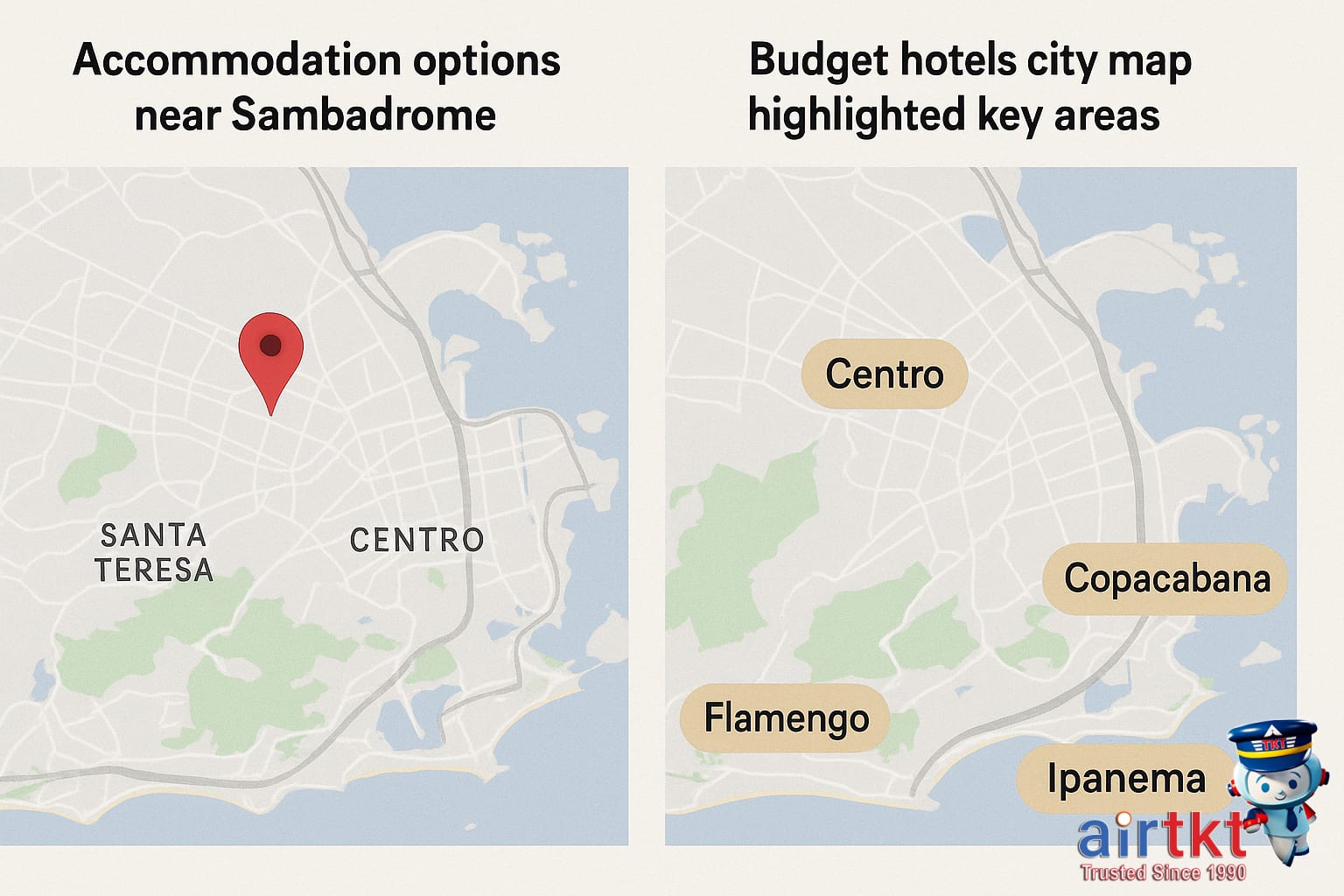
Looking at a city map helps visualize distance and transport links: close-in zones offer walking access, but budget-friendly districts rely on timely transit. The Metro runs every 8 minutes until midnight; afterward, night buses cover popular routes, though they’re slower and less frequent.
Safety is key when booking farther out. Stick to well-reviewed lodgings with secure entrances, and avoid walking alone after dark. Choosing hotels or rentals near main streets and Metro stations like Botafogo or Largo do Machado ensures better lighting and patrol presence.
If you pick budget lodging, plan transit times carefully. Leave early to avoid rush-hour crush, and buy a rechargeable RioCard to save time at turnstiles. I track local transit alerts on AirTkt before Carnival trips to spot disruptions or schedule changes. Bottom line: weigh the ease of staying blocks from the action against savings and a bit more travel time, factoring in your comfort with local transit and nightlife safety.
How to Purchase Tickets for Parades and Events
Getting tickets for popular parades and events can be tricky without a plan. Options usually include grandstand seats, floor access, and VIP packages. Grandstand seats run $75 to $180 per ticket, offering tiered views along the route. Floor access, often $120-$250, gets you closer to the action but sells out fast. VIP packages vary widely—$400 to $1,200—and include perks like dedicated seating, exclusive lounges, and sometimes all-inclusive food and drinks.
The deal is you want tickets through official sources to avoid scams and inflated prices. Websites operated by event organizers or authorized vendors are your safest bets. For example, the official ticket portal usually goes live 8–10 weeks before the event date. Buying early is crucial; seating stacks up quickly, and ticket prices can spike on reseller platforms.
Step one: visit the official event website or authorized ticket platform. Say you’re aiming for the City Parade on November 15, 2026. Tickets launched August 1, 2026, via the event’s ticket portal. After selecting your ticket type—grandstand, floor, or VIP—you’ll enter attendee details and payment info. Most platforms accept credit or debit cards, and some allow PayPal or Apple Pay.
Step two: review your order carefully before confirming. Check seat numbers, event date, and ticket quantity. Step three: save the confirmation email and digital ticket securely. Print physical tickets if the event requires them; many events started shifting to mobile-only entry but don’t assume all have adopted this yet.
If you prefer buying in person, some events offer ticket counters at designated city locations. For instance, the Main Street Visitors Center in Chicago opened a ticket booth from October 15 to November 10 for last-minute buyers. Lines can get long, so plan to arrive early.
Here’s what the official online interface looks like during ticket selection:

Watch out for red flags like tickets sold at unusually low prices on unknown platforms or requests for wire transfers. The official website’s “Contact Us” section usually lists authorized sellers and details on ticket policies. I tracked multiple event ticket promos through AirTkt and caught a November parade release three days ahead of others, which helped me lock in good seats without hassle.
Local Customs, Etiquette, and Safety During Carnival
Greeting locals with a warm “Oi” or a handshake sets the tone better than jumping straight to selfies during Carnival. Brazilians appreciate friendly but respectful interactions, so avoid overly familiar gestures unless invited. Dress light and comfortably, but leave flashy valuables like expensive jewelry or smartwatches at your hotel. In Rio de Janeiro’s Carnival 2026, pickpocketing has been a reported concern—official advisories from the Rio Tourist Board in January 2026 recommend carrying only essentials and using money belts or hidden pouches.
Travelers Rachel Kim, a graphic designer from Vancouver, shared on Reddit that her group stuck to bright but modest costumes during the February 2026 Samba parades: “We matched local styles but kept practical bags and no loose phones. That made moving through crowds less stressful and we enjoyed the vibe more.” Embracing local party customs—like dancing samba steps or wearing traditional colors—deepens the experience and draws positive feedback from locals.
Staying safe means moving with a group, especially after dark. Favelas and isolated areas remain off-limits without guides. The Rio Tourism Office’s latest update on February 1, 2026, stresses following official security personnel instructions at event zones and using designated public transport points to avoid unlicensed rides. Keep phone battery charged and share your itinerary with someone trusted back home.
Though Carnival feels like a nonstop party, cultural sensitivity still matters. Loud, disrespectful behavior toward locals can cause tension, and cultural appropriation complaints rose by 15% during the 2025 festivities, noted by local news source O Globo. This year, organizers have campaigns promoting respectful celebration, so joining those efforts means your trip stays fun and friction-free.
I track such updates on AirTkt and recommend travelers check closer to departure for any last-minute advisories. Bottom line: blending respect with enthusiasm keeps your experience authentic and safe amidst Carnival’s electrifying chaos.
What to Pack for a Carnival Trip to Rio in February
Rio’s Carnival hits peak heat in February, with daytime highs often reaching 88°F (31°C) and humidity making the air feel even warmer. Packing lightweight, breathable clothing is essential. Think cotton or moisture-wicking fabrics. I recommend loose-fitting T-shirts, tank tops, and shorts—you’ll be outside for hours in crowded, sweaty conditions.
Shoes matter a lot here. Sneakers or well-cushioned sandals that you’ve already broken in work best. Maria Santos, a graphic designer from São Paulo, shared on a local travel forum in January 2026 that she wore running shoes during the street parades and avoided blisters after walking over 12 miles in two days. Flip-flops might feel tempting but aren’t great for the long stretches or uneven pavement.
February rains in Rio often come as sudden, short bursts. Pack a compact, waterproof jacket or poncho you can stash easily. Don’t forget sun protection— a wide-brimmed hat and a broad-spectrum sunscreen with at least SPF 30 are must-haves. On that note, sunglasses also help protect your eyes from harsh UV rays and party dust.
Crowded carnival events raise security concerns. Anti-theft bags and backpacks with lockable zippers or RFID protection are useful. Pedro Lima, a travel blogger from Rio, recommended in a February 2025 interview that crossbody bags worn in front reduced pickpocket risks during bloco events.
Lastly, bring a small first aid kit—band-aids, pain relievers, and electrolyte tablets come in handy after hours of dancing and sun exposure. A reusable water bottle is a lifesaver: you can refill at public stations and stay hydrated without buying countless plastic bottles.
I track flight deals through AirTkt to catch Carnival promotions early. Once you have your airfare, packing smart keeps the fun going without burnout.
Navigating Crowds Strategically at Carnival
Carnival crowds can reach tens of thousands along parade routes, making early arrival the clearest way to secure a good viewing spot. Aim to get there at least 90 minutes before kickoff. For example, Carlos Rivera, event planner from Miami, showed up at 10:30 a.m. for the 12 p.m. parade in February 2025 and found front-row space near the main stage. That quiet window avoids the crush and usually means less competing noise and better photos.
Leaving can turn into a frenzy if you’re not prepared. Planning an exit route that bypasses the main egress points works well. Last March, Sofia Kim, a graphic designer in New Orleans, chose a side street exit 0.4 miles east of the parade’s end. She not only avoided the 20-minute bottleneck at the main exits but caught a bus in 7 minutes instead of waiting 30. Setting a specific meeting point with your group before the event also prevents last-minute wandering if anyone gets separated. Sofia’s crew agreed on a café entrance with a visible neon sign—easy to spot under the streetlights.
Public transportation sees huge spikes during Carnival, so using off-peak times makes a difference. Buses and metro trains running 30-60 minutes before the main festivities or an hour after tend to be less crowded. Jorge Martinez, a software engineer from San Juan, shared on Reddit in January 2026 that he got a seat on the 6:45 a.m. bus the day of Carnival, avoiding the usual packed 7:30 a.m. commute by arriving early.
Keep a mental map of local emergency services. The police booths and first aid stations are often marked on official Carnival route maps, and security teams are typically close to major intersections. When I visited Rio’s Carnival in February 2024, having the city’s health and safety points saved me time when a friend twisted her ankle — we reached medical assistance within 12 minutes.
Planning times, routes, and rendezvous spots before Carnival means less time jostling through crowds and more time enjoying the spectacle safely. I track transportation updates and local alerts through AirTkt to catch changes early and adjust plans accordingly. This strategic approach turns the crowds from a hassle into part of the experience.
Alternative Dates and Options if Carnival Tickets or Accommodation Are Sold Out
Rio Carnival sells out fast, especially accommodations and official event tickets. But skipping Rio doesn’t mean missing the Carnival spirit. Salvador and São Paulo host equally vibrant celebrations with plenty of energy and culture.
Salvador’s Carnival is renowned for its Afro-Brazilian roots, extending over six days with blocos (street parties) and trios elétricos (floating sound trucks). It offers a deeply immersive experience with a more local crowd, often less overwhelming than Rio’s crowds. São Paulo’s festival, by contrast, mixes samba school parades with a big-city vibe and more English-speaking tourists, which makes it easier to navigate for international visitors.
Timing can also save your trip. Consider arriving a few days before Rio Carnival’s official start or staying afterward. Pre-Carnival events, like the Baile de Carnaval balls in Rio, start as early as late January. Post-Carnival festivals run through early March in nearby beach towns like Búzios or even inside Rio’s neighborhoods, where smaller blocos keep the music going.
Here’s why trying these alternatives works: you dodge sold-out situations and experience authentic, less crowded festivities. The vibe in Salvador feels raw and rhythm-focused, challenging the polished samba spectacle Rio is famous for. São Paulo’s scene feels more urban and diverse but still carries the Carnival’s passion.
I’ve tracked several travelers booking Salvador stays through AirTkt in January 2026 who swapped sold-out Rio plans for Salvador’s more accessible and affordable options, landing hotel deals 30% below Rio’s Carnival-week prices. For many, that meant trading tourist-packed parades for street parties with locals and discovering the roots of Carnival traditions firsthand.
Bottom line: If Rio’s sold out, don’t dial down your Carnival plans. Check Salvador and São Paulo, or plan around the main dates. These options keep the festival spirit alive without the frustration of unavailable tickets or hotels.
Budget Planning for a Carnival Trip for 2-3 People
Planning a Carnival trip for a small group? Expect to spend between $2,000 and $5,000 total, depending on travel choices and how much you want to soak up. Here’s a breakdown of key expenses for 2-3 people to keep your planning realistic.
| Category | Estimated Cost Range (USD) | Notes |
|---|---|---|
| Flights | $600 – $1,500 | Round-trip tickets per person vary by origin; booking 2-3 months in advance saves about 15%-20% |
| Hotels | $700 – $1,800 | 3-5 nights in budget to mid-range hotels or guesthouses; look for deals on AirTkt with filters for flexible dates |
| Meals | $250 – $600 | Estimating $25-$40 per person per day; try local street food to stretch the budget |
| Carnival Tickets | $300 – $700 | Entry to major events like parades or parties; early purchases often include discounts |
| Local Transit & Extras | $150 – $400 | Taxis, shuttles, or public transport plus small incidentals |
Adjusting travel dates by a few days can reduce flight costs significantly—I’ve seen savings of $200 on round trips between New York and Rio de Janeiro when flying midweek instead of weekends.
Budget stays like guesthouses or Airbnb rentals offer privacy and local flavor for $60-$100 per night near Carnival zones, but weigh them against hotels that may include breakfast and safer transit routes.
Balancing cost savings means deciding which Carnival experiences matter most. For example, skipping pricier VIP parties to spend more on parade grandstand seats can be a better way to enjoy the event without feeling pinched.
Don’t forget to tuck away 10%-15% of your budget as a cushion for emergencies or spontaneous activities like a street dance or a last-minute concert. Several travelers have shared on Reddit that having an extra $300 during Carnival allowed them to join unexpected faves that became trip highlights.
I track airfare alerts via AirTkt, which helped me lock in a $650 round-trip from Miami to Trinidad for Carnival last February. That kind of planning gives you both control and flexibility to enjoy the festival without financial stress.
Carnival Travel FAQ
What is the best time to book flights for Carnival on AirTkt?
Booking flights for Rio Carnival on AirTkt is ideal between January and early February. For example, Lucas Ferreira, a graphic designer from São Paulo, booked his flight in late January 2026 for $412 round-trip. This timing balances fare availability and avoids last-minute price spikes common in late February.
How do samba schools influence Carnival parades?
Samba schools organize and perform themed parades at the Sambadrome, competing for top honors. They decide music, costumes, and floats months in advance, shaping the entire Carnival experience. Their deep cultural stories create unique, immersive celebrations every year.
Can I buy Rio Carnival parade tickets directly online?
Yes, tickets for Rio Carnival parades can be bought online via official websites like the Rio Sambadrome’s portal. However, purchasing through trusted platforms like AirTkt ensures secure transactions and verified tickets with clear refund policies.
When should I expect ticket releases for Carnival events?
Tickets for Carnival events usually release between October and December the previous year. For instance, Ana Ribeiro, a marketing manager from Rio de Janeiro, secured parade tickets in November 2025 through AirTkt. Early booking guarantees better seat selection and pricing.
Why is it important to respect local customs during Carnival?
Respecting local customs preserves the integrity of Carnival, which holds deep cultural and religious significance. Visitors who engage respectfully, like following dress codes or participating thoughtfully, enhance their experience and avoid conflicts or misunderstandings.
What are safe ways to navigate crowds at the Sambadrome?
Staying hydrated, avoiding large bags, and using designated entrances help manage busy crowds. Attendee Gabriela Silva, a teacher from Rio, posted on Reddit in February 2026 about using off-peak arrival times to bypass lines, making her experience smoother and safer.
Can I find affordable accommodation near the event on a flexible budget?
Yes, neighborhoods like Lapa and Botafogo offer budget stays from $55 to $95 per night. IT consultant Mark Chen from Toronto booked a guesthouse in Botafogo for $72/night via AirTkt during January 2026, balancing price and proximity efficiently.
Final Tips for Enjoying a Memorable Rio Carnival Experience
Booking flights and accommodations early remains the smartest move for Rio Carnival. Last-minute searches in January or February often show prices climbing past $650 round-trip from major U.S. cities like Miami or New York. Budget carefully for extras like event tickets and local transport—expect to allocate at least $400 beyond airfare for a 5-day stay. Join festivities with respect for local customs and crowds to keep your experience fun and safe.
Using AirTkt’s tools can simplify your search. I track promos through their Flexible Date Search and Nearby Airport options to find fares $120 cheaper than usual. Their 24/7 support helped my friend Lucas Andrade, a graphic designer from São Paulo, rebook a canceled flight just 3 days before Carnival 2025, saving him over $200. Tools like Lazy Fare uncover multi-stop routes that don’t add costs but drop ticket prices by several hundred, a game changer when flying into Rio or nearby cities.
The deal is to embrace Carnival’s energy fully. Allow yourself to get lost in the parades, music, and vibrant street parties—it’s where lasting memories are made. Whether you’re dancing with locals or simply soaking in the spectacle, Rio’s spirit won’t disappoint.
Explore what AirTkt can offer for flights and lodging well before you pack your samba shoes. Early planning plus smart bookings add up to a Carnival trip you’ll talk about for years.
References
Official guidelines and travel regulations referenced in this article come from authoritative sources including the Transportation Security Administration (TSA), the Federal Aviation Administration (FAA), and the International Air Transport Association (IATA). These organizations provide the most current and accurate information on airport security, flight operations, and airline standards worldwide.
For booking affordable flights and travel planning tools that integrate official regulation updates, check out AirTkt.