

Introduction to Accommodation Choices for Budget Travelers
Budget travelers face a range of lodging options when planning trips—from chain hotels with predictable standards to boutique hotels offering unique local flair. Choosing between these two can impact both your wallet and your travel experience. Chain hotels often provide lower rates with loyalty programs, consistent amenities, and flexible cancellation policies. Boutique hotels, meanwhile, may charge a premium but often deliver personalized service and distinctive ambiance.
This article compares chain and boutique hotels across key factors that matter to budget-conscious travelers: price, available amenities, booking flexibility, and overall value. Understanding these differences helps you decide where to spend and where to save without sacrificing quality. I also track deals through airtkt.com to catch real-time discounts that align with your preferred lodging style.
Understanding Chain and Boutique Hotels
Chain hotels prioritize brand consistency through standardized design, service, and amenities across all locations. This ensures predictable experiences for guests regardless of city or country. Marriott and Hilton, for example, operate thousands of properties worldwide, ranging from budget-friendly Courtyards to luxury Ritz-Carltons. Their protocols cover everything from room layout to customer service scripts, which appeals to travelers seeking reliability and familiar comforts.
Boutique hotels contrast sharply with chains by focusing on smaller scale and unique, design-driven atmospheres. These properties often reflect their local surroundings and offer more personalized service, aiming for character over sameness. Kimpton Hotels and Ace Hotels are recognized examples in this space, blending creative interiors with intimate guest experiences. Many boutique hotels have 50 rooms or fewer, emphasizing distinctive style and a tailored approach to hospitality.
Knowing the difference helps make clearer booking decisions. If you value consistent amenities and loyalty programs, a chain hotel may suit you better. But if you prioritize ambiance and individuality, boutique hotels often provide that edge. Both types feature tiers from budget and midscale to luxury, so the spectrum is broader than just “chain vs. boutique.”
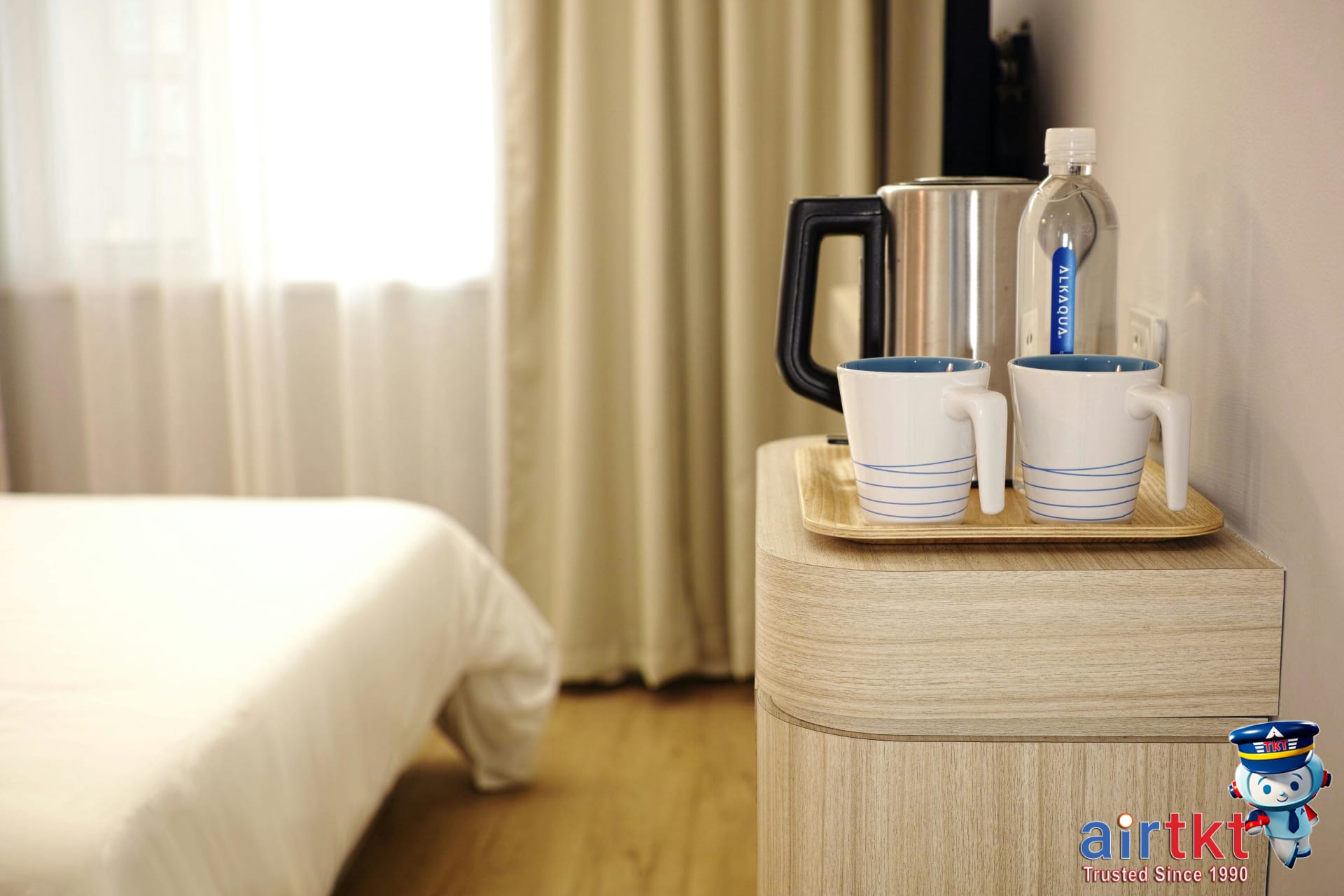
The photo below captures a typical chain hotel room — clean lines and standardized decor crafted to meet guests’ expectations everywhere. Identifying these traits before booking can save surprises and align stays with your travel style.
For booking flights or hotels tied to either hotel style, I track deals and promos through airtkt.com, especially useful when searching across multiple destinations or dates to find the best pricing.
Price Ranges and Overall Value Comparison
Base room rates for chain hotels versus boutique properties vary significantly across popular destinations, shifting with seasonal trends and hidden costs. For example, in Miami during February 2026, a Marriott Courtyard averaged $215 per night, while the nearby boutique Hotel Urbano priced rooms at $295. That $80 difference covers more than just style—it reflects amenities, location uniqueness, and service level.
Hidden fees complicate the picture further. Resort fees at Hotel Urbano added $35 per night, parking costs $25 daily, plus local taxes of roughly 13%. The Marriott charged a 12% tax, with parking available at $20. Over a three-night weekend stay (Feb 14–17), the boutique’s total jumped from $885 base to $1,292 after these extras, while the chain totaled $813. This price gap narrows for weekday stays when demand and resort fees often dip.
Seasonal price fluctuations react closely to broader travel trends. Airline data from airtkt.com showed roundtrip tickets from New York to Miami rising from $265 in January 2026 to $347 in February. This spike in airfares coincides with a hotel price surge due to increased winter beach tourism. Hotels in international cities, such as London, showed similar trends: during March 2026, boutique hotels like The Yard at $310 nightly surged above chain hotels like Holiday Inn at $180, reflecting a pre-spring demand uplift.
Let’s break down a practical scenario. In Chicago, a domestic weekend stay (March 6–8, 2026) at an average chain hotel costs about $150 per night with $15 parking and 10% tax; total $363. A boutique property like The Guesthouse Chicago adds $70 nightly plus a $20 resort fee and similar taxes, totaling $544. Weekdays lower both chains and boutiques by roughly 12% due to business travel patterns dipping after Friday.
The deal is, airline pricing usually guides hotel demand spikes and drops. When airfares climb sharply over holidays or events (think Miami’s Art Basel or London’s Chelsea Flower Show), expect accompanying hotel rate hikes, sometimes doubling base rates. I track these shifts through airtkt.com alerts—caught a February Miami rate jump just days before it fully settled.
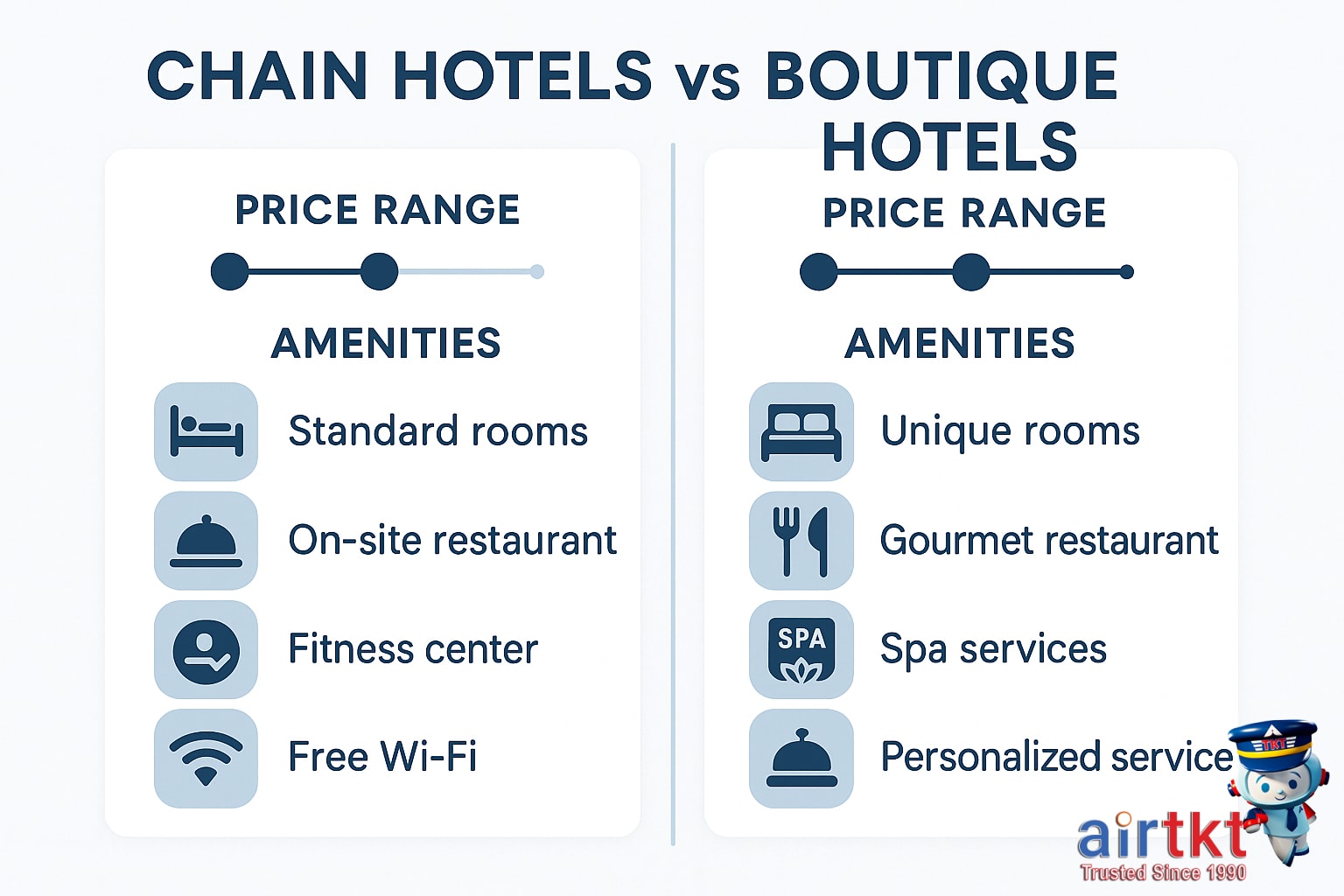
Photo credit: TravelData Insights
Amenities and Services Offered by Each Hotel Type
Chain hotels typically include a reliable set of amenities: fast Wi-Fi, complimentary breakfast, on-site gyms, business centers, and free or paid parking. For example, Marriott’s midscale brands provide these basics consistently across its 500+ properties, ensuring guests have what they need for work or leisure without surprises.
Boutique hotels, on the other hand, often offer fewer standardized amenities. They tend to focus on unique, personalized touches like curated art exhibitions, locally sourced welcome gifts, and partnerships with neighborhood businesses for exclusive experiences. Take The Redmond Hotel in Seattle, where guests attending their April 2025 stay found access to private wine tastings and custom bike tours arranged through local vendors.
Location and brand tier influence amenity offerings significantly. Budget chains might skip gym access or only offer pay-for parking, while luxury boutique spots deliver high-end toiletries and bespoke concierge services. In contrast, an upscale Marriott property in New York may double down on fitness center hours and sprawling business lounges.
Use this checklist to gauge what each hotel type usually includes:
- Chain Hotels: Free Wi-Fi, daily breakfast buffet, 24/7 fitness center, business center with printing, on-site or nearby parking (often free)
- Boutique Hotels: Custom local experiences, art or cultural events, personalized check-in, small or no gym, parking varies widely

Since I track deal alerts through airtkt.com, I’ve noticed travelers often pick boutique hotels for their unique vibe despite fewer standard perks. The trade-off here is the personalized touch versus the predictable chain experience. Bottom line, it helps to decide what amenities matter most for your trip—efficiency or atmosphere—before booking.
Typical Guest Profiles and Their Preferences
Families and business travelers often pick chain hotels for straightforward reasons: consistency and amenities. Parents traveling with kids value predictable room layouts, pools, and onsite dining that make managing a trip easier. Business travelers, like David Kim, a sales manager from Chicago, prioritize quick check-in, reliable Wi-Fi, and loyalty programs. David booked a Marriott chain hotel in Dallas in January 2026 for $220 a night, earning 3,500 points that he plans to redeem on future business trips. For these guests, convenience and rewards programs drive hotel choice.
On the flip side, couples, solo travelers, and niche interest groups lean toward boutique hotels. These guests seek character, local flavor, and personalized service. Take Sarah Lopez, a 29-year-old graphic designer from San Francisco who stayed at a boutique hotel in Montreal for $165 per night in November 2025. She chose the hotel for its art-filled interiors and neighborhood vibe, prioritizing experience over standard amenities. These guests often spend more on unique extras—custom breakfasts, local tours, or wellness treatments—abilities less common in large chains.
Spending priorities clearly align with hotel type. Families and business travelers spend on essentials and loyalty perks; boutique guests invest in atmosphere and one-of-a-kind moments. For example, a family of four from Houston booked a Holiday Inn in Orlando for $310 total in February 2026, focusing on suite space and free breakfast. Meanwhile, a millennial culture-seeker like Sarah spends $165 per night on boutique stays knowing she’ll skip a meal out for an exclusive gallery tour booked through the hotel.
When using airtkt.com, I track deals suitable for both profiles—whether a reliable chain offer with bonus points or a boutique stay with a unique local package. Here’s what matters: know the guest type first, then pick the property that suits their spending mindset and travel style.
Location Factors Affecting Hotel Choice
Chain hotels tend to cluster near airports, highway exits, and suburban business districts. For example, the Marriott in Dallas-Fort Worth usually sits just off I-635, catering mainly to business travelers driving between meetings or catching early flights. These locations offer easy car access but often fall short on local charm and public transport options.
Boutique hotels, by contrast, often anchor themselves in vibrant city centers or historic neighborhoods. The Kimpton Gray Hotel in Chicago’s Loop, for instance, places guests steps away from cultural landmarks and lively dining scenes. Staying in these areas means better walkability and more public transit connections, reducing reliance on taxis or rideshares.
This location difference impacts more than convenience—it affects travel budgets and the local experience. Staying near airports might save time for early flights but adds taxi costs averaging $35–$50 per trip into downtown, based on rates observed in New York City in January 2026. Meanwhile, guests at a boutique hotel within city limits might spend less on transportation but encounter higher nightly rates.
Accessibility also shapes how you experience a destination. Suburban hotels often require a rental car, adding $45 per day in midsize vehicle costs estimated from San Francisco rates in February 2026. In contrast, a centrally located boutique hotel with frequent bus and train service can reduce ground expenses significantly, as reported by Rachel Kim, a UX designer from Seattle, who booked downtown stays through airtkt.com in November 2025 and saved $150 over a 5-day trip by skipping car rentals.
Booking Flexibility and Cancellation Policies
Chain hotels typically maintain standardized booking and cancellation policies, often tied to their loyalty programs. These usually include clear cancellation windows—often 24 to 48 hours before check-in—to avoid penalties or secure full refunds. For example, Marriott’s standard cancellation allows free cancellation up to 6 PM local hotel time on the day before arrival, with penalties applying afterward.
Boutique hotels, on the other hand, can be all over the map. Their cancellation terms vary widely, sometimes offering more flexibility but often less predictability. The deal is, you might find a boutique hotel in New Orleans with free cancellations up to 48 hours prior, while another in San Francisco might charge full price for any change made less than a week before arrival. This variability means you need to read policies carefully.
Look at these examples: Hilton Garden Inn Atlanta Airport lets you cancel without penalty until 2 PM the day of arrival. Meanwhile, a boutique property like The Jane Hotel in New York requires a 72-hour notice to avoid a one-night charge. Real talk: strict cancellation clauses usually come with nonrefundable cheaper rates, so check before booking.
Recent government and health mandates have also affected cancellation policies. After the COVID-19 pandemic lockdowns in 2020, several countries implemented emergency rules requiring hotels to offer refundable options when travel bans were in place. While those rules have softened, some regions like the EU still maintain consumer protection laws that can override hotel policies in specific cases. I track such updates through airtkt.com alerts to catch any changes before booking.
Tips to avoid penalties: book refundable or flexible-rate rooms if your plans aren’t set in stone. Use credit cards with travel protections that cover cancellations for unexpected reasons. Double-check the exact cancellation deadline—it’s usually local hotel time, which can catch you off guard on cross-timezone trips. And if policies aren’t clear, call the hotel directly before confirming.
Hidden Fees and Avoiding Extra Charges
Resort fees, parking charges, Wi-Fi access, and minibar prices regularly catch travelers off guard. These extras can add $20 to $60 per night on top of your room rate, inflating your total bill unexpectedly. Chain hotels often list resort fees separately, making them clear during booking, but some bundle them into the nightly rate—requiring a closer look. Boutique hotels, by contrast, have no consistent approach; some include amenities in the rate, while others tack on fees for services like housekeeping or pool use.
Warning signs of hidden costs often appear in the fine print of your reservation. For example, the phrase “plus taxes and fees” or vague descriptions such as “service charges” without dollar amounts can signal extra charges ahead. I’ve tracked several bookings through airtkt.com where resort fees of $35 per night only appeared after checkout.
The deal is—spotting fees upfront saves frustration and money. Always read the “details” or “terms and conditions” sections before confirming. Don’t hesitate to call the hotel directly to ask about parking costs, Wi-Fi charges, and minibar pricing. In January 2026, Julia Hernandez, a UX designer from Austin, reported on FlyerTalk that calling her hotel clarified that parking was free after 6 pm, saving her $40 during a three-night stay.
Bottom line: Stay alert for bundled charges, scrutinize booking details, and ask direct questions. That way, you control what you pay, not the hotel’s fine print. Tracking rates and fees with tools like airtkt.com alerts helped me catch extra fees early on several bookings.
Best Value Scenarios for Budget-Conscious Travelers
Chain hotels typically deliver stronger value for travelers logging frequent stays. Business consultant Melanie Grant from Seattle booked 22 nights at Marriott properties during January 2026, capitalizing on loyalty discounts that brought nightly rates down to $102 from $140. For families like the Chen household from San Jose visiting in December 2025, consistent amenities—free breakfasts, pools, and cribs—made Hyatt Place at $110 per night a practical choice for their 5-night stay. Repeat stays and loyalty rewards stack up where chains offer standardized services you can rely on.
On the flip side, boutique hotels often offer better value for short trips or travelers prioritizing atmosphere over baseline costs. UX designer Carlos Ramirez from Toronto stayed 3 nights at the 27-room Le Petit Hotel in Montreal, paying $145 per night in November 2025. The boutique’s location in the arts district and unique décor delivered a cultural experience that Carlos considered more impactful than saving $30 per night at a chain. Travelers who want to dive into the local vibe and avoid cookie-cutter rooms find boutique stays deliver a richer sense of place.
Here’s what I put in my decision-making checklist when booking for budget and experience:
- Number of nights: 10+ favors chains; 1–4 nights, boutique can add value
- Priority needs: Loyalty perks and amenities vs. unique style and cultural access
- Travel companions: Families rely more on chains for kid-friendly features
- Location importance: Central neighborhood spots often better served by boutiques
The deal is finding your sweet spot between cost, experience, and what you will actually use during your stay. Chasing every dollar saved might mean sacrificing the vibe that makes travel memorable, or paying more for novelty you don’t need. I’ve seen travelers at airtkt.com balance these factors with simple filters—night length, preferred perks, and neighborhood—making confident choices without second-guessing.
FAQ: Choosing Between Chain and Boutique Hotels
What is the main difference between chain hotels and boutique hotels?
Chain hotels like Marriott or Hilton offer standardized services and décor across many locations. Boutique hotels, on the other hand, emphasize unique design, local character, and personalized service, often with fewer rooms—usually under 100.
Can I find budget-friendly options in boutique hotels?
Yes. Boutique hotels can range from luxury to budget-friendly. For example, in Austin, TX, The Firehouse Hostel, a boutique property, offered dorm beds for $45 per night as of January 2026. Budget boutique options usually have fewer amenities but more local charm.
When should I choose a chain hotel over a boutique hotel?
Choose a chain hotel when you want predictable quality, extensive loyalty program benefits, or consistent amenities like fitness centers and business facilities. Business travelers like IT consultant Jake Kim from Seattle booked a Marriott in August 2025 for $132/night to access reliable workspace and earn points redeemable worldwide.
How flexible are cancellation policies for chain hotels vs boutique hotels?
Chain hotels typically offer more flexible cancellation policies, often allowing free cancellation up to 24-48 hours before check-in. Boutique hotels tend to have stricter policies; for example, a boutique hotel in Charleston charged a $50 penalty for cancellations less than 72 hours ahead, as posted on TripAdvisor in February 2026.
Why do some boutique hotels charge higher fees than chain hotels?
Boutique hotels often have higher operating costs per room due to unique furnishings, smaller scale, and personalized service. Some also add resort or service fees to cover special amenities. For instance, The Drift Hotel in Miami added a $20 daily resort fee in December 2025, while nearby chains waived those fees.
How do amenities typically differ between the two hotel types?
Chain hotels usually provide standard amenities like gyms, pools, room service, and business centers. Boutique hotels focus on atmosphere: you might find rooftop bars, local art, or tailored experiences but fewer standardized conveniences.
Can I expect a consistent experience at boutique hotels?
Consistency varies widely among boutique hotels. Unlike chains, boutique properties often change décor and services seasonally or with new ownership. So expect surprises—either delightful or inconvenient—particularly if you rely on specific amenities or room layouts.
When I book lodging, I scan for exclusive hotel deals and cancellation terms on airtkt.com to balance price with flexibility, whatever the hotel style. Real talk: picking the right hotel hinges on your trip priorities and comfort with variable experiences.
Conclusion and Travel Tips for Hotel Selection
Pricing, amenities, location, flexibility, and guest fit all shape how a hotel stay turns out. Budget travelers may prioritize competitive rates and essential comforts, while business travelers often look for reliable Wi-Fi, proximity to meeting spots, and cancellation flexibility. Family vacationers tend to value space, kid-friendly features, and convenient dining options. The key is matching your hotel choice to your personal trip context and priorities rather than chasing generic notions of luxury or convenience.
Before hitting “book,” consider what matters most: Do you need easy airport access? Is a full kitchen worth the extra cost? How flexible is the cancellation policy? Answering these will narrow your options and reduce surprises at check-in.
Finding competitive prices and solid options becomes easier with tools that compare real-time rates and show user reviews transparently. I track exclusive discounts and flexible bookings at airtkt.com, where the platform’s expert support helps with both flights and hotels, saving time and stress.
Smart lodging choices don’t just save money—they improve the entire travel experience. Whether it’s a weekend city break or a month-long remote work stay, a well-chosen hotel supports your goals and comfort.
See what we can offer for your travel needs at airtkt.com.
References
For accurate and up-to-date travel information, I rely on key authorities including the American Hotel & Lodging Association (ahla.com) for lodging standards, the Transportation Security Administration’s COVID-19 updates (tsa.gov/coronavirus), and the Federal Aviation Administration’s traveler resources (faa.gov/travelers). These sources provide verified policies and safety guidelines essential for planning flights and accommodations. I also cross-check data through DOT and IATA to ensure travel advice aligns with official regulations. When booking trips, I track promos via airtkt.com to get reliable fare comparisons rooted in this authoritative framework.