

Introduction to Opaque Hotel Bookings
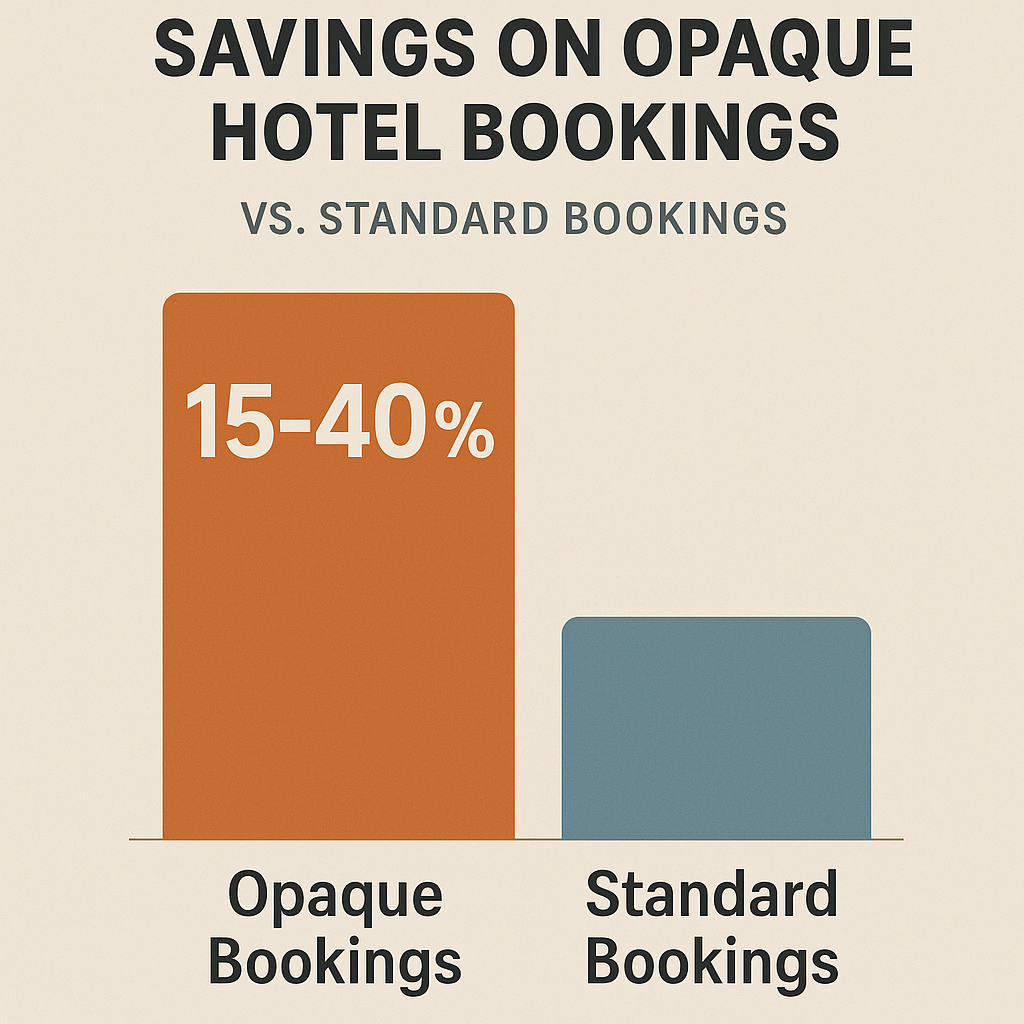
Opaque hotel bookings are a unique and increasingly popular way for travelers to score significant savings on accommodations. Unlike traditional hotel reservations where the property name and exact details are fully visible upfront, opaque bookings keep the hotel’s identity hidden until after the purchase is complete. This “blind booking” model offers considerable discounts—typically ranging between 15% and 40% off standard published rates. But why do such savings exist, and how can travelers take advantage of them?
Hotels offer opaque deals primarily to fill unsold inventory without publicly advertising lower prices that might undercut their brand or established pricing structure. Since the hotel details are revealed only post-booking, the hotel can attract price-sensitive customers without affecting its reputation or regular clientele. For budget-conscious travelers willing to accept some uncertainty, this trading off of information for cost savings is a worthwhile exchange.
Major online travel platforms have embraced this model by incorporating specialized sections dedicated to opaque hotel deals. Platforms like AirTtkt, Hotwire, Priceline, and Trip.com facilitate opaque bookings by aggregating hundreds of hotels that participate in these opaque programs. They provide a simple interface where users can filter options by star rating, location neighborhood, amenities, and guest reviews, all while the exact hotel name remains confidential until after payment.
These platforms also highlight the value of opaque bookings by prominently displaying discounted rates alongside traditional listings for comparison. For example, hotels available through opaque deals often appear with clear indicators such as “up to 40% off.” This transparency confirms the significant savings to be gained compared to booking directly or through fully transparent channels. The convenience of accessing opaque deals through trusted platforms like AirTtkt ensures travelers can confidently explore these offers while enjoying customer support and secure payment processes.
In summary, opaque hotel bookings provide a compelling option for travelers who are looking to stretch their accommodation budget without sacrificing quality. By embracing the unknown and booking through reputable platforms like AirTtkt, savvy travelers gain access to significant discounts that can transform their travel experience. Understanding how and where to find these deals is the first step toward maximizing savings on hotel stays.
Step-by-Step Booking Process for Opaque Hotels
Opaque hotel bookings offer an intriguing way to secure discounted stays by revealing the exact hotel only after purchase. While this unique system can seem confusing at first, understanding the booking flow and how to navigate trusted platforms can unlock significant savings. Below is a comprehensive guide to help you confidently book opaque hotel deals through popular sites like Hotwire, Priceline, and Trip.com.
1. Searching for Opaque Deals
Opaque hotel platforms begin by prompting you to enter your travel dates, destination, and preferences like star rating or neighborhood. Instead of listing specific hotels, these sites display a selection of deals with general details: approximate location, amenities, star level, and price. For example, Hotwire’s “Hot Rates” and Priceline’s “Express Deals” operate on this model, showing you discounted offers without brand names upfront.
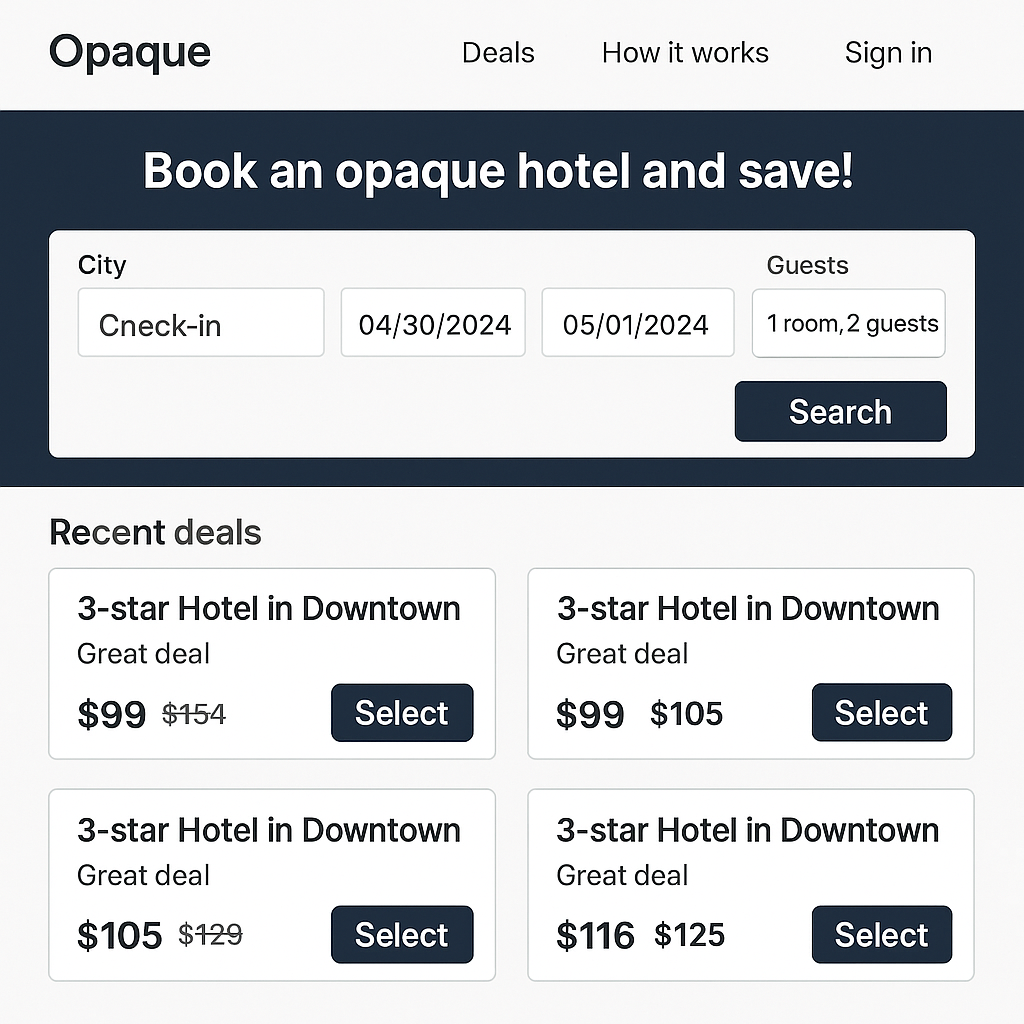
This interface keeps your options open while maintaining the mystery of the hotel identity until payment is complete. Typical details you’ll see include the hotel’s star rating, guest review scores, general neighborhood, and cancellation policies—but brand names and exact property addresses are hidden to ensure price confidentiality.
2. Choosing the Right Deal and Making the Purchase
Once you’ve reviewed the available opaque options, you select a deal that fits your needs and budget. This selection is usually final, as opaque bookings are typically non-refundable or non-changeable due to the deep discounts involved. The platform will require your payment details to confirm the reservation. After purchase, you receive a confirmation email, which reveals the hotel’s name, exact location, and booking details.
For instance, Priceline provides a detailed post-booking itinerary that helps you prepare for your stay while maintaining the integrity of their pricing strategy. By locking the hotel identity until payment, these platforms prevent hoteliers from undercutting their public prices, preserving the value of opaque deals.
3. Why Do Hotels Hide Their Identity Until After Booking?
The primary reason hotel brands and specific property information remain hidden until after payment is to protect pricing structures and room inventory. Hotels often dislike advertising their lowest-price rooms publicly to avoid devaluing their brand and affecting direct bookings or loyalty programs.
Opaque bookings let hotels fill rooms that might otherwise go unsold by offering steep discounts without tarnishing their standard rates. This system is a win-win for travelers seeking bargains and for hotels wanting to maintain rate parity and brand integrity.
4. Tips for Choosing Reputable Opaque Booking Platforms
- Check for Secure, Verified Websites: Make sure the site uses HTTPS encryption and has clear contact information. Trusted platforms like AirTtkt, Hotwire, Priceline, and Trip.com have solid reputations.
- Read Reviews and User Feedback: Look for recent customer testimonials about opaque bookings, focusing on reliability and accuracy of hotel reveal.
- Understand the Terms: Confirm cancellation policies and whether you can see approximate hotel locations before purchasing.
- Avoid Unrealistically Low Prices: If an offer seems too good to be true, it may signal a scam or poor-quality property.
5. Common Pitfalls to Avoid
Be wary of third-party sites that aren’t widely recognized or lack transparent customer service. Always confirm the booking platform’s refund policies for opaque reservations, as many are non-refundable. Additionally, avoid sharing sensitive payment information on unverified sites. Using a trusted platform like AirTtkt ensures a secure and smooth booking experience.
In summary, booking opaque hotels involves searching for anonymized deals, selecting the best offer within your criteria, completing a non-refundable purchase, and then receiving detailed booking information post-payment. By sticking with reputable platforms and understanding the booking mechanics, you can confidently take advantage of excellent discounted hotel rates for your next trip.
Timing Strategies and When to Book Opaque Deals
Understanding when to book opaque hotel deals can significantly impact the price you pay, allowing you to stretch your travel budget further. Prices fluctuate due to seasonal trends, day-of-week effects, booking windows, and current market conditions. By mastering the timing, budget travelers can unlock the best savings available on platforms like AirTtkt.
Seasonal Influences: Shoulder Seasons vs. Peak Travel Periods
Seasonality plays a crucial role in hotel pricing. Peak travel seasons—such as summer holidays, major festivals, and school vacation periods—tend to push prices higher due to increased demand. Conversely, shoulder seasons, which are the periods just before and after peak times, often deliver better rates. During these times, weather can remain pleasant but hotels reduce prices to attract guests.
For opaque deals, booking during shoulder seasons can provide exceptional value. Hotels have unsold inventory and offer steep discounts through opaque channels to avoid publicly lowering their rates. Additionally, traveling during shoulder season can mean fewer crowds and a more relaxed experience, making it a win-win for budget-conscious travelers.
Day-of-Week Effects and Last-Minute Booking Opportunities
Day-of-week fluctuations also influence hotel prices. Weekends and Fridays typically see higher rates in leisure destinations, while midweek stays—Tuesday through Thursday—can be significantly cheaper. For business-heavy markets, the inverse often applies, with weekends offering lower rates. Understanding your destination’s demand pattern is key to timing your opaque bookings.
Opaque deals are also well-known for rewarding last-minute bookers. Hotels prefer to fill rooms close to the stay date rather than face empties, prompting discounted rates in the final days prior to arrival. However, this approach requires flexibility and a willingness to take some risk on location or amenities. For travelers able to wait until a few days before travel, last-minute opaque bookings can secure excellent discounts.
Industry Trends and Data on Opaque Booking Timing
Recent studies highlight that the sweet spot for opaque hotel booking discounts often falls between 7 to 14 days before check-in, blending moderate advance planning with the hotel’s urge to fill unsold rooms. Booking too far ahead may miss out on last-minute markdowns, while booking too late risks limited availability. The AirTtkt platform frequently updates fare and hotel deal data to reflect these trends, helping travelers identify optimal booking windows.
Seasonal data suggests that opaque deals tend to be more generous during economic downturns or travel slumps, which can coincide with off-peak seasons or unexpected global events. For instance, mid-week opaque bookings in certain urban markets have recently offered savings up to 40% compared to standard rates, emphasizing the value of watching industry pricing patterns.
Actionable Timing Recommendations for Budget Travelers
- Book during shoulder seasons: Target travel periods just outside peak times to capitalize on steep opaque discounts and lighter crowds.
- Consider midweek stays: If your schedule permits, aim for Tuesday through Thursday nights in leisure destinations for lower opaque prices.
- Use last-minute booking cautiously: Monitor opaque deals 7 to 14 days before your trip for the best balance of price and availability.
- Leverage AirTtkt’s real-time fare monitoring: Utilize platforms with fresh pricing insights to catch fleeting opaque bargains as they appear.
- Stay flexible about exact hotel or location: Opaque deals reveal hotel identities only after booking, so being open to substitutions can unlock greater savings.
By aligning your bookings with these timing strategies, you can maximize value from opaque hotel deals and enjoy cost-effective travel accommodations with confidence and convenience.
Insider Tips from the Hotel Industry on Opaque Bookings
Opaque bookings offer travelers enticing discounts, but their behind-the-scenes mechanics often remain a mystery. From a hotel’s standpoint, these bookings serve a strategic purpose: filling unsold rooms without publicly slashing prices. This approach helps hotels protect brand value while still maximizing revenue. When you book through an opaque channel, you’re essentially buying a product that hotels label as “excess inventory,” allowing them to maintain rate integrity for paying customers booking directly.
Hotels allocate a specific set of rooms to the opaque market, typically those that are less likely to be sold at full price. These are often standard rooms with average views, sometimes located on lower floors or in less desirable sections of the property. However, quality standards never dip below the hotel’s baseline—it’s still the same hotel with all its amenities. Think of it as receiving reliable accommodations at a stealth discount, rather than a downgrade to an inferior property.
After booking an opaque rate, savvy travelers can leverage certain strategies to enhance their stay. One insider tip is to contact the hotel directly once the reservation is confirmed (keeping your reservation number handy). Politely asking about possible upgrades or room preferences can sometimes pay off—especially if the hotel isn’t fully booked or if your stay coincides with quieter periods. While there’s no guarantee of an upgrade, many hotels appreciate proactive communication and may accommodate reasonable requests to ensure guest satisfaction.
Cancellation policies on opaque bookings typically lean toward strictness since these discounted rooms are non-refundable or have tight change windows. However, industry trends have pushed hotels to offer more flexible terms recently, especially in response to traveler concerns and global disruptions. It’s crucial to carefully check cancellation rules before booking, as some opaque rates may now permit limited modifications or partial refunds. Staying informed about these nuances helps avoid unexpected fees.
In summary, opaque bookings represent a win-win scenario: hotels discreetly reduce inventory waste, and travelers access lower prices that aren’t publicly advertised. Understanding the typical room quality, cancellation constraints, and negotiation tactics gives you an edge when using platforms like AirTtkt to secure these deals. With the right approach, you can enjoy excellent accommodations at impressive discounts while navigating policies confidently.
Best Platforms and Tools for Opaque Hotel Bookings
Finding great hotel deals through opaque booking platforms can significantly reduce travel costs, but choosing the right site makes all the difference. The three leading players—Hotwire, Priceline, and Trip.com—each offer distinct advantages and occasional drawbacks for opaque hotel bookings.
Hotwire
Hotwire is often praised for its simplicity and consistent availability of discounted hotel rates. Its “Hot Rates” feature conceals the hotel name until after booking, allowing travelers to access steep discounts. Users appreciate its straightforward interface and transparent review system, which minimizes unpleasant surprise factors.
- Pros: User-friendly, frequent deals on top chain hotels, decent location hints.
- Cons: Limited hotel details pre-booking can make it tricky for some; cancellation policies are generally strict.
Priceline
Priceline’s opaque booking shines with its “Name Your Own Price” and “Express Deals” models. While the “Name Your Own Price” option has been scaled back, the Express Deals still offer excellent bargains by hiding hotel details until after purchase. Priceline provides a variety of filters, helping users narrow options based on star rating, amenities, and approximate location.
- Pros: Comprehensive filtering options, competitive prices, tailored to savvy deal hunters.
- Cons: Less transparency about exact hotel details upfront; riskier for travelers demanding certainty.
Trip.com
Trip.com has expanded globally, offering opaque hotel deals particularly attractive for international travelers. Its platform supports multi-language use and broad hotel selections beyond major US chains, catering well to those exploring Asia and Europe. Trip.com’s mobile app also facilitates on-the-go booking and easy access to alerts.
- Pros: Great for international travelers, app supports real-time updates, extensive hotel variety.
- Cons: Some users report inconsistent deal quality and less detailed reviews compared to Western platforms.
Comparing User Experience, Deal Variety, and Reliability
Overall, Hotwire offers a clean, intuitive user experience ideal for those wanting quick bookings with less fuss. Priceline appeals to traveler types who prefer more control over filtering and are comfortable with some uncertainty regarding hotel identity. Trip.com stands out for globetrotters seeking opaque deals outside North America, enhanced by its multilingual support and app features.
In terms of deal variety, Priceline and Trip.com tend to feature a broader range of hotels, including luxury and mid-tier options globally, while Hotwire focuses heavily on domestic chains and recognizable brands. Reliability is strongest at Hotwire, where customer feedback and rating systems are robust and regularly moderated; Priceline offers a mixed bag depending on the location and timing; Trip.com’s performance can vary but is steadily growing in trust.
Supplementary Tools: Browser Extensions and Mobile Apps
To stay ahead of fluctuating opaque booking prices, travelers can leverage several handy tools. Browser extensions like Honey and InvisibleHand automatically search for deals and apply discounts when checking rates on hotel booking sites.
Mobile apps such as HotelTonight and DealAngel provide dedicated deal alerts for opaque bookings, notifying users when a better rate appears or when new opaque options are available. These apps also allow filtering by needed amenities, travel dates, or loyalty program compatibility—features valuable for frequent or last-minute travelers.
Choosing the Right Platform for Your Travel Needs
Selecting the best opaque booking channel depends on your comfort level with uncertainty and travel priorities. If you want a hassle-free experience with reliable brands and transparent reviews, AirTtkt recommends Hotwire as a strong pick. For budget-conscious travelers comfortable with some risk in exchange for broader choices, Priceline’s filtering tools are invaluable.
If you’re planning international trips or want access to a wider hotel network beyond North America, Trip.com’s platform and app support provide flexibility and helpful localization.
Lastly, supplementing your chosen platform with browser extensions or mobile alert apps can optimize savings and keep you informed of valuable last-minute opaque hotel deals.
Comparing Prices and Real Examples of Opaque vs. Standard Bookings
Understanding the actual savings from opaque bookings compared to traditional reservation methods is crucial for budget-conscious travelers. Let’s dive into real-world case studies that highlight the differences in prices when booking the same hotels through opaque channels versus standard methods.
Case Study: Hotel Booking Price Comparison
Consider a popular 4-star hotel in downtown Chicago—when booked through a standard online travel agency, the typical nightly rate is around $180. However, when booked via an opaque booking platform, prices drop significantly. In our example, the opaque rate was just $120 per night. This represents a savings of over 33%, translating to $60 saved per night.
In a separate instance, the same approach was applied to a beachfront hotel in Miami. Standard bookings offered a rate of $250 per night, whereas the opaque booking cut the cost down to $170 per night, a considerable 32% decrease. These consistent price gaps illustrate how opaque bookings can provide substantial savings on identical accommodations simply by concealing specific details like the hotel name during the initial shopping phase.
Summary Table of Savings
| Hotel | Standard Booking Price (per night) | Opaque Booking Price (per night) | Price Difference | Percentage Savings |
|---|---|---|---|---|
| 4-Star Hotel, Chicago | $180 | $120 | $60 | 33% |
| Beachfront Hotel, Miami | $250 | $170 | $80 | 32% |
| City Center Hotel, New York | $220 | $150 | $70 | 32% |
Factors Influencing Price Differences
Several contextual factors affect the price gaps between opaque and standard bookings:
- Inventory Control: Hotels often allocate excess inventory at a discount to opaque sites to avoid devaluing their brand on public platforms.
- Booking Flexibility: Opaque bookings usually come with stricter cancellation or modification policies, which can justify lower prices.
- Market Demand: During peak travel times, the price difference may shrink as hotels maximize revenue from standard bookings.
- Transparency: Since opaque bookings conceal hotel identity until after purchase, hotels can offer lower prices without directly competing with their own standard rates.
These elements combine to create opportunities for travelers using platforms like AirTtkt to access deeply discounted hotel rates while maintaining booking confidence.
Conclusion: Maximizing Savings and Booking Smart with Opaque Hotels
Opaque hotel bookings offer an enticing opportunity to secure accommodations at significantly reduced rates. By concealing the exact hotel name until after purchase, these bookings leverage unsold inventory to deliver savings that traditional hotel reservations often cannot match. Travelers who embrace this approach can enjoy luxury and boutique hotels for a fraction of the typical cost, making opaque bookings an excellent money-saving strategy for budget-conscious explorers.
However, it’s important to balance excitement with caution. The very nature of opaque bookings means less flexibility and fewer details upfront, which can sometimes lead to surprises. One of the critical aspects to watch closely is the cancellation policy and booking terms. Many opaque deals are non-refundable or have strict cancellation windows, so understanding these conditions before confirming a reservation is essential to avoid unexpected fees or loss of funds.
To maximize your benefits and minimize risks, apply the tips and timing strategies discussed earlier—such as booking during off-peak times, comparing prices across multiple platforms, and paying attention to the star rating and amenities listed. Leveraging trusted and transparent platforms ensures a smoother booking experience.
AirTtkt stands out as a comprehensive resource for travelers searching for affordable flights, hotels, and vacation packages. Its intuitive platform integrates extensive fare comparisons, user-friendly filters, and reliable customer support, empowering you to book with confidence. Whether you’re planning a spontaneous getaway or a meticulously timed trip, AirTtkt can help you unlock the best deals on opaque hotel bookings and beyond.
In summary, opaque hotel bookings combine value and exclusivity, making them a compelling option for savvy travelers. By carefully reviewing cancellation policies, using smart booking tactics, and relying on dependable services like AirTtkt, you can enjoy exceptional savings without sacrificing quality or peace of mind. Remember, the key to successful opaque booking lies in balancing adventurous savings with informed decision-making.