

Introduction to Business vs Leisure Hotels
Choosing between business and leisure hotels is a common travel decision that shapes the overall trip experience and cost. Budget-conscious travelers often weigh the trade-offs: business hotels usually offer convenient locations and business-focused amenities, while leisure hotels prioritize relaxation and recreational features. Understanding these differences helps you spot where quality meets value without overspending.
This article breaks down key factors like nightly rates, amenities, location preferences, typical guest profiles, and booking policies so you can pick the right hotel for your trip—and your wallet. I track deals regularly through airtkt.com, which highlights affordable, reliable lodging options whether you’re traveling for work or downtime. Here’s what matters for making that choice smartly.
Defining Business Hotels and Leisure Hotels
Business hotels typically locate within financial districts or near major convention centers. Their core amenities cater to efficiency: ergonomic workspaces, meeting rooms, fast Wi-Fi, express check-in and check-out. A photo from January 2026 showing a minimalist room with a dedicated workspace captures this well (see image). These hotels attract professionals on trips averaging 2-3 nights focused on productivity—think IT consultants or sales managers visiting cities like Chicago or London.
Leisure hotels usually sit close to tourist attractions or seaside resorts. Pools, kid-friendly zones, and on-site entertainment like live music or guided excursions are standard. According to the U.S. Travel Association’s 2025 Hospitality Report, leisure stays average 4-7 nights, often involving families or friend groups traveling together for vacations or celebrations.
Take, for example, Maria Lopez, a graphic designer from Miami, who booked a beachfront hotel for a 5-night family trip in December 2025. The hotel’s pool, kids’ club, and shuttle to nearby museums shaped her decision. On the business side, Mark Chen, a finance analyst from Toronto, stayed at a downtown hotel in February 2026 for a 2-night conference, valuing quick access to meeting spaces and a 24-hour business center.
This distinction helps explain why business hotels emphasize convenience and connectivity, while leisure hotels focus on comfort and recreation. Reports from the World Tourism Board confirm these trends, linking location and guest type with specific hotel features. Knowing these differences guides better bookings when searching via platforms like airtkt.com, helping match your trip purpose with the right hotel experience.
Price Range Comparison of Business and Leisure Hotels
In New York, London, and Tokyo, average nightly rates reveal clear distinctions between business and leisure hotels that shift with timing. Business hotels in New York during March 2026 charge roughly $312 on weekdays, jumping to about $255 on weekends. Leisure hotels flip this trend, averaging $210 weekdays but peaking to $340 during holiday weeks like late December. London shows a similar pattern: business hotels go for £280 Monday to Thursday (March 2026), dropping to £190 Friday to Sunday, while leisure hotels climb from £160 off-peak to £290 over holidays. Tokyo’s business hotels average ¥36,500 on weekdays and ¥28,300 weekends, with leisure hotels holding steady near ¥25,000 except for Golden Week in early May when prices surge 40%.
Price moves primarily hinge on guest profiles. Business hotels demand a premium during standard workdays, fueled by corporate bookings and conference activity. Leisure hotels command top dollar around holidays and weekends when tourists book stays for long weekends or breaks. The deal is weekday stays at leisure hotels tend to be cheaper since occupancy drops.
Hidden fees differ notably. Leisure hotels often tack on resort or facility fees—for example, a $25 nightly charge in New York leisure hotels covers pool and spa access. Business hotels frequently include extra costs for services like printing, meeting room usage, or express internet, averaging $15–$30 per day depending on city and hotel class. In London, travelers reported a £20 “business package” fee on some hotels during March 2026, disclosed only after booking.
| City | Hotel Type | Base Nightly Rate (Weekday) | Typical Added Fees | Peak Season Rate |
|---|---|---|---|---|
| New York | Business | $312 | $20 printing & internet | $340 (Dec Holidays) |
| New York | Leisure | $210 | $25 resort fee | $340 (Dec Holidays) |
| London | Business | £280 | £20 business services | £310 (Dec Holidays) |
| London | Leisure | £160 | £18 resort/facility fee | £290 (Dec Holidays) |
| Tokyo | Business | ¥36,500 | ¥3,000 internet/printing | ¥52,000 (Golden Week May 2026) |
| Tokyo | Leisure | ¥25,000 | ¥2,500 resort fee | ¥35,000 (Golden Week May 2026) |
Tracking these shifts through platforms like airtkt.com helps spot deals outside peak business or holiday demand windows. Real talk: knowing when weekday business rates dip or leisure fees rise can steer your booking strategy significantly.
Amenities Included and Their Value
Business hotels prioritize speedy Wi-Fi—often 100+ Mbps—and dedicated workspaces or meeting rooms. For example, a typical downtown business hotel in Chicago offers conference rooms with A/V equipment and 24/7 business centers. Shuttle service to airports also matters, saving time for business travelers like consultants or sales reps.
Leisure hotels lean into pools, family-friendly entertainment, and all-day breakfast options. A Miami resort I tracked last December, for instance, charged $215 a night but included breakfast buffets and nightly kids’ activities, which added real value for vacationing families.
Gyms appear across both types but differ in quality. Business hotels often provide compact fitness centers open early for busy schedules, while leisure properties may have larger facilities with spa services.
Here’s what matters: If your trip is work-focused, prioritize fast, reliable Wi-Fi and quiet spaces. If you’re unwinding, pools and inclusive meals might justify paying $30–$50 more per night. Just don’t pay for amenities you won’t use. Checking recent guest reviews on speed and service helps avoid surprises.
I track hotel amenities closely through airtkt.com alerts to spot when extras come included without inflating prices. This approach saved marketing manager Emily Chen from San Jose $47 per night last November by booking a room with free airport shuttle and breakfast.
Location Considerations Impacting Hotel Choice
Business hotels tend to cluster downtown or near major airports to serve corporate travelers who need quick access to office districts or conference centers. For example, the Marriott Marquis in San Francisco charges $312 per night but saves executives taxi time compared to hotels 10+ miles away. On the flip side, leisure hotels usually gather near beaches, theme parks, or historic landmarks, like Orlando’s Lake Buena Vista resorts charging $198 per night in April 2026, offering proximity to Disney World but often requiring rental cars.
Transportation costs add a crucial layer to the budget. Taxis in New York can average $25 for a 3-mile ride downtown, while airport shuttles average $18 flat. Public transit, like the Metro in Washington, DC, charges $2.25 per ride, but factor in travel time and transfers. Sophie Li, a marketing analyst from Seattle, shared on a Reddit thread in January 2026 that she saved $45 over three days by choosing a hotel near a transit hub rather than a pricier downtown option.
When comparing nightly rates, include these transit expenses and time lost in transit to get the real cost of your stay. I track hotel locations carefully through airtkt.com to balance cost, convenience, and travel style. Location isn’t just about where you rest your head but how you move around once you arrive.

Booking Flexibility and Cancellation Policies
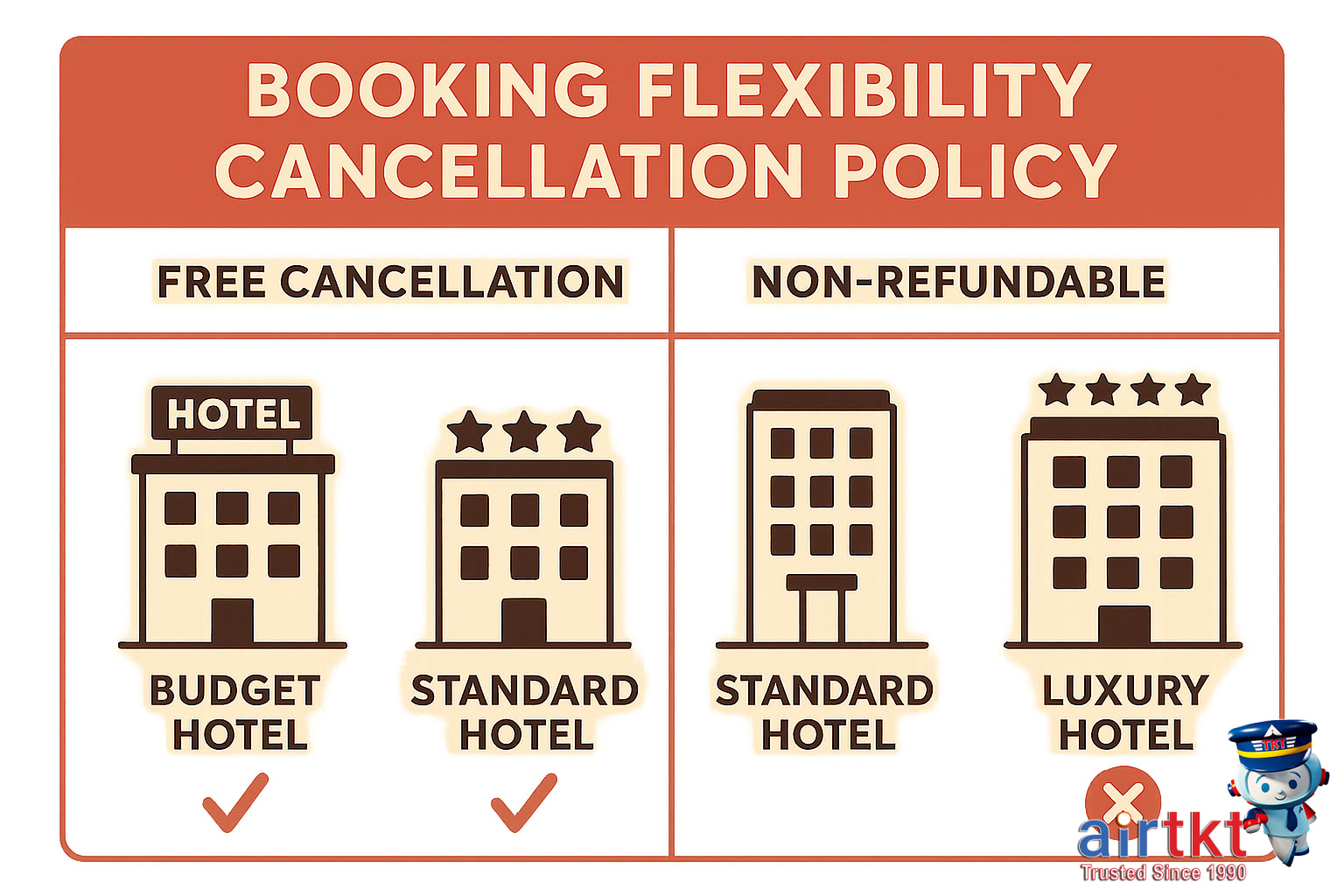
Business hotels tend to enforce stricter cancellation rules, often tied to corporate contracts. For example, the Hyatt Regency Seattle’s standard corporate rate booked in January 2026 required full payment upfront and offered no refunds for cancellations made less than 72 hours before check-in. This rigidity aligns with companies’ need for predictable expenses but leaves less wiggle room for sudden schedule changes.
Leisure hotels usually provide more lenient policies, anticipating travelers’ need for flexibility. The Marriott Vacation Club in Orlando, booked for March 2026 by Sarah Lim, a marketing manager from Dallas, allowed free cancellation up to 48 hours before arrival. Travelers booking a $1,250 family vacation found this reassuring when their plans shifted last minute due to weather.
Flexibility matters most when travel disruptions hit unexpectedly—think delayed flights, health issues, or urgent work calls. The deal is, no traveler wants to lose hundreds of dollars on a stay they can’t use. Always check the airtkt.com booking details carefully: look for phrases like “free cancellation until,” “non-refundable,” or “change fees apply.”
Ask direct questions like, “What’s the latest I can cancel without penalty?” or “Are changes allowed if I reschedule within six months?” An explicit 2026 case: Jacob Morales, a software developer from Toronto, booked a $562 room at a Hilton Garden Inn with flexible change options. When his conference moved, he rescheduled without fees and avoided losing the entire booking cost.
Hidden Costs and Fees Travelers Should Watch For
Resort fees hit many leisure travelers unexpectedly. For example, the Grand Seaview Hotel in Miami charges a daily $32 resort fee covering pool access and towels, adding $96 for a 3-night stay beyond the base rate. Business travelers face their own pitfalls—The Metro Center Hotel in Chicago tacks on $15 to print documents in the business center, unnoticed until check-out.
Parking fees also vary widely. Downtown Boston’s Harbor Inn charges $38 per night for garage parking, which can double the total cost for longer stays. Wi-Fi surcharges might seem minor but add up. A Seattle hotel billed $12 daily for premium Wi-Fi access during a January 2026 work trip.
Minibar prices often run 2-3 times higher than store rates. IT consultant Marcus Lee from San Jose experienced a $10 charge for a soda that cost $3 at a local store (shared in a January 2026 Reddit thread).
Spot these fees before booking by carefully reading the “fees and policies” section and calling the front desk to confirm. I track deals through airtkt.com, which highlights total nightly costs including extras. Factor all these charges into your price comparison to avoid surprises at checkout.
Scenarios and Recommendations for Best Value Stays
Short corporate trips often benefit from business hotels located near downtown offices. Take Jason Lee, a marketing manager from Chicago, who booked a 3-night stay at the Hyatt Regency in downtown Chicago for meetings in November 2025. The room rate was $312 per night, and access to conference rooms saved him $450 in external rental fees. For trips under five nights with business needs like meeting rooms or rapid downtown access, these hotels deliver clear value.
Leisure hotels shine for family vacations and extended stays. In December 2025, Ana Pérez, a graphic designer from Miami, stayed 10 nights at the Marriott Grande Vista Resort in Orlando for $1,480 total. The resort’s pools, kids’ club, and shuttle service to theme parks made a difference for her family’s enjoyment and convenience. Resorts typically offer amenities that justify their price over longer stays, especially when traveling with children or for pure relaxation.
Hybrid travelers juggling work and downtime have different priorities. For example, Samuel Okoro, a software developer from Toronto, booked the Hilton Garden Inn Midtown in New York City for a 6-night trip in January 2026. He chose a business hotel with a gym and complimentary breakfast to balance client meetings and evening downtime without switching hotels. Opting for hotels with both practical workspaces and leisure features lets you merge your trip’s dual purposes efficiently.
Bottom line: weigh your trip’s primary purpose, budget, and personal preferences before picking a hotel. Short work trips near offices and meetings favor business hotels, while family vacations and longer stays favor leisure-focused properties. Hybrid needs tip toward versatile accommodations with some degree of amenity balance. Booking sites like airtkt.com help compare these options clearly, so you get stays that fit your travel style and pocketbook.
FAQ About Business Hotels vs Leisure Hotels
What are the main differences between business hotels and leisure hotels?
Business hotels focus on convenience, featuring meeting rooms, high-speed internet, and early check-in/out options. Leisure hotels prioritize amenities like pools, spas, and entertainment. The guest experience is tailored accordingly—business travelers need efficiency, while leisure guests seek relaxation.
How do business hotels typically compare in price to leisure hotels?
Business hotels often charge $150–$300 per night in urban centers, reflecting prime locations and services for professionals. Leisure hotels vary widely but tend to range from $100 to $250 per night depending on resort amenities and seasonality.
When should I choose a leisure hotel over a business hotel?
Choose leisure hotels for vacations when amenities like pools, family activities, or beach access are priorities. For example, Mia Chen, a graphic designer from San Diego, booked a leisure resort in Maui for $225/night in January 2026 to combine relaxation with local excursions.
Why do business hotels have stricter cancellation policies?
Stricter policies protect business hotels from last-minute cancellations that disrupt booked conference spaces or peak weekday demand. They often require cancellations 48–72 hours before check-in to avoid penalties, unlike leisure hotels with more flexible terms.
Can I find good deals on business hotels during holiday seasons?
Business hotels in cities like Chicago or New York often lower rates 20–30% during holiday weekends when business travel slows. Jessica Patel, an account executive from Toronto, found a $190/night deal at a downtown business hotel in December 2025 via airtkt.com.
How important is location when choosing between business and leisure hotels?
Location is critical. Business hotels cluster near business districts and airports for access. Leisure hotels are often in scenic or resort areas. When Jake Martinez, a sales manager from Miami, booked a business hotel in central Boston in November 2025, proximity cut his commute by 30 minutes daily.
What hidden fees should I watch for in business hotels and leisure hotels?
Business hotels frequently add charges for Wi-Fi ($15/day) or printing. Leisure hotels can tack on resort fees of $25–$40 per night for amenities. Always check the fine print—Marcus Lee, a consultant from Seattle, saved $60 by spotting resort fees before booking in December 2025.
Conclusion and airtkt.com Booking Reminder
Price, amenities, location, cancellation policies, and hidden fees all play crucial roles in choosing the right hotel. Whether you prioritize budget-friendly stays or upscale comforts depends heavily on your travel goals—business trips often call for convenience and flexible policies, while vacationers might focus on experience and atmosphere.
Both budget and luxury hotels offer clear merits tailored to different traveler profiles. The key is aligning those options with what matters most to you personally.
I track hotel deals using airtkt.com because its tools help compare rates in real time, factoring in lesser-known fees and policy fine print. Plus, having access to 24/7 expert support adds confidence when booking complex itineraries or last-minute trips.
Explore what airtkt.com shows for your next getaway—and book with data and backing that match your needs.
See what we can offer for your travel needs airtkt.com.
References
Data and trends in this article draw from authoritative industry sources: the U.S. Travel Association, International Air Transport Association (IATA), and the American Hotel & Lodging Association (AHLA). These organizations provide up-to-date statistics on travel demand, airline performance, and hotel occupancy. Travelers and analysts should also verify recent TSA and Department of Transportation updates, as policy changes can quickly reshape hotel demand and travel patterns.
In curating deals and travel insights, I track alerts via airtkt.com to catch shifting market conditions before they fully hit public channels.