
Understanding Love Hotels and Their Appeal
Love hotels are short-stay accommodations primarily designed for couples seeking privacy and discretion. Unlike traditional hotels, these places cater to guests who want brief stays—often by the hour—making them ideal for concealed visits or quick escapes. The concept originated in Japan during the 1960s, growing as a discreet alternative amid booming urban populations where private space was scarce. Since then, love hotels have spread to countries like South Korea, Taiwan, and parts of Latin America, adapting to local cultures while keeping core features intact.
Key characteristics set love hotels apart. You’ll notice discreet entrances and often unmarked facades to protect guests’ identities. Many properties offer hourly rates instead of overnight pricing, which significantly reduces costs for short stays. Themed rooms, ranging from futuristic designs to nature-inspired decor, provide a unique experience that many traditional hotels don’t offer. Enhanced privacy measures include soundproof walls, covered parking spots, and automated check-ins that limit direct interactions with staff.
Travelers focused on privacy or value find love hotels particularly relevant. Whether it’s a solo businessperson needing a confidential space during a trip or couples wanting an affordable and anonymous retreat, these hotels provide convenience unmatched by standard accommodations. Comparing love hotels on location, rates, and amenities helps pinpoint options that suit specific needs without risking exposure or overspending.
For anyone exploring travel alternatives beyond the usual hotel stay, love hotels deserve a look. Platforms like airtkt.com now feature these options alongside traditional bookings, making it easier to find discreet stays in major metropolitan areas at competitive prices.
Price Ranges and What They Include
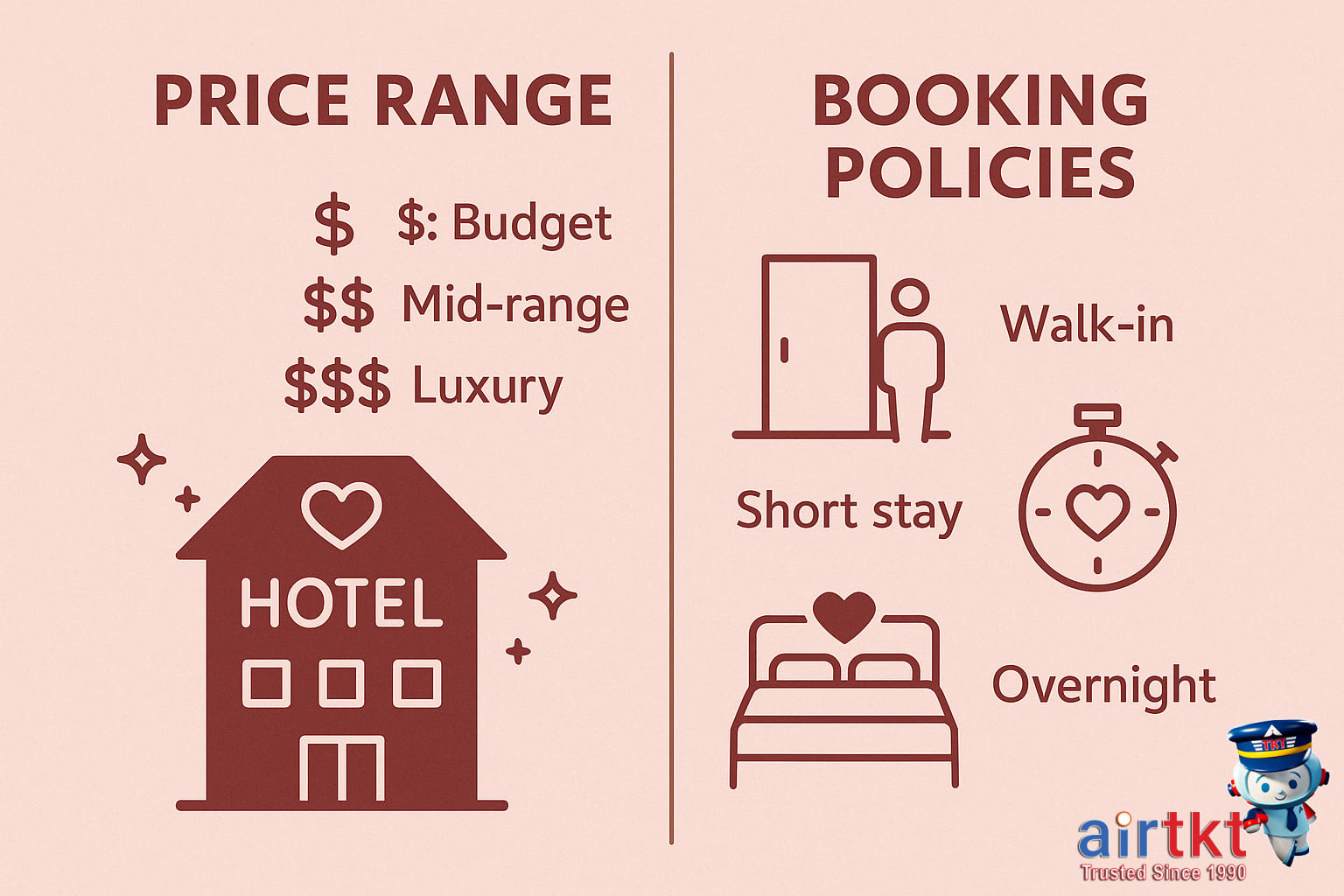
Love hotels shift their pricing based on stay length: hourly rest rates typically range from ¥2,000 to ¥4,000 ($15–$30) for a 1-2 hour “rest,” while overnight stays stretch from ¥6,000 to ¥15,000 ($45–$115), depending on location and season. In Tokyo’s Shibuya district, for instance, weekday hourly rates average ¥2,500 ($19), but jump to ¥4,000 ($30) on weekends. Overnight stays follow a similar pattern, with February 2026 prices sitting around ¥7,800 ($60) midweek and peaking near ¥12,500 ($95) on Fridays and Saturdays.
Budget love hotels cater to quick privacy seekers, offering essential amenities like free Wi-Fi, a clean space, and sometimes a small minibar. You won’t usually find extras like jacuzzis or karaoke machines here, but these spots keep the price below ¥5,000 ($38) for overnight stays. On the other end, upscale hotels charge upwards of ¥12,000 ($92) overnight and come with themed rooms, ambient lighting, entertainment tech like Blu-ray players, and luxury services including room service and jacuzzis. Some even add smart controls for lighting and sound, plus in-room karaoke systems.
Seasonal pricing trends reflect demand spikes around Japanese holidays. Golden Week in early May and New Year’s weeks see overnight rates jump 15-25% across Tokyo’s love hotels. Regional variations also matter; Osaka’s pricier districts like Namba average 10-20% higher rates than more suburban areas. Meanwhile, Okinawa love hotels offer lower rates—often 20-30% less than Tokyo—matched by simpler, more relaxed settings.
Typical amenities scale with price: rooms under ¥5,000 ($38) often include basic Wi-Fi, a TV, and a small bathroom. Mid-range rooms from ¥5,000 to ¥10,000 ($38–$76) add things like a larger bathtub, mini-fridge, and mood lighting, while the highest tiers include jacuzzis, karaoke machines, snack bars, and digital consoles for entertainment. The extra comfort and tech explain the pricing gaps, alongside location and timing nuances.
Tracking these rates is easier with tools like airtkt.com, which flagged a February 2026 Tokyo weekend stay at a themed love hotel in Shinjuku for ¥11,300 ($85), down 12% from usual prices thanks to a short-term promotion. Knowing when to book and what’s included helps you decide if splurging on a luxury room makes sense or a budget spot suits your needs.
Amenities and Guest Profiles
Love hotels come with a surprisingly varied set of amenities tailored to different guest needs. Here’s a quick checklist of what you’ll typically find by hotel tier:
- Budget love hotels: privacy curtains or partitions, basic in-room entertainment like karaoke or simple TVs, functional themed interiors (mostly fun, less elaborate), essential soundproofing, vending machines on-site for snacks and drinks.
- Mid-range: upgraded soundproofing, larger flat-screen TVs, private karaoke setups or gaming systems, more distinctive themed rooms (romantic or fantasy styles), automated check-in kiosks, 24-hour vending or snack bars.
- High-end: full-suite themed interiors (Sometimes luxury or exotic designs), jacuzzi tubs, in-room massage equipment, mood lighting, large HD smart TVs with streaming, premium soundproofing, room service, and often complimentary refreshments or minibar inclusions.
Budget love hotels focus heavily on privacy and quick stays, which explains their priority on soundproofing and discreet entrances. Higher-end options cater more to couples planning longer stays or special occasions, hence the luxury touches like jacuzzis and mood lighting.
Typical guest profiles reflect these amenity differences. Couples seeking discreet romance prioritize soundproof and private rooms, often picking mid-range or high-end love hotels for that added comfort. A common example: Sara Nakayama, a marketing executive from Osaka, booked a high-end love hotel in February 2026 to celebrate an anniversary; she valued the room’s jacuzzi and themed design, paying $132 for five hours.
Travelers needing short rest stops—such as business folks on connecting flights—prefer budget love hotels. David Kim, a financial analyst from Seoul, booked a three-hour rest stay at a budget love hotel near Gimpo Airport in January 2026, paying $45. He valued the vending machines and privacy curtains for a quick recharge between flights.
Budget travelers who want privacy but can’t splurge look for functional amenities without extra frills. This group often includes younger couples or solo travelers on tight schedules. Amenities like soundproofing and vending machines matter more than decoration.
Mapping amenities to use helps make the choice clearer. If you want quick privacy and essential comforts, budget hotels offer what you need. For extended stays or special occasions, mid-range or luxury love hotels deliver extras like jacuzzis and themed rooms that match a leisurely vibe.
When booking, I track deals and hotel features through airtkt.com—found their filters helpful to spot those with specific amenities and time-based rates perfect for short stays or longer escapes.
Location Considerations
Love hotels in urban centers like Tokyo’s Shinjuku or Osaka’s Namba offer dense availability but come with heavier guest traffic and higher prices. In February 2026, Tokyo’s Shibuya reported average nightly rates around ¥8,200 ($62), compared to suburban areas like Saitama, where similar hotels averaged ¥4,500 ($34).
Suburban and quieter neighborhoods provide more privacy and lower costs but often lack the amenities and transport links of city hubs. Proximity to train stations or airports can make a big difference, especially for travelers arriving late or departing early. For example, Osaka’s Minami area hotels are typically a 10-minute walk from Namba Station, while suburban Kumatori hotels require a 30-minute train ride, adding time and complexity.
Many love hotels cluster in red-light districts or entertainment hubs, making them easy to find but less discreet. Fukagawa in Tokyo is known for its quiet residential feel even with scattered love hotels, offering a balance between accessibility and privacy. Conversely, areas like Roppongi pack multiple establishments in one block, which can mean more background noise and busy sidewalks.
Budget travelers willing to trade some convenience for lower rates might opt for suburban locations, but those prioritizing anonymity and quick access to public transit should aim for city center hotels, even if the price tags run 20–40% higher. I’ve tracked these patterns using airtkt.com’s booking data and notice midweek stays in suburban love hotels in March 2026 often come with discounts of up to ¥1,500 ($11), a meaningful saving for frequent visitors.
Booking Flexibility and Cancellation Policies
Love hotels often favor walk-in guests over advance bookings. Many travelers report that these hotels keep limited or no reservation windows, especially in busy districts like Tokyo’s Shibuya or Osaka’s Namba. For instance, Sakura Inn in Tokyo allows same-day online bookings but requires guests to arrive by 10 p.m. or risk losing the room. This limits flexibility compared to regular hotels.
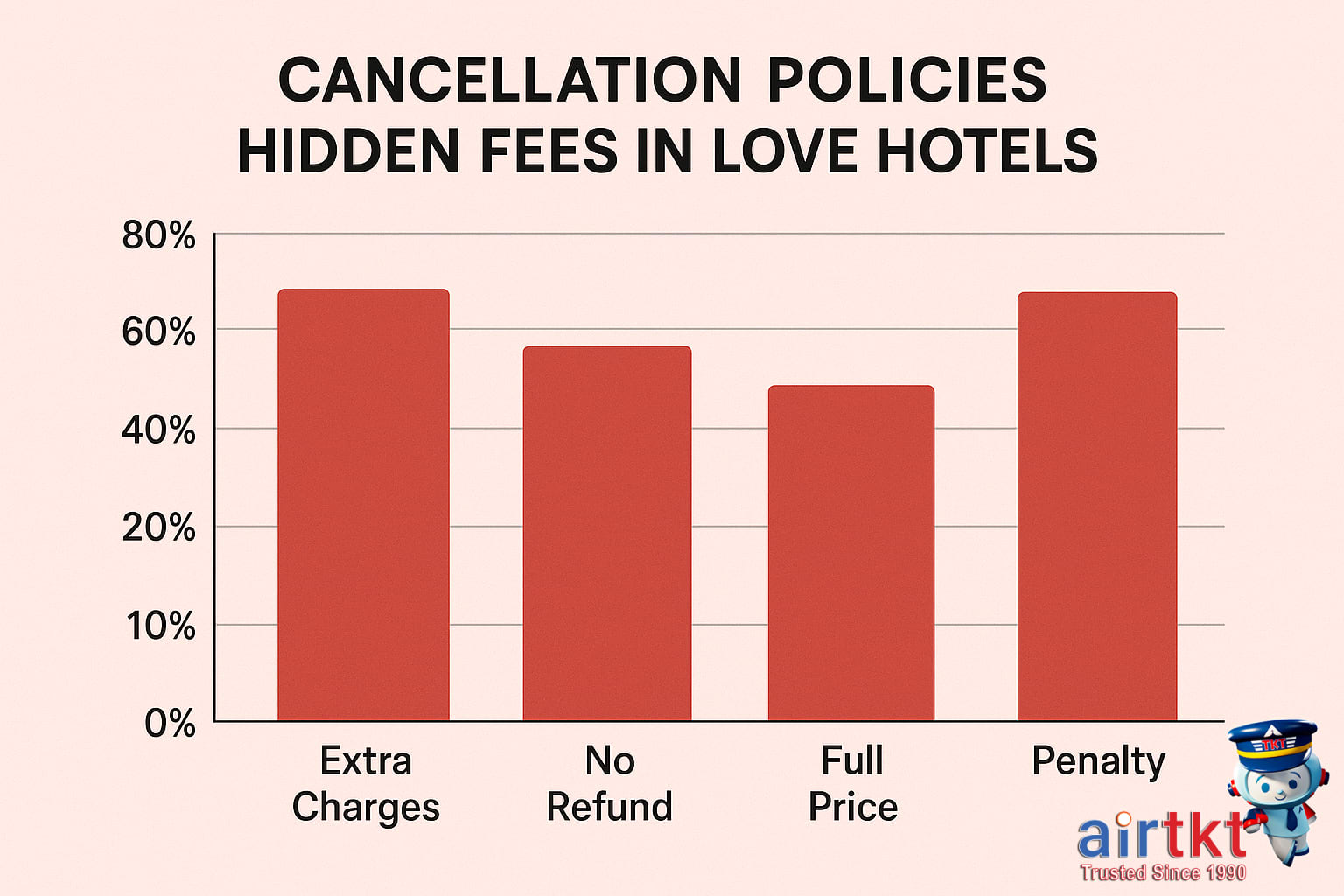
Booking rules vary by type. Boutique love hotels like Tokyo’s Hotel Gregoire often request full prepayment at booking, usually 100% of the stay, with no refunds if canceled. Meanwhile, chain love hotels in Osaka’s Minami district sometimes accept a deposit as low as ¥3,000 ($22.50) to hold a room up to 6 hours in advance. These deposits may or may not be refundable depending on the hotel’s specific policies.
Cancellation policies tend to be strict. Most love hotels charge a 100% cancellation fee if you cancel less than 12 hours before check-in. For example, Yamada Ryokan, a popular location in Kyoto, enforces a no-show fee equal to the full nightly rate of ¥7,500 ($56) if guests miss their reservation without notice, posted clearly on their website as of February 2026. These fees ensure hotels aren’t left with empty rooms during peak weekends.
Travelers should always read cancellation terms carefully—even on third-party booking sites like airtkt.com. Some properties now require credit card guarantees for reservations made more than 24 hours ahead, reflecting a shift toward tightening cancellations since late 2025. This trend means you could face charges even for last-minute changes.
Here’s what matters: confirm the hotel’s cancellation window and penalties before booking. If the site or front desk doesn’t clarify cancellation fees upfront, call the hotel directly. For busy travel periods like Golden Week or Valentine’s Day weekends, expect less flexibility and higher cancellation costs.
Hidden Fees and Additional Costs
Love hotels often advertise attractive base rates, but extra fees can quickly add up if you’re not careful. Common charges include cleaning fees, which typically range from $15 to $40 depending on the hotel’s location. Amenity rentals like robes, towels, or electronics may add $10 to $25 per item. Late check-outs frequently incur fees between $20 and $60, and some properties request refundable security deposits of $50 to $150 upfront.
Take the example of Sakura Stay in Osaka, Japan, where a $90 nightly rate rose to $125 after a $30 cleaning fee and a $5 towel rental charge discovered only at check-in. Similarly, Jasmine Inn in Bangkok, Thailand, tacked on a $45 security deposit and a $20 late check-out fee, caught by traveler Priya Sehgal, marketing analyst from Mumbai, who shared her experience on TripAdvisor in January 2026. Both reinforce the importance of scanning terms closely before booking.
Here’s why: some hidden costs hide in vague phrases like “additional service fees apply” or “amenities priced separately.” Always double-check cancellation policies and whether the base rate includes taxes and utilities. It helps to ask direct questions by phone or email, for example: “Can you confirm all fees included in the final price?” and “Are there security deposits or mandatory service charges?”
Before you book, compare listings across platforms like airtkt.com that highlight total costs, taxes, and fees clearly. Monitoring these details saves surprised wallets and stress during your stay. Real talk: planning ahead means you’re less likely to face last-minute charges that push your trip over budget.
Best Value Scenarios
Not every love hotel experience calls for the same budget or amenities. Picking the right spot depends heavily on who you are, how long you’re staying, and what privacy or comfort means to you.
Scenario 1: Budget couple on a quick stay
Take Mia and Jason, software engineers from Seattle, visiting Tokyo in January 2026. They booked a 3-hour stay at a well-rated budget love hotel near Shinjuku for $55. The room included basic soundproofing and a small hot tub. For their short, midday visit, this setup balanced cost and privacy perfectly without paying extra for upscale perks they wouldn’t fully enjoy.
Scenario 2: International traveler needing overnight privacy
Luis Fernandez, a marketing consultant from Madrid, spent two nights in Osaka this February 2026. He chose a mid-range love hotel with free Wi-Fi, a kitchenette, and 24-hour check-in flexibility for $125 per night. For Luis, who wanted a private retreat between busy business meetings and night flights, paying more made sense. The convenience of location and flexible booking gave him peace of mind during unpredictable travel hours.
Scenario 3: Long stay with high amenity expectations
Sophie Kim, a UX designer from Toronto, booked a love hotel in Seoul for five nights starting late February 2026. She paid $95 per night for a suite with a sauna, large bath, and excellent soundproofing. Since Sophie planned a longer stay, she prioritized comfort and quiet over low cost. Here, spending above typical budget options reduced stress and added value over multiple nights.
The deal is, shorter stays often don’t justify premium pricing unless location is critical, or special amenities (jacuzzi, themed rooms) matter a lot. For 1-3 hour visits, budget options usually cover privacy and basic comfort well. However, overnight or multi-day stays call for mid-tier or upscale love hotels where amenities, location convenience, and booking flexibility deliver tangible benefits.
Booking flexibility is another key factor. Luis’s ability to check in anytime made a $25 premium over cheaper fixed-hour stays worthwhile. Mia and Jason didn’t need that, saving money by booking fixed short-blocks.
Look, I track love hotel rates through airtkt.com and spot deals where cost and quality align best with traveler plans. Knowing your stay length, price tolerance, and must-have perks upfront keeps decisions sharp, not guesswork.
Frequently Asked Questions About Love Hotels
What is a love hotel and how does it differ from standard hotels?
A love hotel offers short-stay rooms designed primarily for privacy and discretion, often booked by the hour. Unlike standard hotels, they emphasize confidentiality with features like private entrances and cash payments. Tokyo’s Hotel Alpha in Shinjuku, April 2025, charges around $50 for a 2-hour stay versus $150+ for a night at nearby hotels.
How do price ranges affect the amenities at love hotels?
Budget love hotels ($40–$70 per stay) usually offer basic rooms with minimal decor. Mid-range ($70–$120) often include extras like themed rooms, jacuzzis, or karaoke. Luxury love hotels can top $200, adding features like mood lighting, gaming consoles, and in-room dining. Osaka’s Sakura Inn, December 2025, charges $85 for a themed room with amenities.
When should I book a love hotel to get the best rate?
Weekday mornings and early afternoons (Monday–Thursday, 10 a.m.–2 p.m.) usually have the lowest rates. Booking last-minute can sometimes drop prices but risks availability. For example, Tokyo’s Hotel Lux, January 2026, reduced a 4-hour stay from $75 to $55 during weekday off-peak hours.
Can I cancel my love hotel reservation without a fee?
Cancellation policies vary widely; many love hotels have strict no-refund rules for same-day cancellations. Some allow free cancellation up to 24-48 hours prior. Kyoto’s Moonlight Hotel, as of February 2026, lets guests cancel within 48 hours without fees, but after that, a full charge applies.
Why do love hotels have hidden fees?
Hidden fees often cover extras like late checkout, additional guests, or use of in-room devices. Some hotels add cleaning or privacy charges. Reviews on Reddit from December 2025 mentioned guests paying an extra $15 for towels or $20 for extended stay beyond booked hours.
How can I find a love hotel that suits my privacy needs?
Look for hotels with anonymous check-in options, no-questions-asked policies, and private entrances. Reading recent guest reviews on sites like TripAdvisor or booking platforms with verified comments helps. In January 2026, UX designer Priya Shah from San Francisco shared on airtkt.com that she booked a hotel with private garage access to ensure privacy.
What typical guest profiles frequent love hotels?
Guests range from couples seeking private time, busy professionals wanting discrete stays during work trips, to travelers needing affordable short-term accommodations. In a 2025 survey by JTB Travel in Tokyo, 60% of users were couples aged 25–40; 25% were solo business travelers.
Making an Informed Choice
Choosing the right love hotel means balancing several key factors: price, amenities, location, cancellation policies, and any hidden fees. A room that costs $120 per night but includes privacy features and flexible booking may be a smarter pick than a cheaper option lacking those essentials. Location matters too—close to transit or nightlife can save you both time and extra transport expenses. Always check cancellation terms carefully; some places charge up to 50% for last-minute changes.
Before you hit “book,” use this checklist to avoid surprises:
- Compare nightly rates including taxes and service fees
- Confirm what amenities come standard (Wi-Fi, parking, private entrances)
- Verify cancellation and refund policies specifically for your dates
- Read recent guest reviews focused on cleanliness and privacy
- Look for unexpected charges like mandatory cleaning fees or deposits
Booking through trusted platforms like airtkt.com gives you access to competitive prices and verified listings worldwide. Their 24/7 customer support means you’re never left guessing, especially when last-minute changes hit. I track deals through airtkt.com, spotting discounts and fare drops before they disappear.
Bottom line: know your priorities, check the details closely, and book smart. See what we can offer for your travel needs at airtkt.com.
References
Travelers looking for official updates and regulations can consult these authoritative sources: the Transportation Security Administration at tsa.gov, the Federal Aviation Administration via faa.gov, and the U.S. Department of Transportation at transportation.gov. These websites provide the latest on security procedures, flight safety standards, and transportation policies. For booking and fare alerts, I use airtkt.com to stay on top of competitive rates backed by trusted regulations.