

What Are Resort Fees?

Resort fees are those extra mandatory charges you’ll often see added per night to your hotel bill—above and beyond the advertised room rate. These fees typically aren’t optional, and even if you never use the amenities they supposedly support, you’ll still need to pay them.
Hotels say resort fees help cover the cost of things like pools, fitness centers, local shuttle services, Wi-Fi, or daily newspapers. But I’ll be honest—when I first stayed at a resort and spotted that unexpected daily resort fee on my receipt, I was pretty surprised. It’s easy to miss the fine print during booking, especially when the total price doesn’t show the fee upfront.
For hotels, resort fees provide two main advantages: they can generate extra revenue while allowing properties to advertise a lower nightly base rate than their actual out-the-door price. From a traveler’s perspective, though, it can feel like you’re paying for things you may not even use. That’s why I usually recommend checking the full fee details before you commit to a reservation.
Whenever you’re planning a stay that mentions “resort,” “destination,” or “facility” fees, ask the hotel what’s covered. Sometimes these charges include perks like free morning coffee, bike rentals, or beach gear, while at other properties, the inclusions might be less useful to you. Knowing exactly what’s bundled with that extra charge lets you compare hotels more fairly and avoid surprises at checkout. If you’re booking through a travel platform, look for tips on making smarter hotel bookings—like those included in the airtkt.com hotel booking tips article.
Common Charges Included in Resort Fees
Resort fees have become a standard part of the hotel landscape, but what’s actually included in those extra daily charges? In my experience, resort fees usually cover amenities I might use during my stay—though the list varies widely depending on the hotel or destination. Here’s a rundown of what these fees often include, plus guidance on why it pays to check before you book.
Typical Resort Fee Amenities
Most commonly, resort fees grant guests access to hotel pools—sometimes including hot tubs and steam rooms. Reliable Wi-Fi is another standard inclusion, whether you’re lounging in your room or out by the pool. Fitness centers or on-site gyms are typically covered as well, letting you skip any separate day-use charges. Pool towels, lounge chairs, and even bottled water might also fall under the fee.
For travelers driving in, self-parking is often bundled in the resort fee—though valet service may cost extra at many properties. Local phone calls, which used to be a bigger perk, are still listed at some hotels as part of the benefit package. Many resorts also include shuttle service to nearby attractions, shopping centers, or airports in their daily charges, offering a bit of value if you plan to get out and explore.
Some resorts even add in perks like newspaper delivery, use of business centers, beach equipment rentals, bike loans, and group fitness classes. However, what you actually get—for example, complimentary yoga classes versus just pool access—can depend on the property’s location, brand, and style. Large resorts in places like Las Vegas or Hawaii tend to bundle more services, while smaller urban hotels might only include Wi-Fi and gym use.
Charges Differ by Property and Destination
The range of amenities included will look different in New York City than at a seaside resort in Cancun or a sprawling Las Vegas property. Urban hotels may cover basics like Wi-Fi and gym access, while large resorts add shuttle transfers or daily rentals. High-end or family-oriented resorts often offer more expansive lists. I’ve noticed that what’s “standard” at one hotel may be an upcharge at another—so always dig into the details.
Hotels tend to list covered amenities on their official website, but the terms can change or differ among locations. Even within the same chain, resort fee inclusions can vary from property to property. That’s why I usually recommend checking the specific hotel’s site instead of assuming from a third-party booking platform. It’s the best way to avoid surprises on your final bill and to see if you’ll actually use what you’re paying for.
Hotels Most Likely To Charge Fees

Most travelers expect resort fees at luxury properties, but the truth is, a much wider mix of hotels can tack on these extra charges. You’ll find resort fees most predictably at big-brand resorts (think Marriott, Hilton, and Hyatt) in popular leisure destinations, as well as swanky city-center hotels in hot spots like Las Vegas, Miami, and Orlando. In my own bookings, I noticed that luxury resorts often have these fees, but also some budget hotels sometimes charge them unexpectedly—nothing shakes up a travel budget quite like a surprise nightly charge at a place you thought was simple and affordable.
Geographically, certain cities and regions are notorious for resort fees. Las Vegas is the poster child, with almost every property on or near the Strip—regardless of star rating—adding them to your final bill. Miami’s beachfront resorts and urban high-rises often tack on daily charges for amenities like beach chairs or gym access. Orlando’s family resorts, close to major theme parks, typically include fees relating to shuttles or water park access, rolled into their “resort” package. So even if you stick to the main tourist corridors, don’t assume your quoted hotel price will be the true total unless you double-check where you’re booking.
All-Inclusive Resort Fee Structures
One detail that trips people up: many all-inclusive resorts handle fees differently. For these properties, especially those in Mexico or the Caribbean, charges like resort fees and service fees are usually baked into the overall nightly price you’re quoted up front. That means, in most cases, you won’t be hit with an unexpected fee at checkout—but it’s still smart to review those fine-print details for added charges on premium amenities, spa services, or airport transfers. If you’re considering an all-inclusive trip, I’d compare options directly on airtkt.com—their all-inclusive vacation offers make it easy to see what’s covered and what might cost extra.
Keep in mind that as hotel chains update policies frequently, one of the most accurate ways to spot surprise resort fees is to skim recent guest reviews. Properties sometimes waive or change these charges by season or as part of competitive promotions, but fellow travelers are quick to flag them in their feedback.
How To Avoid Paying Resort Fees

Few things sting more than discovering an unexpected resort fee tacked onto your hotel bill. The good news is, if you’re proactive, you can often avoid or at least reduce these extra charges. Here’s what I’ve learned works best for keeping these fees at bay.
Book Direct and Ask First
Hotels aren’t always upfront about their resort fees on third-party booking sites. When you book directly with a hotel, though, it’s much easier to clarify what’s included in your rate and what’s not. I always double-check my booking confirmation for any resort fees before finalizing. If anything looks unclear, I recommend calling the front desk to ask directly before you complete your reservation. Many properties are willing to confirm all charges or even waive smaller fees if you ask upfront.
Choose Hotels Without Fees
Some hotel brands never charge resort fees, while others only add them at certain properties. Before you book, look for hotels that explicitly advertise no resort, facility, or mandatory amenity fees. Properties in business districts or outside typical resort areas often skip these charges entirely. A quick website scan or filtering your search results for “no resort fee” saves time and money.
Leverage Loyalty and Negotiate
Loyalty status sometimes comes with waived fees. If you belong to a loyalty program, log in before booking to see if you qualify for exclusive rates or waived fees. Even if you’re not a member, you can try negotiating at check-in—politely ask if the fee can be reduced or removed, especially if you aren’t using resort amenities. Some front desk staff have flexibility, especially for off-peak stays.
Use Filter Tools on Booking Sites
Booking websites increasingly help you dodge fees with filters that exclude hotels with resort charges. Set these filters before you browse—this narrows your options to properties that are upfront about total costs. I’ve found this feature incredibly helpful for avoiding unwelcome surprises at checkout, especially in cities where resort fees have become more common.
Resort fees aren’t always avoidable, but with a combination of careful booking, asking directly, and making the most of loyalty perks, you can sidestep many of these hidden charges. That bit of extra attention upfront means more left in your travel budget for things you actually want to enjoy.
Pros and Cons of Resort Fees
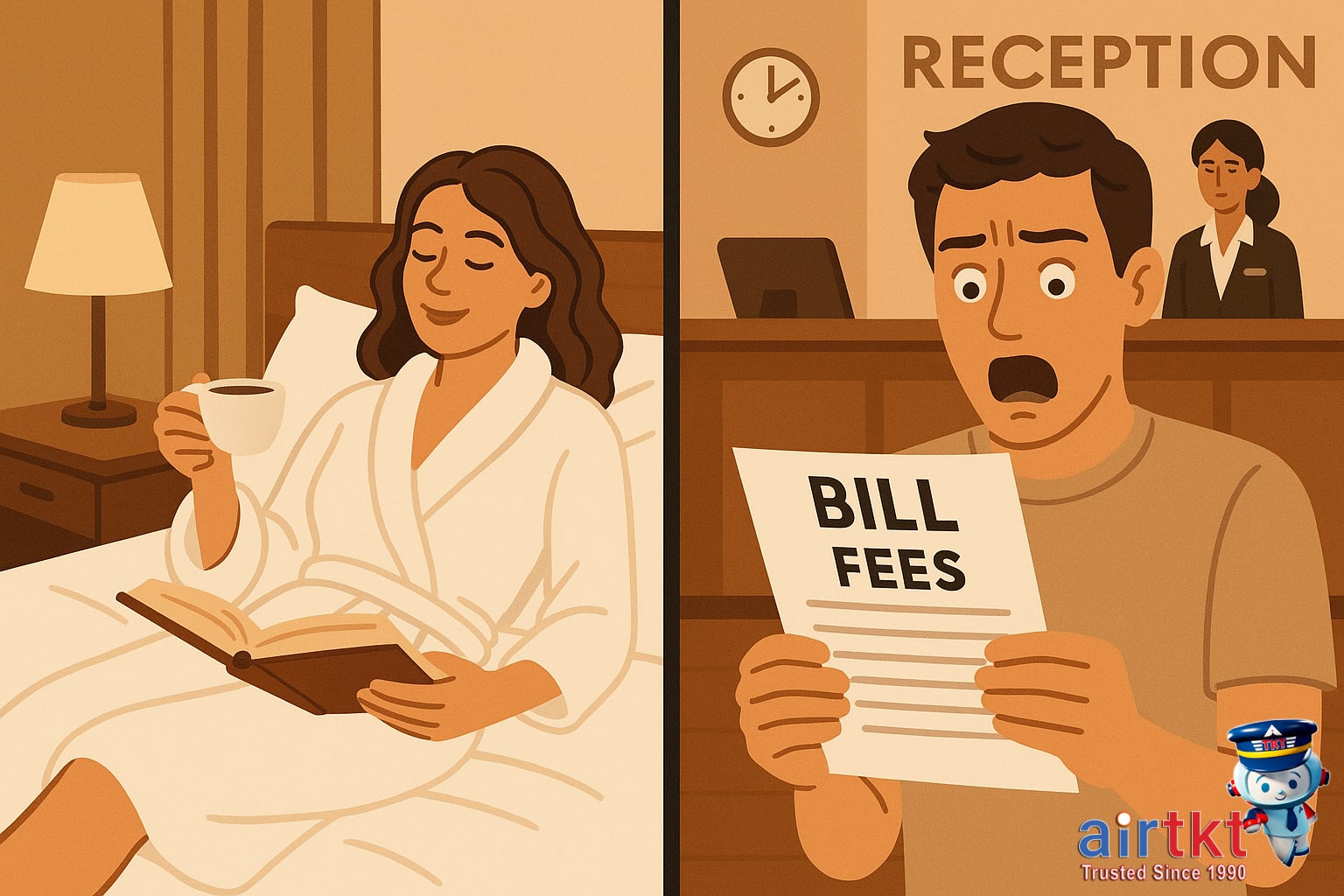
Resort fees are one of those travel realities that come with more controversy than you’d expect. Hotels often add these daily charges to cover amenities like pools, gym access, Wi-Fi, and shuttle services. From a business angle, I get that these extras and fluctuating operational costs add up, and resort fees give hotels flexibility to keep base rates competitive on booking sites.
On the flip side, the most common complaints revolve around transparency and fairness. Many travelers feel blindsided when fees appear at checkout rather than being included in the up-front price. That sticker shock isn’t just annoying—it can make budgeting for your trip a headache, especially if you’re juggling family expenses or watching your travel funds closely. I’ve experienced that frustration, too: sometimes I understand why resorts add fees, but they can definitely feel misleading if you don’t see them until the final bill.
How Resort Fees Impact Travelers
Most hotels use the revenue from resort fees to maintain or improve guest amenities and to help offset rising operational expenses. You might be paying for that pool you never used or the “complimentary” breakfast you didn’t try. While you could argue you benefit from these features indirectly, it’s easy to see why travelers wish they had the option to skip certain fees—or at least know about them before clicking “reserve.” According to the Federal Trade Commission and prominent travel advocacy groups, full fee disclosure up front is a persistent issue within the lodging industry.
The key takeaway for me is that, whether you like resort fees or not, they’re not going away soon. I recommend factoring them into your total trip cost from the beginning—double-check your reservation confirmation for any mention of “resort fee” or “facility fee” so you’re not blindsided. If you’re shopping for hotels on sites like airtkt.com, look for breakdowns of all taxes and fees when comparing options.
Smart Booking Strategies for Resort Fees

One of the most frustrating aspects of hotel bookings today is the increasing presence of resort fees, which can really balloon the price you pay compared to what’s shown up front. I always compare total costs—including resort and facility fees—before finalizing any reservation. Filtering by nightly rate alone rarely tells the real story. Sometimes, a hotel with a seemingly low headline price can end up costing more once those resort fees are added at checkout.
Total Cost Comparison Matters
When I’m weighing my accommodation options, I’ll check the details section or summary breakdown to see if resort fees are included in the total. If the booking site isn’t clear, I reach out to the customer support team directly. A quick chat or email can clear up whether additional fees will appear on my final bill. I recommend always reviewing the hotel’s own policy page too, since some properties only disclose fees there.
Leverage AirTkt’s Tools for Savings
I use airtkt.com features like Lazy Fare and Nearby Airport Search not just to find lower airfare, but to stretch my whole trip budget. For instance, booking a cheaper nearby airport often means extra flexibility in hotel choices, some of which may have minimal or no resort fees. The platform’s hotel search displays fee details more transparently than many other sites, which I find cuts down on those “surprise charges” once I arrive.
Transparency Is Key When Booking
Many hotel booking platforms are still inconsistent about showing resort fees up front. That’s why I always prioritize sites where the real total—including taxes and all mandatory fees—appears before I hit confirm. Some sites only show this info on the payment screen, while others, like airtkt.com, try to surface all costs earlier in the process. Fee transparency not only lets you budget more accurately, but also helps avoid frustration at check-in.
Ask About Fees Before Booking
If you can’t find fee info no matter where you look, don’t hesitate to ask. I’ve learned that a short call or customer service message can prevent those “hidden fee” headaches. For travelers interested in maximizing savings on both flights and hotels, I’d also suggest reading our guide on flight and hotel combo deals—sometimes bundling can offset the impact of resort fees entirely.
How Customer Support Handles Resort Fees

Resort fees can be confusing, especially when they appear unexpectedly or aren’t clearly listed during the booking process. That’s where strong customer support really steps in—I’ve found that talking to a knowledgeable support agent often clears up any confusion quickly, letting me know exactly what I’ll pay and why. Effective support not only answers fee-related questions before you book, but also helps you resolve disputes if something on your bill doesn’t look right after check-in or checkout.
Travelers usually reach out to customer service to ask whether a hotel charges a resort fee, how much it will be, and what amenities it covers. After booking, it’s common to double-check if the fee is included in the final price or to get clarification when the amount charged doesn’t match what was advertised. Sometimes, questions come up at the hotel itself—especially if local taxes or other surcharges are tacked on. In my experience, a quick call to support is the way to get answers you can rely on, rather than guessing or digging through fine print.
If you’re booking through airtkt.com, you have access to 24/7 phone-assisted reservations and ongoing support. This round-the-clock help is great, especially if you’re booking outside regular business hours or traveling in a different time zone. Need details about resort fees before you confirm? A travel expert can walk you through what’s covered and help make sure there aren’t any surprises. Encounter an unexpected charge at checkout? Support can step in to help mediate with the hotel and advocate for you if something isn’t right.
The extra reassurance of having real people available whenever something comes up can make the difference between a smooth trip and a frustrating one. Whenever I’ve needed clarity—or even a little advocacy—having access to real, responsive support has made my travel experience that much better.
Resort Fees and Your Travel Budget

One of the quickest ways to derail your travel budget is forgetting to factor in resort fees—especially when you’re looking for deals on accommodations. Budgeting with resort fees included helps me avoid unexpected expenses on trips, and it’s now something I won’t skip when planning. Even a modest nightly resort charge can add up fast, whether you’re staying at a wallet-friendly spot or a high-end property.
To help you get a sense of how resort fees might impact your overall costs, I’ve broken out a sample budget below. These numbers reflect a typical day for each travel tier and already account for average resort fees. If you’ve never planned for this line item before, you’ll quickly notice the importance of including it to avoid surprises at check-out.
| Budget | Mid-range | Luxury | |
|---|---|---|---|
| Accommodation (inc. resort fees) | $55.00 | $125.00 | $260.00 |
| Food | $25.00 | $50.00 | $100.00 |
| Transport | $15.00 | $35.00 | $75.00 |
| Activities | $20.00 | $45.00 | $90.00 |
I used to overlook resort fees in my early trip planning—until I realized how much they nudged up the real nightly cost of a hotel. Including these fees in my travel spreadsheets completely changed how accurately I could predict my daily expenses. It’s simpler to stick to your financial limits when every likely charge is clear from the start.
If you want extra help, airtkt.com offers travel budgeting tools that make it straightforward to plug in these extra hotel charges alongside other costs. I’d recommend checking out their guide on using these tools if you want precise control over your costs ahead of booking.
Resort Fees Frequently Asked Questions
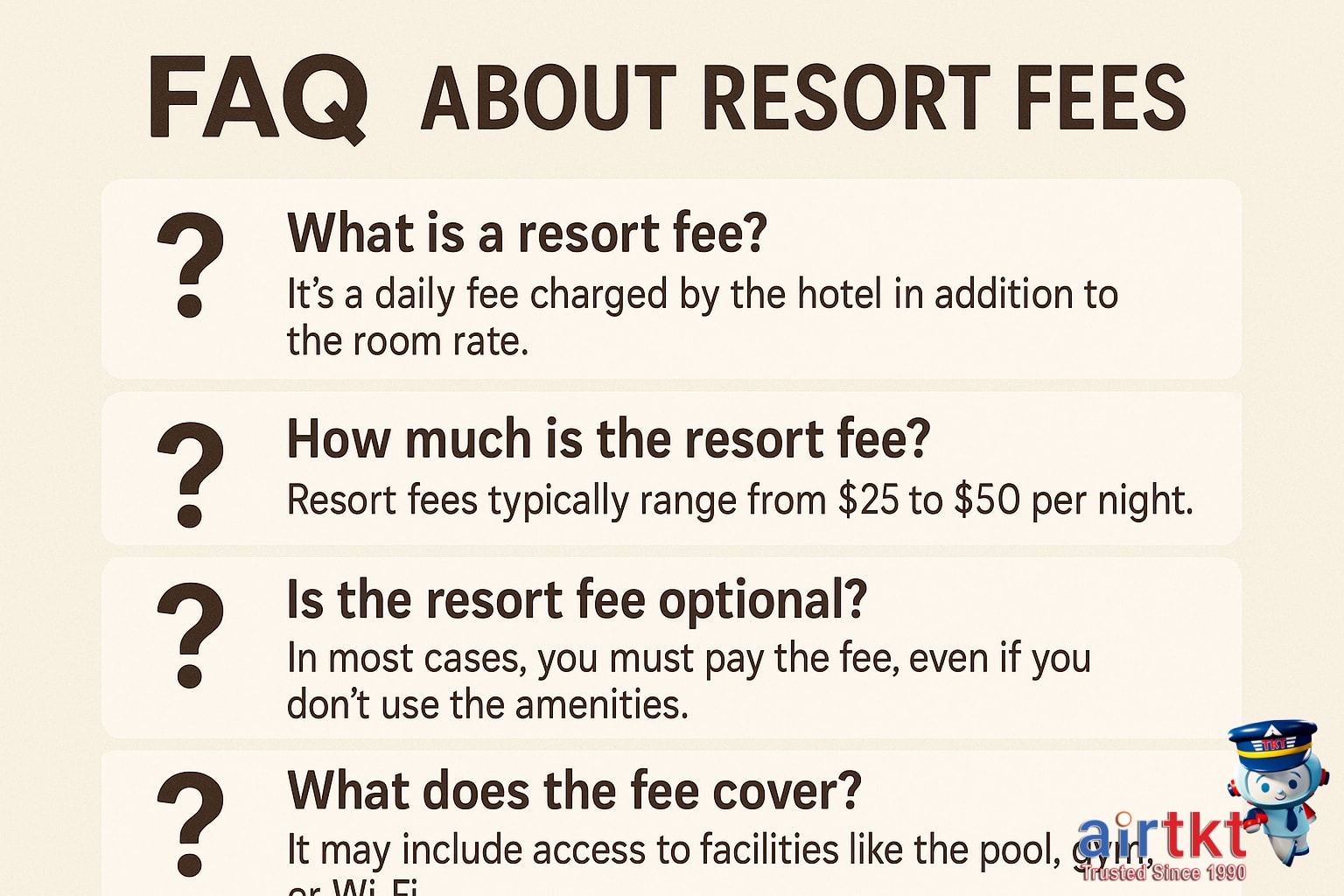
- What exactly are resort fees at hotels?
Resort fees are additional charges added to your nightly hotel bill, typically covering amenities like Wi-Fi, gym access, pool use, or local phone calls. These fees are most common in resorts and large city hotels. I usually review hotel policy details before booking so there are no unexpected costs at check-in.
- Are resort fees always mandatory?
In most cases, resort fees are mandatory and added per night, even if you don’t use the included amenities. However, some smaller hotels or chains occasionally waive them for certain guests or loyalty members. It’s rare to have them removed simply by request, so always check before confirming a reservation.
- How can I avoid paying resort fees when booking a hotel?
Avoiding resort fees isn’t always possible, but you can start by searching specifically for hotels advertising “no resort fees.” Some loyalty programs may waive fees for frequent guests. I’ve also found that booking directly with a hotel and asking upfront sometimes helps clarify what you’ll actually pay.
- What do resort fees typically include?
Resort fees generally cover facilities such as Wi-Fi, use of the fitness center, pool towels, or complimentary bottled water. Sometimes they also include discounts on nearby attractions. If you’re not planning to use these perks, it’s worth weighing if you want to pay extra for them at all.
- Do online travel agencies display resort fees during the booking process?
Most major travel websites are required to show resort fees, but how clearly they’re displayed varies. Fees may appear as a line item before final payment, not as part of the initial room price. I always use a booking platform that transparently lists all taxes and fees upfront before sealing any deal.
- Is there a difference between service charges and resort fees?
Yes, there is a difference. Resort fees are tied to amenities and are charged per night, while service charges may be single fees for room service or gratuities. These distinctions can be confusing, so it’s smart to check your bill closely and ask the front desk if any charge looks unfamiliar.
- What’s the best tip for booking hotels with resort fees?
My top booking tip is to factor resort fees into your budget from the start. If comparing options, add the nightly resort fee to the room rate for a honest total. Don’t be afraid to call the property or check their website’s fine print to get accurate information before you commit.
Final Thoughts on Resort Fees
Wrapping up, understanding resort fees is a real game changer for smarter travel planning. These additional charges can catch even seasoned travelers off guard, and no one likes an unwelcome surprise on their final bill. From my own trips, I’ve learned that knowing about resort fees beforehand has made my travel planning so much smoother—there’s far less second-guessing and I always feel more in control of my budget.
As you book accommodations, always check if a resort fee is listed and what’s actually included. Some fees cover perks you might use, like pool access or Wi-Fi, but others might add little value to your stay. If you’re ever unsure, I recommend reaching out to the property directly for clarification or using booking tools that plainly show you all the costs before you commit. It’s a simple step that can genuinely save you both money and headaches later on.
While no one enjoys reading the fine print, investing those extra few minutes in double-checking fees is worth it. Personally, I now make it a habit to vet every charge before hitting the final payment button. For those who prefer transparency from the outset, platforms like airtkt.com can be especially helpful as you compare options and keep surprises to a minimum. Ultimately, a little upfront research helps you stay on track with your travel budget and ensures the only surprises you encounter are the pleasant kind.